Home / Jeolla / Taein Hyanggyo, Jeongeup
Taein Hyanggyo, Jeongeup: a Joseon Confucian school (hyanggyo) and a righteous army base
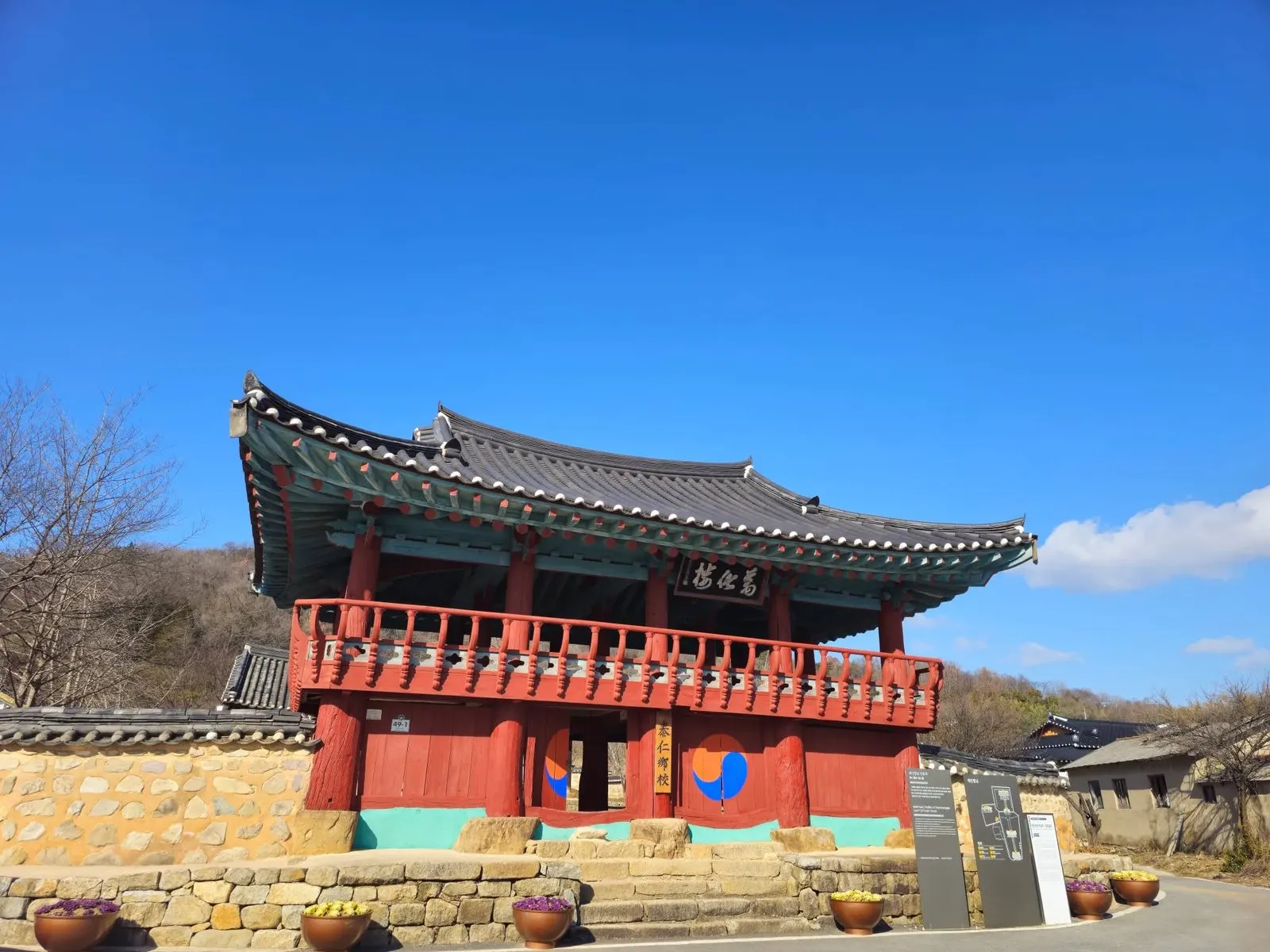
Taein Hyanggyo in Jeongeup, Jeonbuk State: a Joseon-era local Confucian school with a two-storey red gate pavilion, Manhwaru, where Choe Ik-hyeon's righteous army was based in 1906. Free and always open. My visit in February.
- Getting there
- By car: parking available (Korea Tourism Organization). By bus: check the live route in Naver Map.
- Cost
- Free (Korea Tourism Organization).
- Time needed
- About 30 minutes (estimate).
- Best time
- Any time; it's always open (Korea Tourism Organization). I went on a clear day in late February.
Tap any Korean name on this page to hear it. Prefer Naver Map? In the app (set to English), search Taein Hyanggyo Jeongeup, or paste the Korean name:태인향교
Short version: Taein Hyanggyo (태인향교) is a Joseon-era hyanggyo, a local Confucian school, in Taein-myeon, Jeongeup, Jeonbuk State. Its gate is a two-storey red pavilion called Manhwaru, and in 1906 the righteous army of Choe Ik-hyeon was based here in its fight against Japanese rule. I went on a clear Monday at the end of February 2025. The story of this place is really great. Entry is free.
Last checked: 17 November 2026. The history of Manhwaru, the layout and the 1906 righteous army come from the official signs at the gate, which I photographed, and from the Korea Tourism Organization. Entry, opening, parking and the address come from the Korea Tourism Organization. We couldn’t confirm the school’s founding date from an official source, so it isn’t given here. The impressions and the photos are from my own visit. Tell me if anything has changed.
What it is
A hyanggyo (향교) was a local Confucian school run by the state in Joseon times. Taein’s has a gate pavilion, a lecture hall (Myeongnyundang), an inner gate, a shrine (Daeseongjeon) and a dormitory (Jangsujae), according to the map board at the gate.
Manhwaru, the gate pavilion
The building Manhwaru (만화루) is famous. The official sign at the gate says it’s the school’s main gate and a two-storey pavilion, built probably in the late Joseon period. The name means “Pavilion of Ten-Thousand Transformations”: everything should be edified according to the Confucian Way. The name board was written by Jo Hang-jin, who became magistrate of Taein in the 1790s.
According to the same sign, gate pavilions were usually an odd number of bays wide, with the door and the name board in the centre. Manhwaru is four bays wide, so its name board is off-centre and it has two central doors. I’m told details like the wide passage in the middle of the steps and the two entrance doors are hard to see anywhere else.
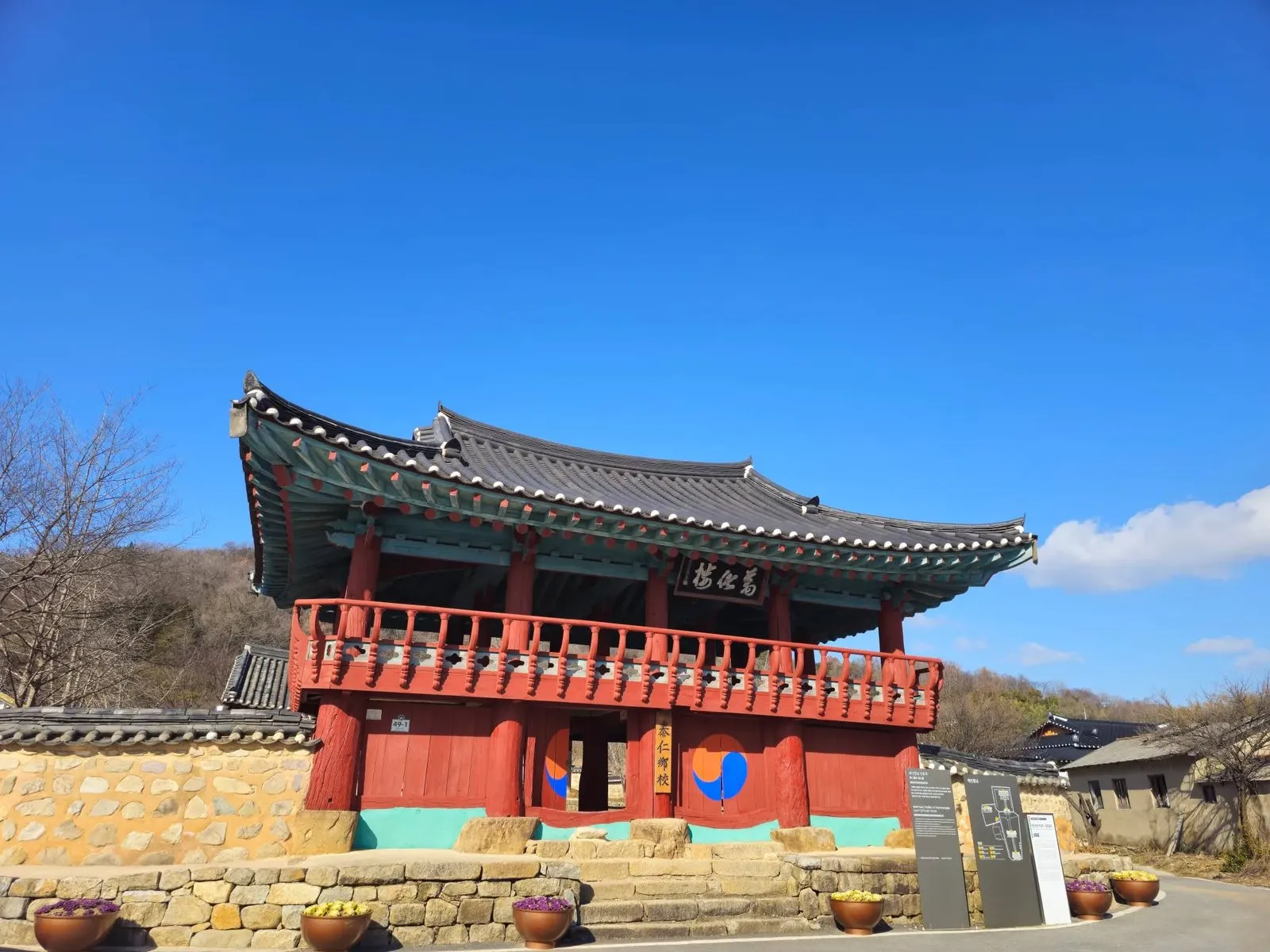 Manhwaru from the road. The signs are on the right.
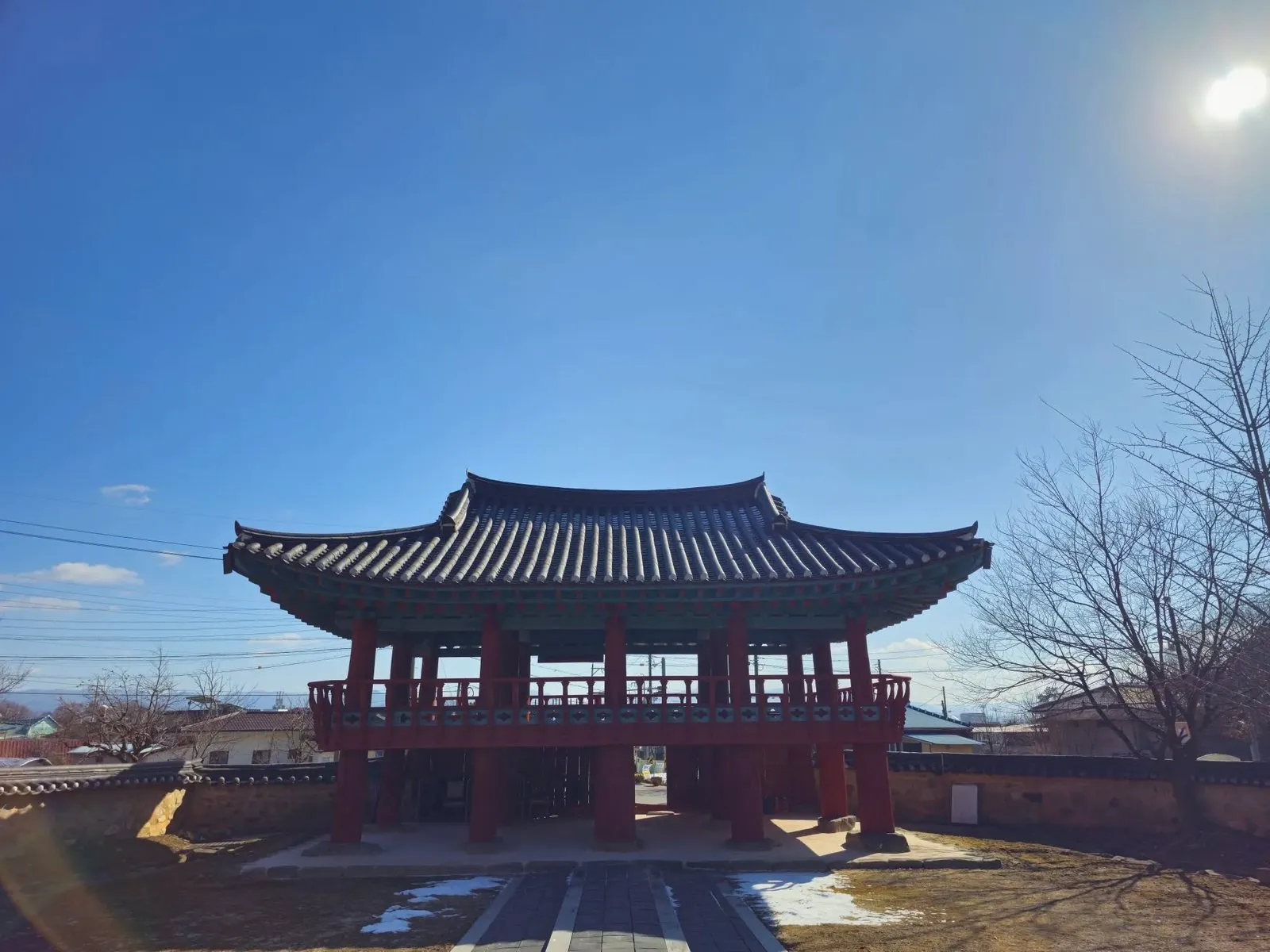 The same pavilion from inside the grounds.
The layout
The layout is interesting too. On the map board at the gate, Manhwaru, the lecture hall, the inner gate and the shrine stand one behind another in a line, with the lecture hall in front of the shrine.
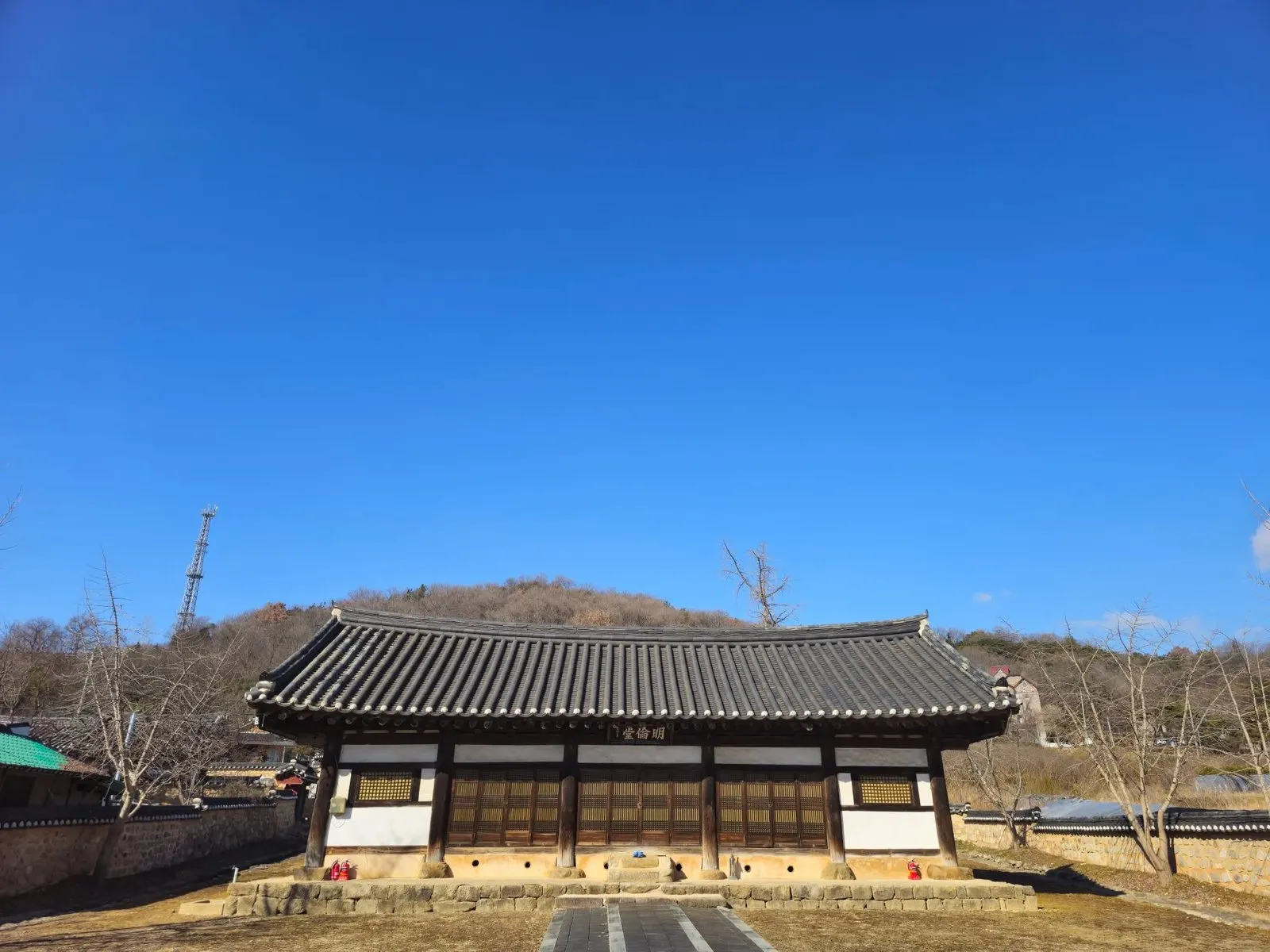 Myeongnyundang, the lecture hall.
The 1906 righteous army
It’s also connected with the righteous army leader Choe Ik-hyeon. The Korea Tourism Organization and the memorial sign at the gate tell the story:
- After the 1905 treaty that made Korea a Japanese protectorate, Choe Ik-hyeon raised the Taein Righteous Army with Im Byeong-chan at Museong Seowon on 4 June 1906.
- The army marched straight into Taein, and the county governor fled. While staying at Taein Hyanggyo, it seized the government’s weapons, recruited soldiers and built up its strength.
- It left Taein on 5 June and reached Sunchang by way of Jeongeup and Gokseong. Faced with government troops at Sunchang on 11 June, Choe disbanded the army to avoid Koreans fighting Koreans.
The sign marks the school as a memorial facility designated by the Ministry of Patriots and Veterans Affairs.
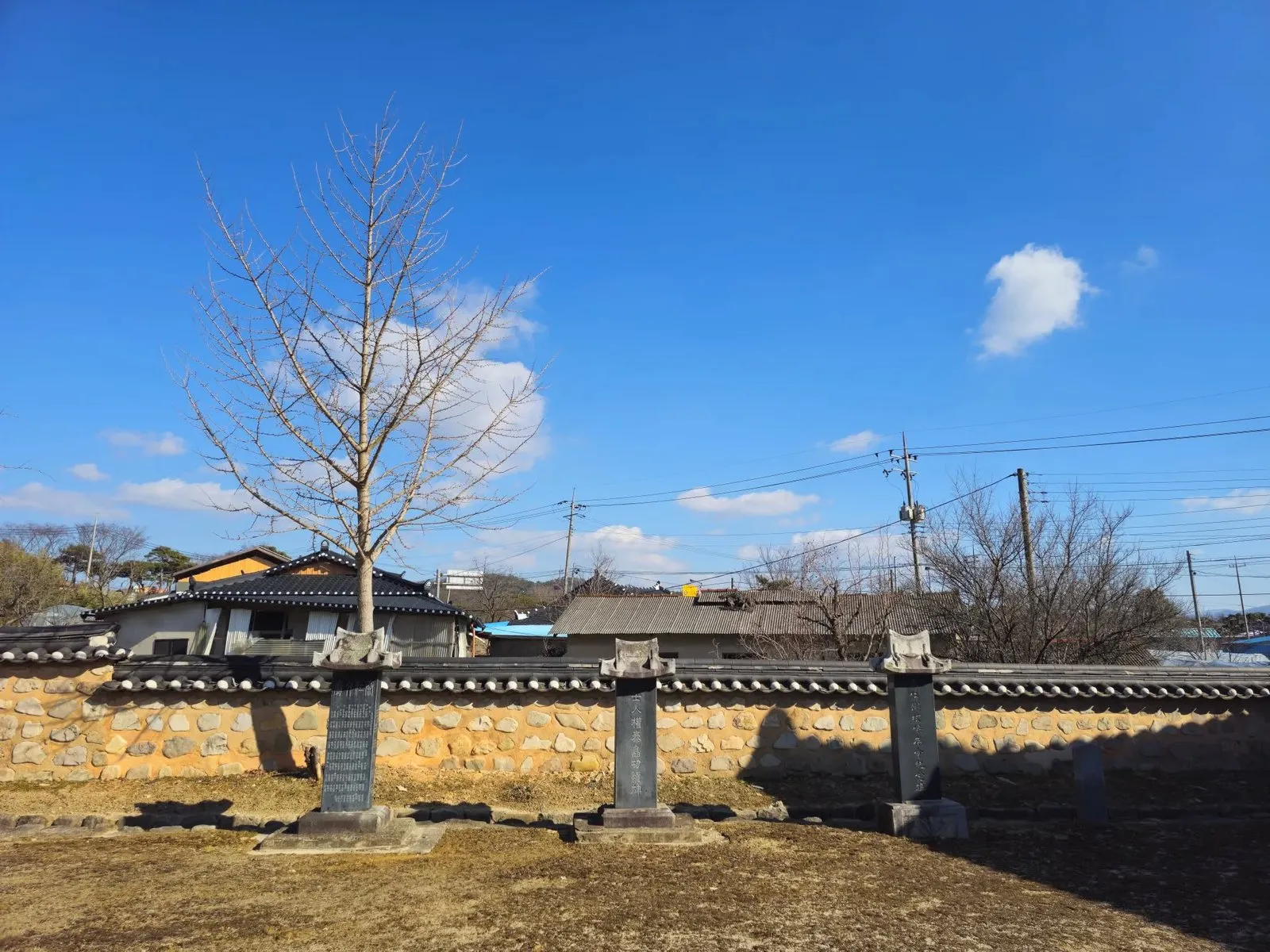 Stone steles by the wall.
Go once and I think you can really feel the atmosphere of the scholars who used to study here.
Visiting
| Taein Hyanggyo | |
|---|---|
| Entry | Free (Korea Tourism Organization) |
| Hours | Always open, all year (Korea Tourism Organization) |
| Parking | Available (Korea Tourism Organization) |
| Address | 49-1 Hyanggyo 2-gil, Taein-myeon, Jeongeup |
How to get there
By car: I drove. The Korea Tourism Organization lists parking.
By bus: we haven’t listed bus details here. Check the live route in Naver Map by pasting the Korean name, 태인향교.
How to check buses in English: install Naver Map and switch it to English in its settings. When I checked it in October 2026, the English version showed bus routes, stop names and live arrival times (minutes and stops away) in English. Google Maps also gives public transport directions in Korea, but as of late September 2026 it still had no turn-by-turn walking or driving navigation here. Stuck? Call the Korea Travel Hotline: dial 02-1330 from a Korean mobile phone (+82-2-1330 from abroad). It has English-speaking staff. More in our guide to taking buses in Korea in English.
Tips
- Read the signs at the gate. The Manhwaru sign and the righteous army sign both have English text.
- Pair it with Pihyangjeong. The pavilion in the same township is another stop I made on the same day: see Pihyangjeong.
- Look at the doors. Manhwaru is four bays wide, which the gate sign calls unusual for a gate pavilion, so it has two central doors and an off-centre name board.
Who it’s for
Likely to suit (estimate): history fans, anyone interested in Korean Confucian schools or the righteous armies, and people driving through Jeongeup.
Sources
The official signs at the gate, in Korean and English, which I photographed on my visit (Manhwaru’s role, age, name, name board and four-bay plan; the map of the buildings; the 1906 righteous army story and the memorial designation); the Korea Tourism Organization’s Korean listing for Taein Hyanggyo (the righteous army story, free entry, always open, parking, the address). The impressions and the photos are from my own visit.