Home / Jeolla / Gubongsan Observatory, Gwangyang
Gubongsan Observatory, Gwangyang: a free Korean observatory over the bay and steelworks
Gubongsan Observatory, Gwangyang: a 473 m summit you can drive up, with a 9.4 m metal-art beacon and views over the bay, POSCO's steelworks and the Yi Sun-sin Bridge. Free, open at all times.
- Getting there
- Drive up to the car park below the summit (Korea Tourism Organization). The road up is steep.
- Cost
- Free (Korea Tourism Organization).
- Time needed
- About 1 hour (estimate).
- Best time
- Open at all times (Korea Tourism Organization). The guide board said the lights stay on until 23:00. Known for sunrise, sunset and the night view.
Tap any Korean name on this page to hear it. Prefer Naver Map? In the app (set to English), search Gubongsan Observatory Gwangyang, or paste the Korean name:구봉산전망대
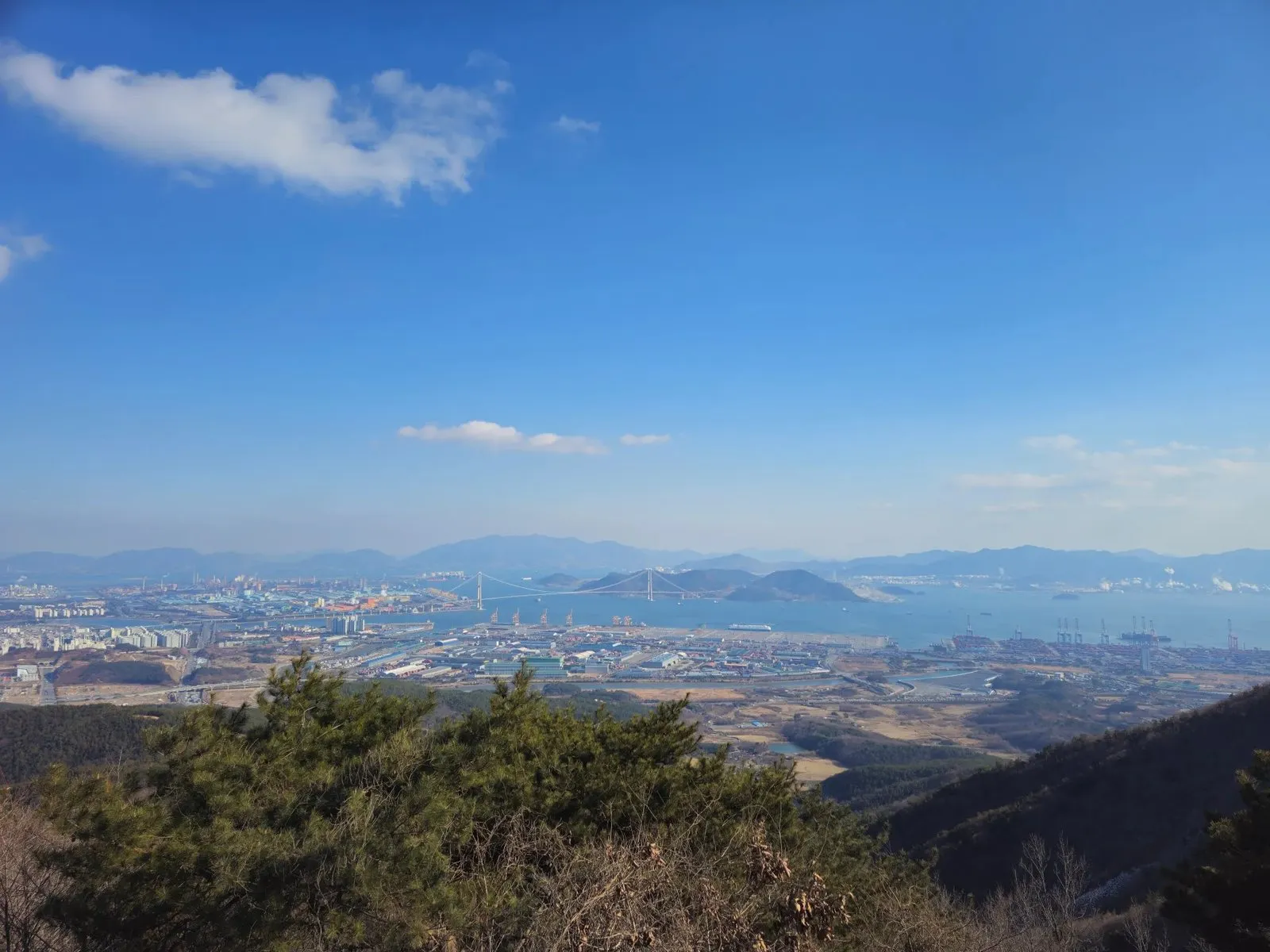
Short version: Gubongsan Observatory (구봉산전망대) sits on the 473 m summit of Gubongsan in Gwangyang, South Jeolla. You can drive almost to the top, and from there you look over Gwangyang Bay, the port, POSCO’s Gwangyang steelworks and the Yi Sun-sin Bridge. At the top stands a 9.4 m metal-art beacon tower. It’s free and open at all times, and it’s known for its night view. My photos are from around February 2025, in daylight.
Last checked: 20 November 2026. Height, the beacon tower, the views, parking, free entry and opening hours come from the Korea Tourism Organization (KTO) listing. The night-view awards come from news reports. The history and the lighting hours come from the guide board at the site, which I photographed. The new Panorama Walk comes from news reports. The impressions and the photos are from my own visit. I can’t confirm the exact day I went: the photos were posted on 10 February 2025. Tell me if anything has changed.
What it is
The KTO describes Gubongsan Observatory as a lookout on the 473 m summit, with views as far as Suncheon, Yeosu, Hadong and Namhae, popular for sunrise and sunset. Cars can drive up to the car park just below the summit, and there are telescopes for looking out over the bay.
If you’re planning a trip to Gwangyang, you have to go to Gubongsan Observatory. The view is seriously amazing.
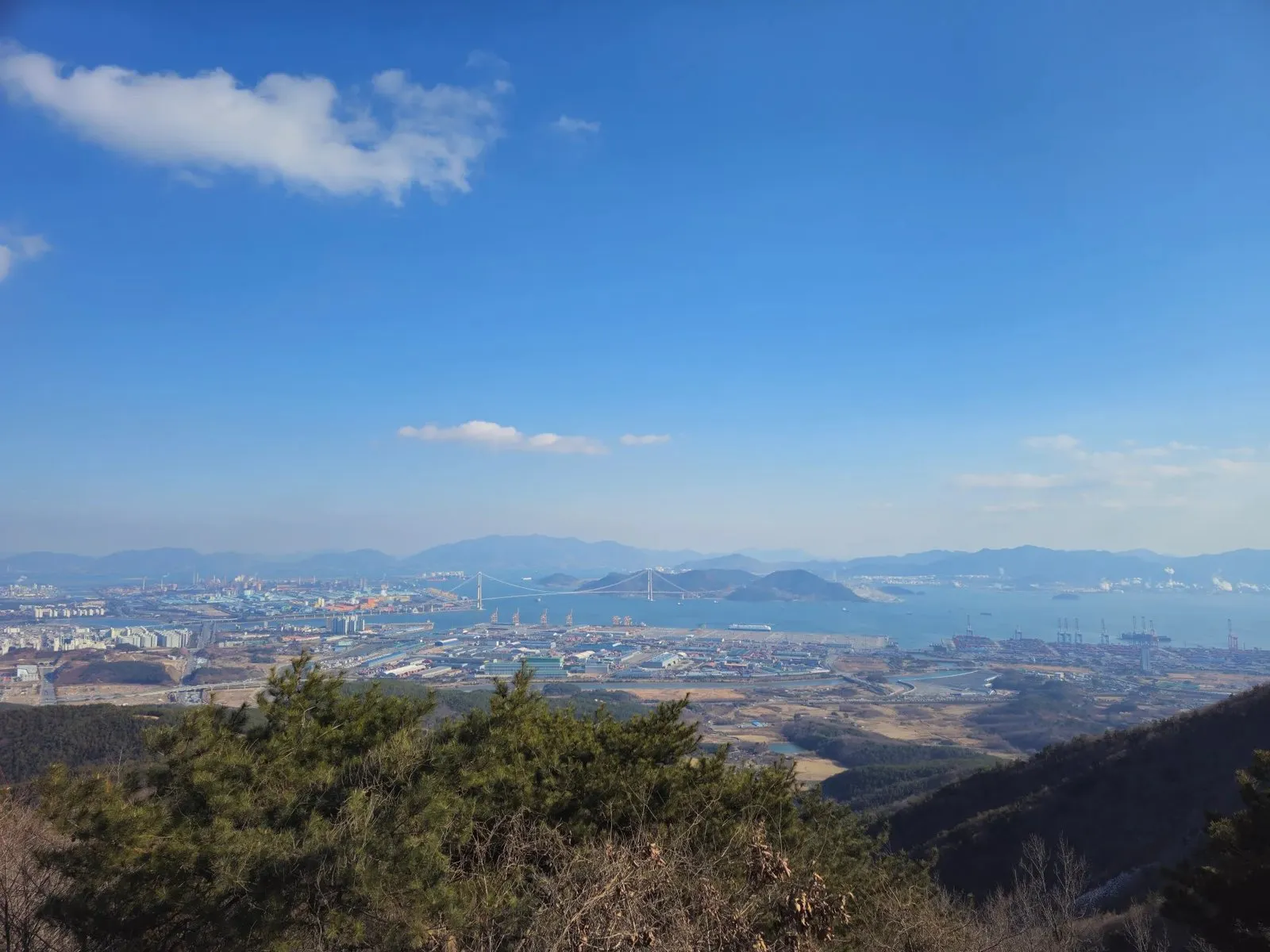 Gwangyang Port and the bridge from the top.
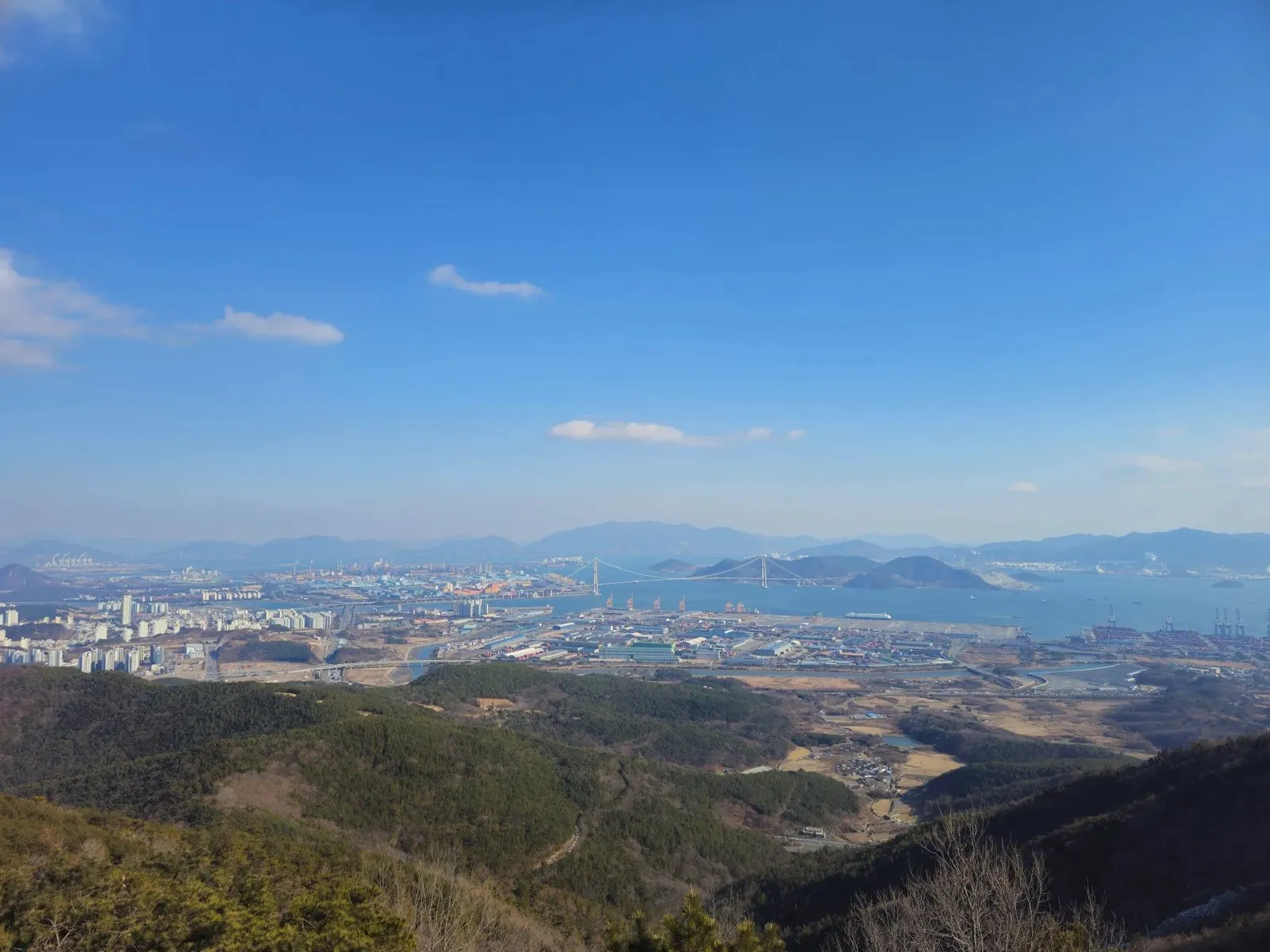 The city and the bay.
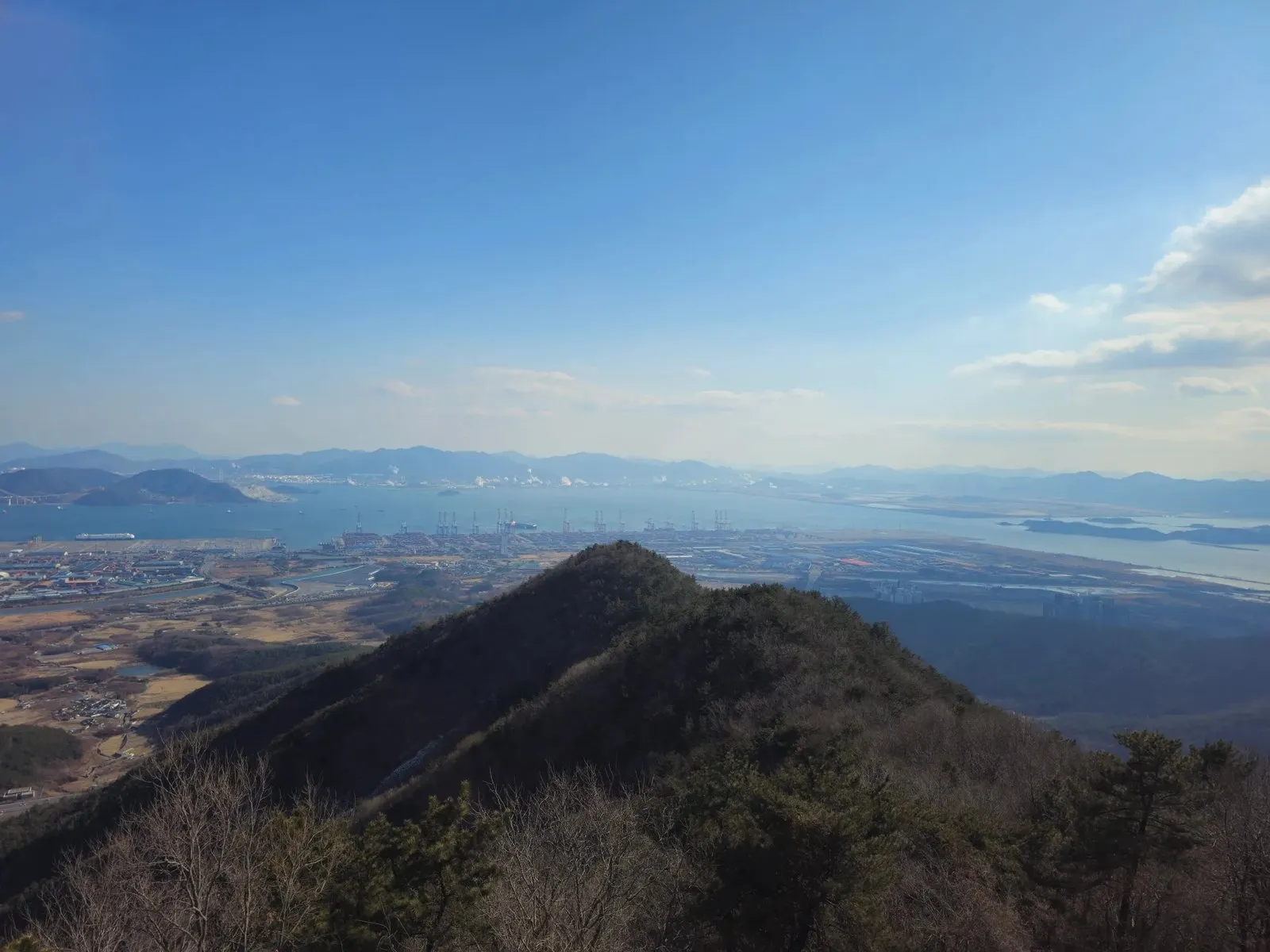 The ridge down to the container terminal.
The night view
The KTO says the lights of POSCO’s Gwangyang steelworks, the Yi Sun-sin Bridge, Gwangyang Port and the Yeosu National Industrial Complex make the bay glitter at night. The KTO picked Gubongsan Observatory for its “Top 100 Night Tourism Spots” in 2020, and in 2023 “Gubongsan Observatory & Gwangyang Bay Night View” was named in the “Korea Night Night Gokgok 100” list of night-time attractions, according to news reports.
The guide board at the site says the observatory lights stay on until 23:00. My own photos are from the daytime.
The beacon tower and the old beacon
Gubongsan’s name comes from an old fire-signal beacon (봉수대) on the summit. The guide board says only the stone base of the old beacon survives, and that the mountain was officially renamed Gubongsan in 2011.
At the top there’s the 9.4 m metal-art beacon tower. Great for photos. The KTO says it’s a modern steel and LED sculpture of a plum blossom opening like a flame, standing where the old beacon was, and that its height of 9.4 m stands for the year 940, when the name Gwangyang was first used.
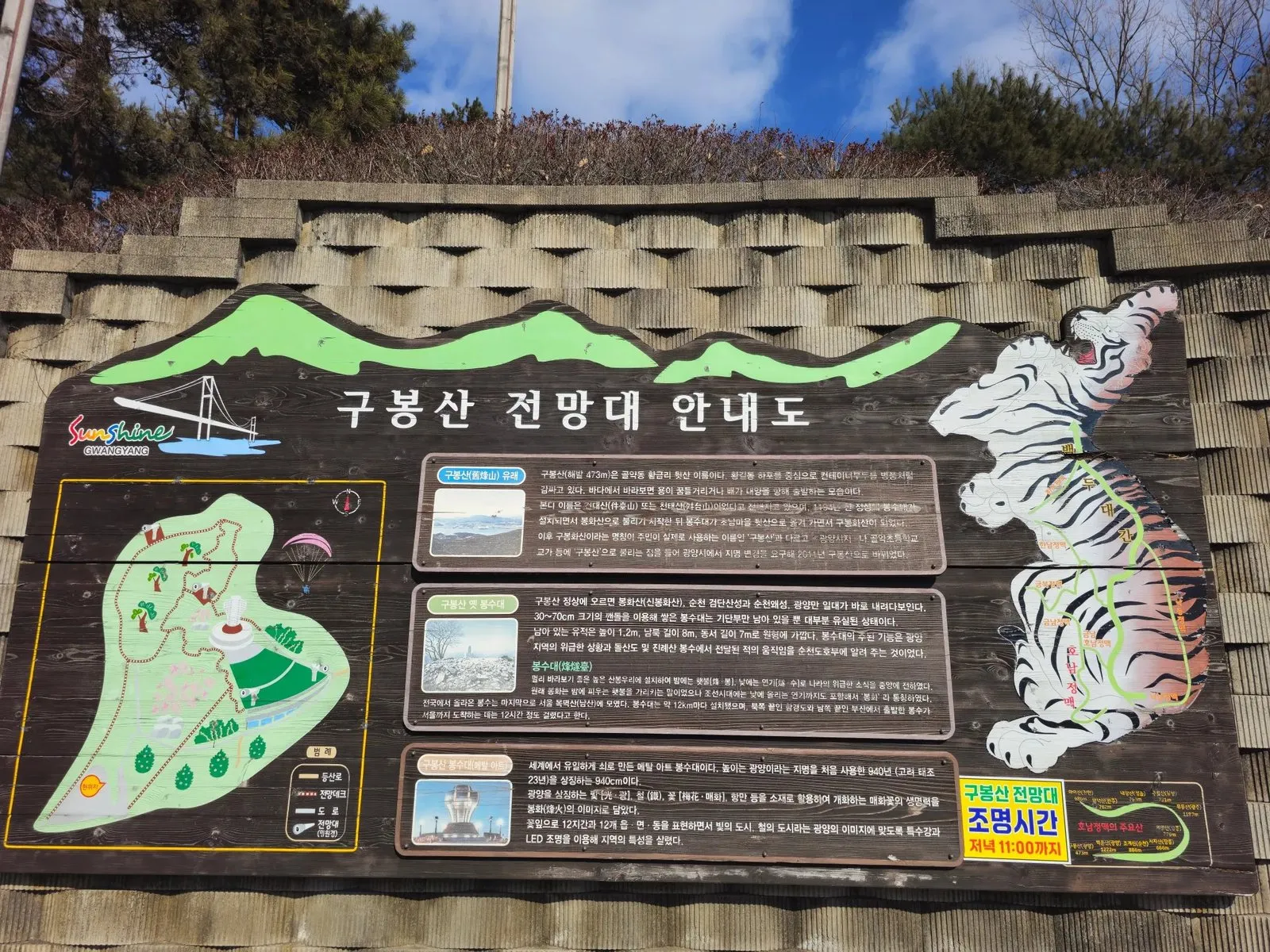 The guide board: history panels and the lighting time, until 23:00.
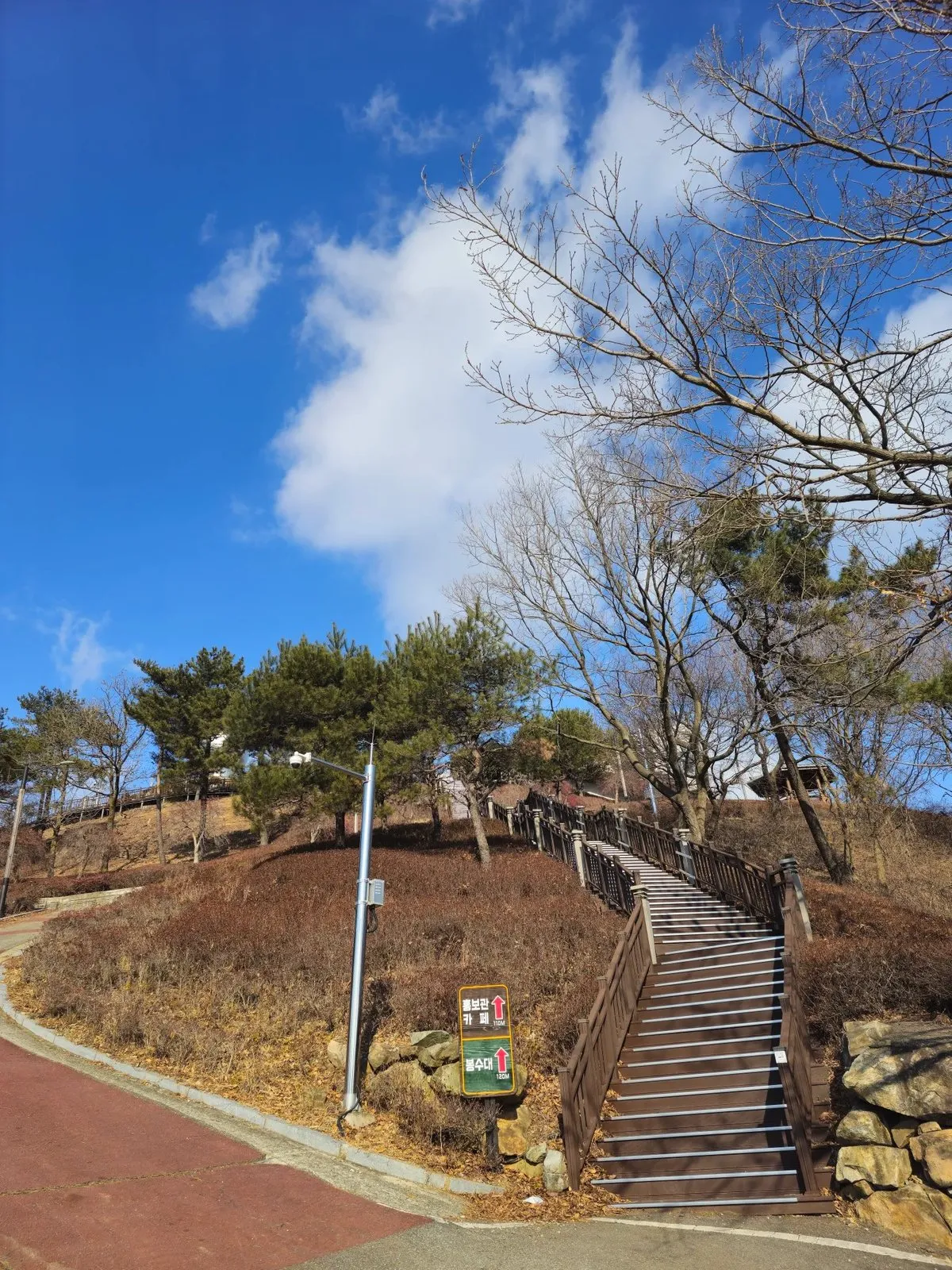 Stairs up from the car park; the signpost points to the beacon tower and the cafe.
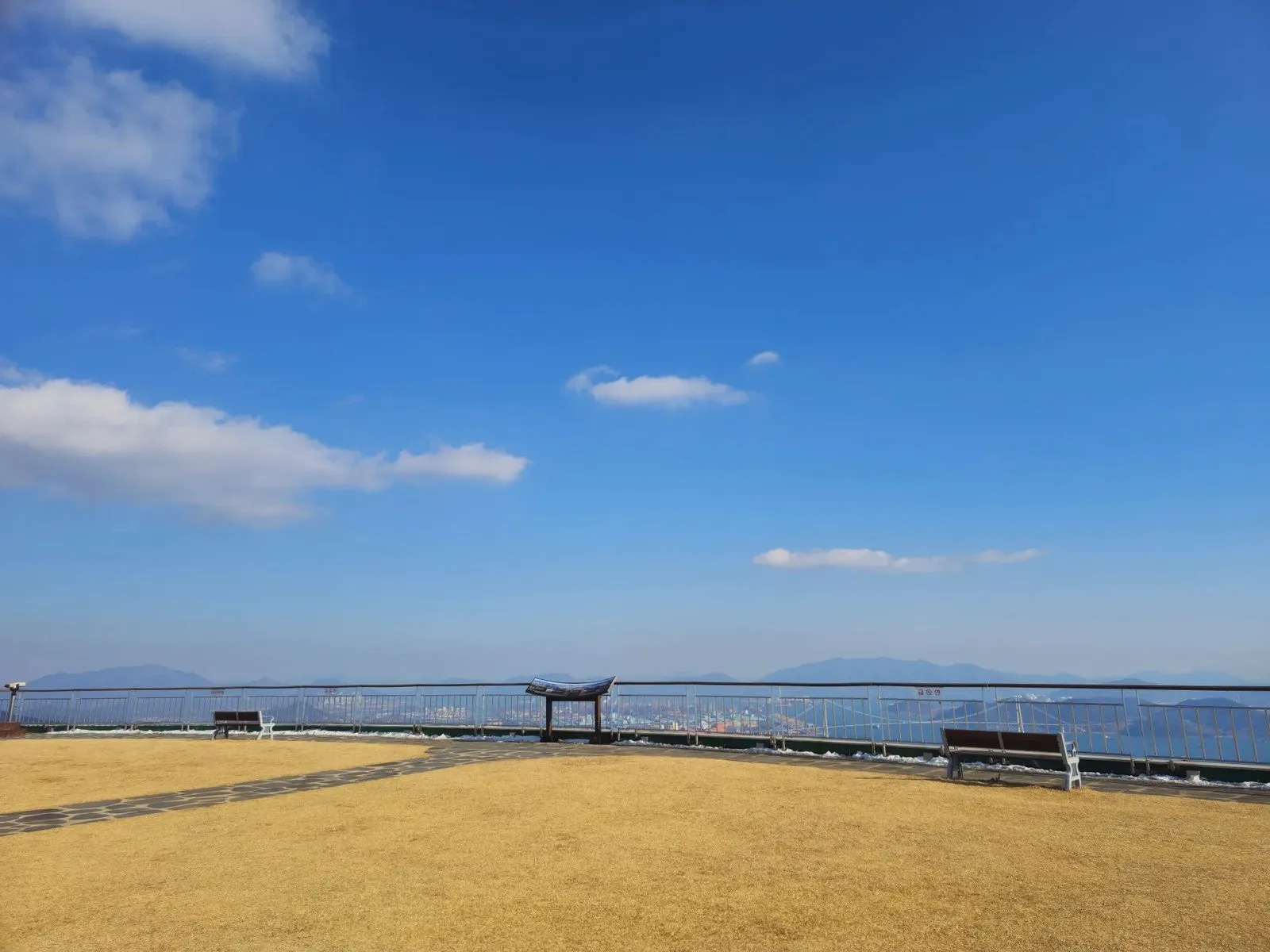 The viewing deck at the top.
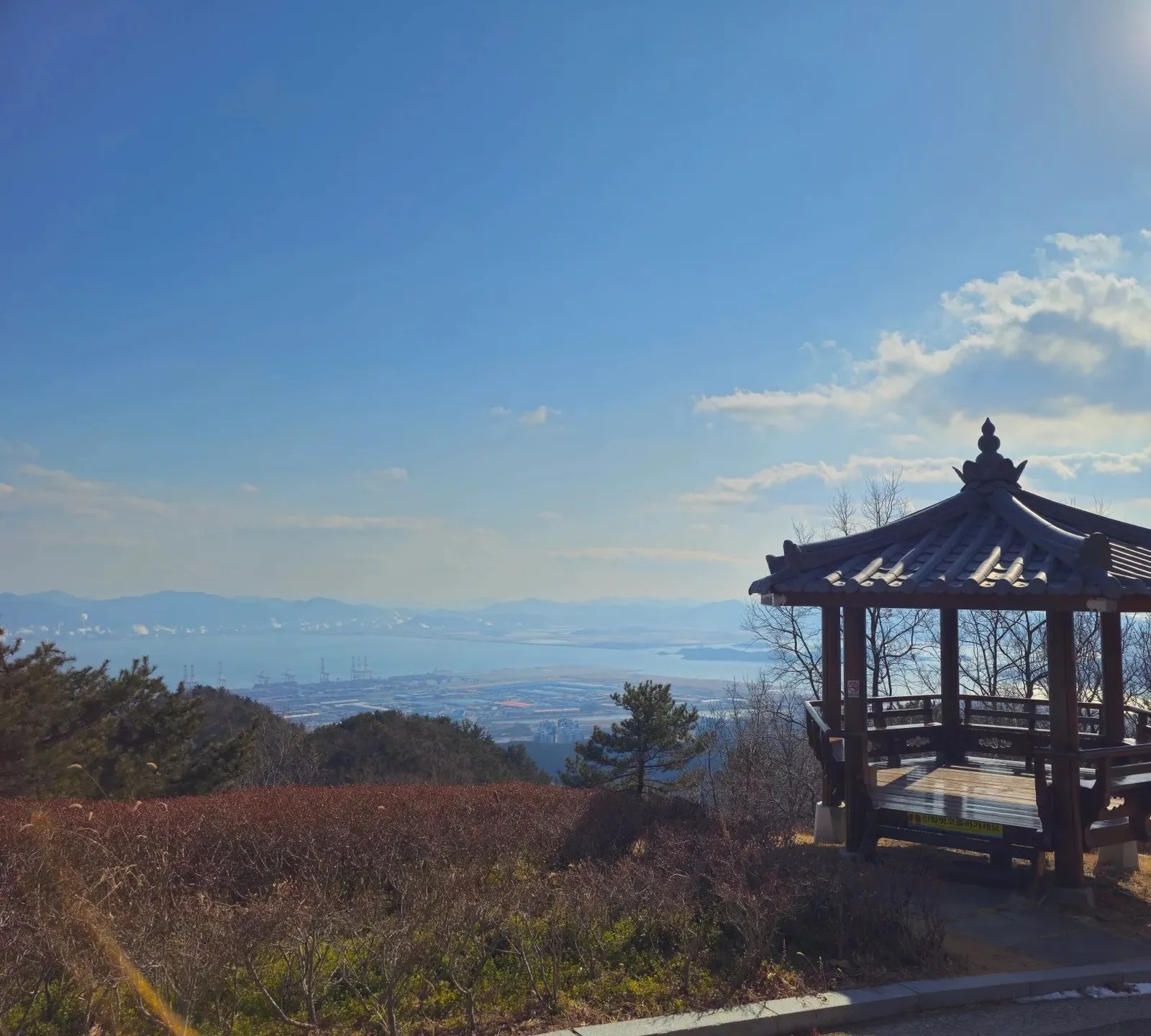 A pavilion over the bay.
New since my visit: the Panorama Walk
After my visit, a new steel walkway called the Panorama Walk opened at the summit. According to news reports, it’s a spiral steel ramp more than 20 m high, built by POSCO, and it officially opened on 10 November 2026 after a trial run. Entry is by advance booking through the city’s own app, limited to 200 people an hour; one report says you can sometimes walk straight in when it’s quiet. The reports give its hours as 10:00–18:00 from November to March and 10:00–20:00 from April to October, closed on Mondays, so unlike the observatory it isn’t open around the clock. I haven’t been on it, and we couldn’t confirm whether booking works in English: ask the 1330 hotline before you go.
Visiting
| Gubongsan Observatory | |
|---|---|
| Entry | Free (KTO) |
| Hours | Open at all times, every day (KTO). Lights until 23:00 (guide board at the site). |
| Parking | Available; cars can drive to the car park below the summit (KTO). I found two big free car parks. |
| Cafe | There’s one near the summit (my visit; the signpost said 110 m). |
| Panorama Walk | Opened 10 November 2026; advance booking, 200 people an hour; 10:00–18:00 (Nov–Mar) or 10:00–20:00 (Apr–Oct), closed Mondays (news reports). |
| Address | 155 Gubongsanjeonmangdae-gil, Gwangyang (news reports). Official addresses now end “Jeonnam-Gwangju Special Metropolitan City”: Gwangju merged with South Jeolla on 1 July 2026. |
How to get there
By car: search 구봉산전망대 in Naver Map. There are two big free car parks, so no worries about parking. But the road is quite steep, so be careful.
By bus: we haven’t listed bus details here. Check the live route in Naver Map.
How to check buses in English: install Naver Map and switch it to English in its settings. When I checked it in October 2026, the English version showed bus routes, stop names and live arrival times (minutes and stops away) in English. Google Maps also gives public transport directions in Korea, but as of late September 2026 it still had no turn-by-turn walking or driving navigation here. Stuck? Call the Korea Travel Hotline: dial 02-1330 from a Korean mobile phone (+82-2-1330 from abroad). It has English-speaking staff. More in our guide to taking buses in Korea in English.
Tips
- Go around sunset. Go around sunset and it’s truly spectacular. The KTO also lists it as a sunrise and sunset spot.
- Have a coffee. There’s a cafe too, so you can take in the view over a coffee.
- Drive carefully. The road up is steep.
Who it’s for
Likely to suit (estimate): photographers, couples, and anyone driving along the south coast who wants a big view without a hike.
Sources
The Korea Tourism Organization’s Korean listing (as retrieved on 20 November 2026, last updated June 2026: 473 m, the views, sunrise and sunset, the 9.4 m metal-art beacon and the year 940, cars to the car park, telescopes, the night view, free entry, open at all times, parking), with the height, views and beacon also in Cheonji Ilbo (November 2026) and Gwangyang City’s English tourism page; news reports on the 2020 “Top 100 Night Tourism Spots” (Kukmin Ilbo’s Kuki News, Asia Business Daily) and the 2023 “Korea Night Night Gokgok 100” (Asia Business Daily, Metro Seoul); news reports on the Panorama Walk (Financial News, Asia Business Daily, Design magazine); the guide board at the site, which I photographed (the old beacon, the 2011 renaming, lights until 23:00). The impressions and the photos are from my own visit.