Home / Jeolla / Jeonghyesa Temple, Suncheon
Jeonghyesa, Suncheon: a Korean temple whose main hall is itself a national Treasure
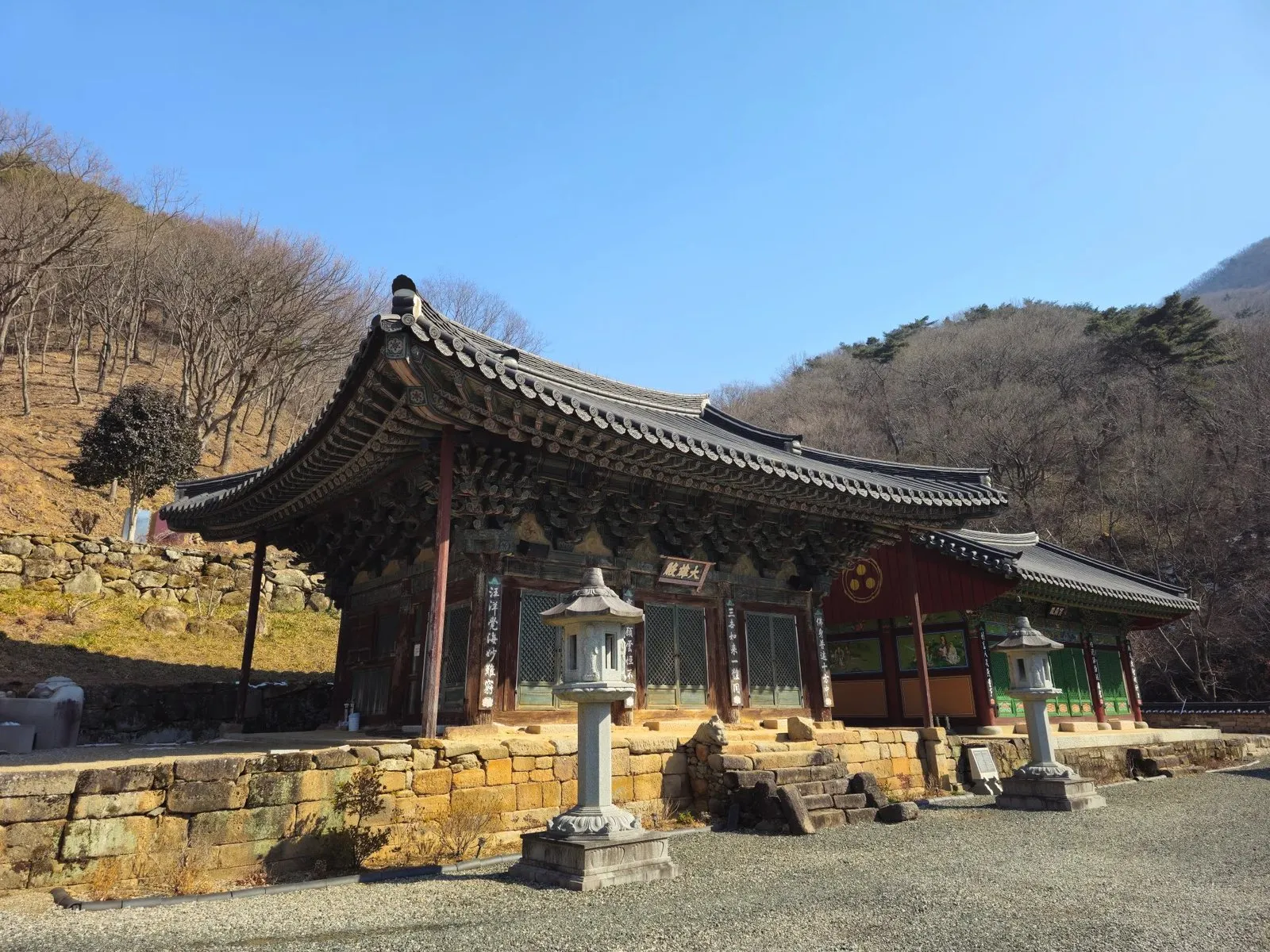
Jeonghyesa in Suncheon, South Jeolla: a small mountain temple whose three-bay main hall, rebuilt in 1617, is a national Treasure. Open at all times. My visit on a clear February day.
- Getting there
- By car: search the Korean name, 정혜사, in Naver Map. By bus: check the live route in Naver Map.
- Cost
- Free (Korea Tourism Organization).
- Time needed
- About 30 minutes (estimate).
- Best time
- Open at all times; use after 18:00 is limited (Korea Tourism Organization). I went on a clear day in February.
Tap any Korean name on this page to hear it. Prefer Naver Map? In the app (set to English), search Jeonghyesa Temple Suncheon, or paste the Korean name:순천 정혜사
Short version: Jeonghyesa (정혜사) is a small temple on a hillside in Seo-myeon, Suncheon, South Jeolla. Its main hall, the Daeungjeon (대웅전), is a national Treasure: a three-bay wooden hall with a hip-and-gable roof, rebuilt in 1617. The Korea Tourism Organization (KTO) lists it as free and open at all times. I went on Tuesday 11 February 2025.
Last checked: 20 November 2026. The temple’s history and the hall’s features come from the official heritage board in front of the hall, which I photographed, the KTO listing (also the opening hours and the address) and the Encyclopedia of Korean Culture. The impressions and the photos are from my own visit. Tell me if anything has changed.
What it is
The heritage board estimates that Jeonghyesa was founded sometime between the 9th and 13th centuries; the KTO gives two main founding stories. The KTO and the Encyclopedia of Korean Culture both say it was long called the “old temple” (고사) because it is so old.
According to the board, the monk Chungji of Songgwangsa stayed here and the temple flourished, and, according to tradition, it was badly damaged during the Japanese invasions of the 1590s. Records say the temple was repaired in 1617 and 1854, and several times after that. The KTO says a record on the hall’s ridge beam names the monk Sinuk, who rebuilt the three-bay hall in the 9th year of King Gwanghaegun (1617).
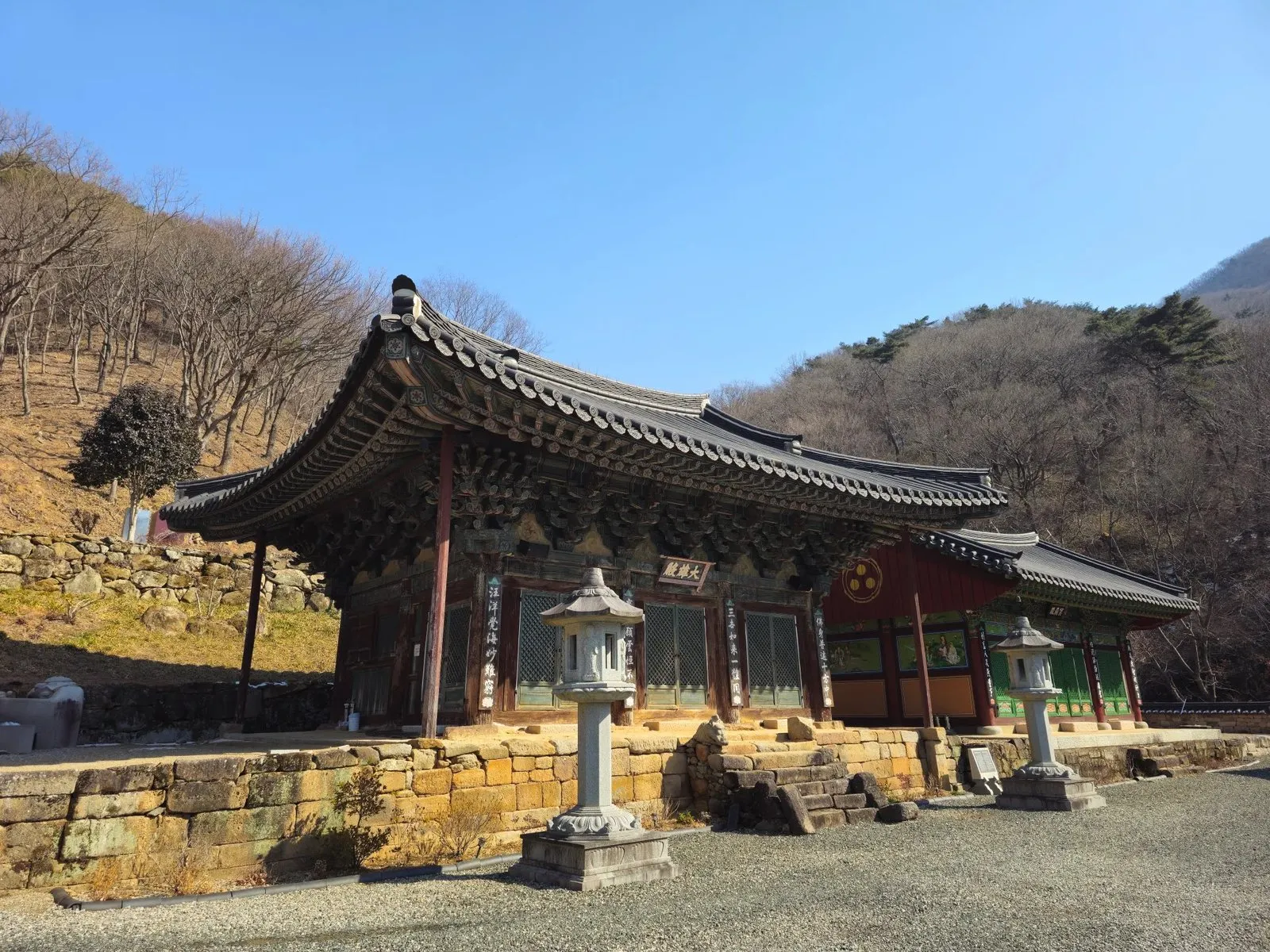 The main hall from the front left.
The main hall
The KTO says the hall was designated a Treasure on 30 November 1984. The heritage board describes it as a single-storey hall, three bays wide and two deep, with a hip-and-gable roof and one bracket set in each space between the columns. It singles out the unusual shape of the blocks at the base of the brackets, the carved dragon heads on the stairs and the stair-side stones with a taegeuk (yin-yang) pattern. The Encyclopedia of Korean Culture says the hall’s brackets and details show the features of early Joseon architecture.
Usually the cultural heritage inside a temple is a stone pagoda, a seated Buddha, a stone Buddha or a bell. A main hall that is heritage in itself felt unusual, so it caught my interest. The painted decoration on the hall has faded a bit.
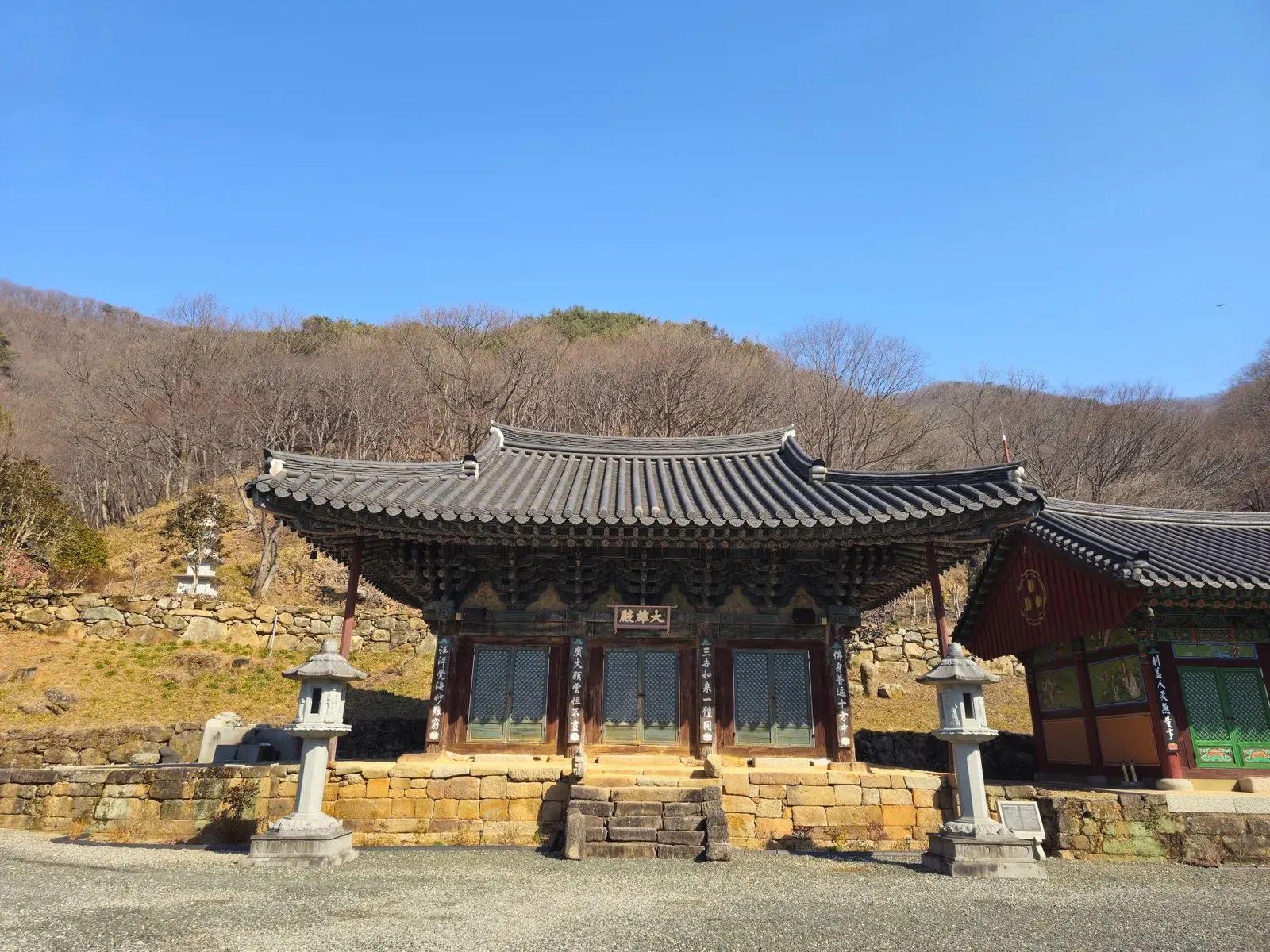 Straight on: three bays across the front.
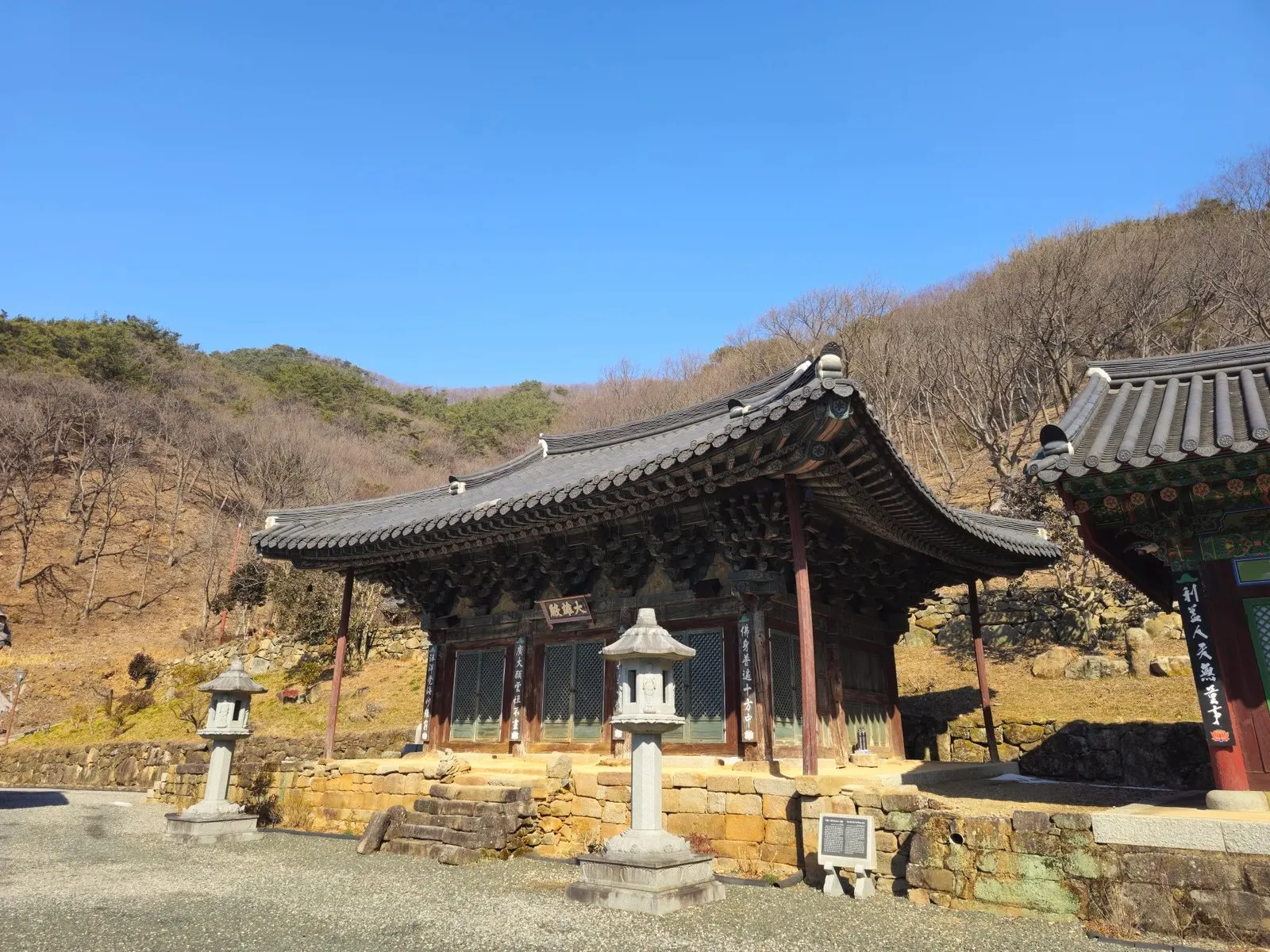 The side, with the upturned eaves.
Visiting
| Jeonghyesa | |
|---|---|
| Hours | Open at all times; use after 18:00 is limited (KTO) |
| Entry | Free (KTO) |
| Language | The KTO lists no foreign-language guide service. The heritage board has an English panel, but it has a few mistakes (it gives the 1617 repair as 1671). |
| Address | 32 Jeonghyesa-gil, Seo-myeon, Suncheon (KTO). Official addresses now end “Jeonnam-Gwangju Special Metropolitan City”: Gwangju merged with South Jeolla on 1 July 2026. |
How to get there
By car: search 순천 정혜사 in Naver Map.
By bus: we haven’t listed bus details here. Check the live route in Naver Map.
How to check buses in English: install Naver Map and switch it to English in its settings. When I checked it in October 2026, the English version showed bus routes, stop names and live arrival times (minutes and stops away) in English. Google Maps also gives public transport directions in Korea, but as of late September 2026 it still had no turn-by-turn walking or driving navigation here. Stuck? Call the Korea Travel Hotline: dial 02-1330 from a Korean mobile phone (+82-2-1330 from abroad). It has English-speaking staff. More in our guide to taking buses in Korea in English.
Who it’s for
Likely to suit (estimate): people interested in traditional Korean architecture, and anyone touring Suncheon’s temples.
Sources
The official heritage board in front of the hall, which I photographed (founding estimated between the 9th and 13th centuries, Chungji, damage in the 1597 invasion, repairs in 1617 and 1854, three by two bays, hip-and-gable roof, brackets, dragon heads and taegeuk stones); the Korea Tourism Organization’s Korean listing (updated September 2026: free entry, founding stories, the “old temple” name, the ridge-beam record of Sinuk’s rebuilding, Treasure designation on 30 November 1984, hours, the address); the Encyclopedia of Korean Culture (Academy of Korean Studies: the “old temple” name, early Joseon features). The impressions and the photos are from my own visit.