Home / Jeolla / Sangwonsa Temple, Gochang
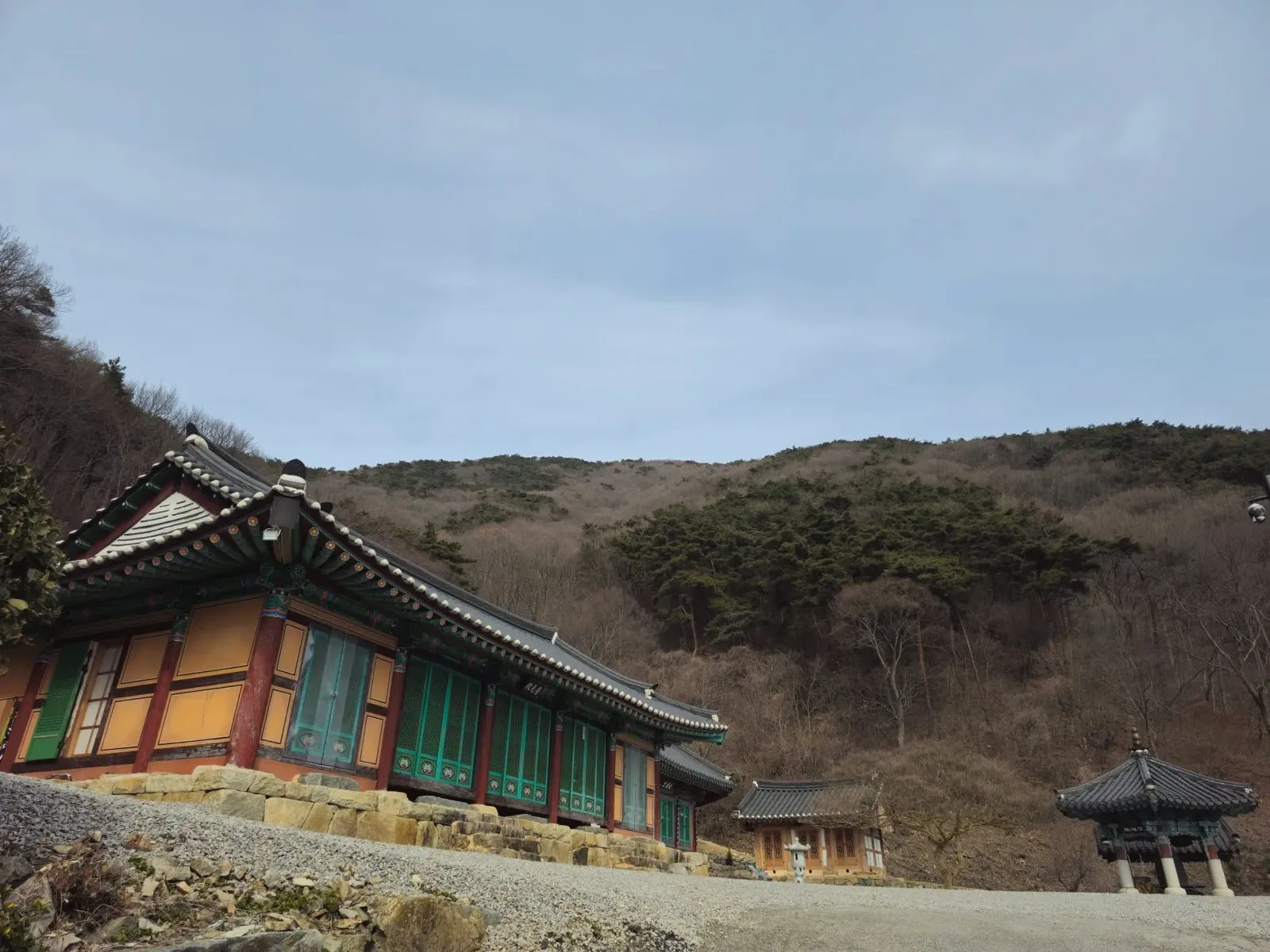
Sangwonsa Temple, Gochang: a small temple at the foot of Bangjangsan
A small temple on the slopes of Bangjangsan in Gochang, Jeonbuk State, founded in 546 according to its board, with a main hall thought to date from the mid-18th century and a Buddha triad inside. The road up has steep slopes and bends in places, and it's narrow.
- Getting there
- By car only if you're comfortable on steep, narrow roads with bends (my experience). There's also a hiking route from Gochang town (Korea Tourism Organization); we couldn't confirm buses. Parking is available (Korea Tourism Organization).
- Cost
- We couldn't confirm whether there's an entry fee.
- Time needed
- About 30 minutes to 1 hour at the temple (estimate), plus the drive up.
- Best time
- Open all year (Korea Tourism Organization). I visited in late February.
Tap any Korean name on this page to hear it. Prefer Naver Map? In the app (set to English), search Sangwonsa Temple Gochang, or paste the Korean name:고창 상원사
Short version: This Sangwonsa (상원사) is a small temple on the slopes of Bangjangsan in Gochang, Jeonbuk State. It is not the much better-known Sangwonsa on Odaesan in Gangwon. Its board says it was founded in 546, and its main hall is thought to date from the mid-18th century. It’s small and neat, with the mountainside right behind it. I liked it. The catch is the drive: the road up has steep slopes and bends in a few places, and it’s very narrow.
Last checked: 16 November 2026. The history and the details of the main hall come from the hall’s information board, which I photographed and which has an English text. Where the temple is, its parent temple, its buildings, opening, parking and the address come from the Korea Tourism Organization. We couldn’t confirm whether there’s an entry fee, or bus details. The impressions and the photos are from my own visit. Tell me if anything has changed.
Which Sangwonsa?
There are several temples called Sangwonsa in Korea. The famous one is in Odaesan National Park in Gangwon. This one is in Gochang, Jeonbuk State. The Korea Tourism Organization places it at the foot of Bangjangsan in Wolgok-ri, Gochang-eup, and lists it as a branch temple of Seonunsa, the head temple of the Jogye Order’s 24th district.
A short history
According to the board in front of the main hall, Sangwonsa was founded in 546, in the Baekje kingdom, by two monks, Gobong and Balyong. The English text says it was reconstructed in 942 and repaired several times after that.
The main hall, Daeungjeon, is presumed to have been built in the mid-18th century. Inside is a Buddha triad: Sakyamuni in the middle, with the Medicine Buddha and Amitabha on either side. The board says the triad is a Jeollabuk-do Tangible Cultural Heritage (No. 210), and the hall itself is a Jeonbuk-do Cultural Heritage Material.
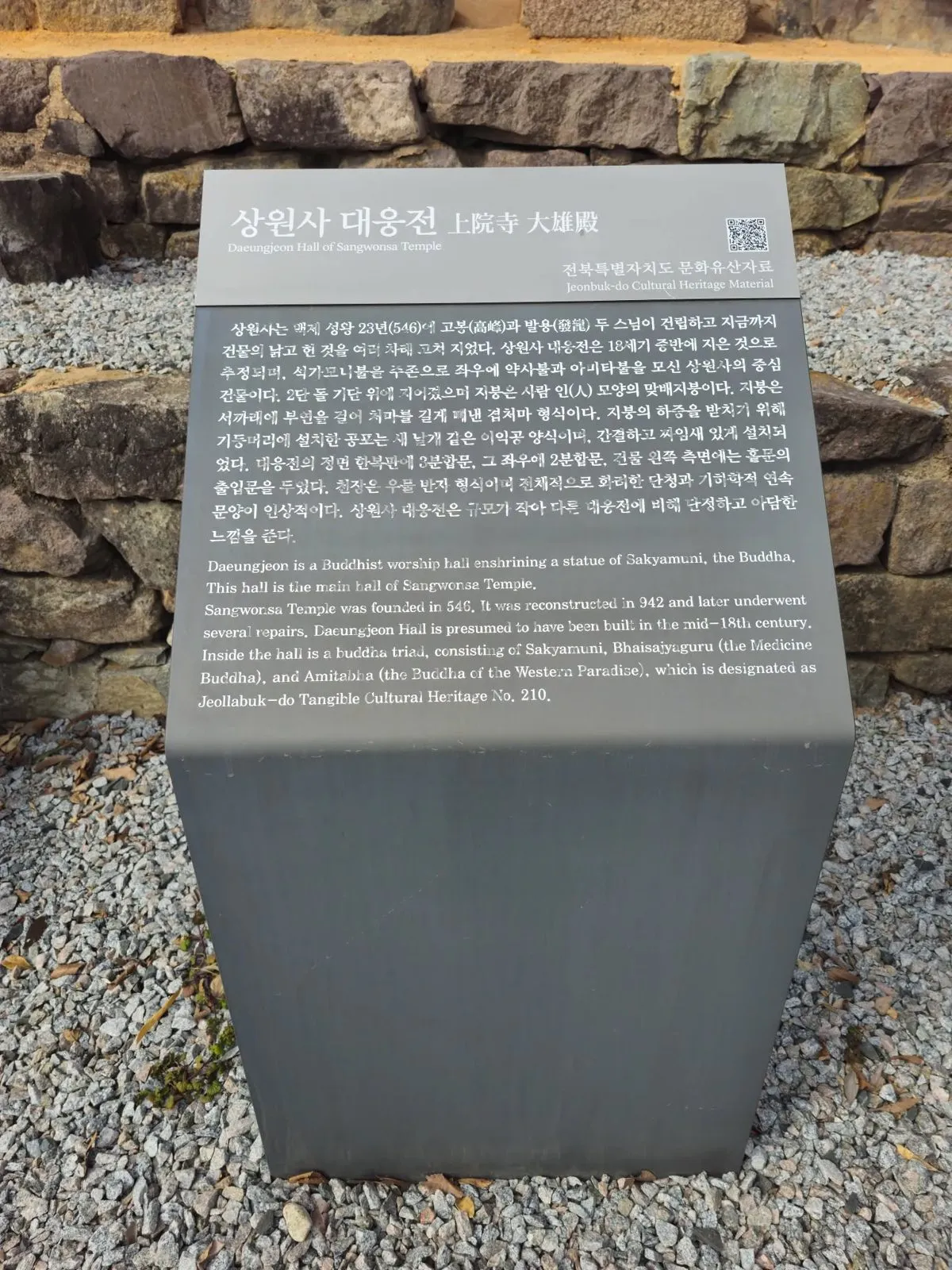 The board in front of the main hall, in Korean and English.
The main hall
The hall is small. It stands on a two-tier stone base, and its roof is a gabled one, shaped like the Chinese character for “person” (人), as the Korean text on the board puts it. The board also points out the colourful painted decoration and the repeating geometric patterns, and says that because it’s small, it feels neater and more modest than most main halls. That’s exactly what I liked about it.
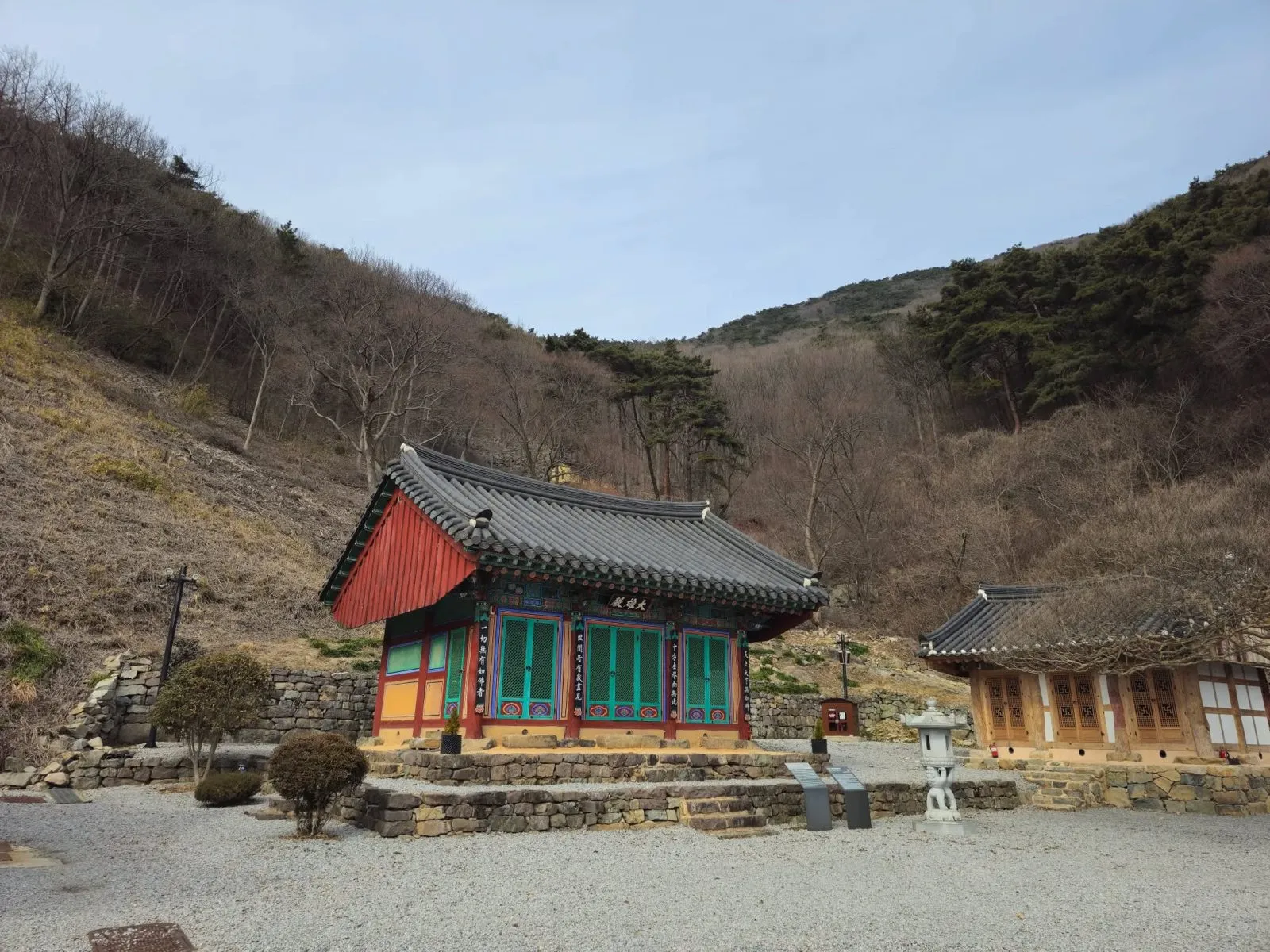 Daeungjeon, the main hall, from the side.
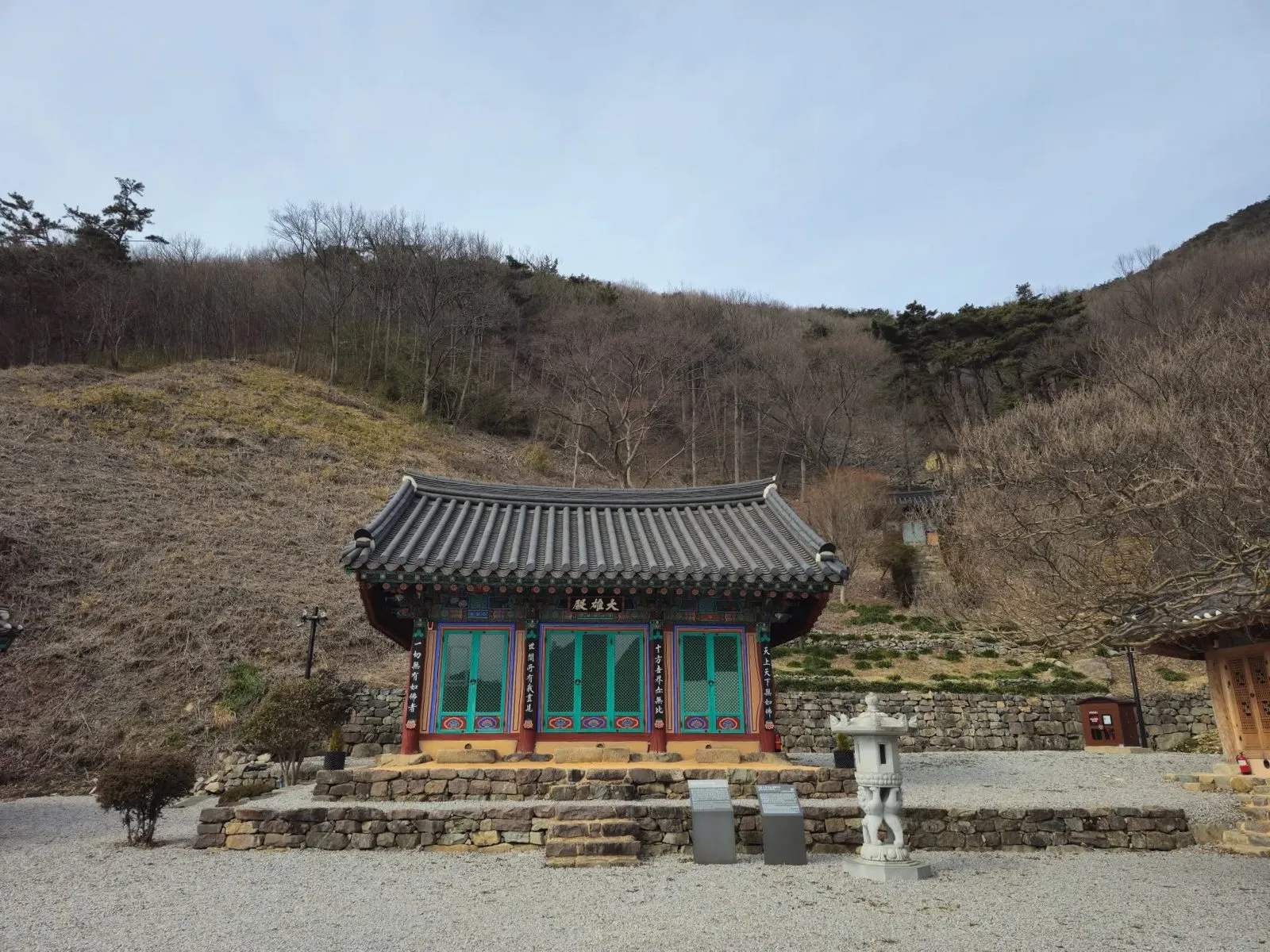 From the front. The plaque reads Daeungjeon (大雄殿).
The Korea Tourism Organization lists the other buildings as Bogwangjeon, Nahanjeon, a bell pavilion and a mountain-spirit shrine (Sansingak). The temple isn’t big, and the mountainside comes right down behind it.
Visiting
| Sangwonsa Temple, Gochang | |
|---|---|
| Entry | We couldn’t confirm whether there’s a fee |
| Open | All year (Korea Tourism Organization) |
| Parking | Available (Korea Tourism Organization) |
| Address | 214 Sangwonsa-gil, Gochang-eup, Gochang |
It’s a working temple, so keep your voice down near the halls.
How to get there
By car: I drove. Be warned: the road up has steep slopes and bends in a few places, and it’s so narrow that meeting a car coming the other way is a real problem. If you’re not a confident driver, I’d skip it.
On foot: the Korea Tourism Organization lists a Bangjangsan hiking route from Gochang town that passes Sangwonsa on its way up Bangjangsan, about 1 hour 20 minutes one way. I didn’t hike it. It also says mountain trails in Korea can be closed for wildfire prevention in spring (2 March to 30 April) and autumn (1 November to 15 December), so check before you go.
By bus: we couldn’t confirm bus details. Check the live route in Naver Map by pasting the Korean name, 고창 상원사.
How to check buses in English: install Naver Map and switch it to English in its settings. When I checked it in October 2026, the English version showed bus routes, stop names and live arrival times (minutes and stops away) in English. Google Maps also gives public transport directions in Korea, but as of late September 2026 it still had no turn-by-turn walking or driving navigation here. Stuck? Call the Korea Travel Hotline: dial 02-1330 from a Korean mobile phone (+82-2-1330 from abroad). It has English-speaking staff. More in our guide to taking buses in Korea in English.
Tips
- Mind the road. Steep slopes and bends in places, and narrow enough that meeting an oncoming car is a problem. Not for nervous drivers.
- Read the English board. The one in front of the main hall has an English text.
- Look inside. If the doors are open, the paintwork and the Buddhist paintings are worth a look.
- Don’t confuse it with Odaesan. Search “Sangwonsa Gochang”, not just “Sangwonsa”.
Who it’s for
Likely to suit (estimate): people road-tripping round Gochang, anyone who likes small, quiet temples more than big busy ones, and confident drivers.
Sources
The Daeungjeon information board, photographed on my visit (the founding in 546 by Gobong and Balyong, the reconstruction in 942, the hall’s date, base, roof and decoration, the triad and its designation, the hall’s heritage status), and the Korea Tourism Organization’s listings for Sangwonsa (location at the foot of Bangjangsan in Wolgok-ri, branch temple of Seonunsa, the buildings, open all year, parking, the address) and for Bangjangsan (the hiking route past Sangwonsa and its time, the seasonal trail closures). The impressions and the photos are from my own visit.