Home / Jeolla / Seongpungsa Temple Site Pagoda, Yeongam
Seongpungsa pagoda, Yeongam: a Korean stone pagoda dated to 1009 by a record found inside
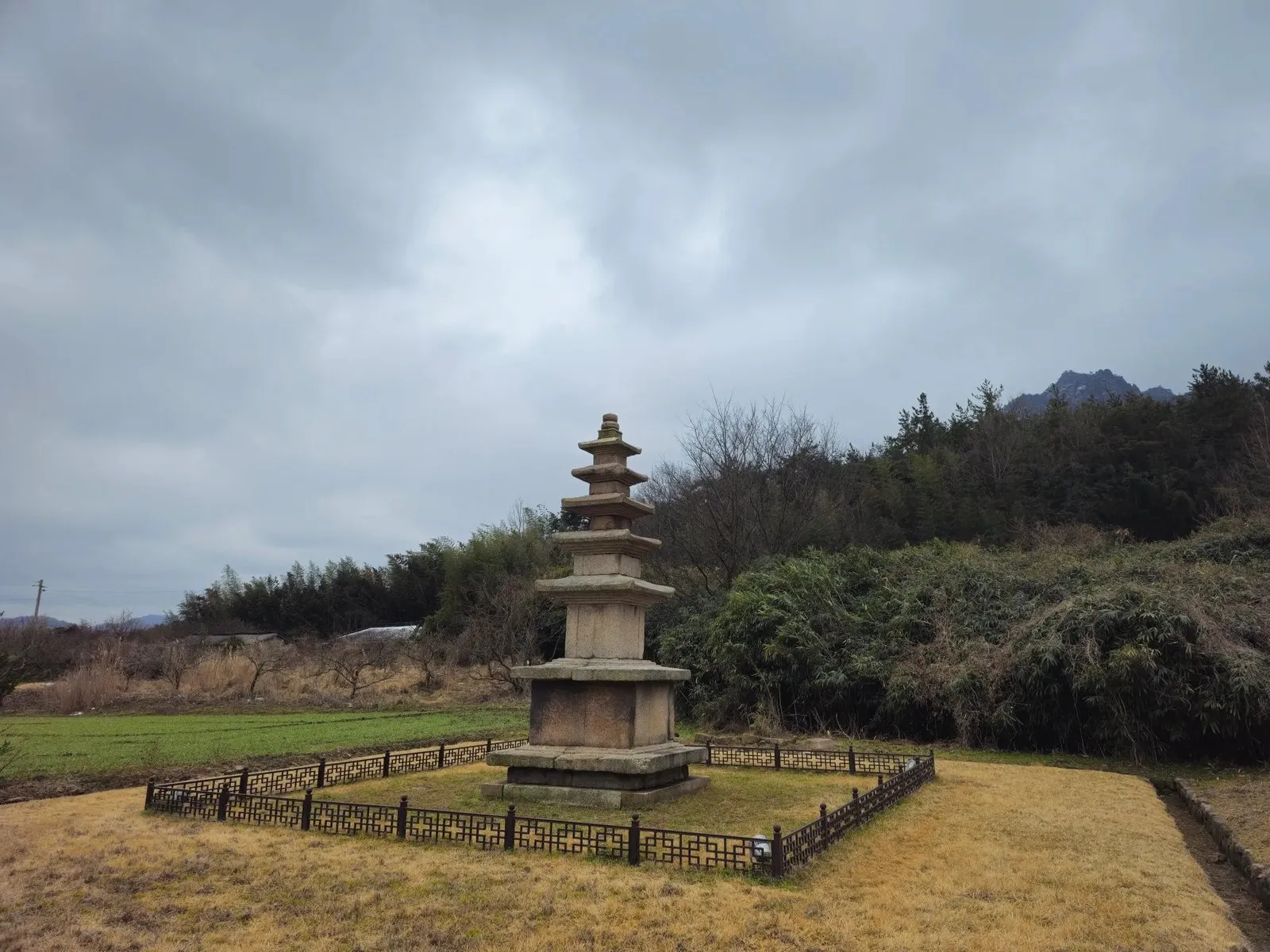
A five-storey Goryeo stone pagoda in a field in Yeongam, South Jeolla: a national Treasure dated to 1009 by a record found inside when it was rebuilt in 1986. My visit in February.
- Getting there
- By car: search the Korean name in Naver Map. By bus: check the live route in Naver Map.
- Cost
- We couldn't find official visitor information for this site.
- Time needed
- About 20 minutes (estimate).
- Best time
- I went on a cloudy day in February.
Tap any Korean name on this page to hear it. Prefer Naver Map? In the app (set to English), search Seongpungsa Temple Site Five-story Stone Pagoda Yeongam, or paste the Korean name:영암 성풍사지 오층석탑
Short version: The five-storey stone pagoda at the Seongpungsa temple site (영암 성풍사지 오층석탑) stands on its own in a fenced patch of grass in Yeongam-eup, South Jeolla. It’s a national Treasure from the Goryeo period. When it was taken apart and rebuilt in 1986, a record was found inside that dates it to 1009. I went on Wednesday 12 February 2025, a cloudy day.
Last checked: 19 November 2026. The pagoda’s structure, the 1986 rebuild, the record and the date come from the official heritage board at the site, which I photographed, and from the Encyclopedia of Korean Culture. We couldn’t find a Korea Tourism Organization listing with visiting information (hours, entry, parking), so none is given here. The impressions and the photos are from my own visit. Tell me if anything has changed.
What it is
A pagoda (탑) is a Buddhist monument for keeping relics of the Buddha, the board at the site explains. Seongpungsa was a temple, and the pagoda stands on its site. The board gives it as Treasure No. 1118.
This one has five storeys of body stones and roof stones on a two-tier base. The board says each storey’s body and roof are each cut from a single stone, with corner pillars carved on the body stones, and the roof stones have four tiers of supports underneath on the first to third storeys and three on the fourth and fifth.
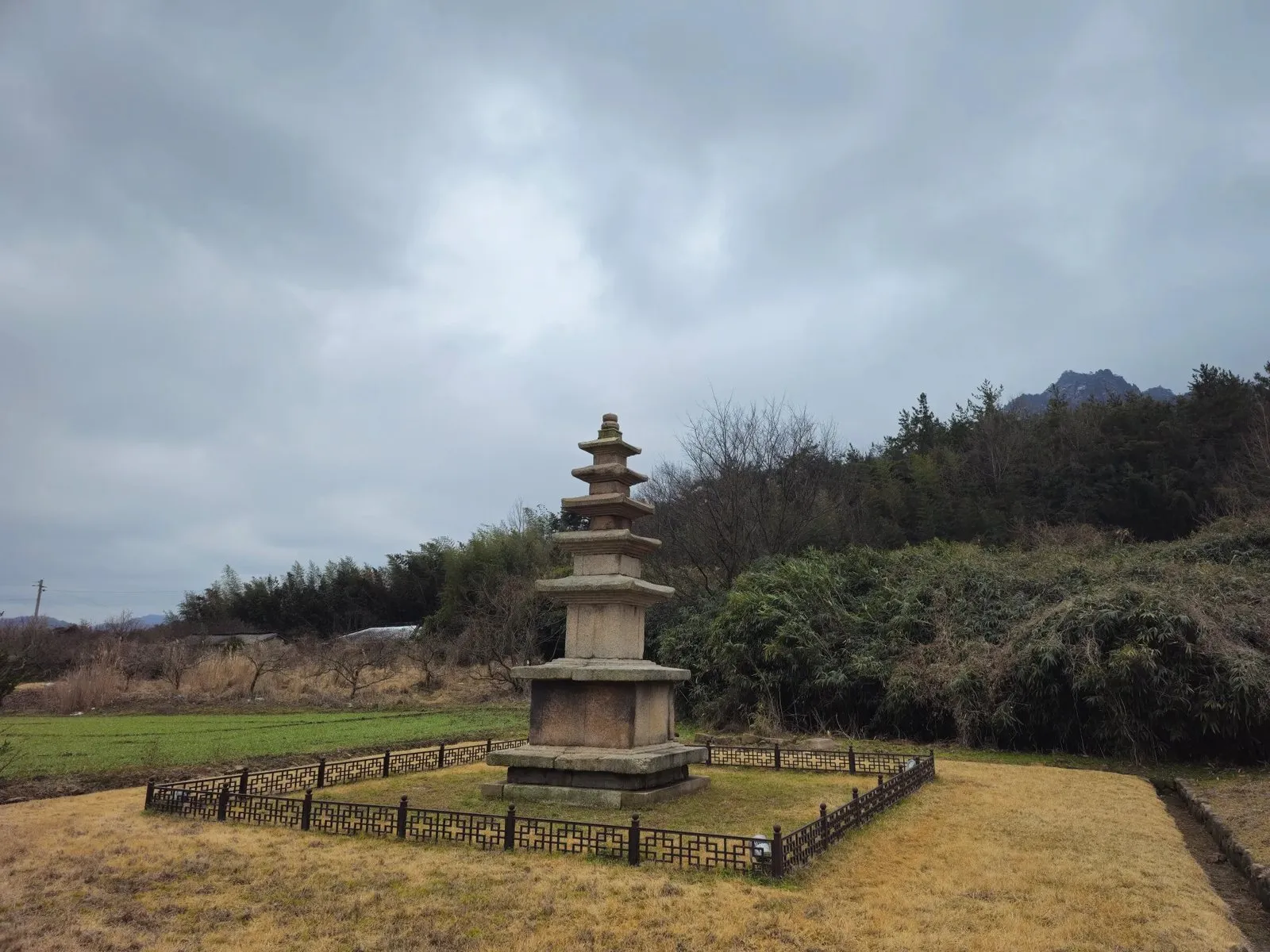 The pagoda from the side, with the hills behind.
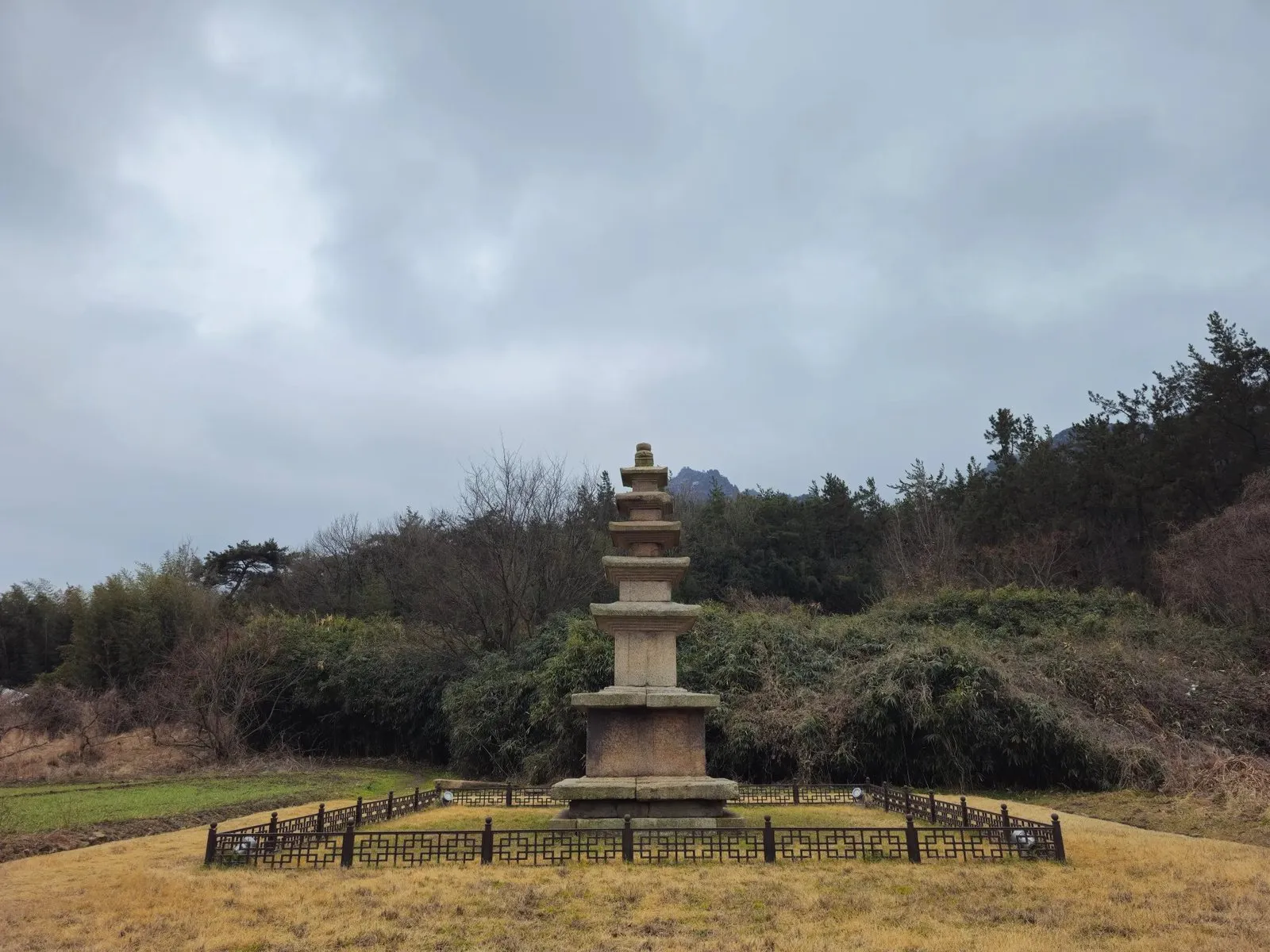 Straight on: the two-tier base and five storeys.
The fine carving and design of each part show the skill of the time.
The date inside
The pagoda had fallen down and lay in pieces for a long time, and Yeongam County rebuilt it in 1986, the Encyclopedia of Korean Culture says. Some of the upper stones are restorations. While it was apart, a tapji was found: a written record of why and when the pagoda was put up. It names the 27th year of the Tonghwa era, which the board and the encyclopedia both give as 1009, the 12th year of King Mokjong of Goryeo.
A Goryeo-era treasure, and what makes it special is that you can know exactly when it was made. The encyclopedia notes that few Korean stone pagodas can be dated this precisely, which makes it a reference point for studying Goryeo pagodas.
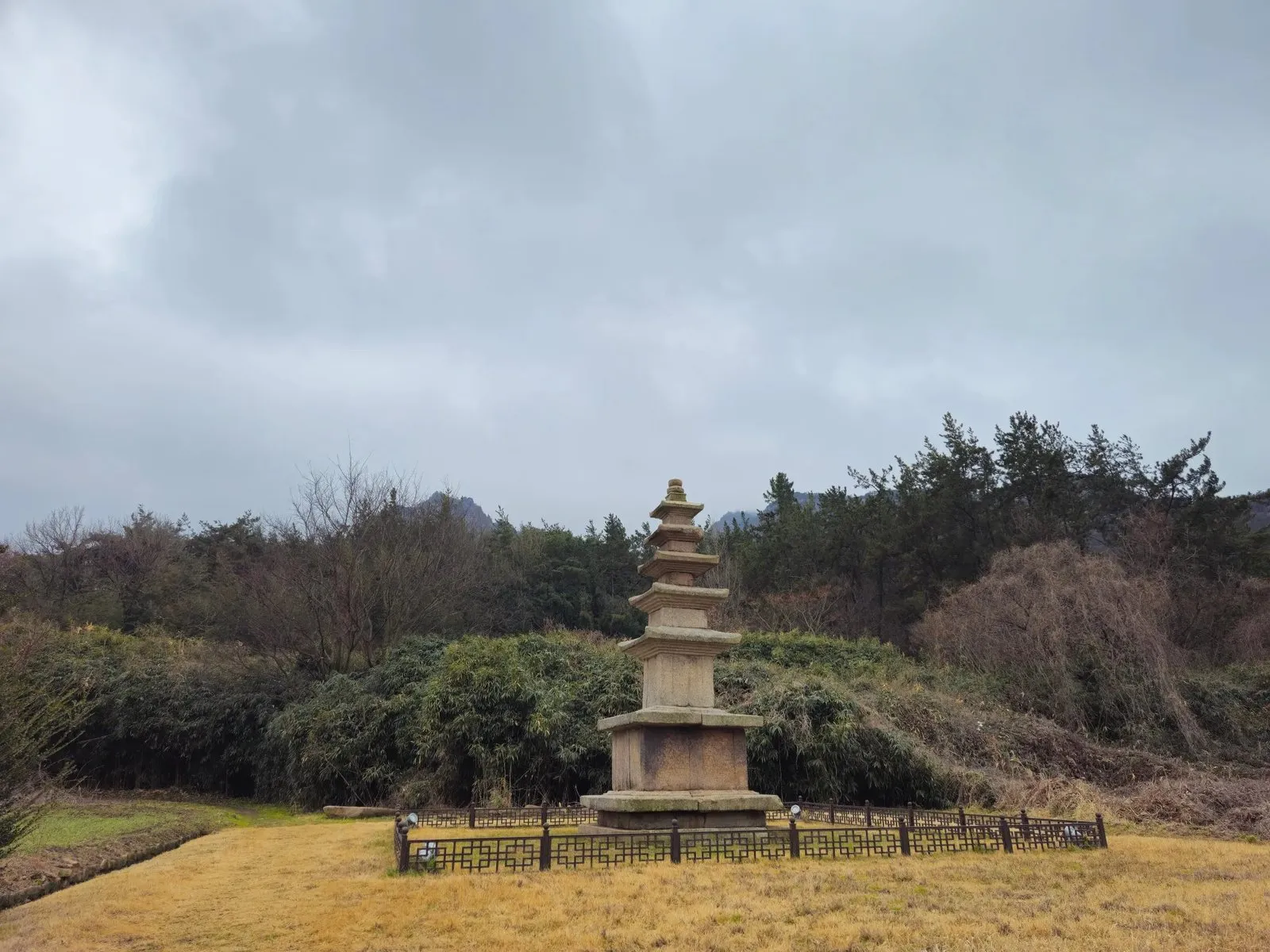 The pagoda stands alone in the field.
Getting to the pagoda
You reach the raised site over stone steps and a slab bridge. There’s an information board in Korean and English on the site, near the pagoda.
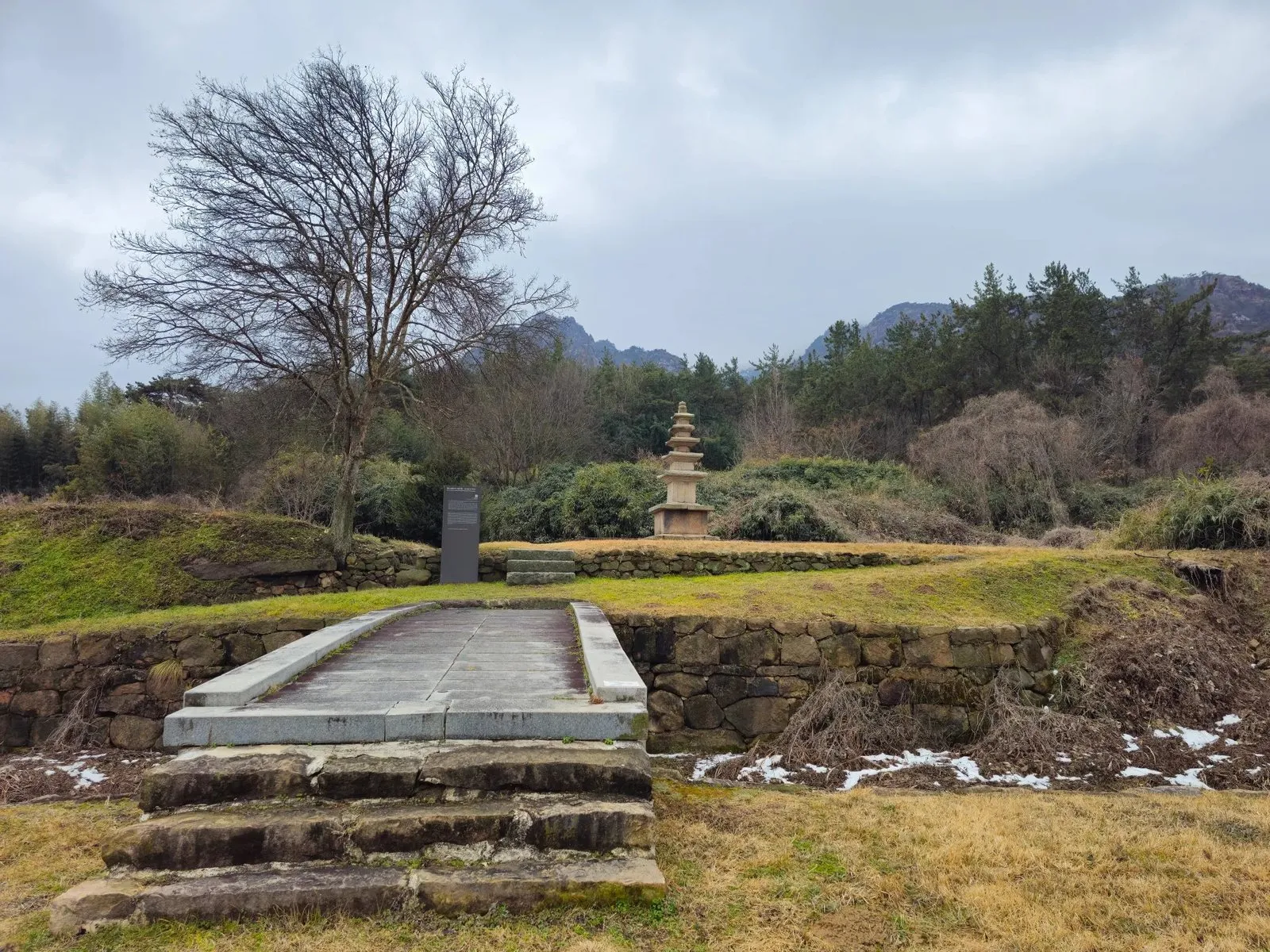 The way in, over a stone slab bridge.
The weather wasn’t great, but it had its own atmosphere ^^
Visiting
| Seongpungsa Temple Site Pagoda | |
|---|---|
| Entry / hours | We couldn’t find official visitor information. |
| Parking | We couldn’t confirm parking from an official source. |
| Address | 533-1 Yongheung-ri, Yeongam-eup, Yeongam-gun (heritage board at the site). Official addresses now end “Jeonnam-Gwangju Special Metropolitan City”: Gwangju merged with South Jeolla on 1 July 2026. |
How to get there
By car: search the Korean name, 영암 성풍사지 오층석탑, in Naver Map.
By bus: we haven’t listed bus details here. Check the live route in Naver Map.
How to check buses in English: install Naver Map and switch it to English in its settings. When I checked it in October 2026, the English version showed bus routes, stop names and live arrival times (minutes and stops away) in English. Google Maps also gives public transport directions in Korea, but as of late September 2026 it still had no turn-by-turn walking or driving navigation here. Stuck? Call the Korea Travel Hotline: dial 02-1330 from a Korean mobile phone (+82-2-1330 from abroad). It has English-speaking staff. More in our guide to taking buses in Korea in English.
Tips
- Read the board. The heritage board on the site, near the pagoda, explains it in Korean and English.
Who it’s for
Likely to suit (estimate): people who like Korean history and Buddhist art, and anyone driving through Yeongam who wants a quiet stop.
Sources
The official heritage board at the site, which I photographed (Treasure No. 1118, the address, the two-tier base and five storeys, single-stone bodies and roofs, the roof-support tiers, stones restored, the tapji found in the 1986 rebuild and its Tonghwa 27 / 1009 date); the Encyclopedia of Korean Culture (Academy of Korean Studies: fallen for a long time, rebuilt by Yeongam County in 1986, the 1009 date, few precisely dated pagodas). The impressions and the photos are from my own visit.