Home / Jeolla / Old Higashi Honganji (Dongbonwonsa), Mokpo
Old Higashi Honganji, Mokpo: Japanese temple in Korea turned church, now a free culture centre
The former Mokpo branch of Higashi Honganji (Dongbonwonsa): a 1930s Japanese Buddhist hall built in stone, a church from 1957 to 2007, now the free Ogeori Culture Center in Mokpo's old town.
- Getting there
- In Mokpo's old town. Parking available (Korea Tourism Organization). Search the Korean name in Naver Map for the live bus route.
- Cost
- Free (Korea Tourism Organization).
- Time needed
- About 30 minutes (estimate).
- Best time
- 09:00–18:00. Closed Mondays and public holidays (Korea Tourism Organization).
Tap any Korean name on this page to hear it. Prefer Naver Map? In the app (set to English), search Ogeori Culture Center Mokpo, or paste the Korean name:오거리문화센터
Short version: The old Mokpo branch of Higashi Honganji (구 동본원사 목포별원, “Dongbonwonsa” in Korean) is a Japanese Buddhist temple hall in Mokpo’s old town, built of stone in the 1930s. After Korea’s liberation it became a school’s first home, then Mokpo Central Church from 1957 to 2007, and it is now the Ogeori Culture Center (오거리문화센터), an exhibition and event space. Entry is free. My photos are from around February 2025.
Last checked: 19 November 2026. The building’s history comes from the official heritage board in front of it, which I photographed, and from the Korea Tourism Organization (KTO) listing, which also gives the hours, closing days, free entry, parking and the address. The impressions and the photos are from my own visit. I can’t confirm the exact day I went: the photos were posted on 19 February 2025. Tell me if anything has changed.
What it is
The KTO says this was the first Japanese Buddhist temple in Mokpo, a branch of the Higashi Honganji (Shinshū Ōtani-ha) temple, and that it was set up in April 1898. The KTO adds that the temple is said to have bought the present site in 1904 and finished a single-storey wooden temple here in November 1905.
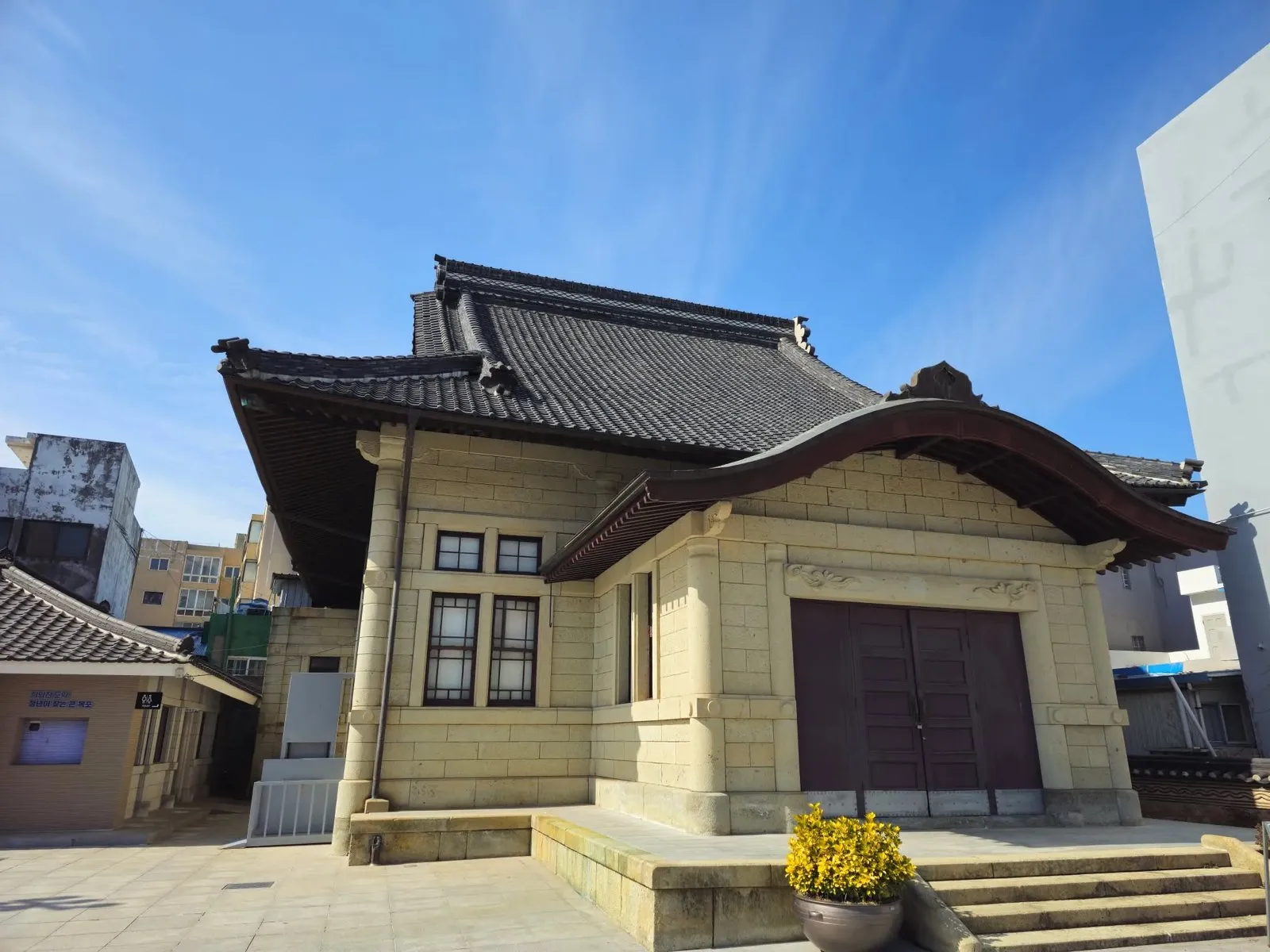
The hall you see today is newer. The heritage board says it was built in the 1930s as the main hall of the temple, in stone, but in the style of a Japanese wooden Buddhist hall, which it calls a rare look. The board says the roof over the entrance is a Japanese-style gable; you can see its curve in the photos.
From the Japanese-style tiled roof to the details of the stone building, one look and you really get a Japanese feel.
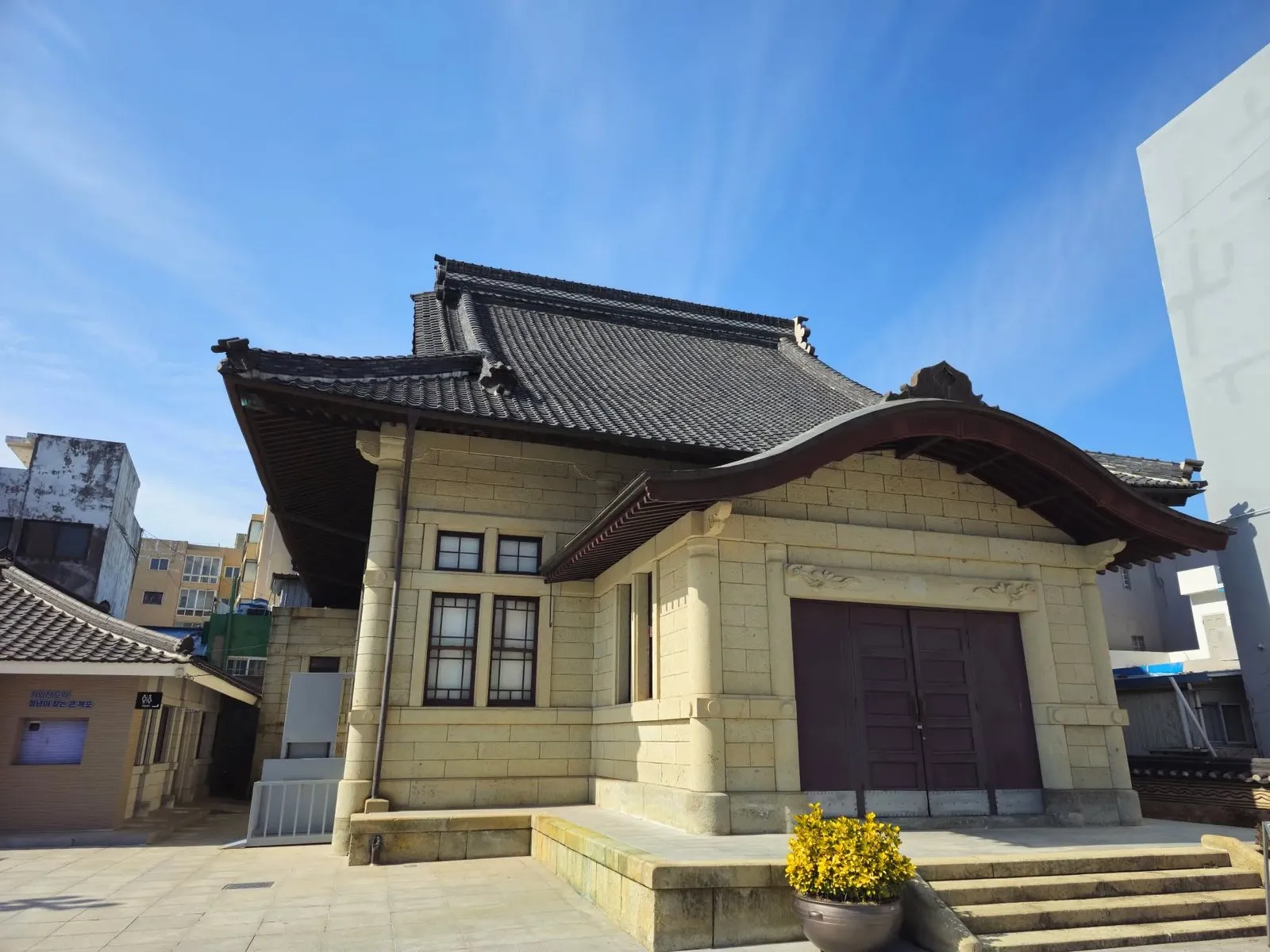 The entrance gable, from the side.
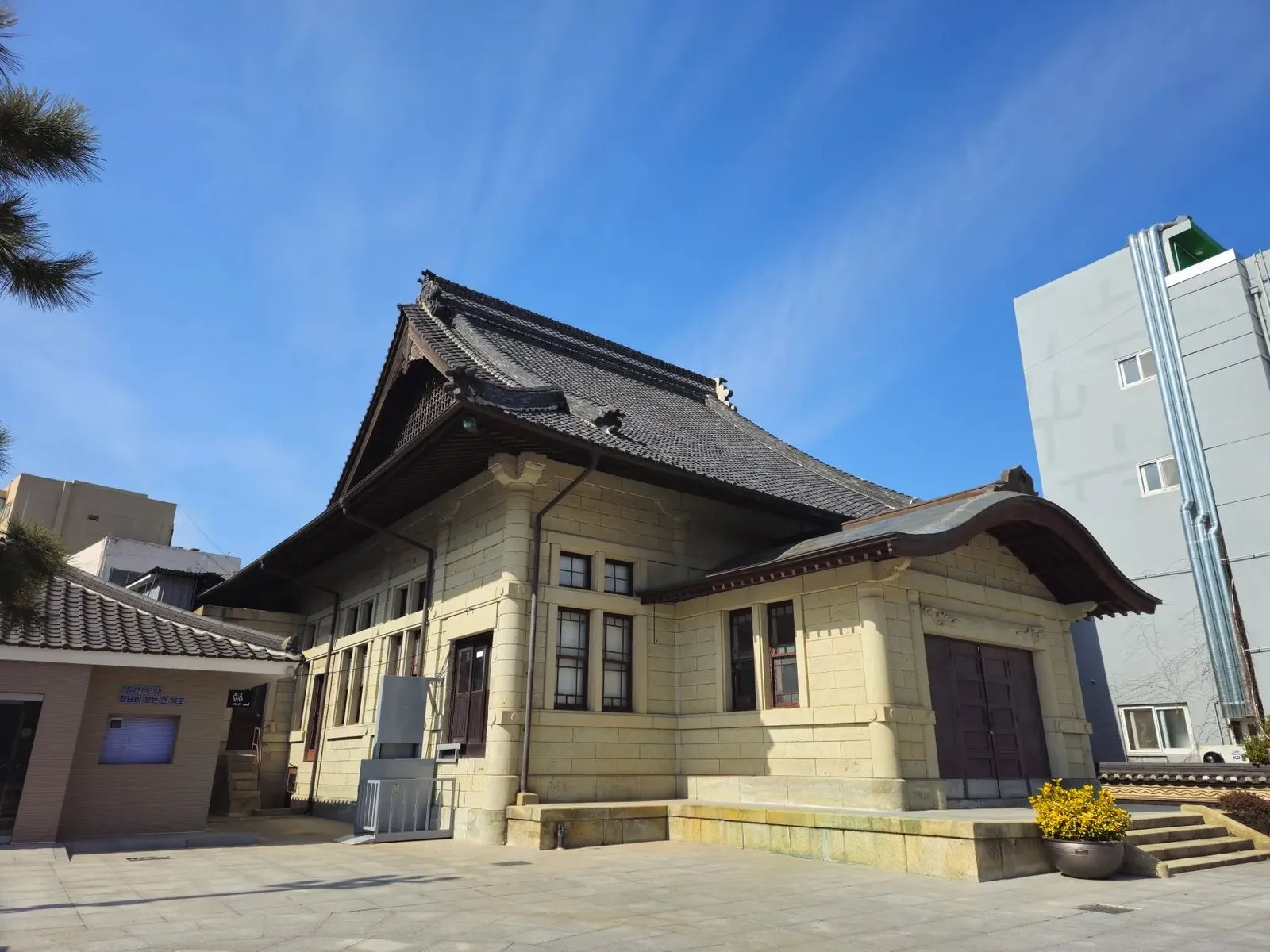 The long side with its tall windows.
Temple, church, culture centre
According to the heritage board:
- After liberation (1945), the temple was looked after by Jeonggwangsa, a Korean temple, and it became the starting point of Jeonggwang Middle School, a Buddhist school founded in 1946.
- From 1957 to 2007 it was used as Mokpo Central Church (목포중앙교회).
- During the May 18 Democratic Movement in 1980 and the June Democratic Struggle in 1987, it was a symbolic place and a scene of the fight for democracy.
- It was once close to being demolished to make room for a car park, but civic groups and others saved it.
- Today it is the Ogeori Culture Center, used for exhibitions and cultural events.
The KTO adds that Mokpo City bought the building, that it was registered as National Registered Cultural Heritage No. 340 on 3 July 2007, and that it opened as the Ogeori Culture Center on 19 January 2010 after the inside was refitted and a car park was added.
A temple, then a church, then a culture centre: is there any other building with a history like this?
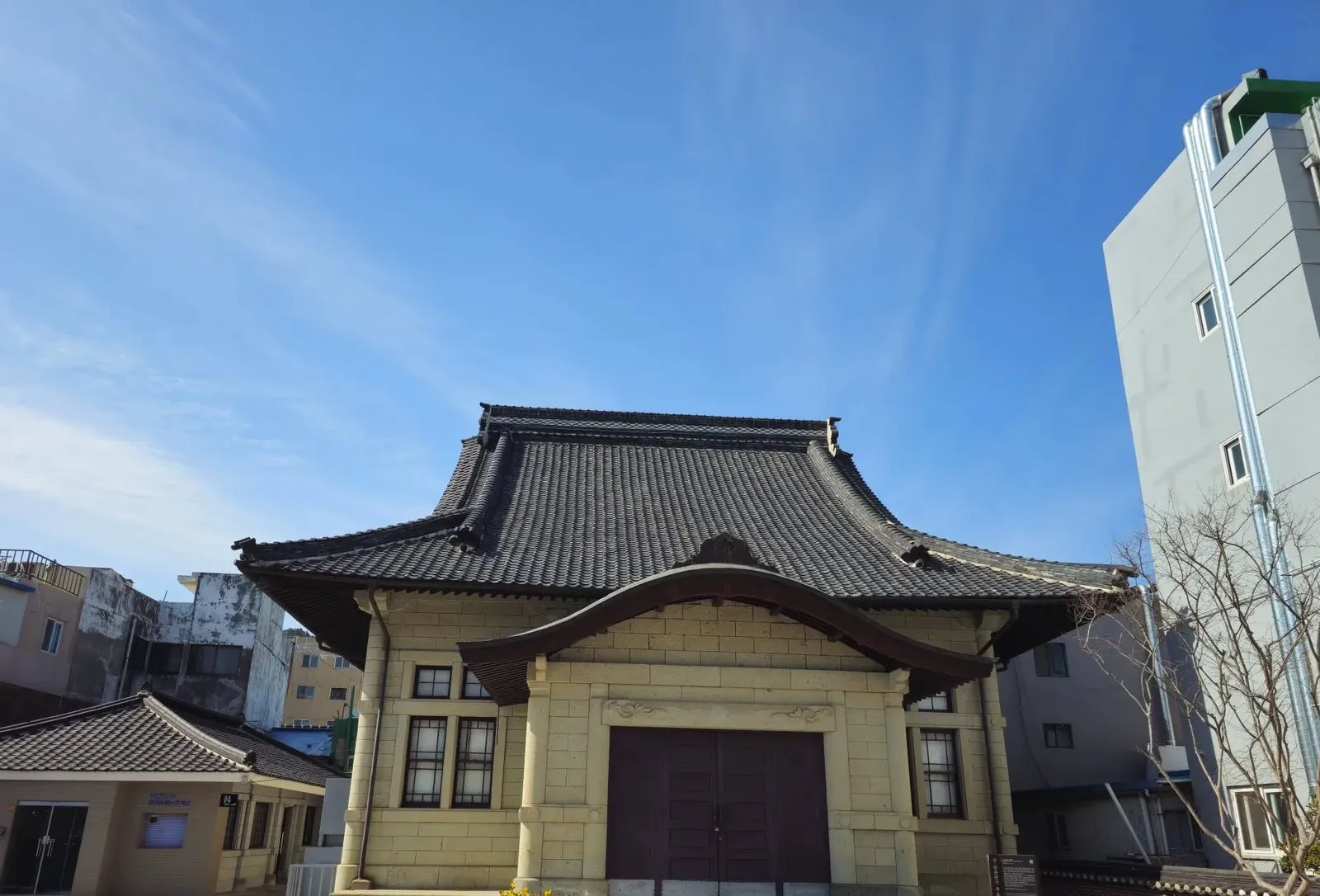 The front of the hall.
Visiting
| Old Higashi Honganji (Ogeori Culture Center) | |
|---|---|
| Entry | Free (KTO) |
| Hours | 09:00–18:00 (KTO) |
| Closed | Mondays and public holidays (KTO) |
| Parking | Available (KTO) |
| Address | 5 Yeongsan-ro 75beon-gil, Mokpo (KTO). Official addresses now end “Jeonnam-Gwangju Special Metropolitan City”: Gwangju merged with South Jeolla on 1 July 2026. |
What’s on inside changes with each exhibition or event, so we haven’t described the inside here.
How to get there
By car: the KTO lists parking. Search the Korean name, 오거리문화센터, in Naver Map.
By bus: we haven’t listed bus details here. Check the live route in Naver Map.
How to check buses in English: install Naver Map and switch it to English in its settings. When I checked it in October 2026, the English version showed bus routes, stop names and live arrival times (minutes and stops away) in English. Google Maps also gives public transport directions in Korea, but as of late September 2026 it still had no turn-by-turn walking or driving navigation here. Stuck? Call the Korea Travel Hotline: dial 02-1330 from a Korean mobile phone (+82-2-1330 from abroad). It has English-speaking staff. More in our guide to taking buses in Korea in English.
Tips
- Not on a Monday. The KTO lists it as closed on Mondays and public holidays.
- Read the board. The heritage board by the front calls the stone-built Japanese style “a rare appearance” and explains the history in Korean and English.
- Staying over? I’ve stayed at the Caltonhill Hotel in Mokpo.
Who it’s for
Likely to suit (estimate): people interested in modern Korean history and the Japanese colonial era, architecture fans, and anyone walking Mokpo’s old town.
Sources
The official heritage board in front of the hall, which I photographed (the 1930s stone hall in Japanese style, the Japanese-style entrance gable, Jeonggwangsa and the 1946 school, the church from 1957 to 2007, the 1980 and 1987 democracy movements, the near-demolition and the culture centre today); the Korea Tourism Organization’s Korean listing (updated November 2026: first Japanese temple in Mokpo, April 1898, the 1904 site and 1905 wooden temple, purchase by the city, registration on 3 July 2007 as No. 340, the culture centre opening on 19 January 2010, hours, closing days, free entry, parking and the address). The impressions and the photos are from my own visit.