Home / Chungcheong / Janggoksa Temple, Cheongyang
Janggoksa Temple, Cheongyang: a Korean temple with two main halls
A mountain temple on Chilgapsan in Cheongyang, said to date from 850, with an upper and a lower main hall, each with a Medicine Buddha, and three National Treasures. Free entry.
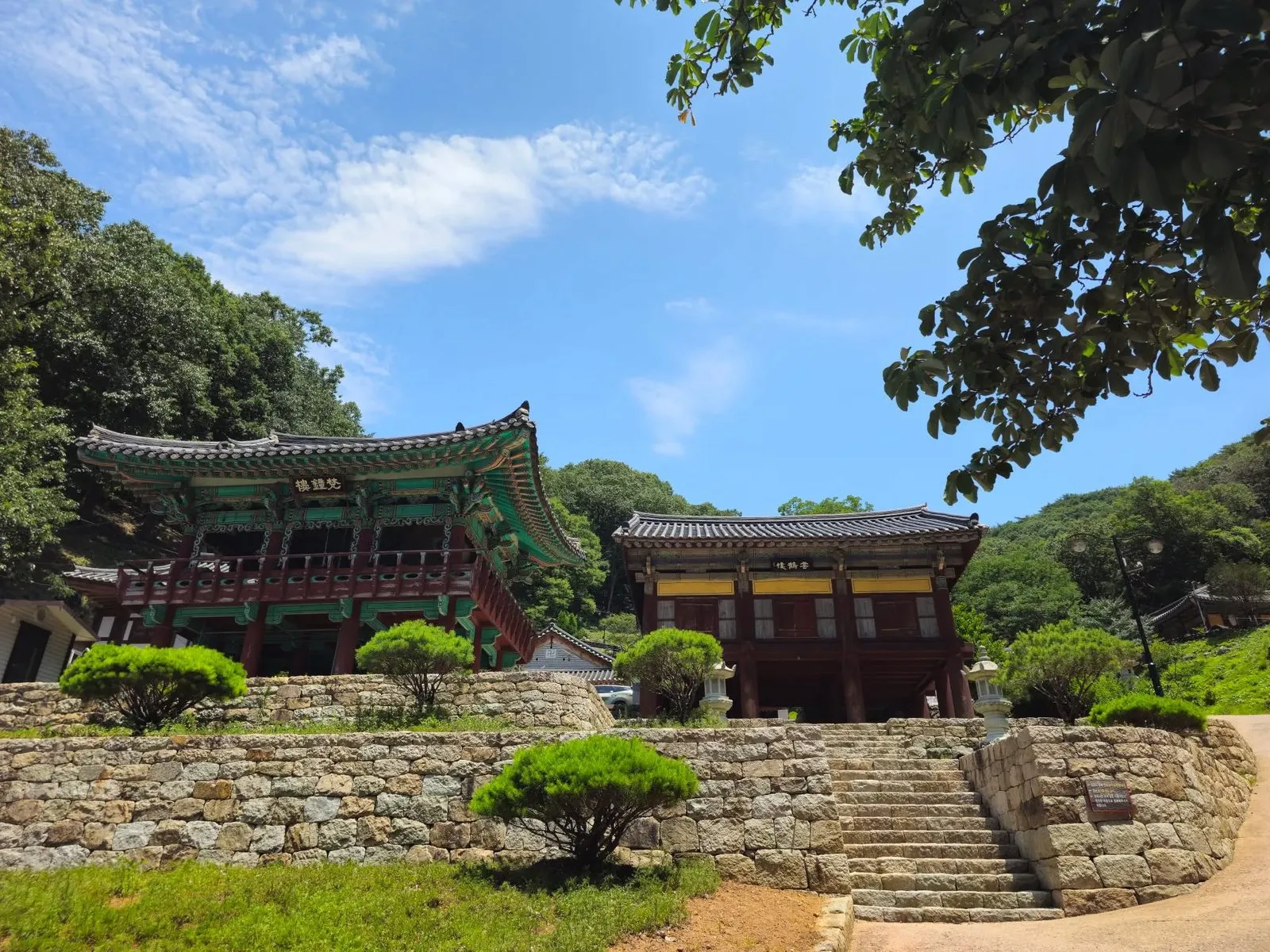
- Getting there
- By car: the Korea Tourism Organization lists parking. By bus: we couldn't confirm the bus details, so check the live route in Naver Map.
- Cost
- Free (Korea Tourism Organization).
- Time needed
- About 1 hour (estimate)
- Best time
- Autumn for the leaves (my guess, I went in summer) or spring for the cherry-blossom road leading to the temple. The Korea Tourism Organization lists it as open every day.
Tap any Korean name on this page to hear it. Prefer Naver Map? In the app (set to English), search Janggoksa Temple Cheongyang, or paste the Korean name:청양 장곡사
Short version: A mountain temple on the slopes of Chilgapsan in Cheongyang, South Chungcheong, said to have been founded in 850. What makes it unusual is that it has two main halls, an upper and a lower Daeungjeon, and each has a statue of the Medicine Buddha. It holds three National Treasures, and the Korea Tourism Organization lists entry as free. It’s smallish but has its own atmosphere (my view).
Last checked: 13 November 2026. The founding story, the two halls and the Medicine Buddhas come from the temple’s information board, which I photographed and which has an English text, and from Cheongyang County’s English tourism page. The National Treasures come from the board and the Encyclopedia of Korean Culture. Hours, entry, parking and the address come from the Korea Tourism Organization. We couldn’t confirm the bus details. The impressions and the photos are from my own visit. Tell me if anything has changed.
Two main halls
Janggoksa has two main halls, both called Daeungjeon: an upper one and a lower one. Cheongyang County’s English tourism page says such a pair is rarely seen at other temples. The board on site describes each hall:
- The upper Daeungjeon has square bricks on the floor instead of the usual wooden boards.
- The lower Daeungjeon is small, with a gabled roof shaped like the Chinese character for “person” (人), and layered wooden brackets under the eaves.
Each hall has a statue of the Medicine Buddha (Bhaisajyaguru). The board says this Buddha is believed to have the power to heal incurable illnesses, and that followers and tourists come from all over the country.
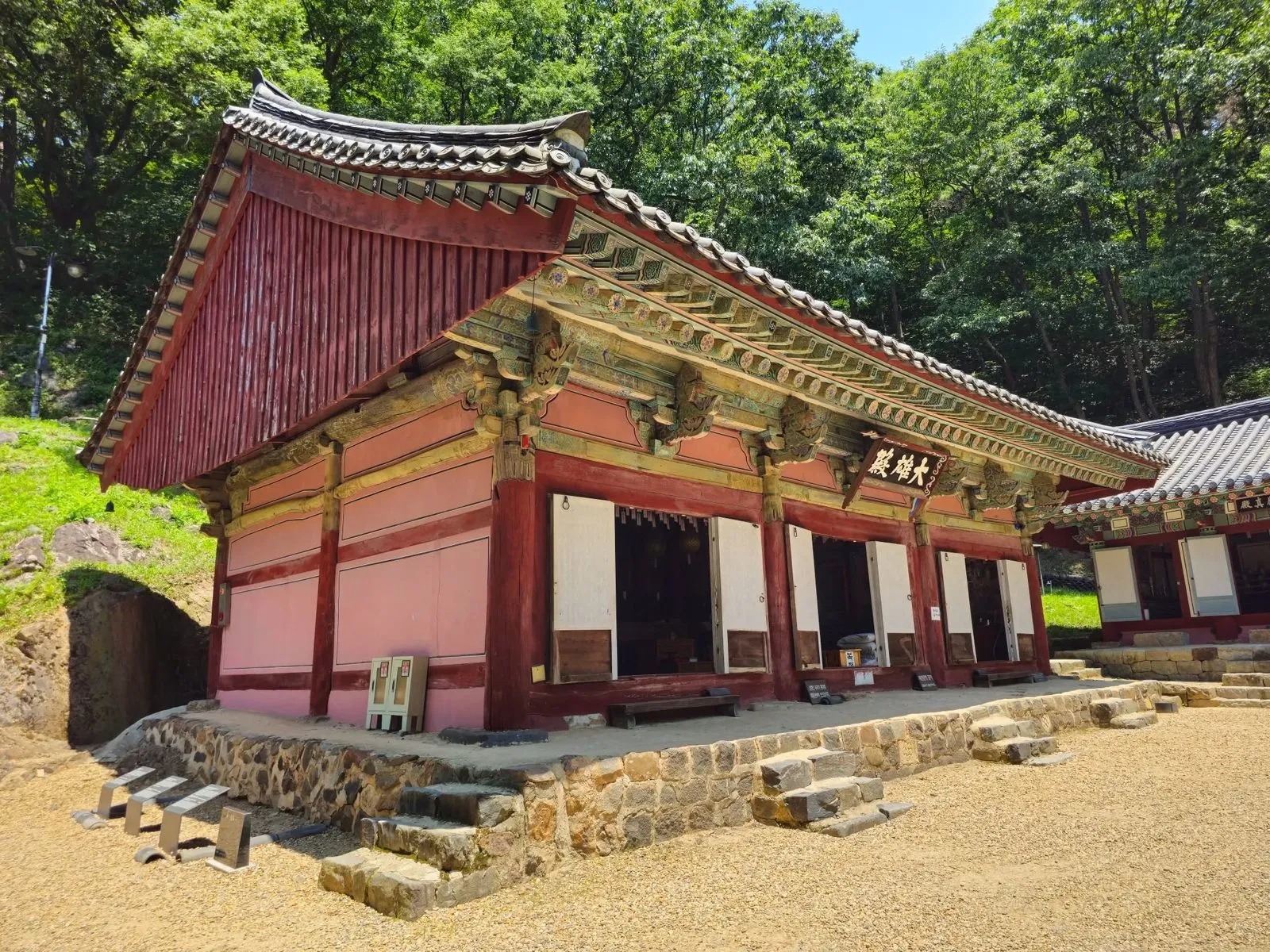 One of the two Daeungjeon halls, up the slope next to the Eungjinjeon hall.
A short history
According to the board, the temple was traditionally founded in 850 by the Seon master Chejing, and few details of its later history are known. The Encyclopedia of Korean Culture describes it as a branch temple of Magoksa, the head temple of the Jogye Order’s 6th district.
The temple holds three National Treasures:
- An iron seated Medicine Buddha with its stone pedestal, in the upper hall.
- A gilt-bronze seated Medicine Buddha in the lower hall. It was a Treasure from 1963 and was raised to a National Treasure in 2022.
- A large hanging painting of the Maitreya Buddha made in 1673.
The Encyclopedia notes that the Seolseondang hall was also made a Treasure in 2026.
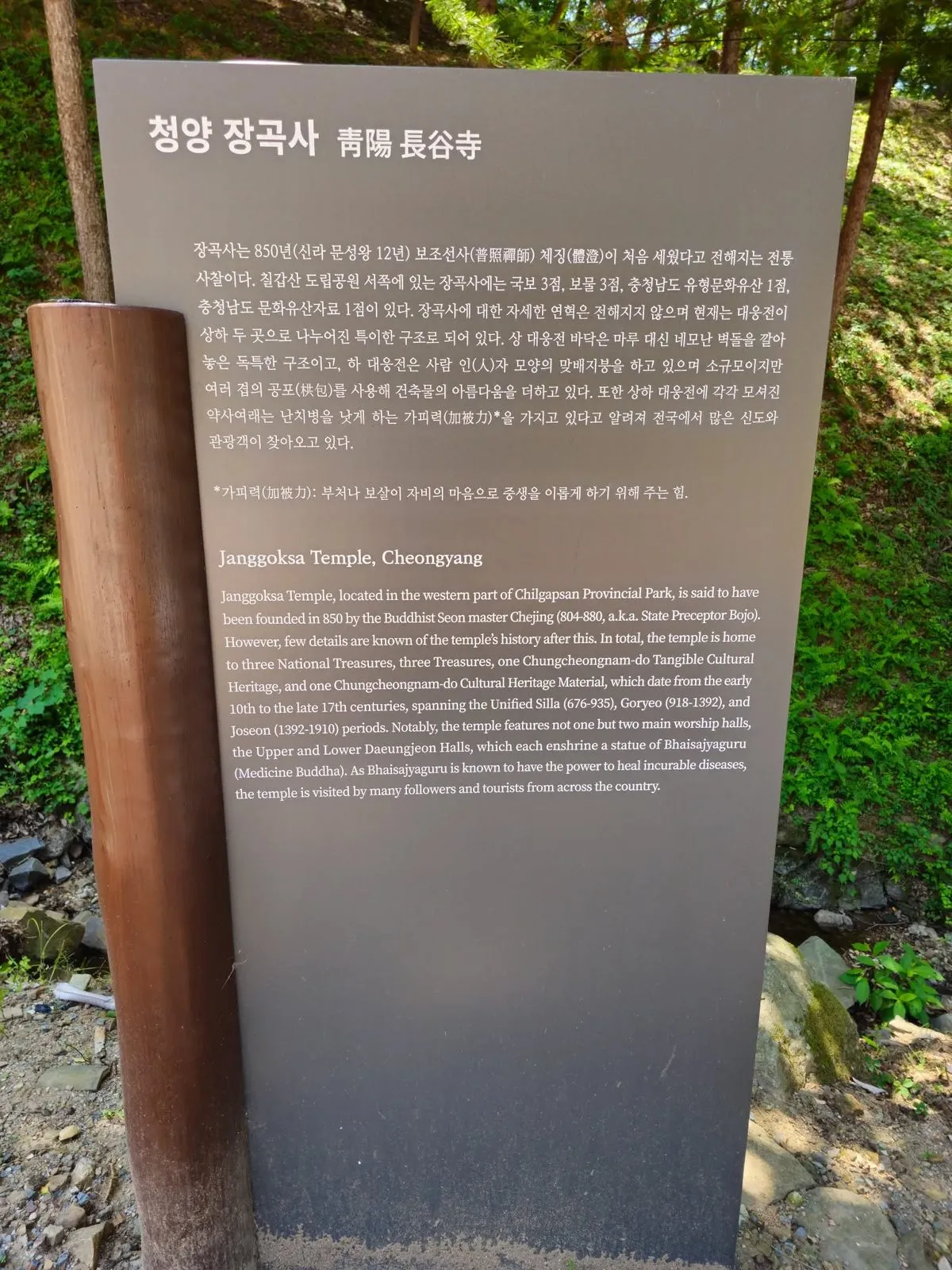 The temple’s information board, with an English text.
Walking around
Stone steps lead up past the bell pavilion and the Unhangnu pavilion to a courtyard. Off the courtyard is the Seolseondang hall, which carries the temple’s name plaque. A signpost there points up the slope to the upper Daeungjeon, the Eungjinjeon, the Samseonggak and the hiking trail, and left to the lower Daeungjeon, the Seolseondang, the Unhangnu and the Jijangjeon. The signpost is in Korean only.
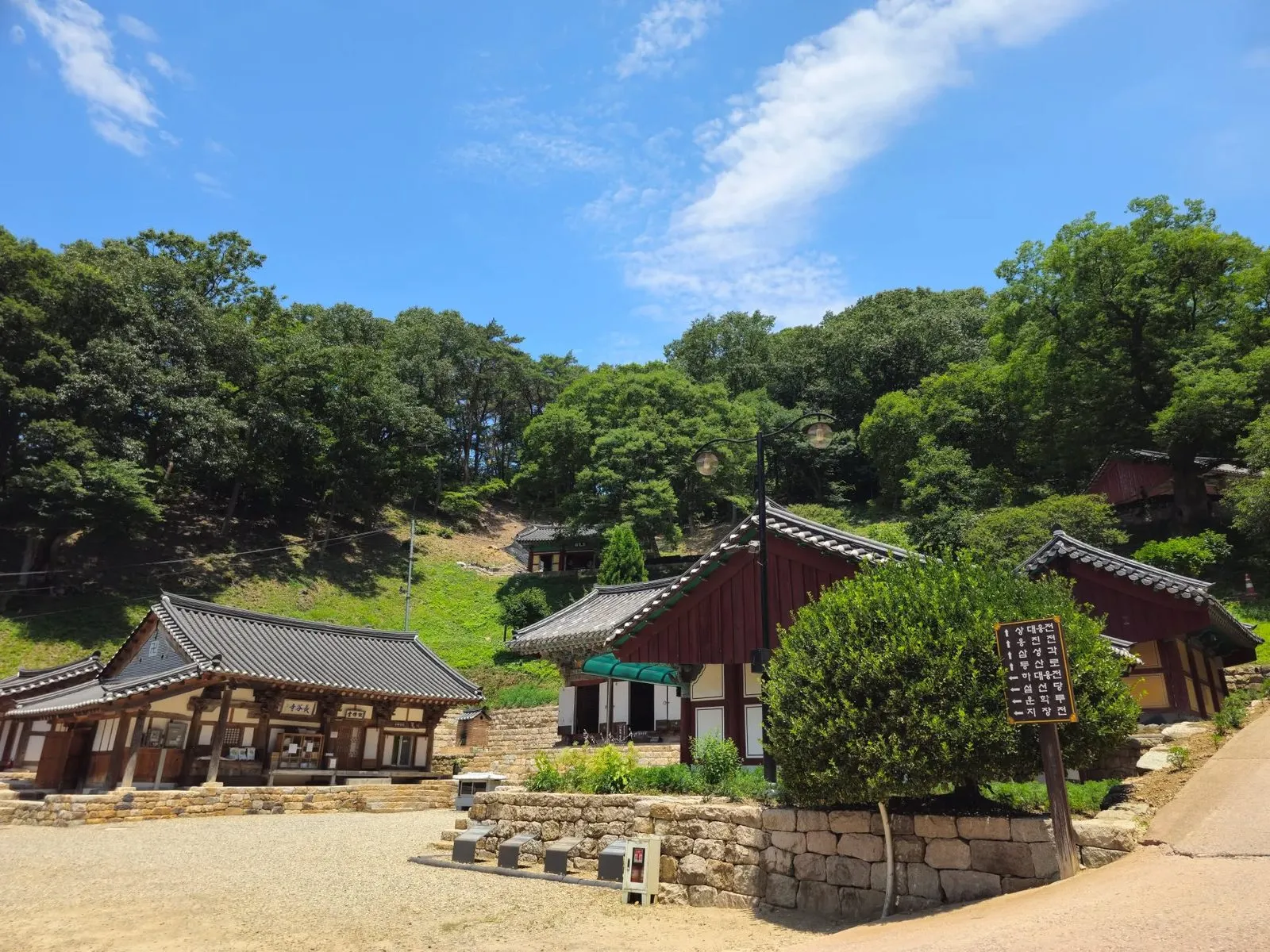 The courtyard, with the Seolseondang on the left and the signpost on the right.
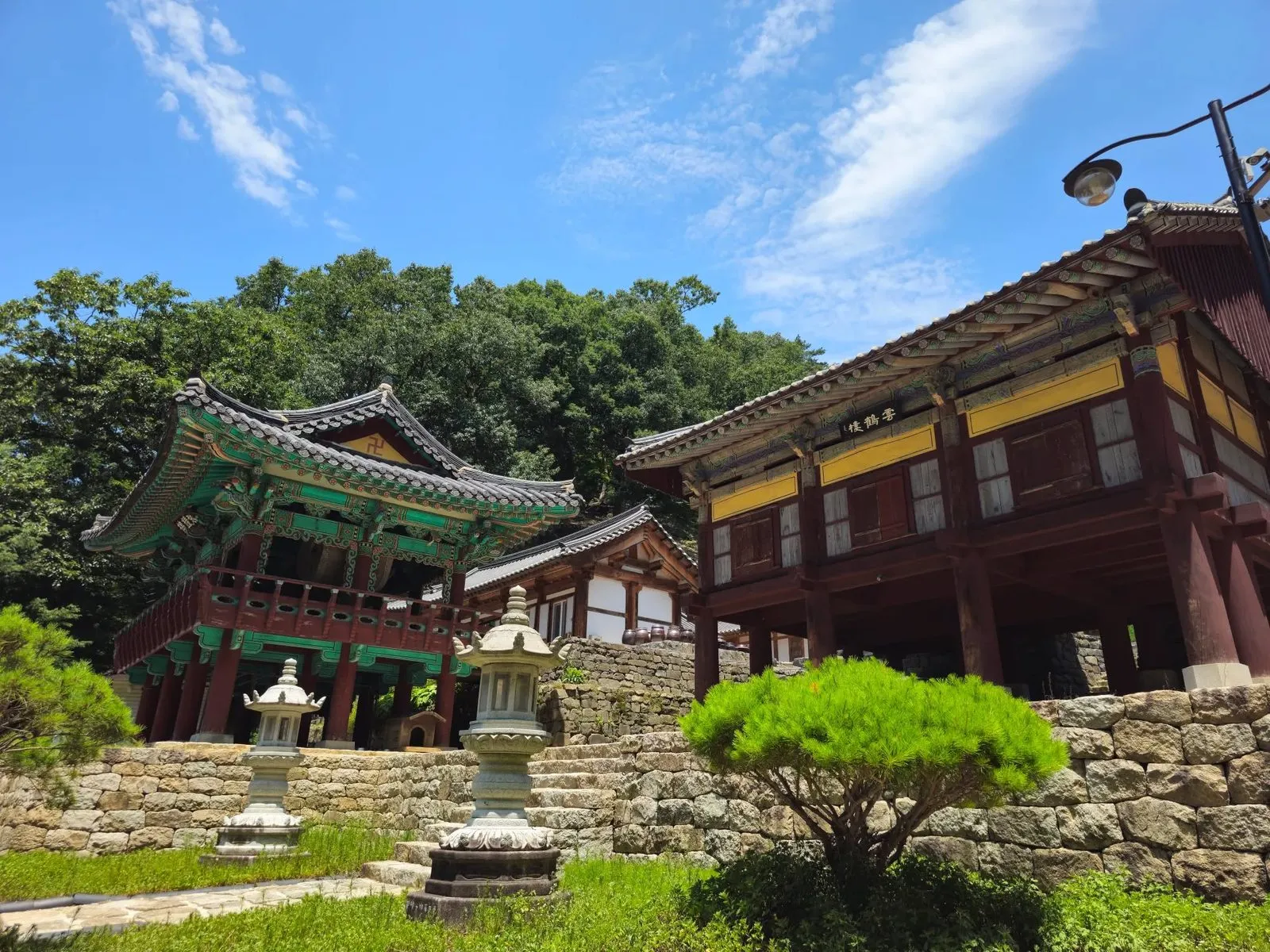 The bell pavilion (left) and the Unhangnu pavilion (right).
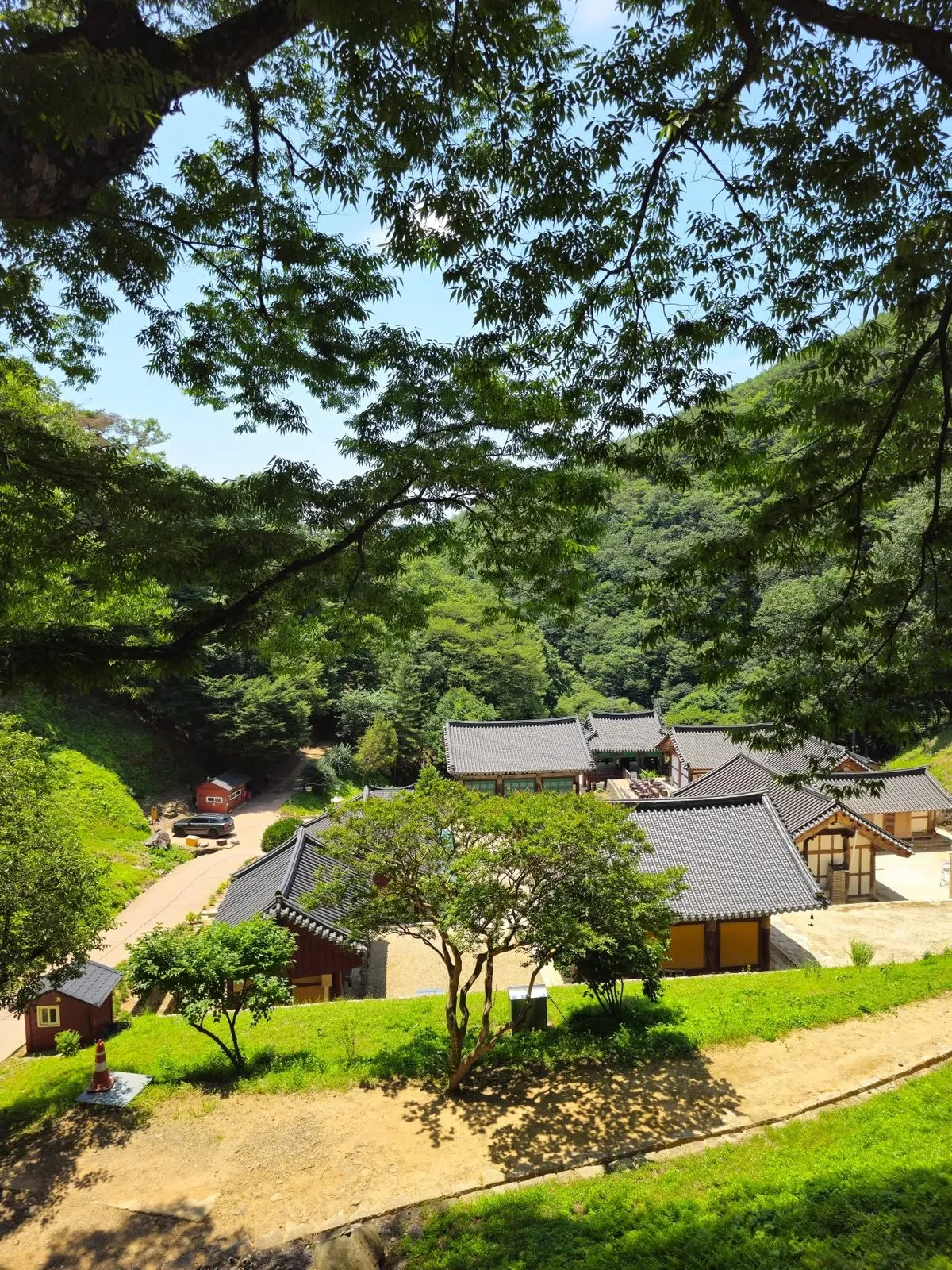 Looking down on the temple from the upper slope.
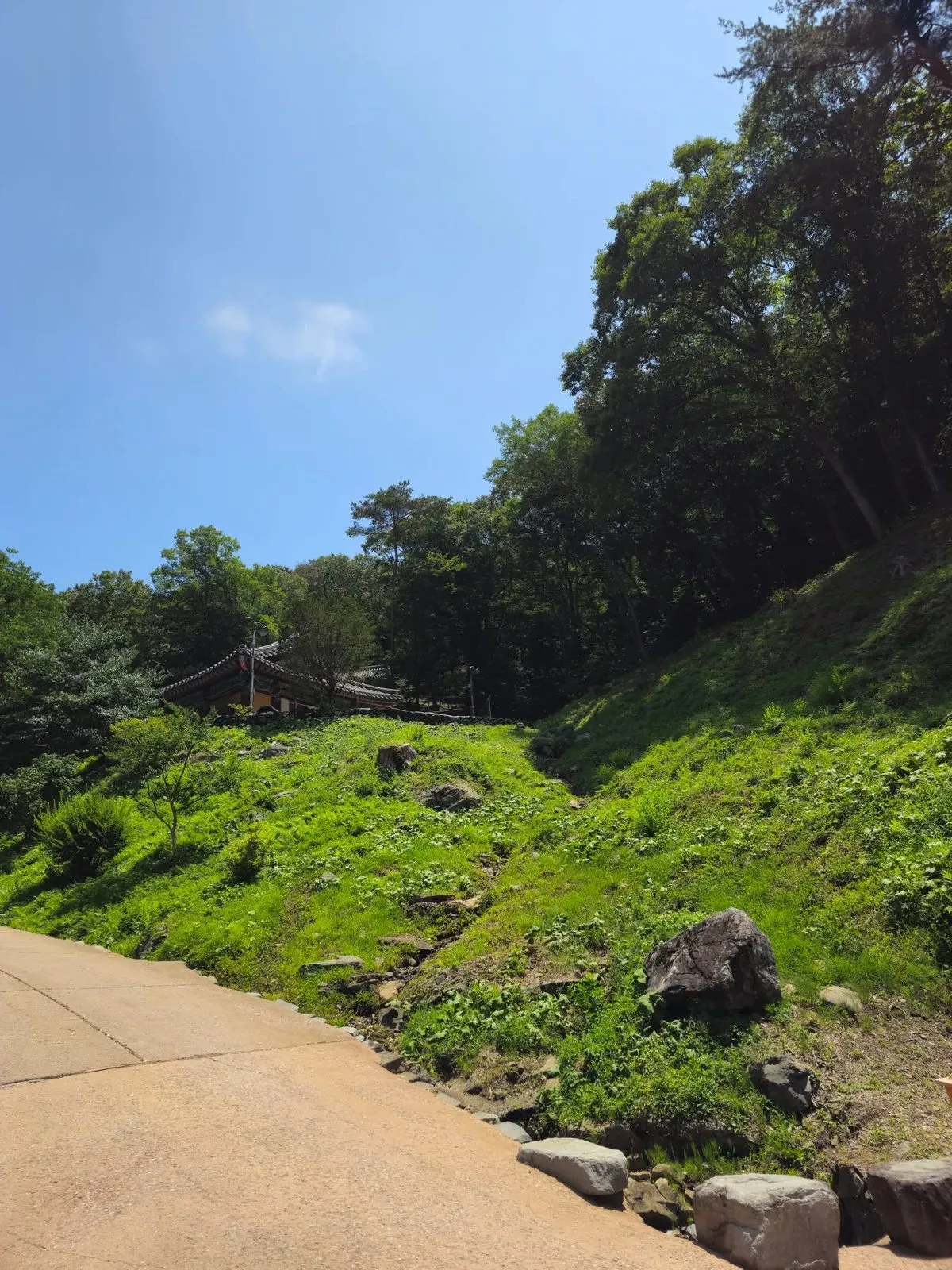 The grassy slope beside the path.
Visiting
| Janggoksa Temple | |
|---|---|
| Entry | Free (Korea Tourism Organization) |
| Hours | 10:00–17:00, open every day (Korea Tourism Organization) |
| Parking | Available (Korea Tourism Organization) |
| Address | 241 Janggok-gil, Daechi-myeon, Cheongyang |
It’s a working temple, so keep your voice down near the halls.
How to get there
By car: the Korea Tourism Organization lists parking.
By bus: we couldn’t confirm the bus details, so I haven’t listed them. Check the live route in Naver Map by pasting the Korean name, 청양 장곡사.
How to check buses in English: install Naver Map and switch it to English in its settings. When I checked it in October 2026, the English version showed bus routes, stop names and live arrival times (minutes and stops away) in English. Google Maps also gives public transport directions in Korea, but as of late September 2026 it still had no turn-by-turn walking or driving navigation here. Stuck? Call the Korea Travel Hotline: dial 02-1330 from a Korean mobile phone (+82-2-1330 from abroad). It has English-speaking staff. More in our guide to taking buses in Korea in English.
Tips
- See both halls. The signpost in the courtyard points up the slope to the upper hall and left to the lower one.
- Read the English board. The temple’s information board has the history in English.
- Spring or autumn. The Korea Tourism Organization says the cherry-blossom road leading to the temple is one of Korea’s 100 beautiful roads. I went in summer, but I think the autumn leaves would be lovely (my guess).
Who it’s for
Likely to suit (estimate): anyone interested in Korean Buddhist temples and architecture, people looking for some peace of mind in the mountains, and anyone visiting the Baekje Culture Experience Museum nearby, which is in the same township.
Sources
The temple’s information board (photographed on my visit: founding story, the two halls, the Medicine Buddhas, the count of National Treasures), Cheongyang County’s English tourism page (founding by Chejing in 850, the rarity of two Daeungjeon halls), the Encyclopedia of Korean Culture (branch temple of Magoksa, the three National Treasures and their halls, the 2022 upgrade, the 1673 painting, the 2026 Seolseondang Treasure), Newsis and Segye Ilbo (July 2026, the Seolseondang Treasure), and the Korea Tourism Organization’s Korean listing (hours, entry, parking, address, the cherry-blossom road). The impressions and the photos are from my own visit.