Home / Chungcheong / Baekje Culture Experience Museum, Cheongyang
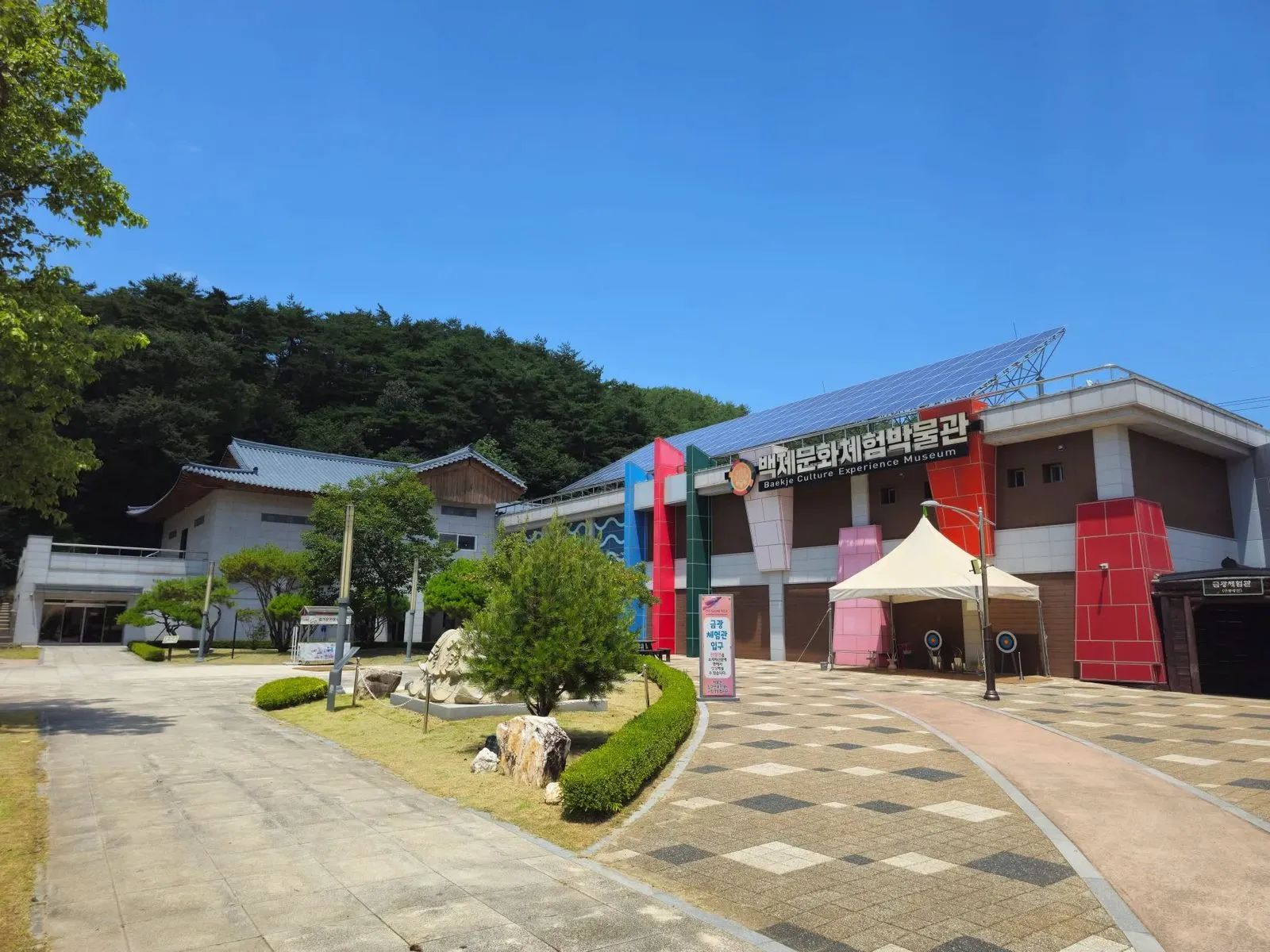
Baekje Culture Experience Museum, Cheongyang: Baekje clothing, pottery and kilns
A county-run museum in Cheongyang on the Baekje kingdom's kilns, with weekend pottery and costume activities, a gold-mine hall and big lawns. Adults 2,000 won, free parking.
- Getting there
- By car: a big free car park (my note). By bus: we couldn't confirm the bus details, so check the live route in Naver Map.
- Cost
- Adults 2,000 won, teenagers and soldiers 1,500 won, children 1,000 won; 6 and under and 65 and over free. Activities are separate.
- Time needed
- 1 to 2 hours (estimate)
- Best time
- Weekends, when the activities are listed. Closed on Mondays.
Tap any Korean name on this page to hear it. Prefer Naver Map? In the app (set to English), search Baekje Culture Experience Museum Cheongyang, or paste the Korean name:백제문화체험박물관
Short version: A museum run by Cheongyang County in South Chungcheong, at the foot of the hills in Daechi-myeon. It’s about the Baekje kingdom’s kilns in the area and Cheongyang’s own history, with a gold-mine hall, weekend activities like pottery making and Baekje costume, and wide lawns with photo spots outside. Adults pay 2,000 won and parking is free. I expected just display cases, but it was much more fun than I thought (my view).
Last checked: 13 November 2026. Hours and closing days come from Cheongyang County’s museum site and the Korea Tourism Organization, and the fees from the Korea Tourism Organization and the fee board at the entrance, which I photographed. The activities come from the Korea Tourism Organization and the museum site. The kiln history comes from an information board on the grounds, which I photographed. We couldn’t confirm the bus details. The impressions, the parking and the photos are from my own visit. Tell me if anything has changed.
Why Baekje, in Cheongyang?
Baekje was one of Korea’s three ancient kingdoms, and two of its capitals, Ungjin (today’s Gongju) and Sabi (today’s Buyeo), were not far from here. A board on the museum grounds, headed with a line calling Cheongyang a city of Baekje architectural art, shows Baekje roof tiles and says they were used in the palaces, temples and government offices of those two capitals. The board also describes the Hakam-ri kiln site in Cheongyang, which it dates to the first half of the 6th century, where pieces of three-legged pottery, cups and jars were dug up.
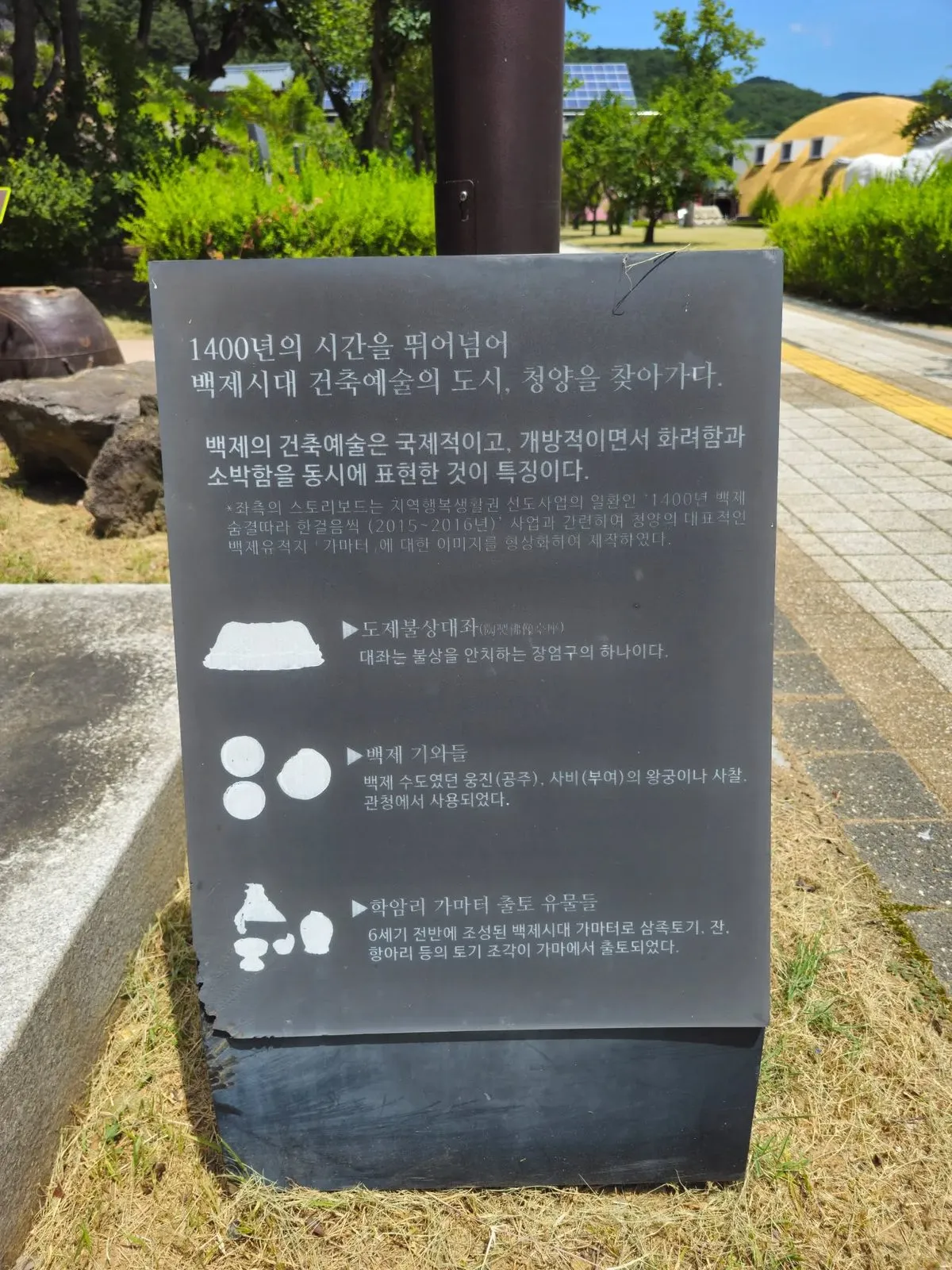 The board about Baekje roof tiles and the Hakam-ri kiln site (in Korean only).
The Korea Tourism Organization says the museum building itself was designed to look like a Baekje-era kiln. It lists five highlight pieces: a Baekje kiln site more than 1,500 years old, blue roof tiles, a painting of the scholar Choi Ik-hyeon’s exile, a rubbing of a statue of Confucius, and a golden turtle.
The museum marked its 10th anniversary with a family festival in October 2026.
What’s here
The exhibition halls. Besides the Baekje displays, the Korea Tourism Organization lists a gold-mine hall, a farming-culture hall and a street scene recreating the 1960s. The gold-mine hall has its own entrance at the side of the main building; its sign adds “Gubong Mine” in Korean.
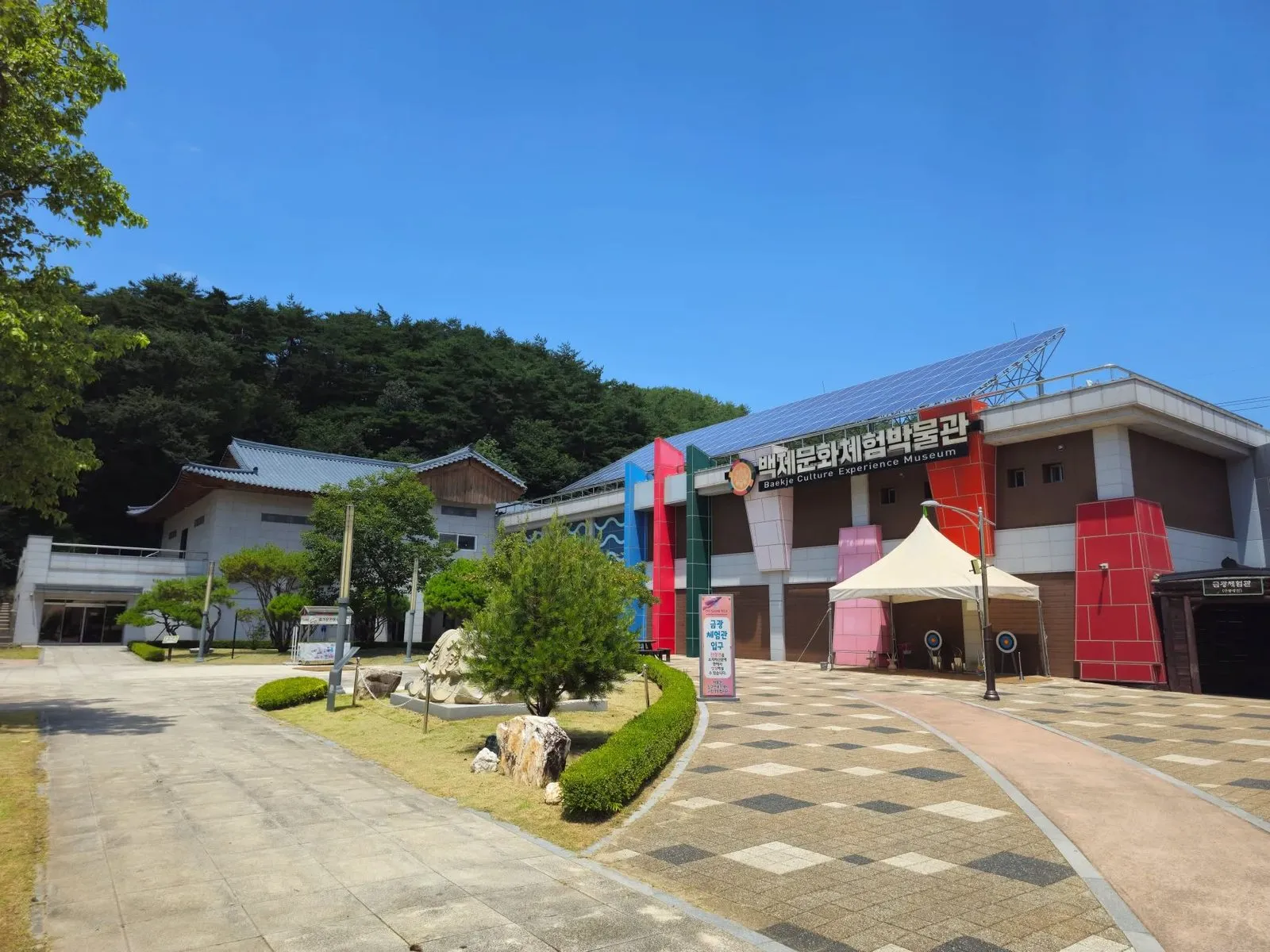 The main building. The dark wooden entrance on the right is the gold-mine hall.
Activities. According to the Korea Tourism Organization, weekends are when you can make Baekje-style pottery or your own cup and try on Baekje clothing. On weekdays, Baekje pottery making is for people who booked ahead, registering at the museum between 10:00 and 16:30. The museum’s own site lists small craft activities such as colouring a traditional-knot strap and notes that materials can run out early. Activity fees are separate from admission, and we couldn’t confirm current prices.
I mentioned weapon making and gold panning in my notes. We couldn’t confirm that either is offered now, so ask at the desk.
Outside. There are big lawns, horse statues, a golden dome with an arched entrance, and a hall built in traditional style.
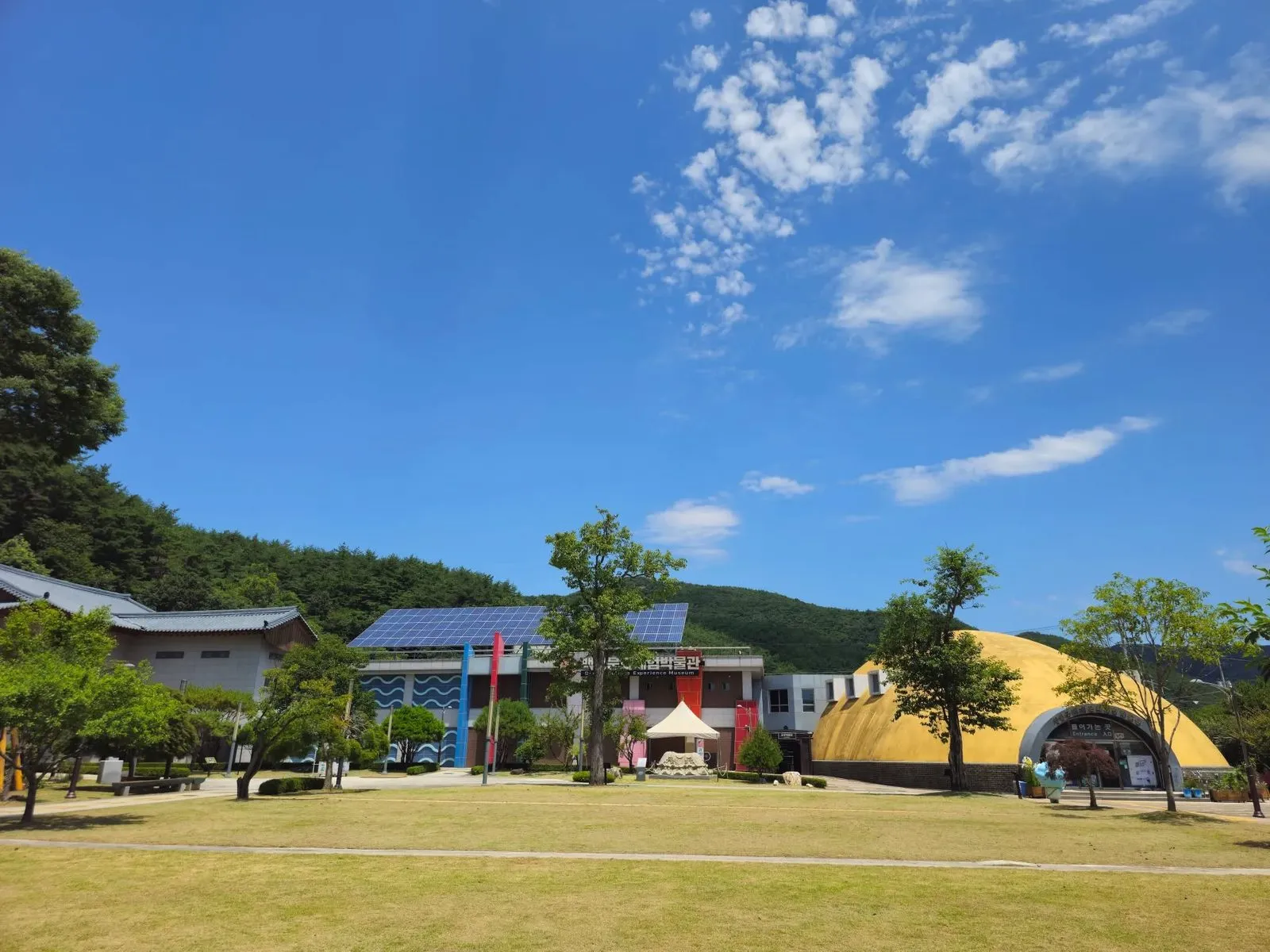 The lawn, the main building and the golden dome.
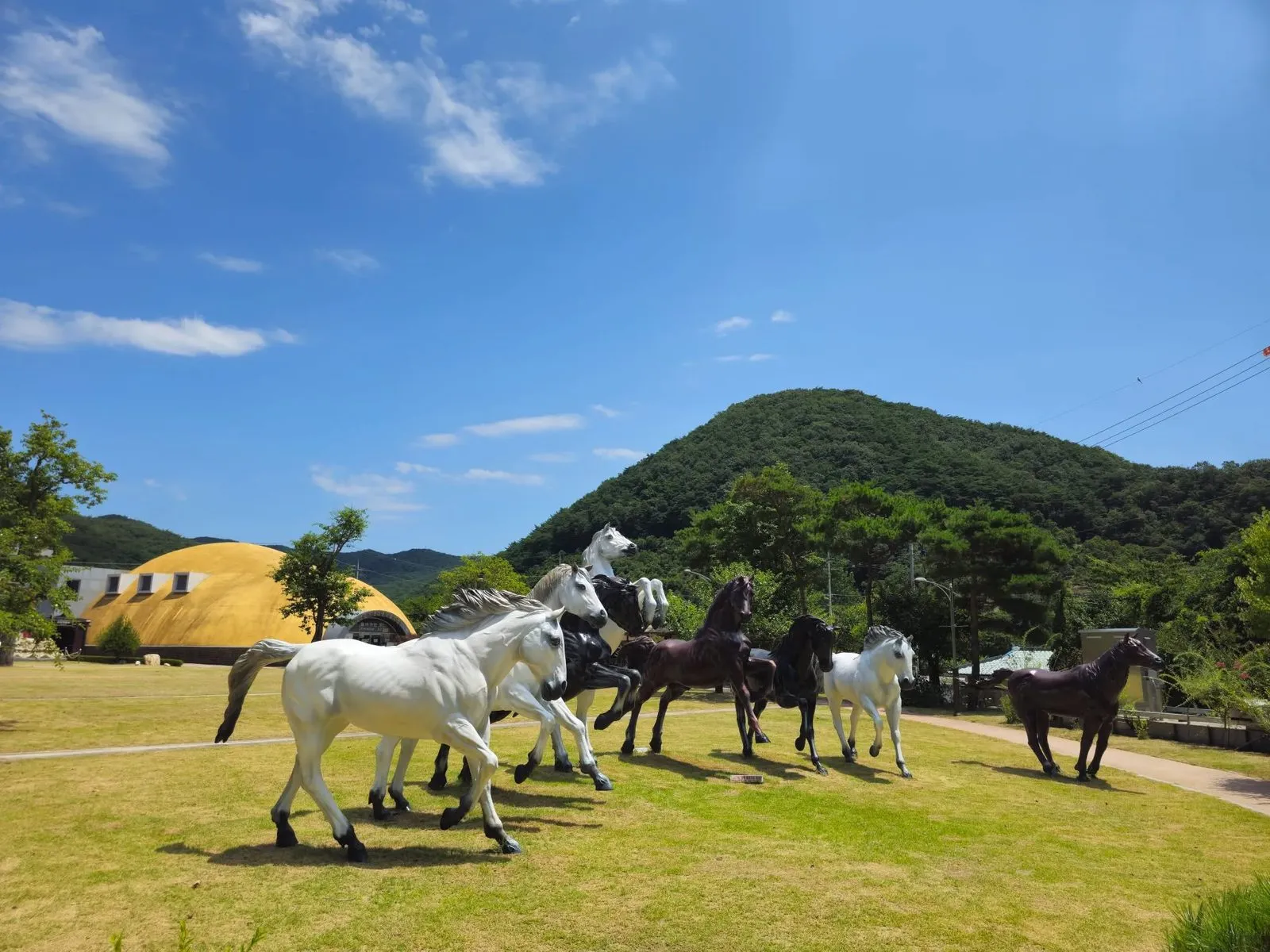 Horse statues on the lawn.
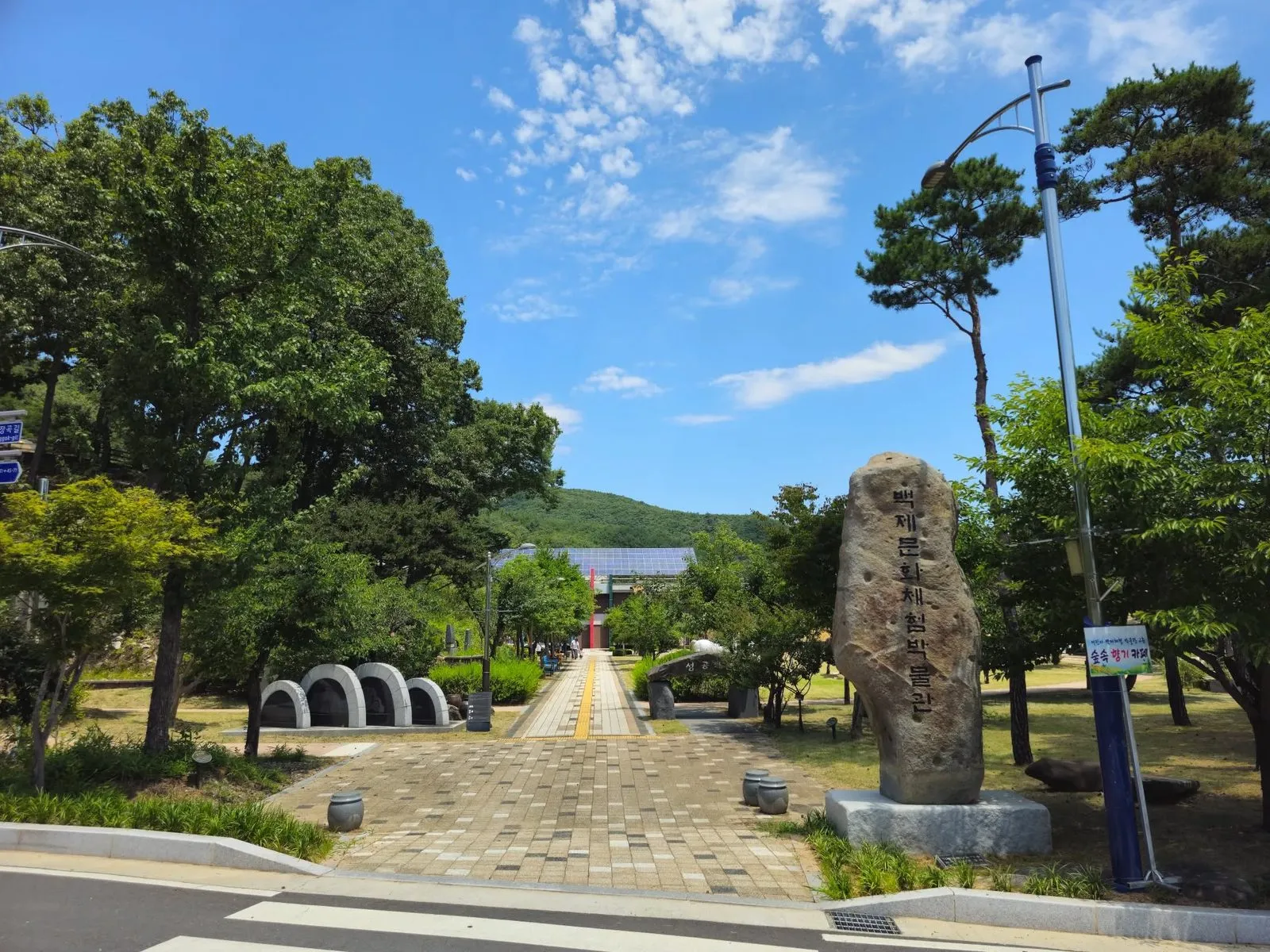 The path in from the road, with the name stone.
Children’s Baekje Experience Center. Next to the museum there’s a separate children’s centre run by the county, with its own ticket (ages 4–12 3,000 won, ages 13–64 2,000 won, as on the board I photographed in July 2025) and its own bookings. The booking pages are in Korean, so the hotline below can help.
Visiting
| Baekje Culture Experience Museum | |
|---|---|
| Admission | Adults (19–64) 2,000 won · teenagers (13–18) and soldiers 1,500 won · children (7–12) 1,000 won · 6 and under and 65 and over free. Groups of 20 or more pay less |
| Parking | Free, and the car park is really big (my note) |
| Hours | 09:00–18:00 March–October, 09:00–17:00 November–February. Tickets stop an hour before closing (17:00 in summer, 16:00 in winter) |
| Closed | Mondays (Tuesday if Monday is a public holiday), 1 January, Seollal and Chuseok days, and other days the county sets |
| Address | 43-24 Janggok-gil, Daechi-myeon, Cheongyang |
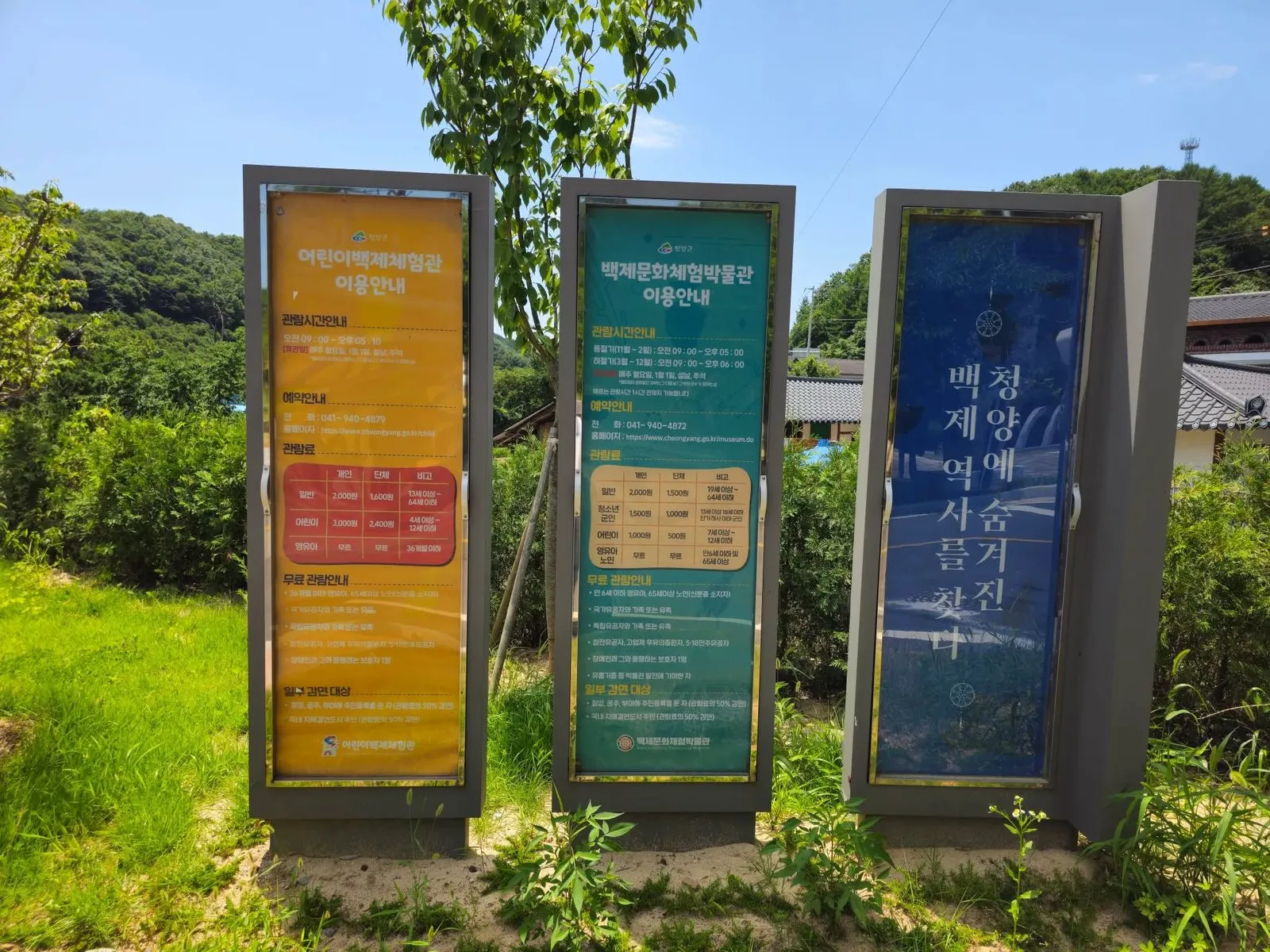 The hours and fee boards at the entrance (in Korean only), as I saw them in July 2025.
Closing days can change, so check before you go (the Korea Travel Hotline below can help in English).
How to get there
By car: there’s a big free car park.
By bus: we couldn’t confirm the bus details, so I haven’t listed them. Check the live route in Naver Map by pasting the Korean name, 백제문화체험박물관.
How to check buses in English: install Naver Map and switch it to English in its settings. When I checked it in October 2026, the English version showed bus routes, stop names and live arrival times (minutes and stops away) in English. Google Maps also gives public transport directions in Korea, but as of late September 2026 it still had no turn-by-turn walking or driving navigation here. Stuck? Call the Korea Travel Hotline: dial 02-1330 from a Korean mobile phone (+82-2-1330 from abroad). It has English-speaking staff. More in our guide to taking buses in Korea in English.
Tips
- Go at the weekend for the activities. That’s when pottery, cup making and Baekje costume are listed. On weekdays, pottery is for people who booked.
- Pick what you want. Activities are paid separately, so choose the ones that interest you.
- Not on a Monday. That’s the regular closing day.
- The boards are in Korean. The fee and kiln boards I photographed were Korean only. The main building’s sign is also in English.
Who it’s for
Likely to suit (estimate): families with children, couples on a day out in South Chungcheong, and anyone who has seen Gongju or Buyeo and wants another Baekje stop away from the big sites.
Sources
Cheongyang County’s Baekje Culture Experience Museum site (hours, ticket cut-off, closing days, current craft activities) and its tourism pages for the Children’s Baekje Experience Center (fees, also on the board I photographed), the Korea Tourism Organization’s Korean and English listings (fees, activities, the kiln-shaped design, highlight pieces, exhibition halls, address), the fee boards and the kiln board at the museum (photographed on my visit), and Sisa Journal, Goodmorning Chungcheong, Gukje News and News T&T (September–October 2026) on the 10th anniversary. The impressions, the parking and the photos are from my own visit.