Home / Gyeongsang / Bukjijangsa Temple (Daegu)
Palgongsan temple, Daegu: Bukjijangsa, quiet and peaceful
A quiet old temple on the southern side of Palgongsan in Daegu, with a Treasure-listed Joseon hall and twin stone pagodas. Free admission and free parking when I visited, but the last stretch is a narrow mountain road.
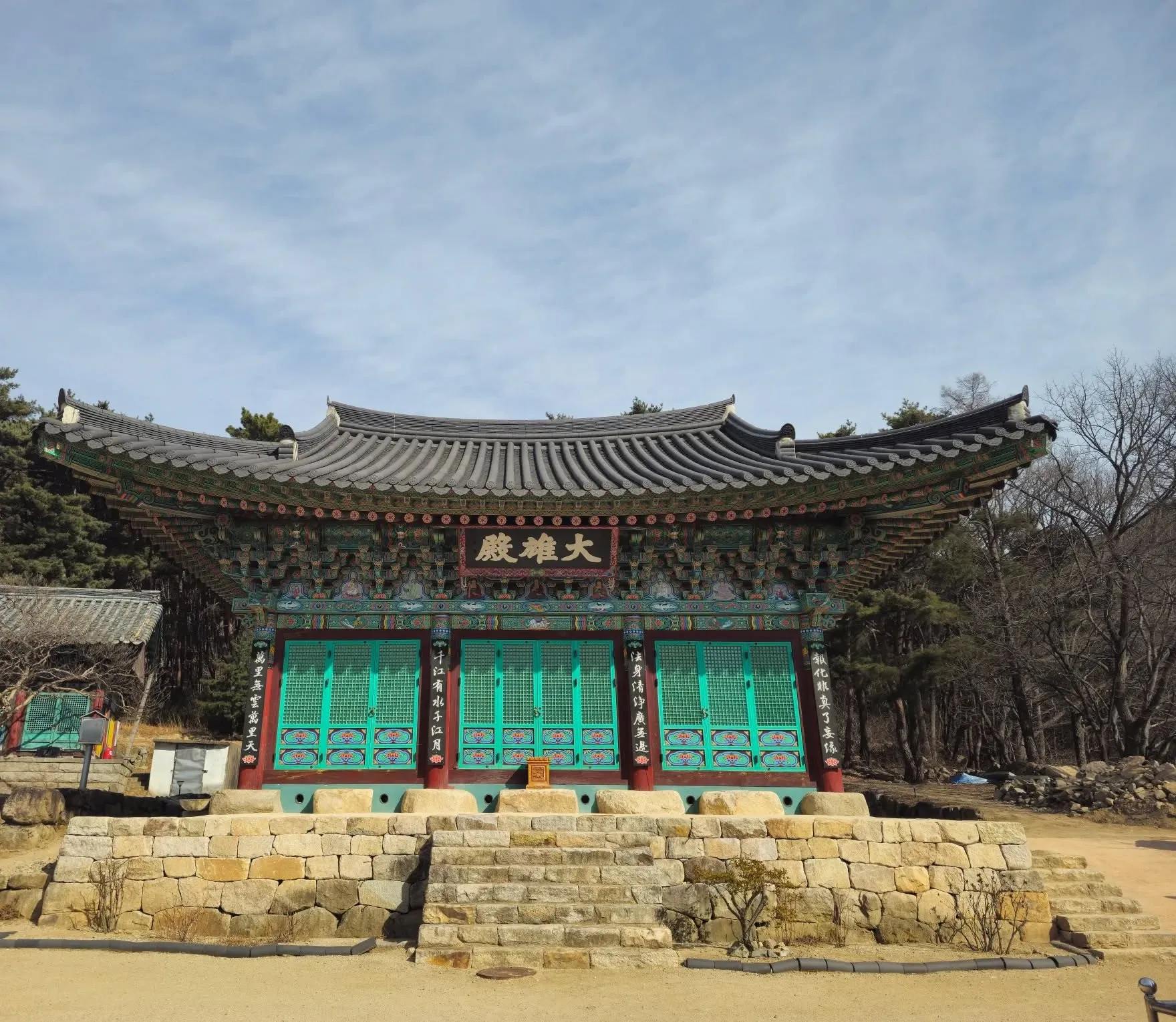
- Getting there
- On the southern side of Palgongsan, in Dong-gu, Daegu. I drove; the last stretch is a single narrow, winding mountain road. On foot, Daegu Olle Palgongsan Course 1 ends at the temple. For buses, check the live route in Naver Map (in English).
- Cost
- Free admission and free parking when I visited (February 2026)
- Time needed
- About 30 minutes to an hour to look around (estimate)
- Best time
- Open every day of the year (Korea Tourism Organization). Our suggestion: go in daylight, for the drive in.
Tap any Korean name on this page to hear it. Prefer Naver Map? In the app (set to English), search Bukjijangsa Temple Daegu, or paste the Korean name:북지장사
Short version: Bukjijangsa (북지장사) is an old temple beside a clear stream on the southern side of Palgongsan in Daegu. Its Jijangjeon hall is a national Treasure, and two three-storey stone pagodas stand side by side east of the main hall. I went on 6 February 2026. It was quiet and peaceful, a good place to take your time over the old heritage pieces, and quite a few people were there hiking or out for a walk. Admission and parking were free, and the car park is big. The one downside is the drive in: the last stretch is a single narrow, winding mountain road.
Last checked: 24 October 2026. The history and the heritage listings come from the national heritage service’s records and the information boards on site (Korean and English, photographed February 2026); where they differ, the note says so. Opening days, the Samguk Yusa mention, the pagoda-era estimate and the walking route come from the Korea Tourism Organization. Free admission and parking, the road and my impressions are from my own visit. Tell me if anything has changed.
The temple
Bukjijangsa is a branch temple of Donghwasa, the head temple of the Jogye Order’s 9th district (Korea Tourism Organization). The organization’s listing says the temple appears in the Samguk Yusa, the 13th-century collection of histories and legends from Korea’s Three Kingdoms, as Gongsan Jijangsa.
Its founding date depends on whom you ask. The national heritage service’s record for the Jijangjeon hall and the board on site say tradition has it founded in 485, under King Soji of Silla, by the monk Geukdal. The board’s English version prints 465, but its Korean version says the seventh year of King Soji’s reign, which is 485. The heritage service’s records for the pagodas and the statue give a different date: founded in 1192, in the Goryeo period (the pagoda record names the monk Bojo Guksa as founder). The Korea Tourism Organization’s listing instead treats 1192 as a rebuilding by Bojo Guksa Jinul, not the founding.
The Jijangjeon hall (Treasure)
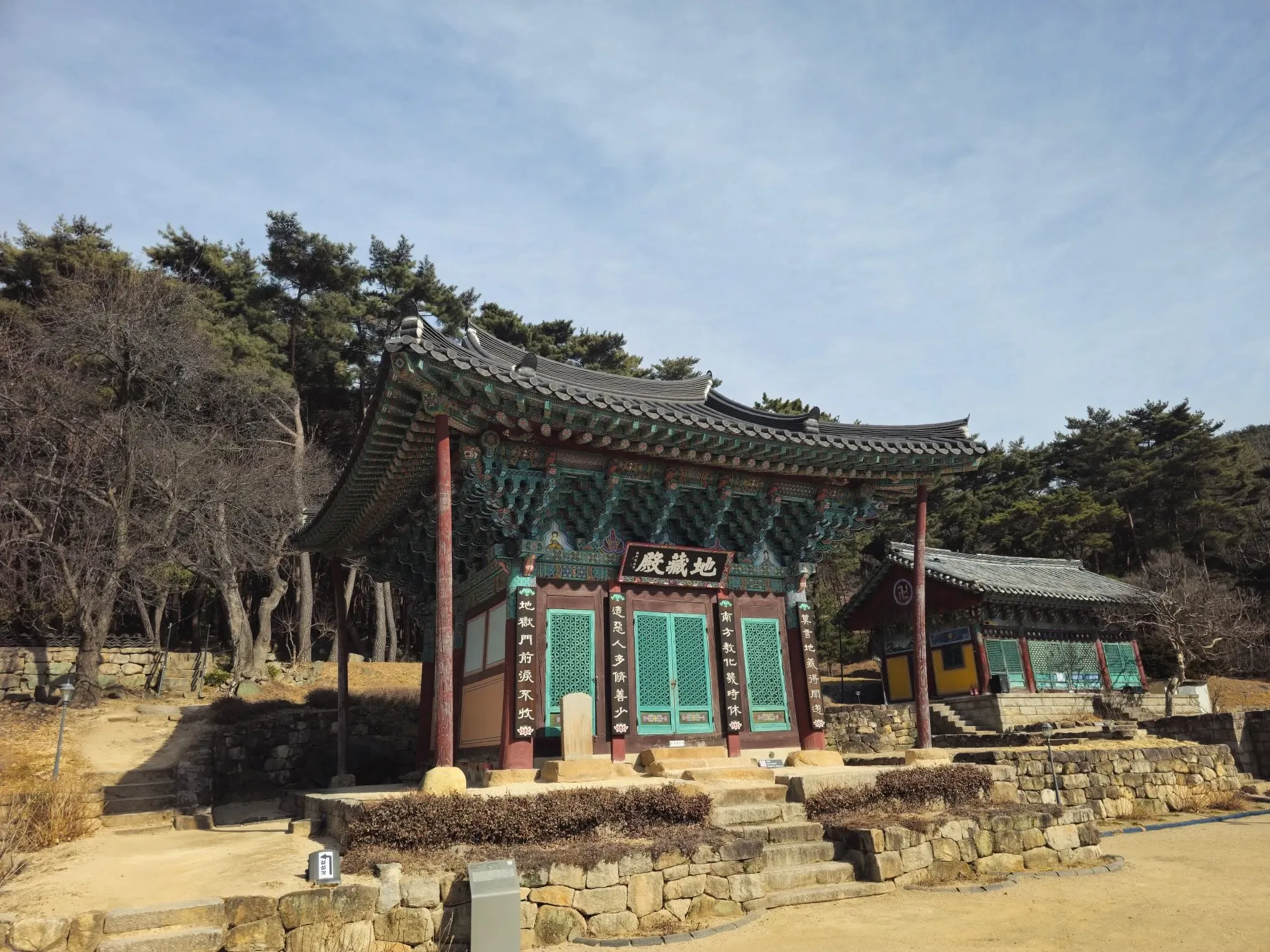 Jijangjeon, the Treasure-listed hall. The signboard reads 地藏殿 (Jijangjeon).
The Jijangjeon hall was designated a Treasure, one of Korea’s national heritage listings, in November 1984 (national heritage service). According to the heritage service’s record and the board on site:
- The building was once used as the temple’s main hall, after the original main hall burned down.
- Dismantling and repair work in 2011 turned up a record from 1761 showing it was raised as a Jijangjeon, a hall for Jijang (Ksitigarbha) Bodhisattva, so it was given that name again.
- It’s only one bay wide at the front, under a hip-and-gable roof with multi-bracket eaves.
- Its frame borrows techniques from pavilions, which is rare for a Buddhist hall, and that’s why it matters for the study of Joseon architecture.
The board dates the building to 1623, while the heritage service’s record calls it Joseon-period and places its details in the mid-Joseon style.
The twin stone pagodas
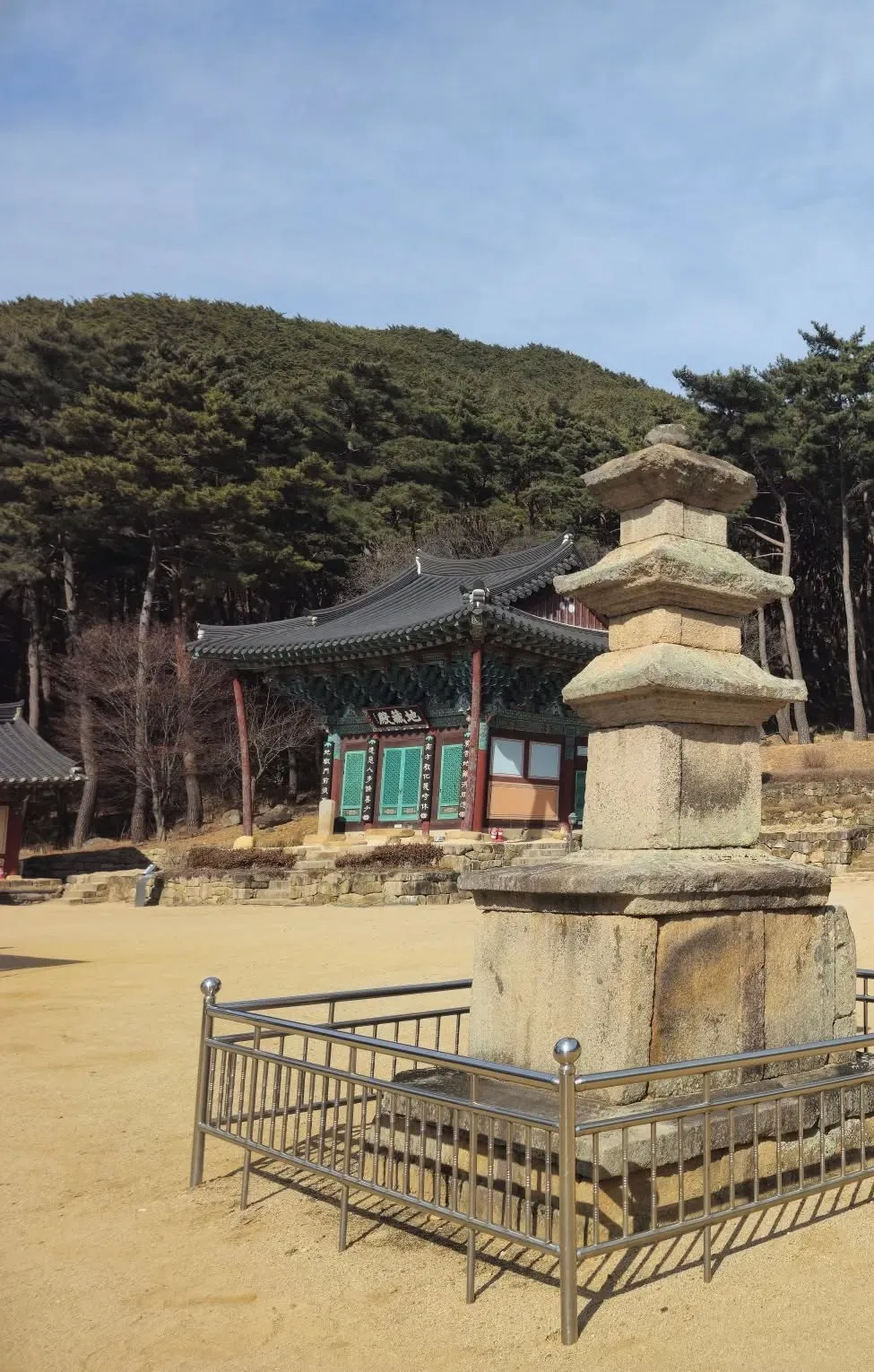 One of the two three-storey stone pagodas, with the Jijangjeon hall behind it on the left.
Two three-storey stone pagodas of almost the same size and shape stand side by side east of the main hall. They were designated a Daegu cultural heritage in March 1982 (national heritage service). Each has a two-tier base, and the roof stones have four tiers of supports underneath. The board says they follow the usual Unified Silla pattern, and that they were taken apart and restored in May 1981; the heritage service says they had been buried or scattered before that 1981 restoration. Neither the heritage service’s record nor the board gives a date for when they were made; the Korea Tourism Organization’s listing thinks they’re probably from the Goryeo period.
The stone Jijang statue
The temple also has a stone seated statue of Jijang Bodhisattva, designated a Daegu cultural heritage in May 1988 (national heritage service). The heritage service’s record says it was found in the ground behind the main hall, holds a jewel in its left hand, and is thought to date from the late Unified Silla period. The Encyclopedia of Korean Culture dates it to the Goryeo period instead.
Visiting
| Bukjijangsa Temple (Daegu) | |
|---|---|
| Address | 243 Dojang-gil, Dong-gu, Daegu (대구광역시 동구 도장길 243) |
| Open | Every day of the year (Korea Tourism Organization) |
| Admission | Free when I visited (February 2026) |
| Parking | Big car park, free when I visited (February 2026) |
| Walking route | Daegu Olle Palgongsan Course 1 ends here: about 5 km there and back, roughly 1 hour 20 minutes (Korea Tourism Organization) |
How to get there
By car: I drove. No admission fee, no parking fee, and the car park is big. Just one downside: the drive in is quite difficult. The way in is a single narrow mountain road. If a car comes the other way, one of you has to reverse to the nearest passing place (a spot where the shoulder has been widened) to let the other through. On top of being narrow, it’s winding, there are slopes, and the surface is full of potholes. A February 2025 travel essay in Gyeongbuk Maeil also describes a narrow, sloping, curving mountain road in. Our suggestion: if you’re not confident on narrow roads, go in daylight and take it slowly.
On foot: Daegu Olle Palgongsan Course 1 runs from the Poet’s Road (시인의 길) to the temple, about 5 km there and back (Korea Tourism Organization).
By public transport: check the live route in Naver Map (switched to English): search Bukjijangsa, or paste 북지장사.
How to check buses in English: install Naver Map and switch it to English in its settings. When I checked it in October 2026, the English version showed bus routes, stop names and live arrival times (minutes and stops away) in English. Google Maps also gives public transport directions in Korea, but as of late September 2026 it still had no turn-by-turn walking or driving navigation here. Stuck? Call the Korea Travel Hotline: dial 02-1330 from a Korean mobile phone (+82-2-1330 from abroad). It has English-speaking staff. More in our guide to taking buses in Korea in English.
Tips
- More in Daegu: Buinsa, a temple on the southern side of Palgongsan that honors Silla’s Queen Seondeok and once kept Goryeo’s First Tripitaka. I went there the same day.
- Read the boards. The boards by the pagodas and the Jijangjeon hall have English versions.
- Take the road slowly, and be ready to reverse to a passing place if a car comes the other way.
Who it’s for
Likely to suit (estimate): anyone visiting Palgongsan, fans of old temple architecture, and walkers on the Daegu Olle trail. Less suited to nervous drivers.
Sources
Checked against the national heritage service’s records (Jijangjeon: Treasure, designated 30 November 1984, founding tradition 485, the 2011 repair and 1761 record, one-bay front, pavilion-style frame; the pagodas: Daegu cultural heritage, designated 4 March 1982, twin pagodas east of the main hall, two-tier bases, buried or scattered before the 1981 restoration; the statue: Daegu cultural heritage, designated 30 May 1988, found behind the main hall, late Unified Silla estimate; 1192 founding date, Bojo Guksa named in the pagoda record; the address), the information boards on site (Korean and English, photographed February 2026: the 1623 date, the Unified Silla pattern, the May 1981 restoration), the Korea Tourism Organization’s listings (updated January 2026: branch temple of Donghwasa, the Samguk Yusa mention, 1192 as a rebuilding by Jinul, the pagodas as probably Goryeo-period, open every day of the year; updated December 2025: Daegu Olle Palgongsan Course 1), the Encyclopedia of Korean Culture (Goryeo date for the statue), Korea JoongAng Daily and Asia Economy (2020: the Samguk Yusa compiled in 1281, a collection of Three Kingdoms history and legends) and Gyeongbuk Maeil (February 2025 travel essay: the narrow mountain road). Free admission and parking, the big car park, the road and my impressions are from my own visit.