Home / Gyeongsang / Gimhae Wood Culture Museum
Gimhae Wood Culture Museum: a free museum all about wood, with woodworking classes
A free, city-run museum in Gimhae all about wood: four floors of exhibits about wood, a phytoncide room and woodworking classes you book ahead. Closed Mondays.
- Getting there
- 5-49 Gwandong-ro 27beon-gil, Gimhae (Gimhae City). We couldn't confirm the bus or parking details, so check the live route in Naver Map.
- Cost
- Free. Woodworking classes and the wooden playground cost extra and are booked in advance.
- Time needed
- 1 to 2 hours, more with a class (estimate)
- Best time
- Not Mondays (see the closing days below). In summer, in my view.
Tap any Korean name on this page to hear it. Prefer Naver Map? In the app (set to English), search Gimhae Wood Culture Museum, or paste the Korean name:김해목재문화박물관
Short version: A free museum run by Gimhae City, South Gyeongsang, all about wood: what it is, how people have used it, and traditional and modern woodcraft. It has four floors above ground, with permanent exhibitions on the 1st and 3rd floors and woodworking classes you book ahead. When I visited there were also wooden automata, a wooden-games exhibition (now ended) and a phytoncide room on the 4th floor. It’s closed on Mondays. I wrote my post from the phytoncide room and recommend it for a summer day (my view).
Last checked: 15 November 2026. Hours, closing days, admission, the address, the floors and facilities, and the class and playground times come from Gimhae City’s website and the museum’s pages on it. The permanent exhibition names come from the museum’s pages; the Gamtan Play exhibition, the automata and the games come from the boards in my photos. We couldn’t confirm the bus or parking details, or current class prices. The impressions and the photos are from my own visit. Tell me if anything has changed.
Why I went
I’m here right now. I’m writing this post in the phytoncide room on the 4th floor~^^! Did you know there was a museum like this in Gimhae?
Gimhae City describes it as a hands-on museum about wood culture, combining collecting, research, exhibitions, education and woodcraft activities. Its prologue wall opens with the line that human civilisation began and developed with trees.
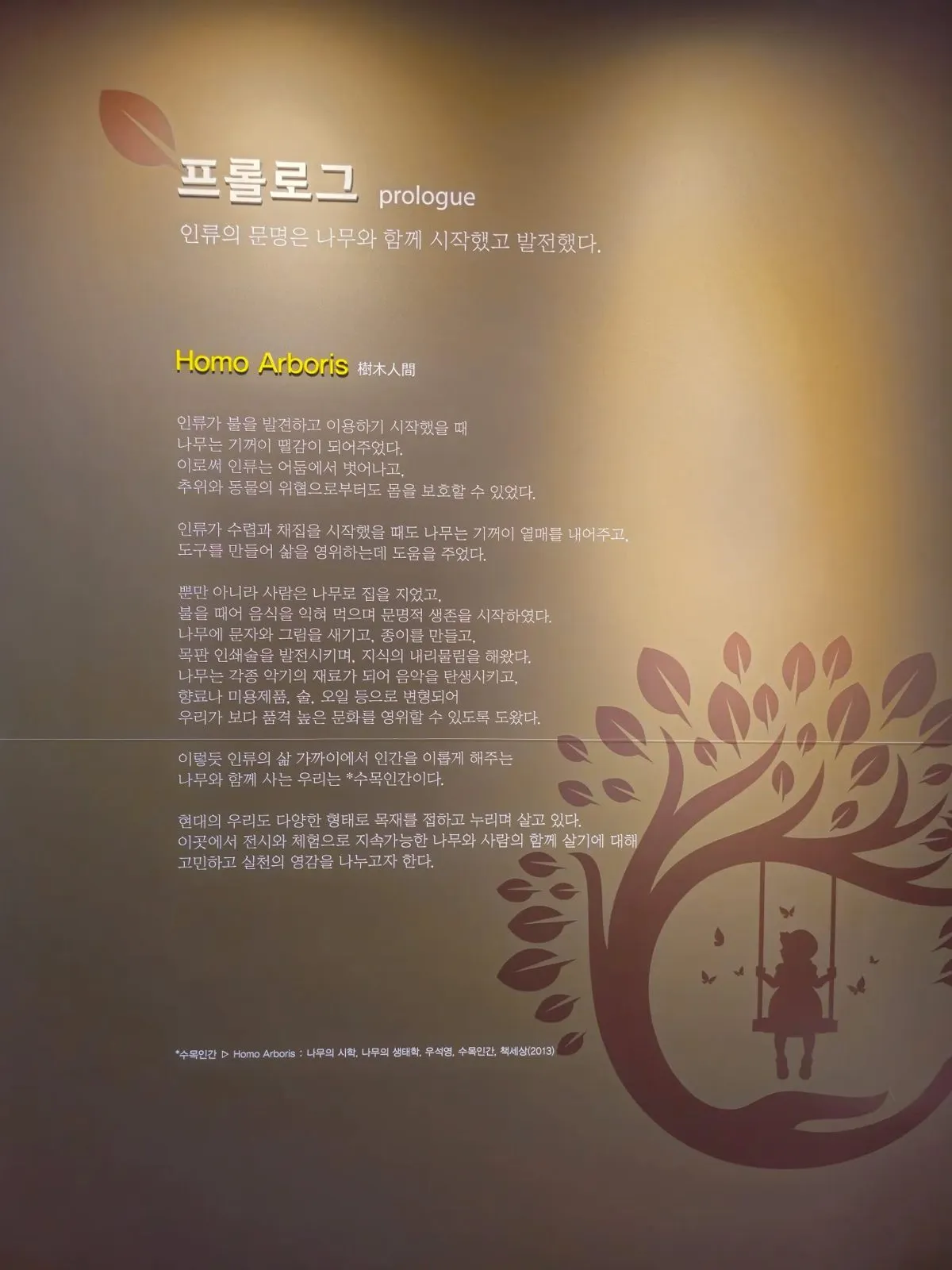 The prologue wall (in Korean).
What’s inside
Gimhae Wood Culture Museum is a real pilgrimage site for wood geeks. It’s not a place that just puts wood on display: you can touch things and try them yourself, so the time just disappears.
Gimhae City lists four floors above ground with exhibition rooms, a woodworking hall and machine room, a wooden play area, a forest activity room, a forest experience room for young children, and a café. The museum’s site names its permanent exhibitions as “Meeting Wood” and “Understanding the Properties of Wood” on the 1st floor, and “Wood Culture in Daily Life” and “Adding Human Wisdom” on the 3rd.
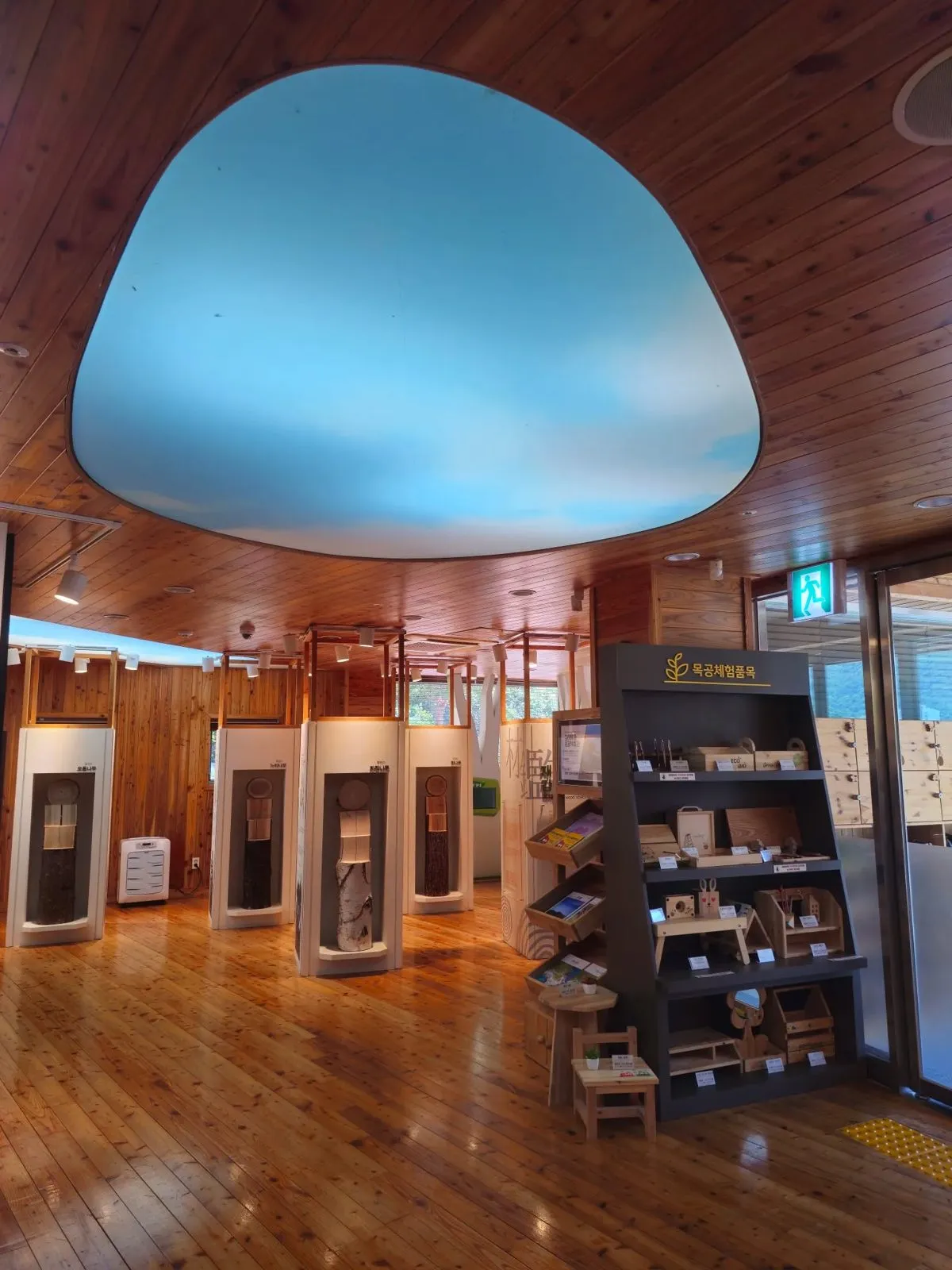
About wood. The 1st floor has the history of wood and forests and artworks made of wood, and you can really touch all of it, so kids and adults both have fun. Boards explain how trees grow and what a cross-section of a trunk shows, with real wood samples, and the hall has trunk sections of different trees under a ceiling painted as blue sky. Some of the old furniture is behind glass or a rope barrier.
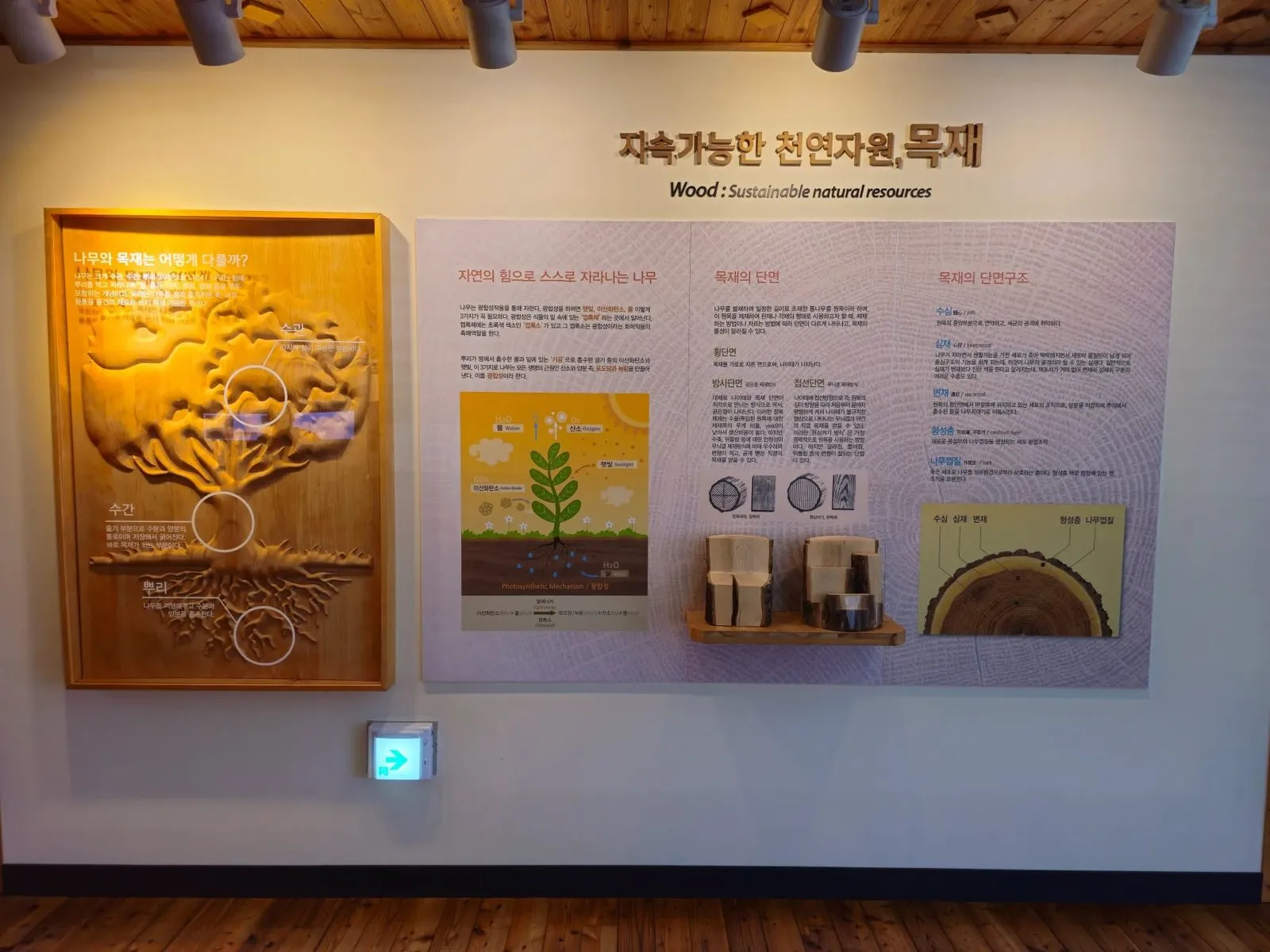 Wood as a sustainable natural resource.
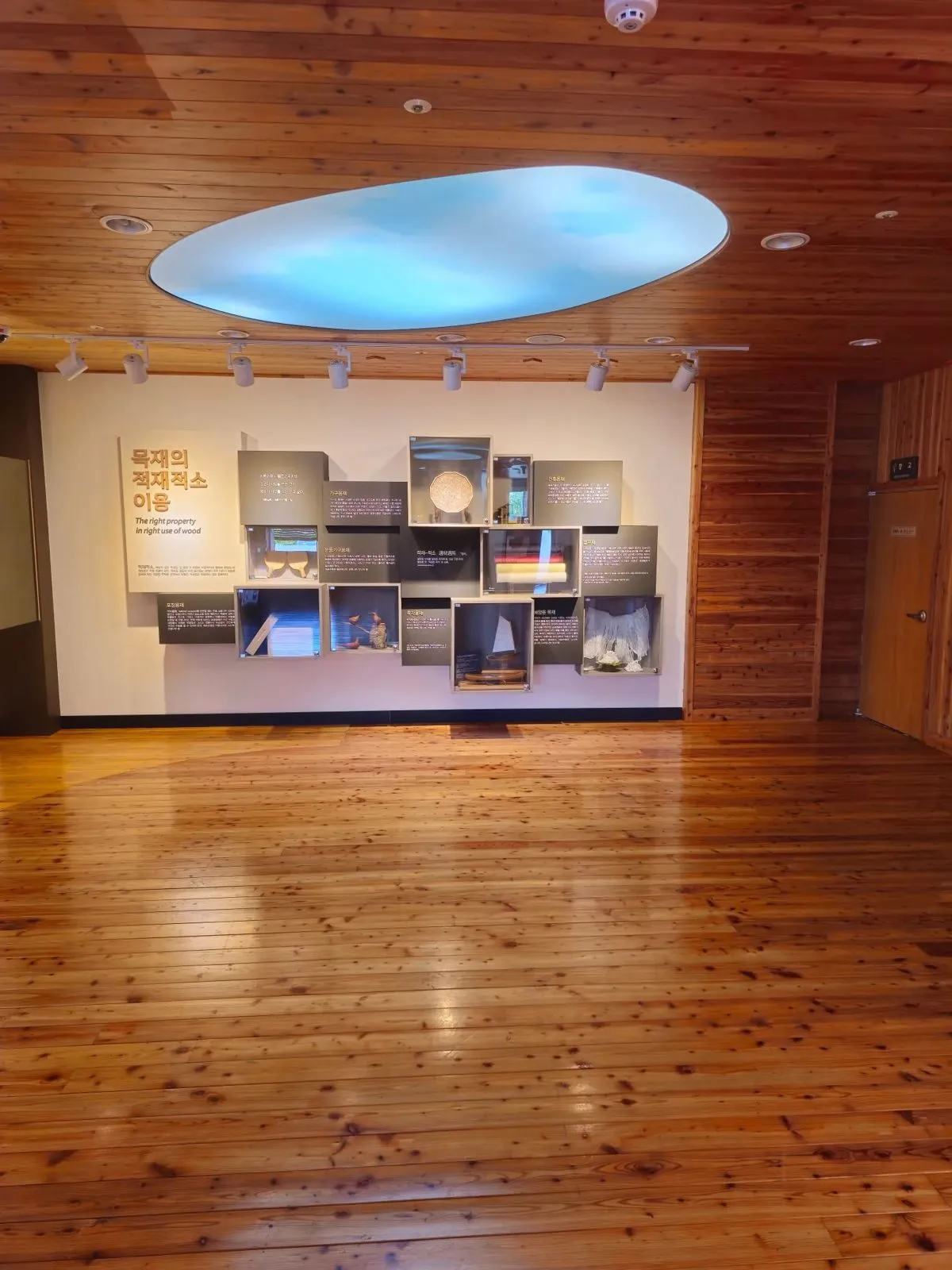 The right wood for the right use.
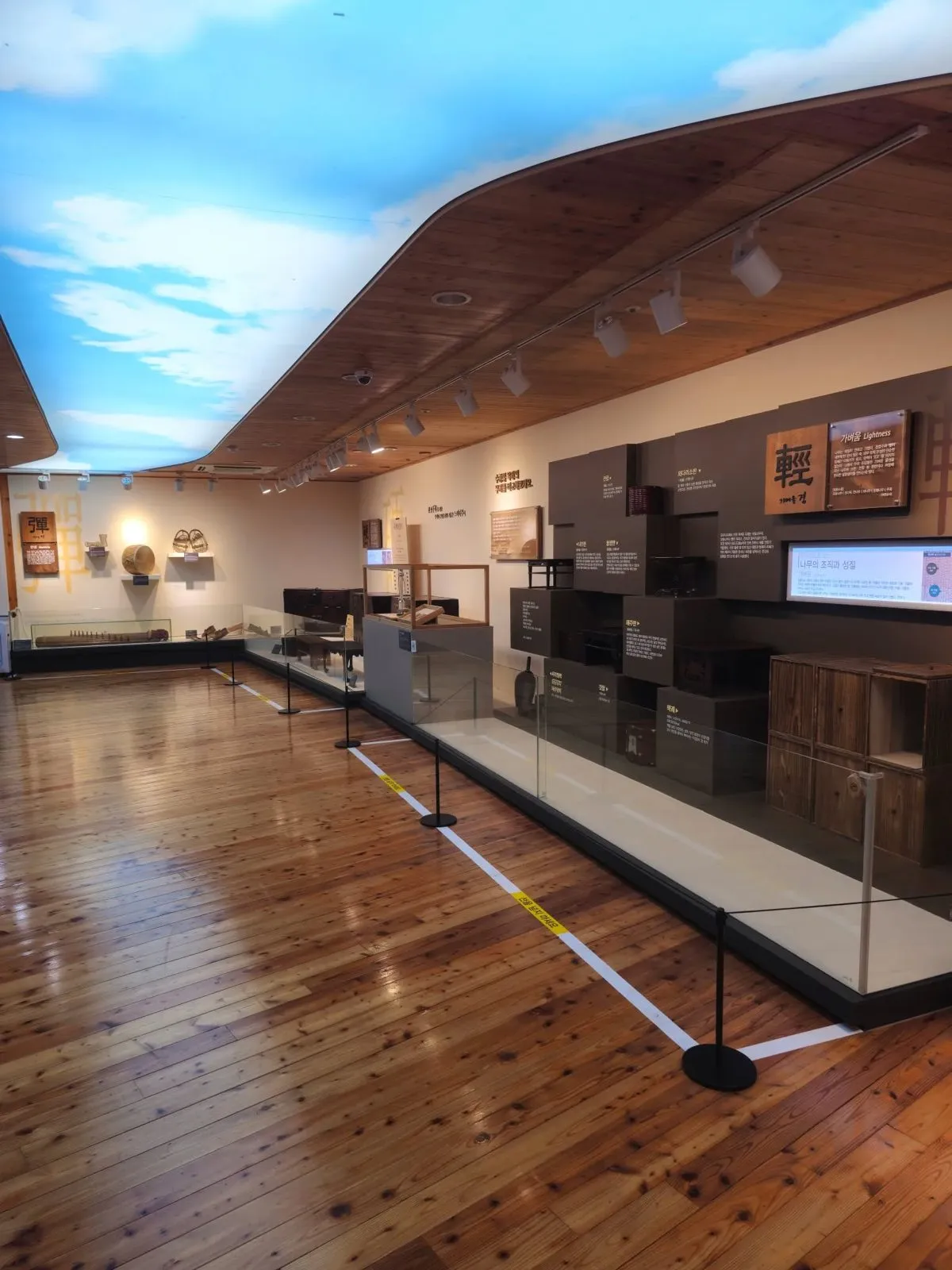 Displays on the properties of wood.
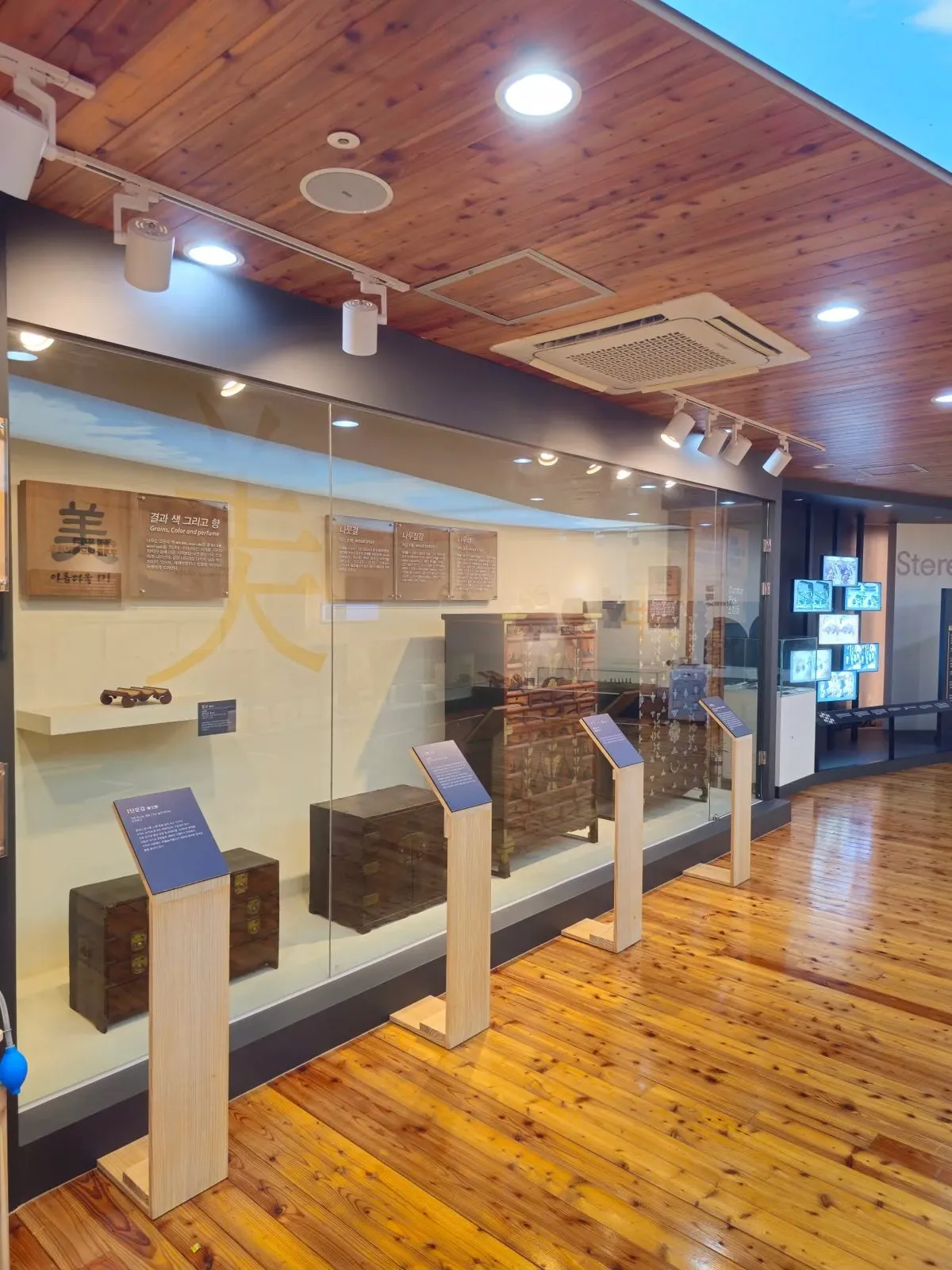 Old wooden chests: grain, colour and scent.
The 3rd floor covers wood culture in daily life and woodcraft.
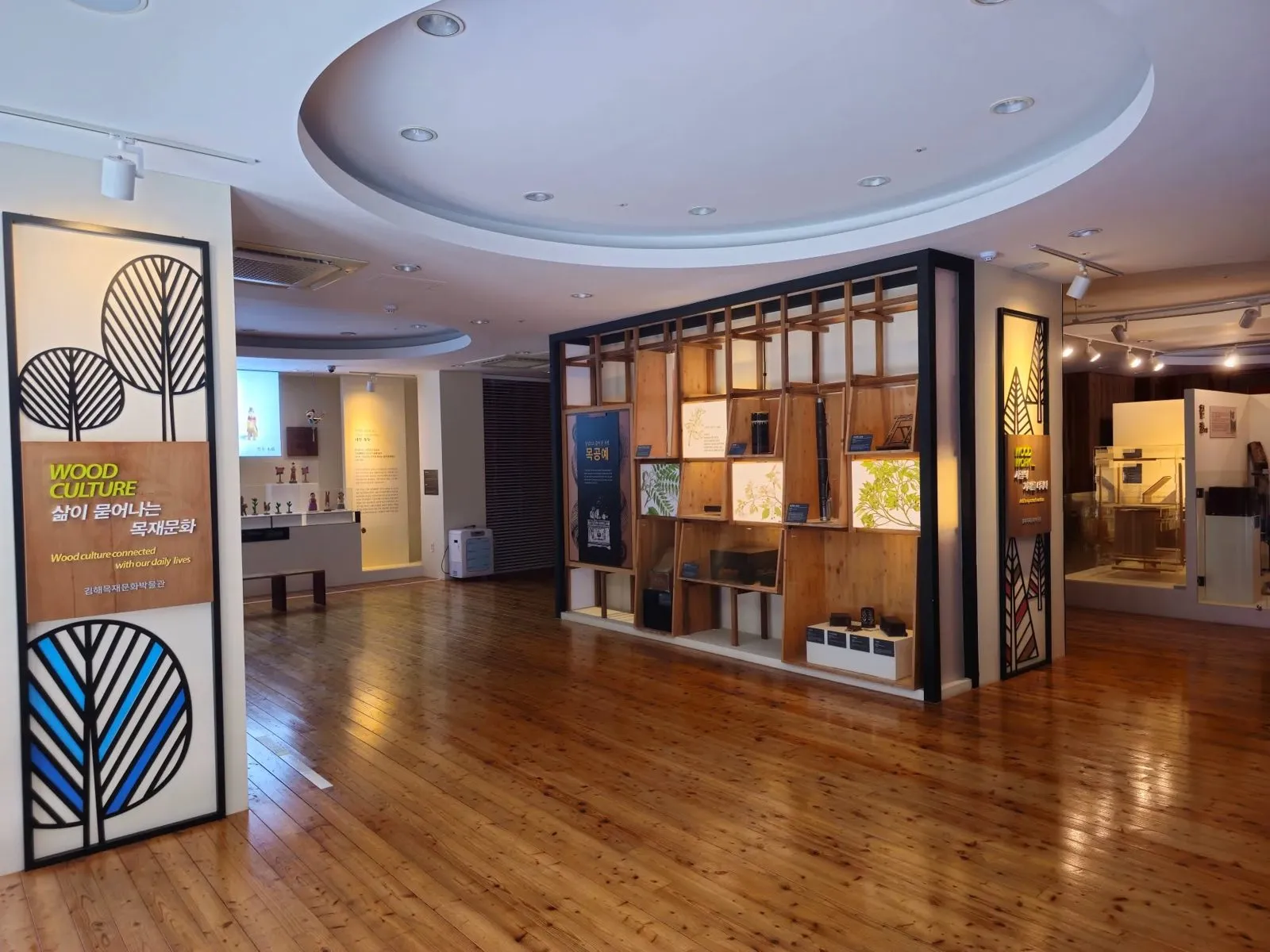 “Wood culture connected with our daily lives.”
Wooden automata. A board explains that automata are figures moved by mechanisms, and that Korea’s first was the Jagyeongnu water clock. When I visited, three hand-cranked wooden figures showed a planer, a saw and a hammer at work, with labels (in Korean) explaining the crank, yoke and eccentric-roller mechanisms inside.
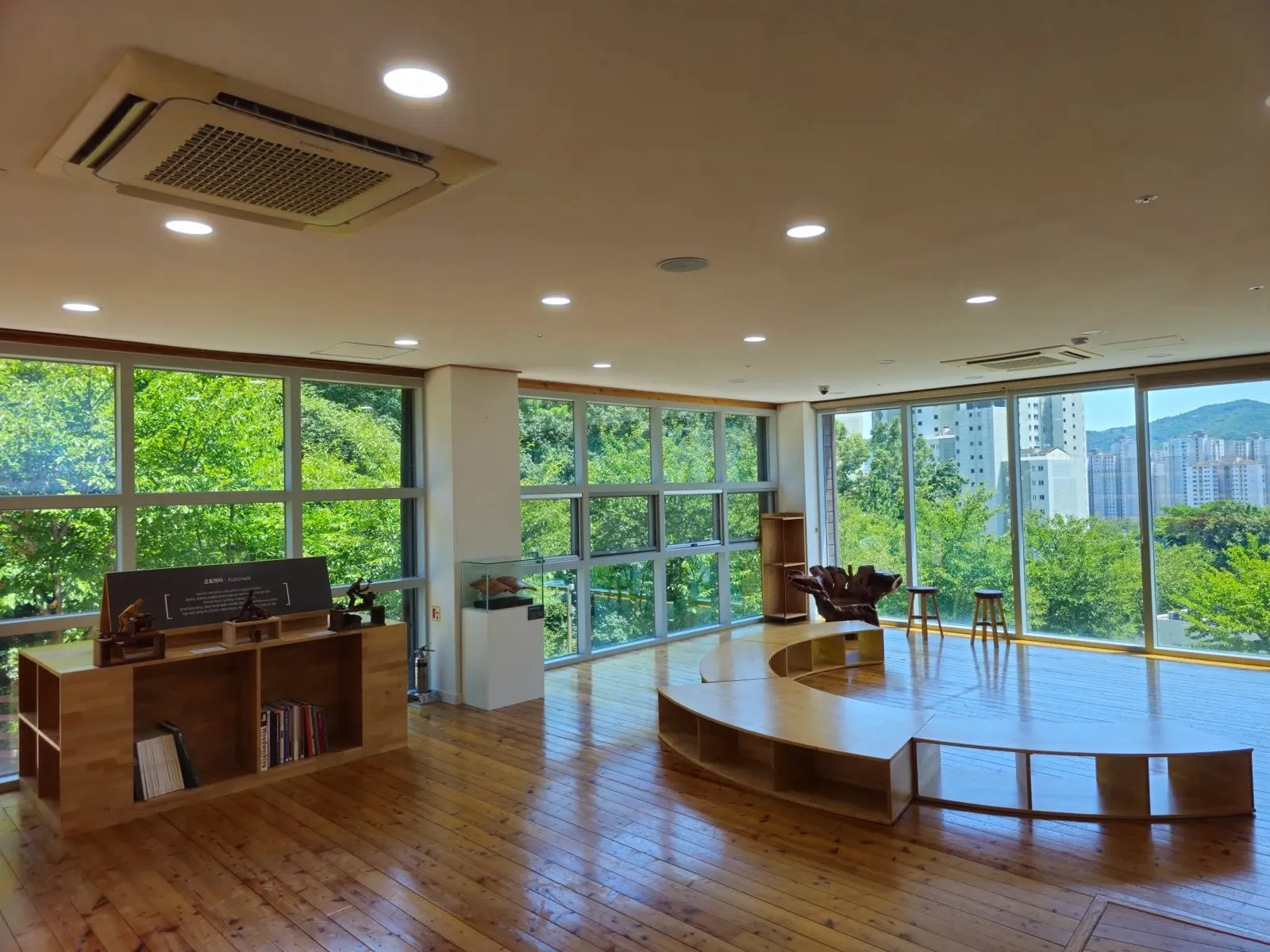 The room with the automata.
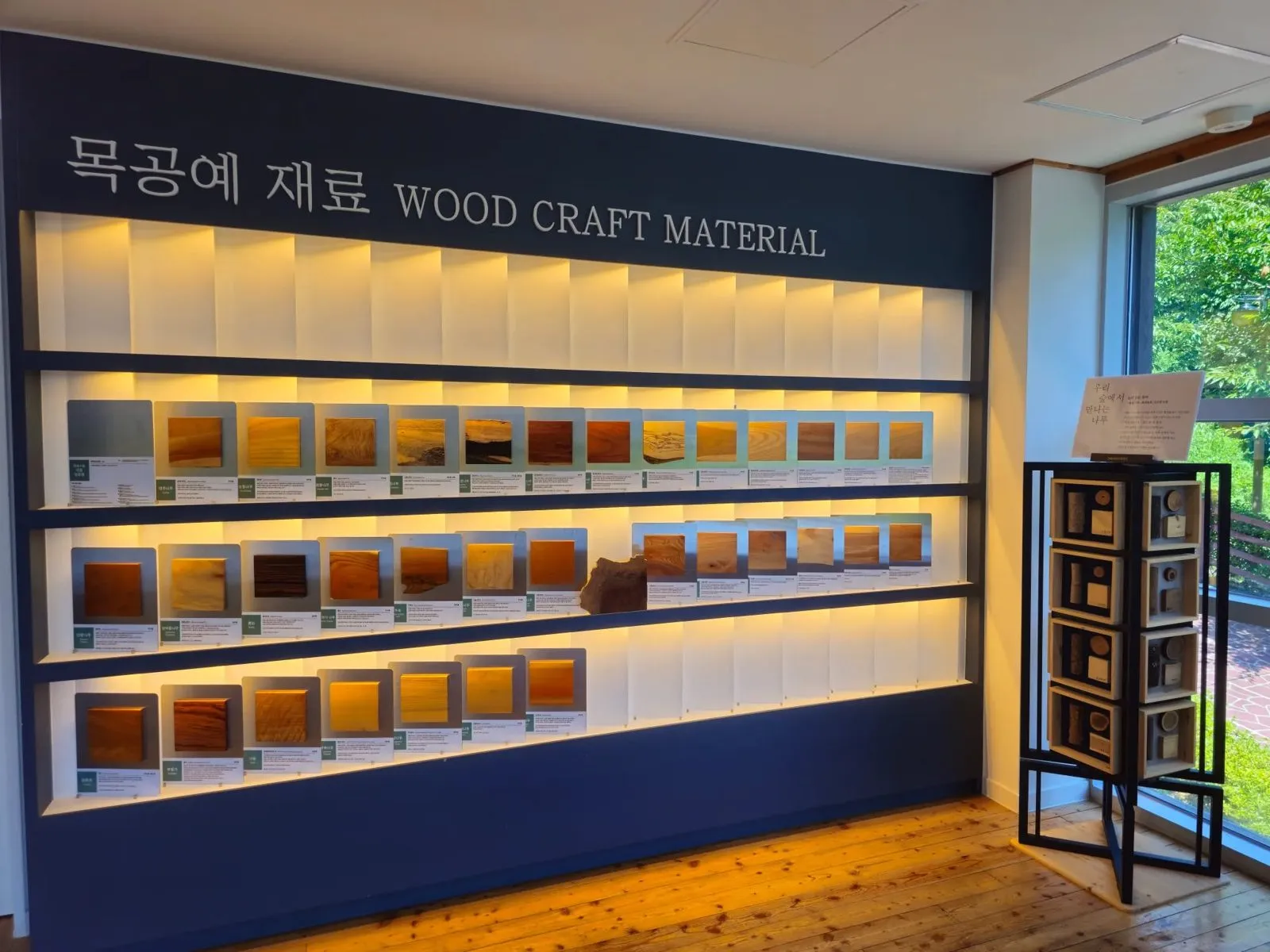 Woodcraft materials, each sample labelled.
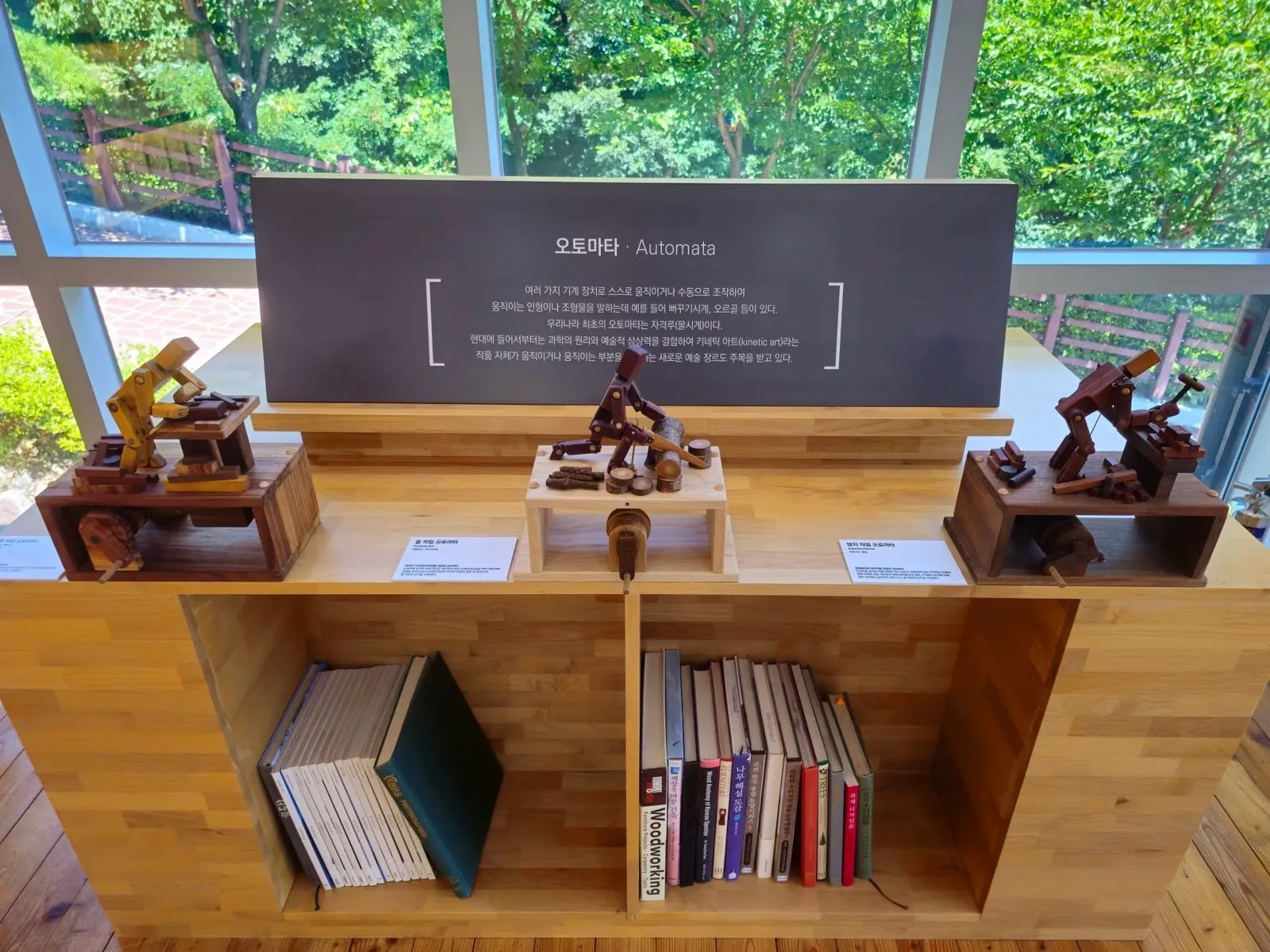 The automata shelf.
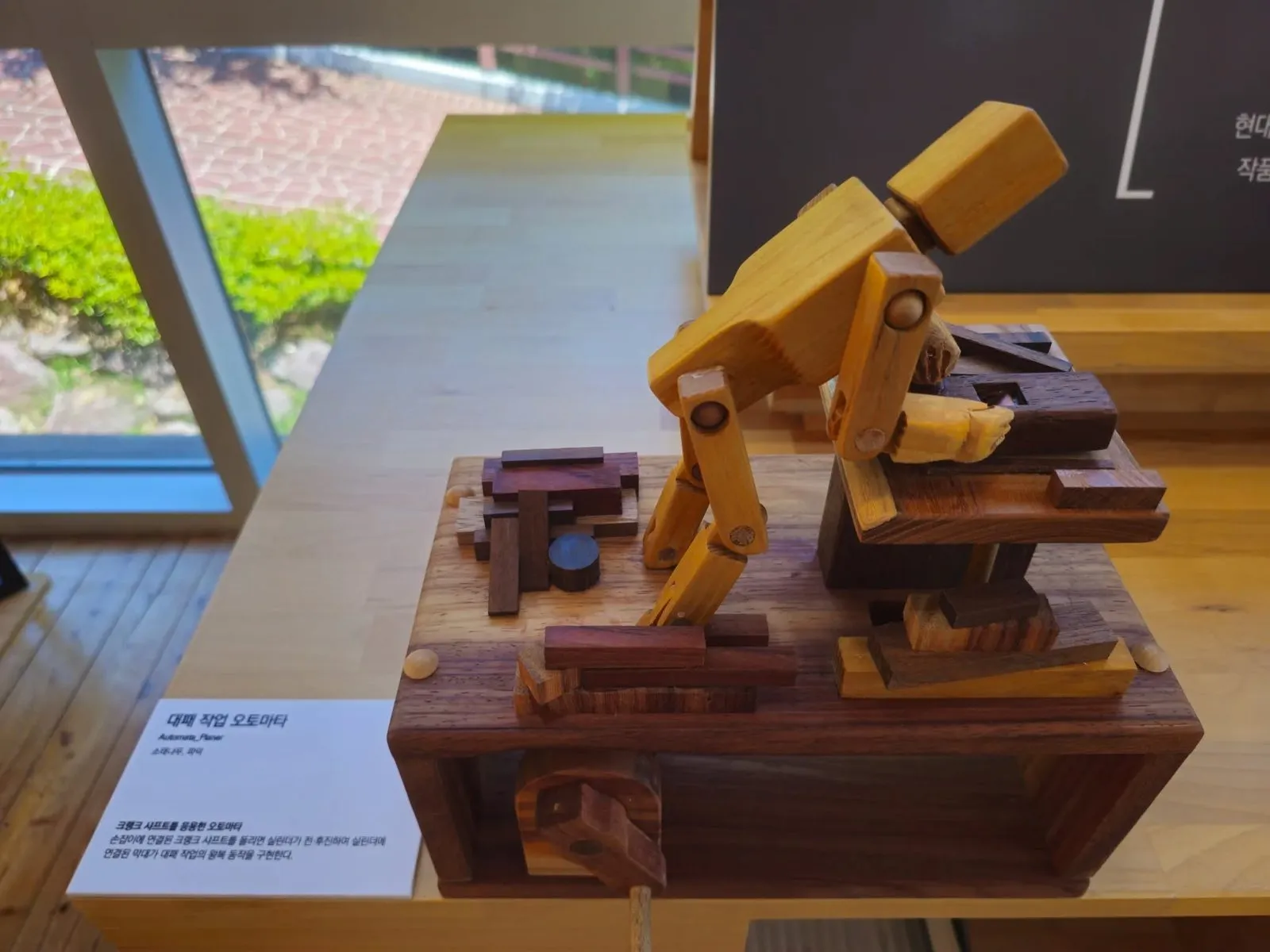 The planer.
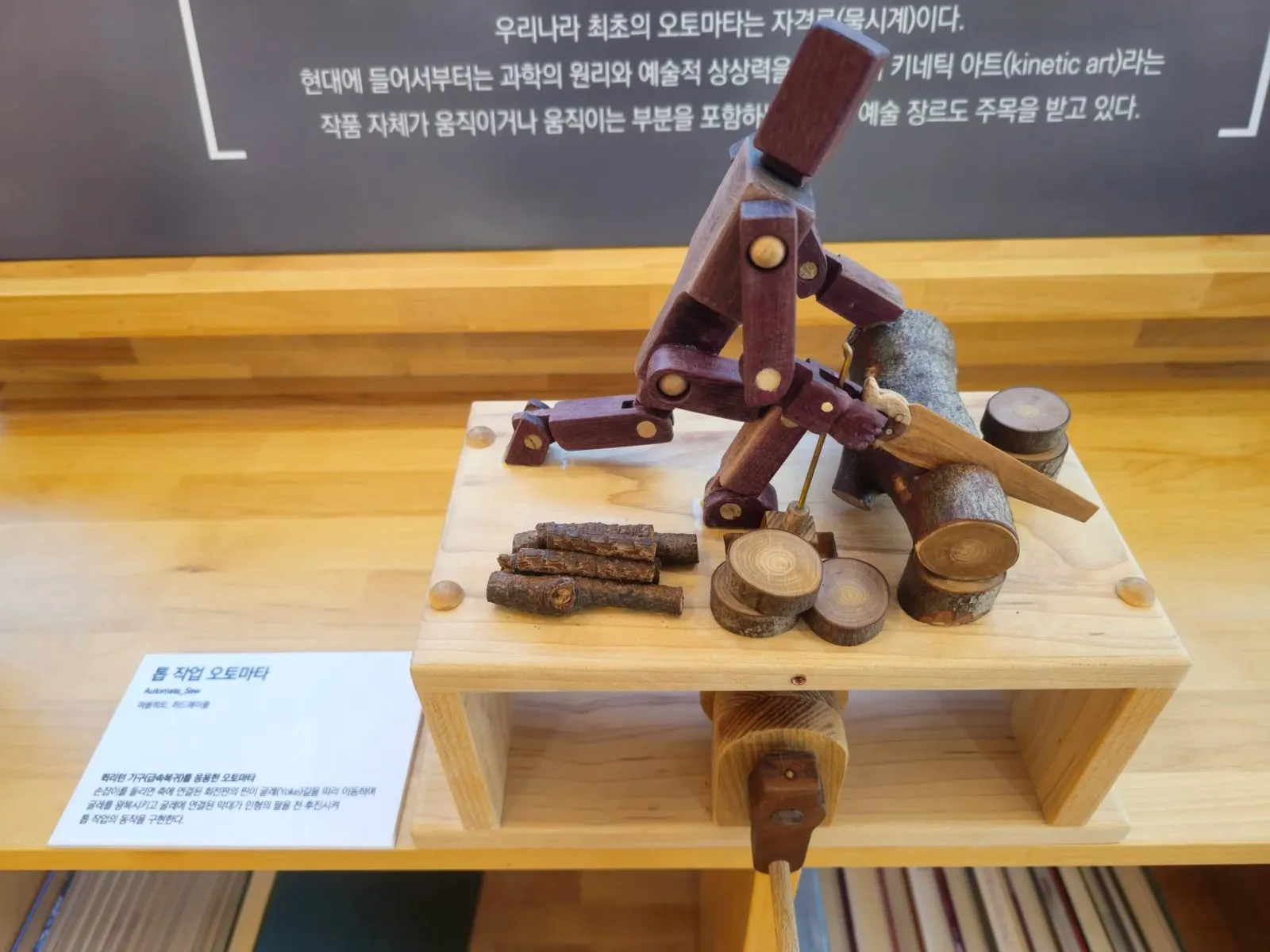 The saw.
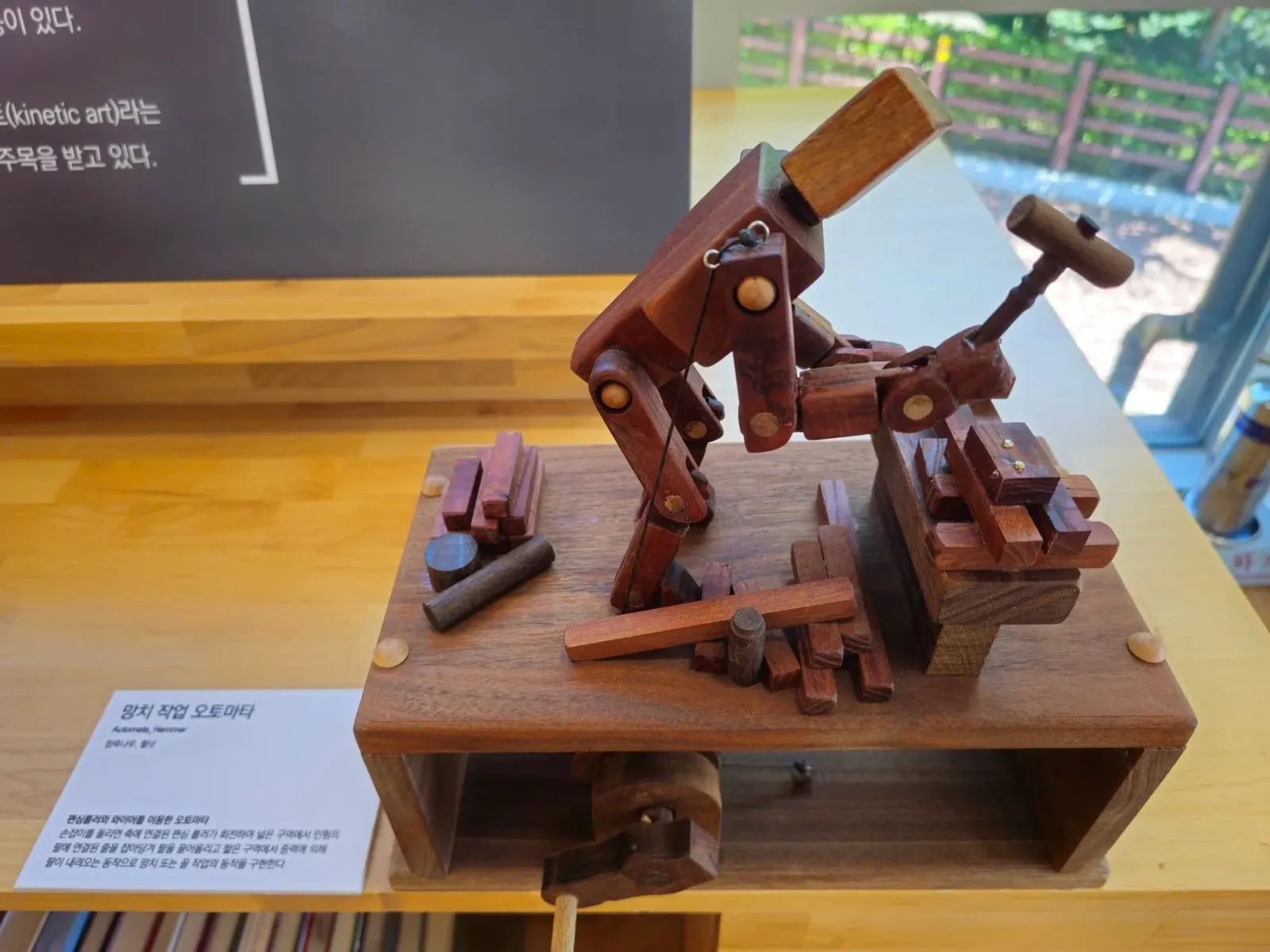 The hammer.
Wooden games. When I visited, a special exhibition called “Gamtan Play” (감탄놀이), a wood-friendly playground for everyone, ran in the special exhibition hall from 2 May 2025 to 31 May 2026, so it has ended. Its play corners, which I photographed, included bisachigi, a traditional game of knocking over a standing stone (here, wooden blocks) by throwing another, a ring toss on a wooden tree, and a maze board you tilt together by standing on it. They had the same “How to Play” boards as the exhibition, so they appear to have been part of it and may no longer be there.
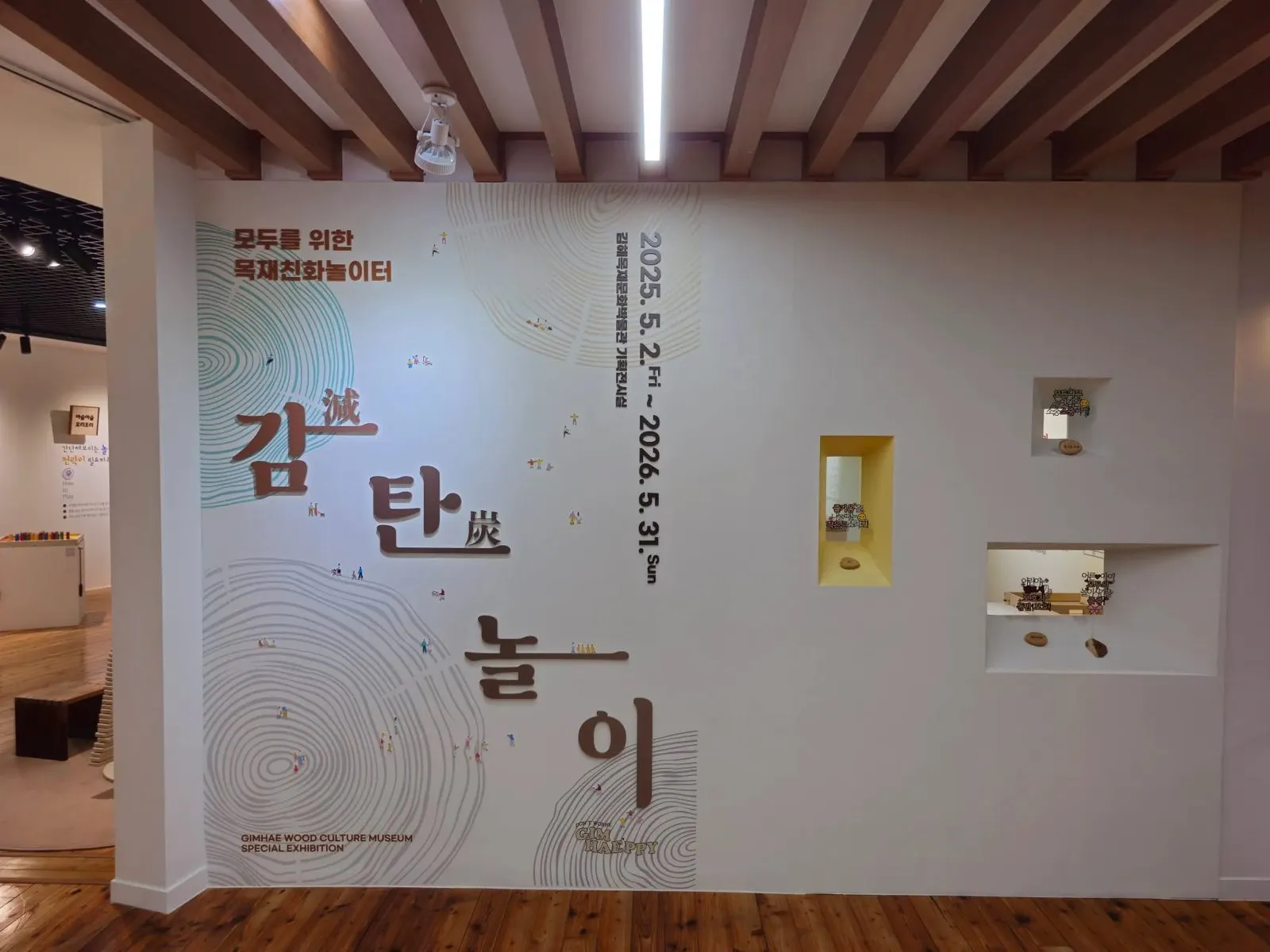 The Gamtan Play exhibition wall (now ended).
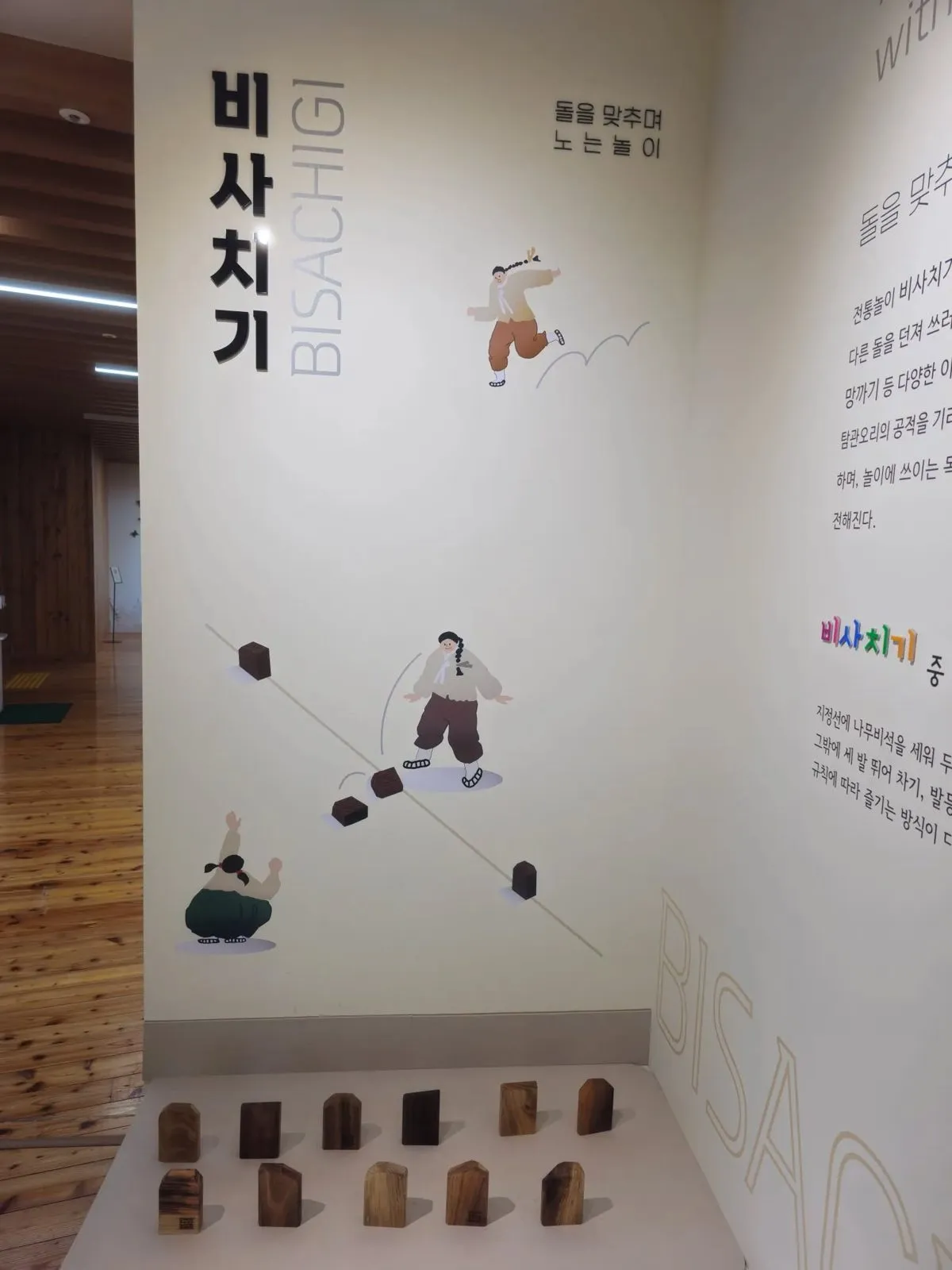 Bisachigi, with wooden “stones”.
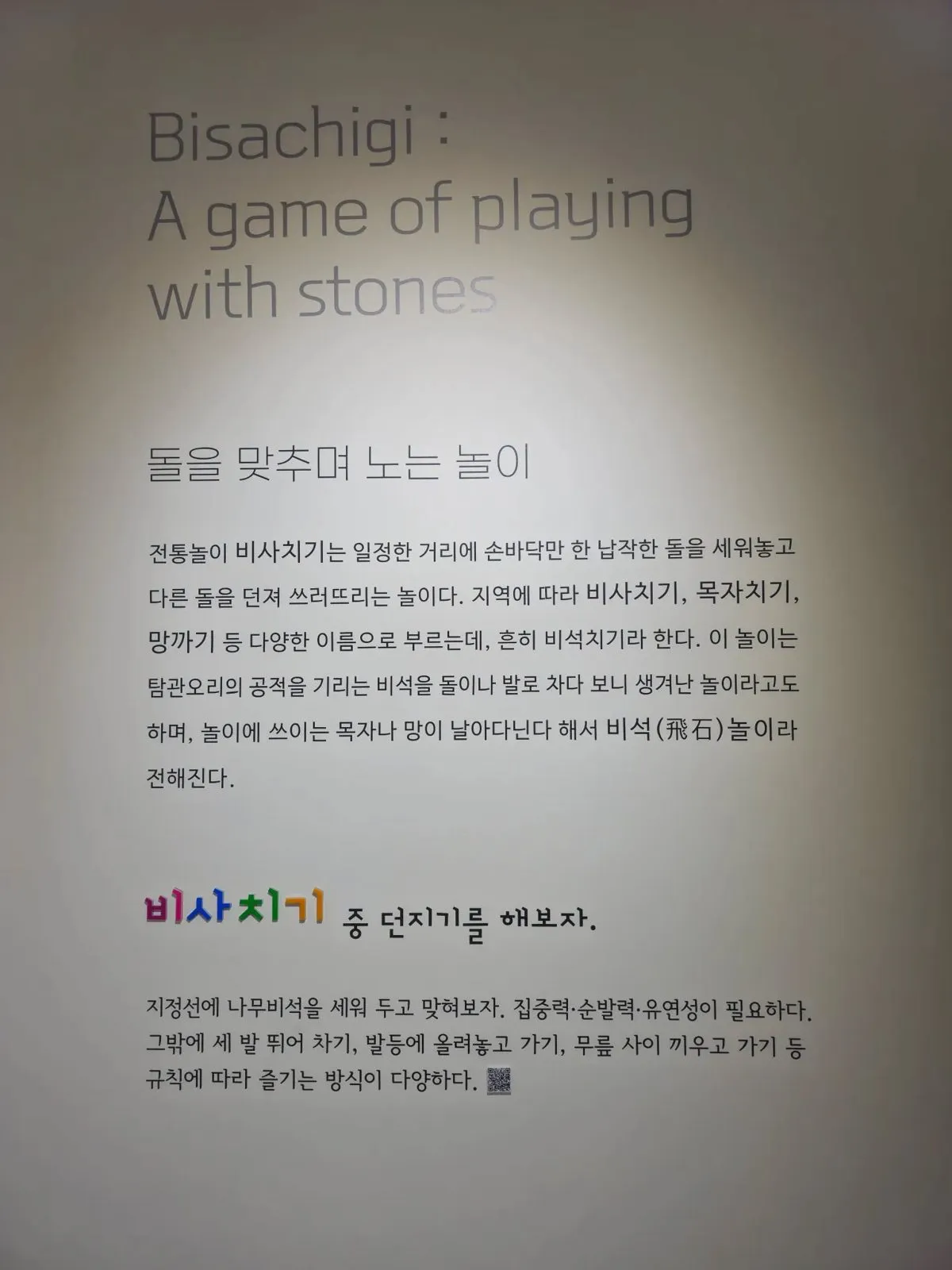 How bisachigi is played (in Korean).
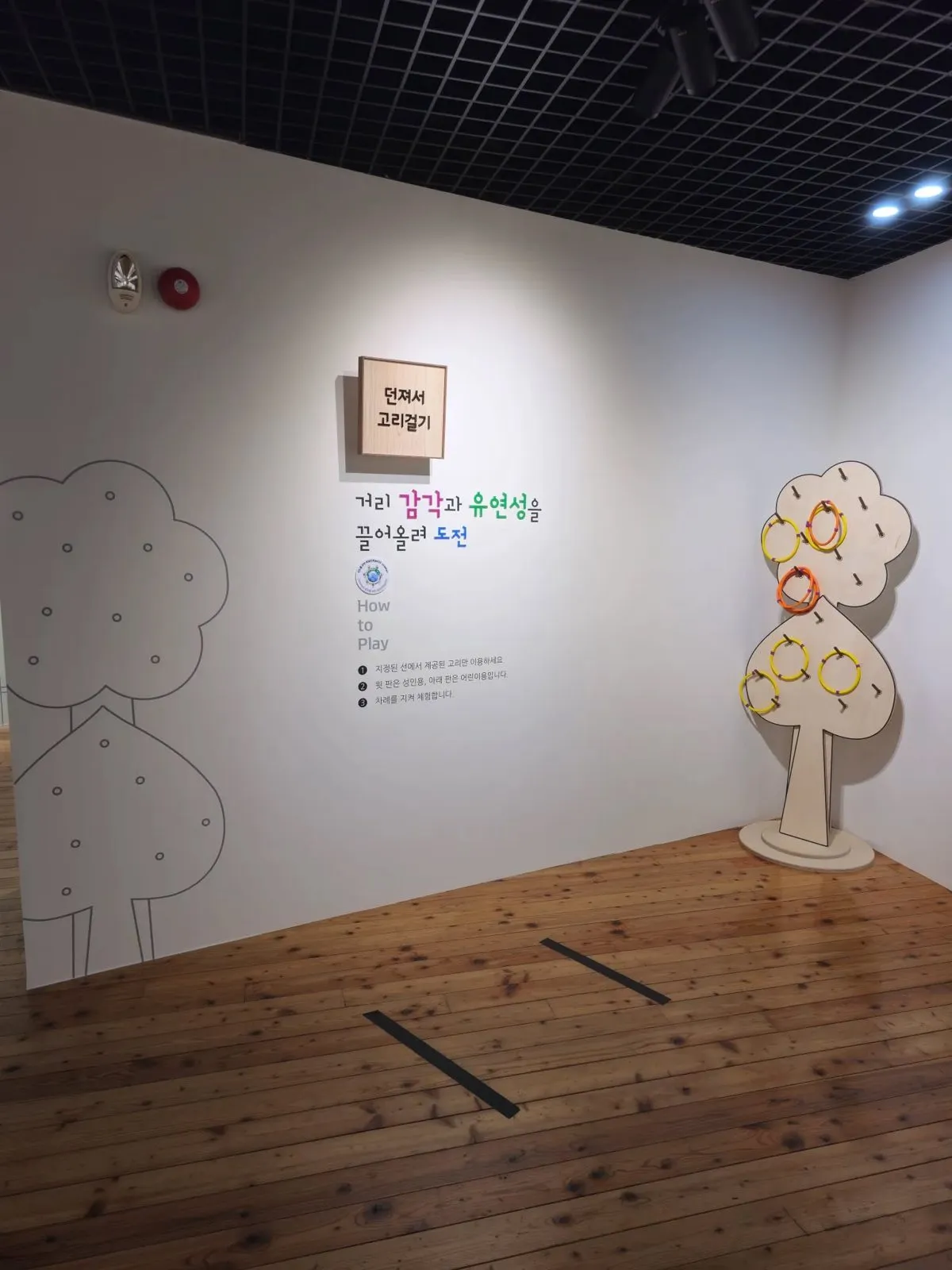 The ring toss.
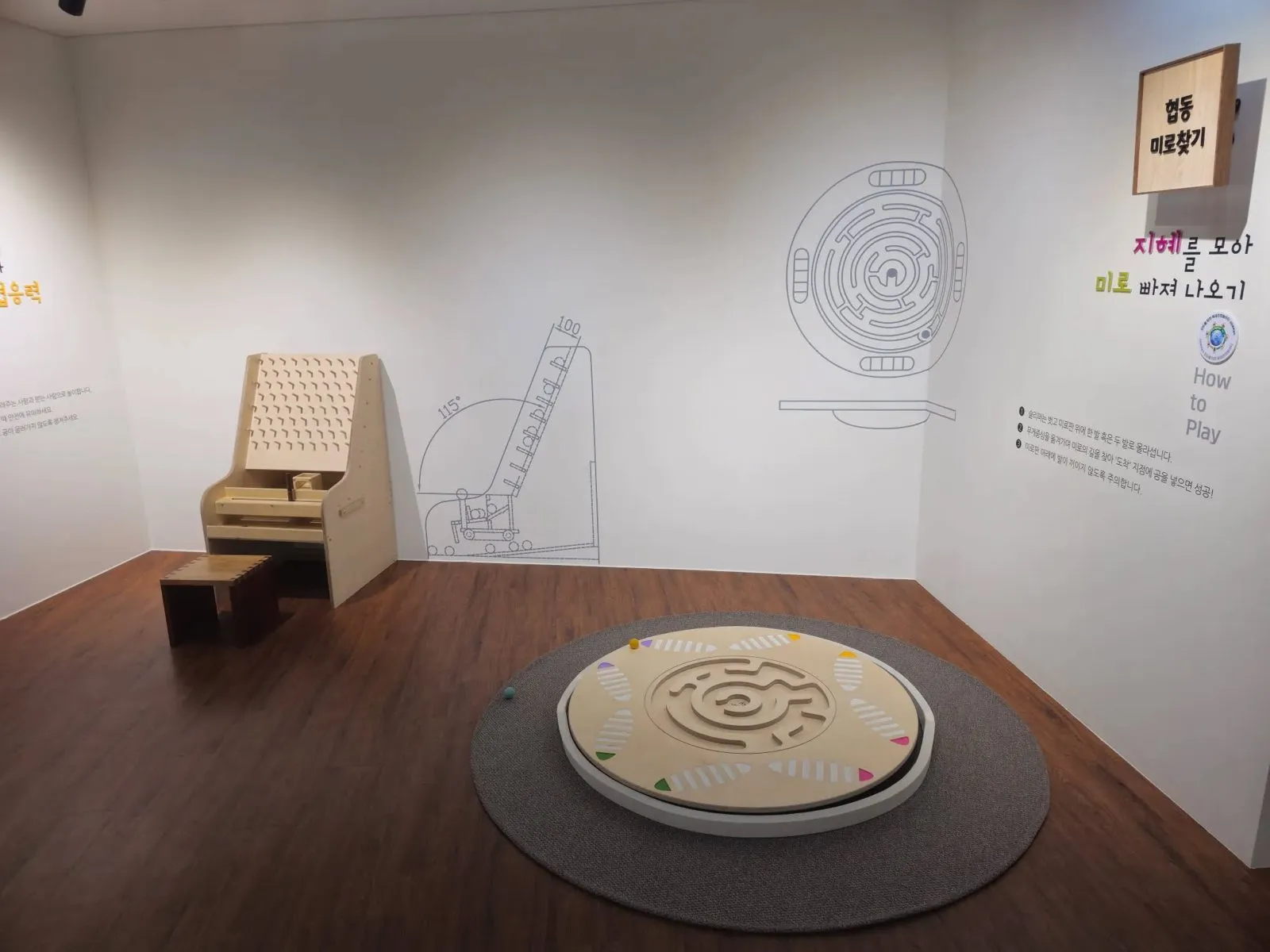 The team maze.
The phytoncide room. I wrote my post here, on the 4th floor, in July 2025. It goes up to the 4th floor. I don’t think I can stay much longer because of time.
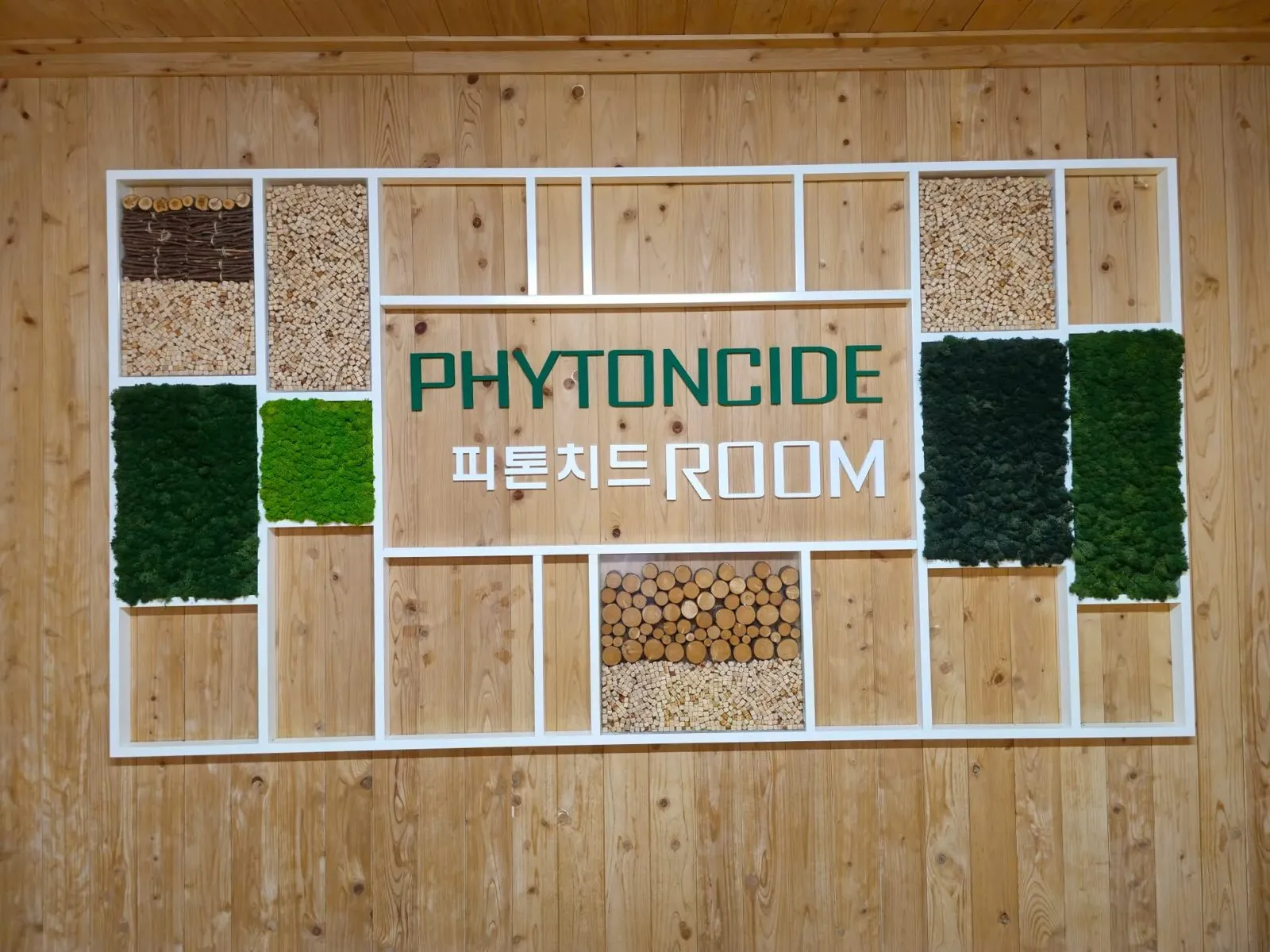 The phytoncide room.
Smelling the wood somehow feels healing! Don’t just stay home on the weekend, go here at least once. There are lots of little fun touches.
Woodworking classes
Upstairs there’s a woodworking workshop, so if you make a little DIY piece with a friend, it’s all the feels. Of course, the activities must be booked in advance!
The museum’s programme calendar lists a daily woodworking class for teenagers, adults and families, with sessions from 10:00 to 12:00 and 14:30 to 16:30, and the wooden playground (꿈크는나무놀이터), with no age limit, in three sessions a day. Both are booked and paid online in advance through the museum’s website, which is in Korean. We couldn’t confirm current prices, so call 055-324-6006 (in Korean) or ask the Korea Travel Hotline below to help.
Good to know
| Gimhae Wood Culture Museum | |
|---|---|
| Admission | Free; classes cost extra |
| Hours | From 09:00. Gimhae City’s pages give closing time as 17:30 or 18:00, so check before you go. Last entry is 30 minutes before closing, so arrive by 17:00 to be safe |
| Closed | Mondays, 1 January, Seollal and Chuseok. When a Monday is a public holiday it opens, and closes the next day instead |
| Classes | Booked ahead online (in Korean); daily sessions 10:00–12:00 and 14:30–16:30 |
| Phone | 055-324-6006 (in Korean) |
| Address | 5-49 Gwandong-ro 27beon-gil, Gimhae |
- In English: many headings and some boards are in English too, but most of the explanations are in Korean only.
- More in English: Gimhae City has an English page on the museum on its Places of Crafts and Folk Arts page.
How to get there
By public transport or car: we couldn’t confirm the bus route or parking, so check the live route in Naver Map before you go.
How to check buses in English: install Naver Map and switch it to English in its settings. When I checked it in October 2026, the English version showed bus routes, stop names and live arrival times (minutes and stops away) in English. Google Maps also gives public transport directions in Korea, but as of late September 2026 it still had no turn-by-turn walking or driving navigation here. Stuck? Call the Korea Travel Hotline: dial 02-1330 from a Korean mobile phone (+82-2-1330 from abroad). It has English-speaking staff. More in our guide to taking buses in Korea in English.
Sources
Gimhae City’s culture facilities page and its English version (hours, closing days, free admission, the address, four floors and facilities), the museum’s pages on Gimhae City’s website (its description, the permanent exhibition names by floor, the programme calendar with class and playground sessions and online booking, the phone number), and the boards and exhibition wall in my photos (the automata, the Gamtan Play dates, bisachigi, the ring toss, the maze). The impressions, the phytoncide room and the photos are from my own visit.