Home / Gyeongsang / Jangsaengpo Whale Culture Special Zone, Ulsan
Jangsaengpo, Ulsan: Korea's whale culture zone, with a whale museum and dolphins
Jangsaengpo Whale Culture Special Zone, Ulsan: an old whaling port with the Whale Museum, a dolphin aquarium, a recreated whaling village and whale-watching cruises. Closed Mondays.
- Getting there
- Paid car park on site (my visit). By bus: check the live route in Naver Map.
- Cost
- Each facility charges separately: Whale Museum ₩2,000, Whale Ecology Experience Hall ₩5,000, Whale Culture Village ₩3,000 for adults (Korea Tourism Organization). I paid ₩7,800 for four facilities in February 2025.
- Time needed
- Half a day (estimate).
- Best time
- Main facilities 09:00–18:00 (last tickets 17:30). Closed Mondays and on Seollal and Chuseok days (Korea Tourism Organization).
Tap any Korean name on this page to hear it. Prefer Naver Map? In the app (set to English), search Jangsaengpo Whale Museum Ulsan, or paste the Korean name:장생포고래박물관
Short version: Jangsaengpo (장생포) in Nam-gu, Ulsan, was a whaling base. Today it’s the Jangsaengpo Whale Culture Special Zone (장생포 고래문화특구), which the Korea Tourism Organization (KTO) describes as the only tourism zone in Korea built around whale history and culture. It has the Whale Museum, a dolphin aquarium, a recreated whaling village, a monorail, a kids’ park and whale-watching cruises, each with its own ticket. I went on Saturday 8 February 2025 and paid ₩7,800 for four facilities.
Last checked: 20 November 2026. Facilities, prices, hours, closing days and the address come from the KTO listings for the zone and each facility. The whale festival dates come from the Ministry of Culture, Sports and Tourism’s festival listing. The impressions, the parking and what I paid are from my own visit. Tell me if anything has changed.
What it is
Have you heard of the Jangsaengpo Whale Culture Special Zone? It used to be a whaling base, and now it’s a whale-themed tourist area.
The KTO says the Whale Museum was built in the old whaling base to collect and show whaling objects that have been disappearing since commercial whaling was banned in 1986. Its listing for the zone describes the museum’s whale skeletons and whaling tools, and the Whale Ecology Experience Hall, Korea’s first dolphin aquarium, where you can watch dolphins.
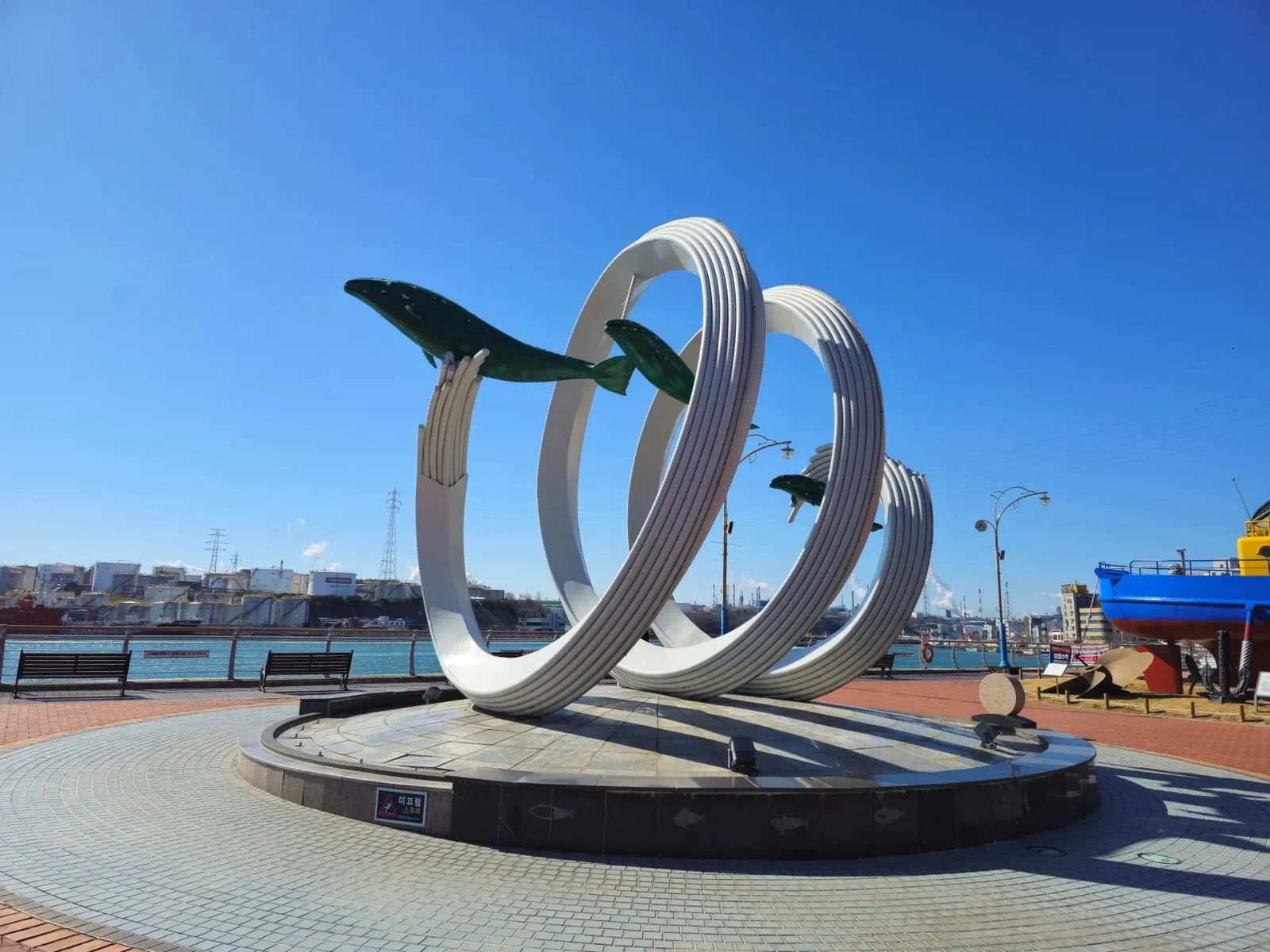
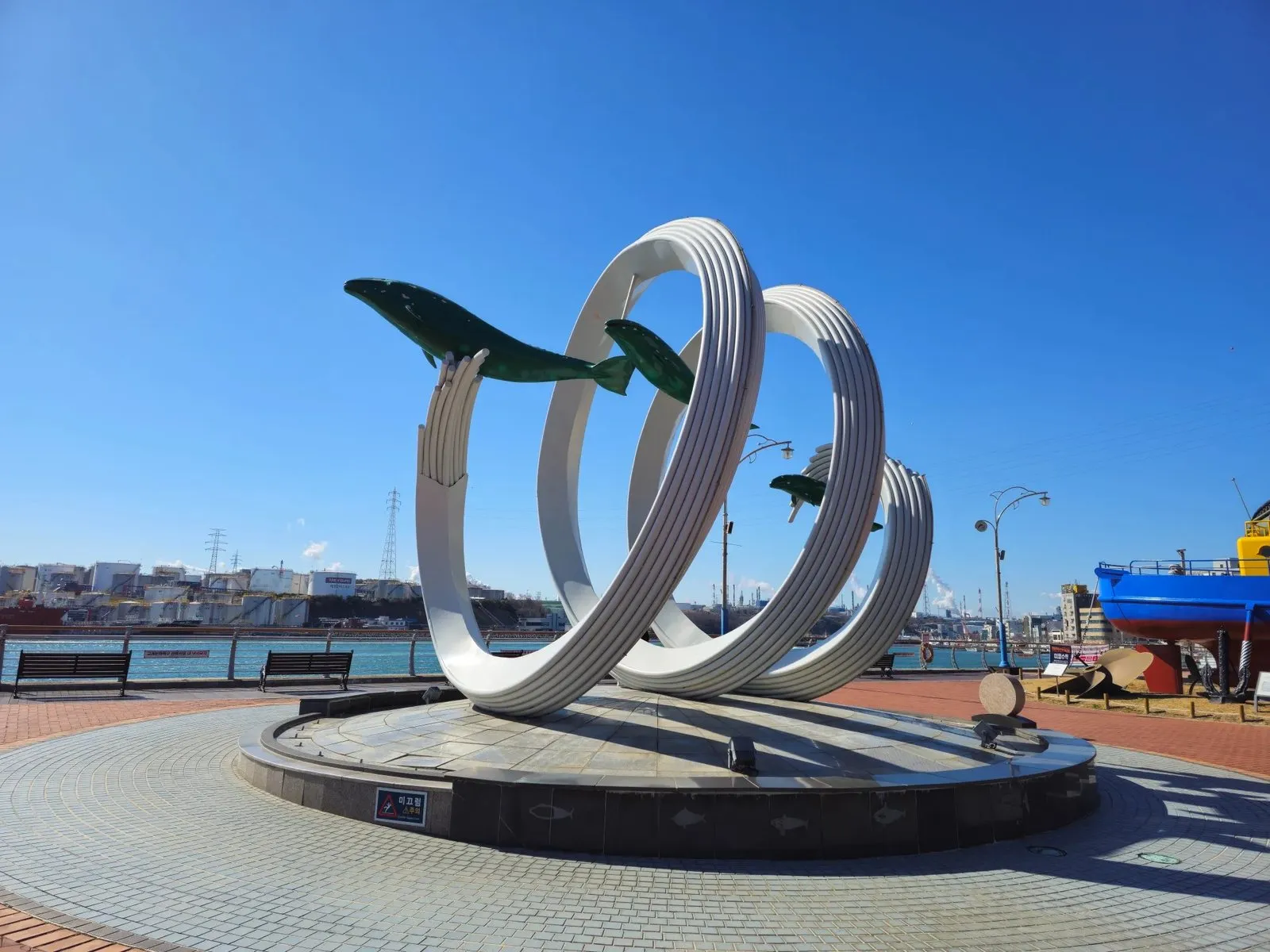 The whale ring sculpture by the harbour.
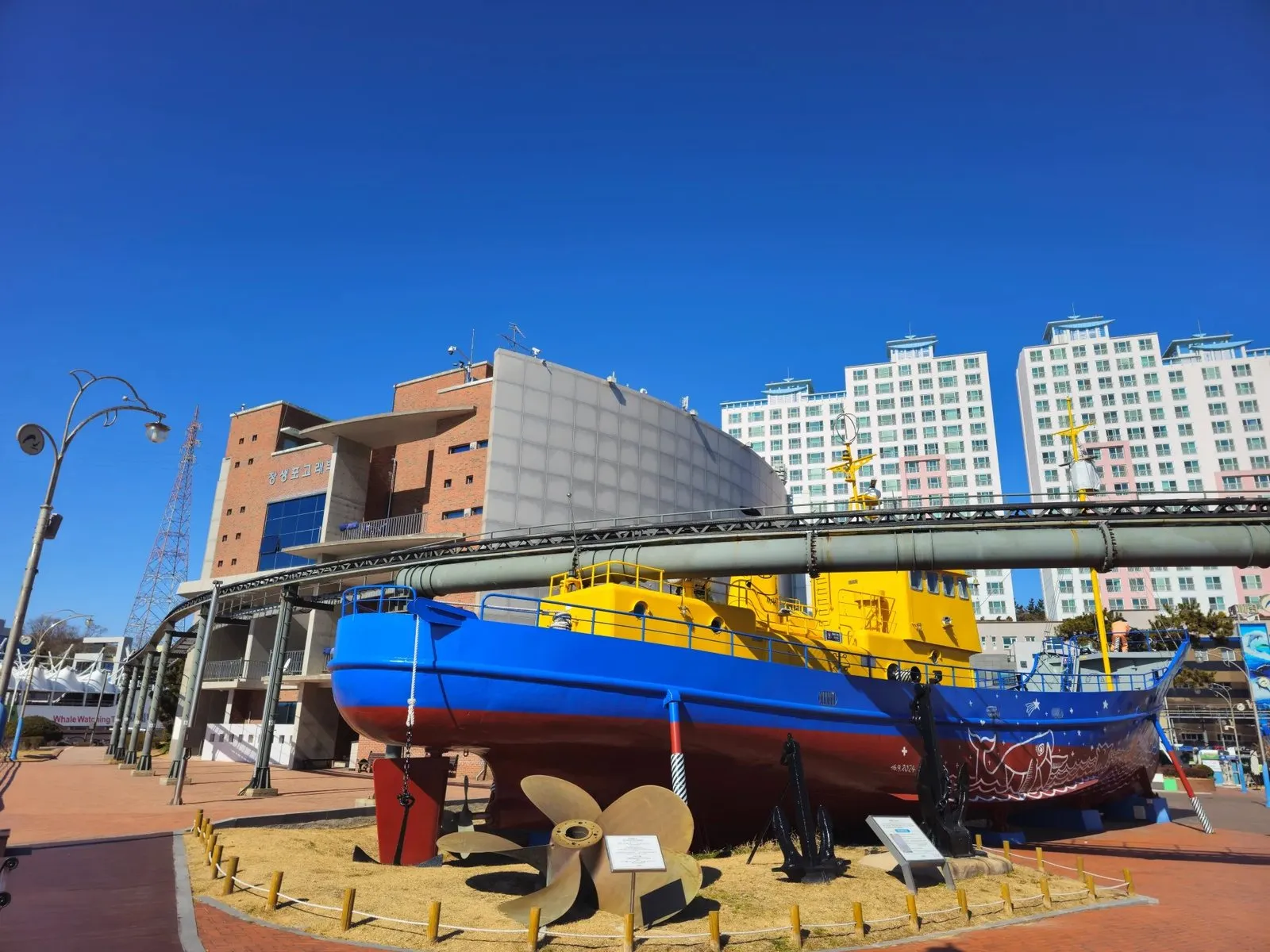 An old whaling ship on display next to the museum.
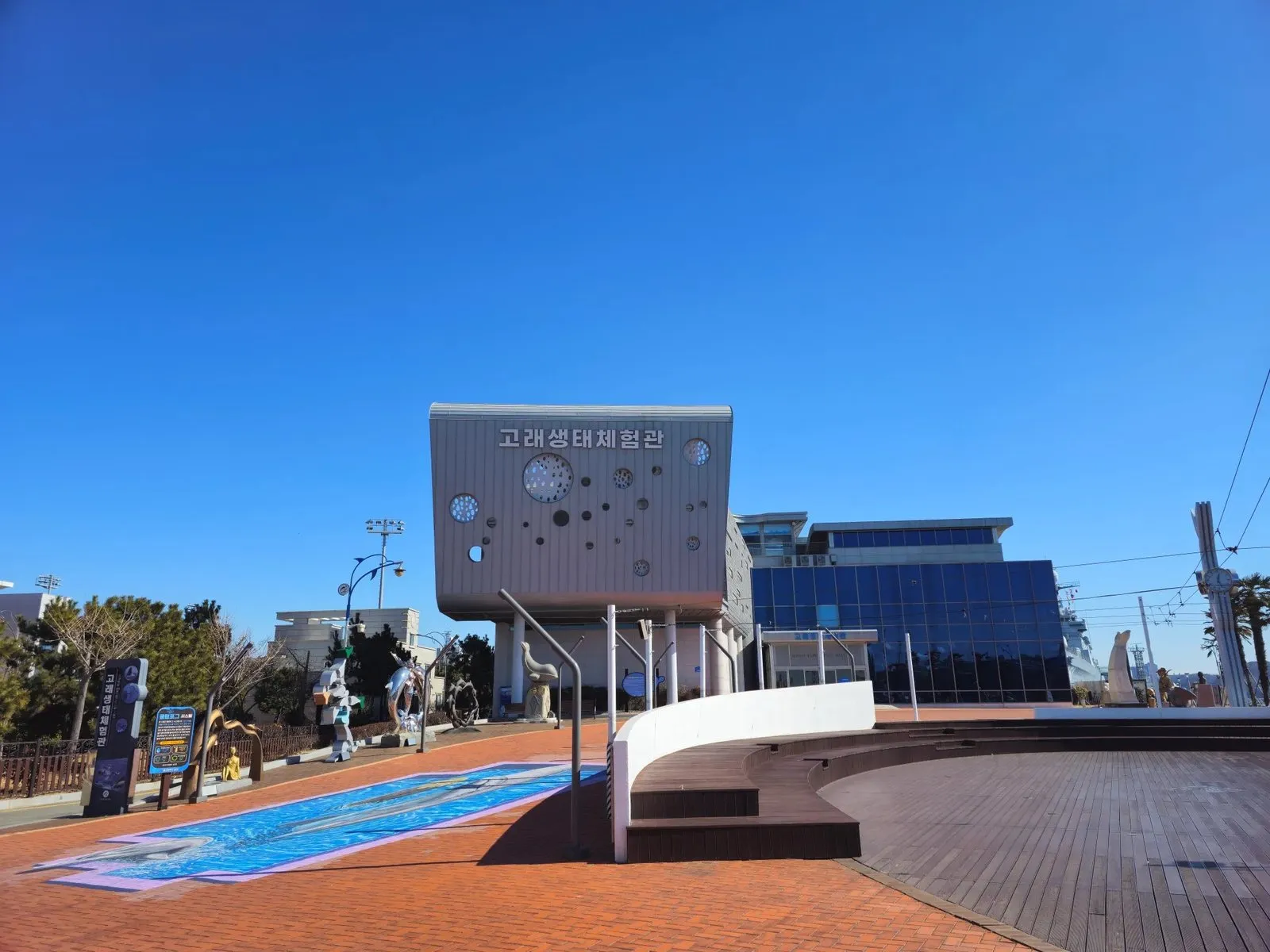 The Whale Ecology Experience Hall, with the dolphin aquarium.
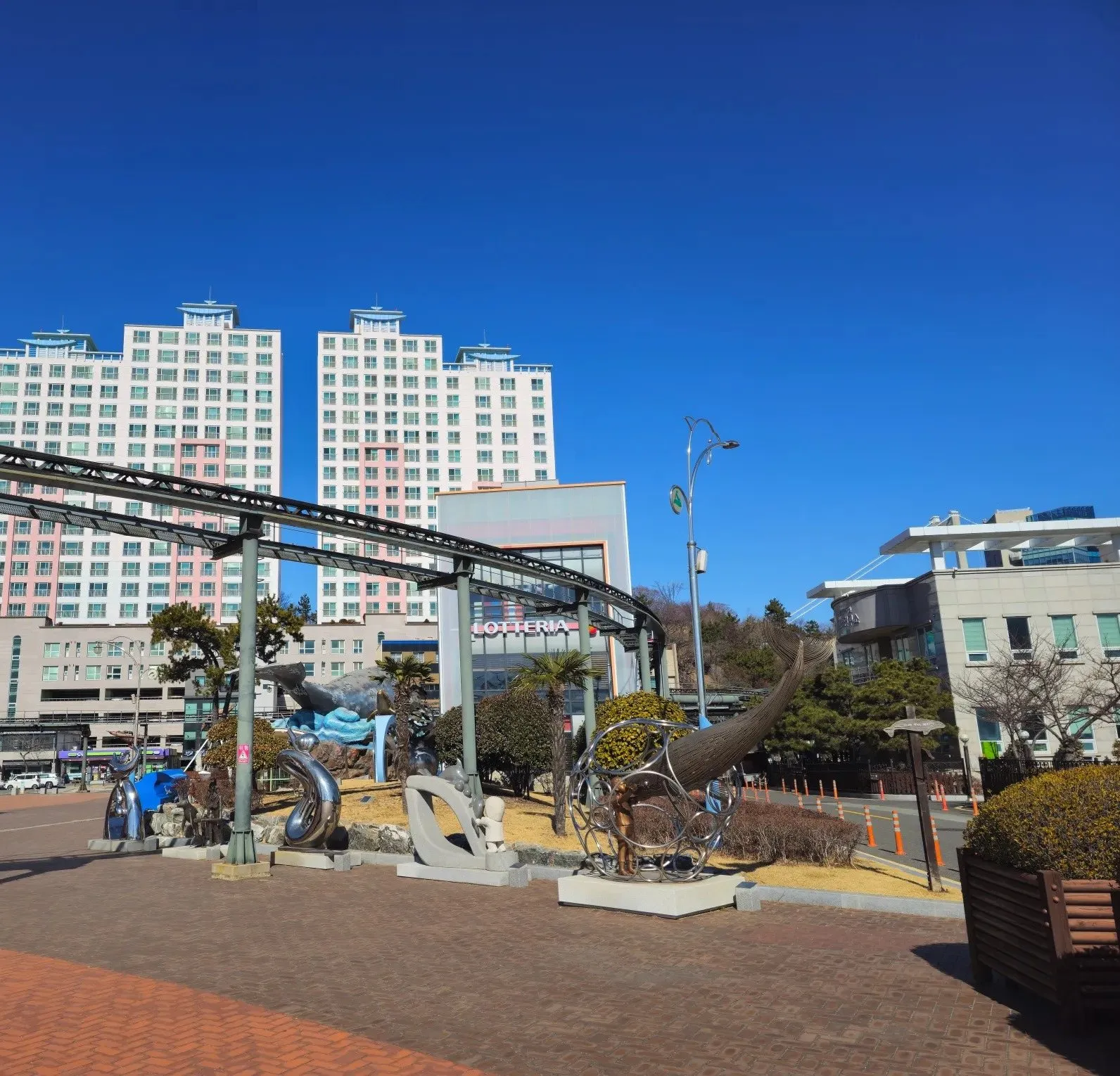 Whale sculptures around the plaza.
What’s in the zone
According to the KTO listings:
- Whale Museum (장생포고래박물관): whale skeletons, models and whaling objects. Adults ₩2,000.
- Whale Ecology Experience Hall (고래생태체험관): the dolphin aquarium, sea-fish tanks and displays on whaling life. Adults ₩5,000.
- Whale Culture Village (고래문화마을): opened in 2015, it recreates the old Jangsaengpo whaling village, with whale sculptures and life-size whale models. Adults ₩3,000.
- Jangsaengpo Monorail and Welly Kids Land: the zone’s listing gives the monorail 10:00–18:00 and the kids’ park 10:00–18:00 (last tickets 17:00).
- Whale-watching cruise (고래바다여행선): the KTO says Korea’s first whale-watching cruise started here in July 2009. Whale-watching trips run from April to October; in November only a Saturday evening coastal tour sails, and there’s no sailing on Mondays.
The Whale Culture Village recreates the old village, so it’d feel like slipping back in time. Getting around by monorail is comfortable, and Welly Kids Land is good for kids to play in.
In February 2025, using four of the facilities in the zone cost me ₩7,800 in total.
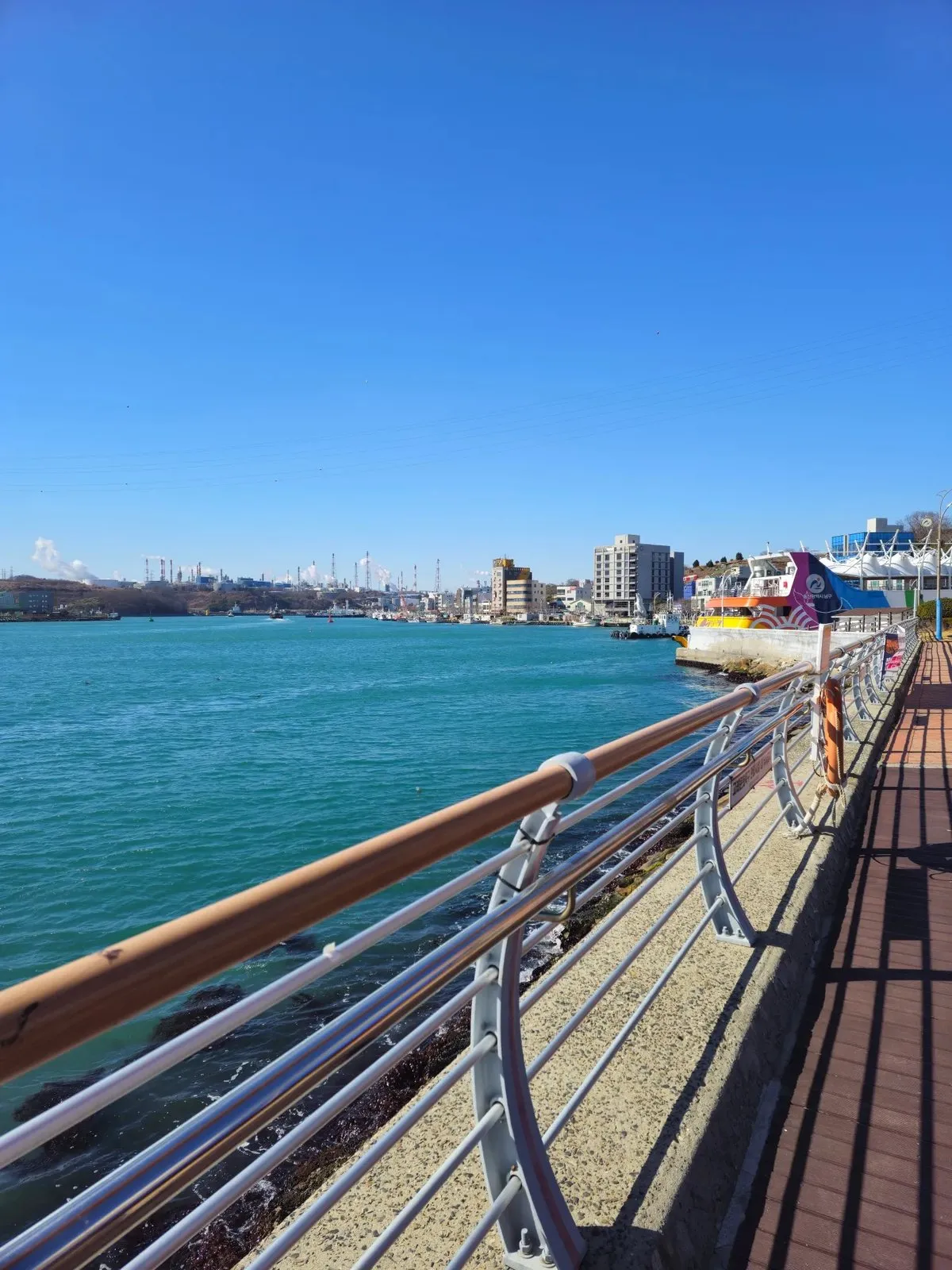 The harbour, with a tour boat moored.
Ulsan Whale Festival: the 30th Ulsan Whale Festival was held in the zone on 15–18 October 2026 (Ministry of Culture, Sports and Tourism festival listing).
Visiting
| Jangsaengpo Whale Culture Special Zone | |
|---|---|
| Hours | Whale Museum, Whale Ecology Experience Hall, the Ulsan warship and the Whale Culture Village: 09:00–18:00, last tickets 17:30. Monorail 10:00–18:00. Welly Kids Land 10:00–18:00, last tickets 17:00 (KTO) |
| Closed | Mondays (if a Monday is a public holiday, check the zone’s notices) and on Seollal and Chuseok days (KTO) |
| Prices (adults) | Whale Museum ₩2,000; Whale Ecology Experience Hall ₩5,000; Whale Culture Village ₩3,000 (KTO). Other facilities are priced separately. |
| Parking | Available (KTO). I found a big paid car park. |
| Address | 244 Jangsaengpogorae-ro, Nam-gu, Ulsan (KTO, Whale Museum) |
How to get there
By car: search 장생포고래박물관 in Naver Map. There’s a big paid car park, and whale-meat restaurants line up in front of it.
By bus: we haven’t listed bus details here. Check the live route in Naver Map.
How to check buses in English: install Naver Map and switch it to English in its settings. When I checked it in October 2026, the English version showed bus routes, stop names and live arrival times (minutes and stops away) in English. Google Maps also gives public transport directions in Korea, but as of late September 2026 it still had no turn-by-turn walking or driving navigation here. Stuck? Call the Korea Travel Hotline: dial 02-1330 from a Korean mobile phone (+82-2-1330 from abroad). It has English-speaking staff. More in our guide to taking buses in Korea in English.
Tips
- Not on a Monday. Most facilities close on Mondays.
- Whale-watching is April to October only (KTO). Check the schedule before you plan around it.
- Tickets are separate. Each facility has its own price.
Who it’s for
Likely to suit (estimate): families with children, whale and sea-life fans, and anyone on an Ulsan itinerary. If you like whales or are looking for an unusual trip, give it a go.
Sources
The Korea Tourism Organization’s Korean listings for the Jangsaengpo Whale Culture Special Zone (updated October 2026: the only whale tourism zone, the facilities, hours, closing days, parking), the Whale Museum (whaling base, the 1986 ban, ₩2,000, the address), the Whale Ecology Experience Hall (₩5,000), the Whale Culture Village (2015, the recreated village, ₩3,000) and the whale-watching cruise (July 2009, whale-watching April–October, November coastal tour only); the Ministry of Culture, Sports and Tourism’s festival listing (Ulsan Whale Festival, 15–18 October 2026). The impressions, the car park, the restaurants and the ₩7,800 I paid are from my own visit.