Home / Gyeongsang / Buinsa Temple (Daegu)
Daegu temple honoring Queen Seondeok: Buinsa and the First Tripitaka
A quiet temple on Palgongsan in Daegu that honors Silla's Queen Seondeok, where Goryeo's First Tripitaka was kept until it burned in 1232. A Palgongsan trailhead. Free admission and parking when I visited.
- Getting there
- 967-28 Palgongsan-ro, Dong-gu, Daegu (Korea Tourism Organization), on the southern side of Palgongsan. I drove; the car park is big and was free. For buses, check the live route in Naver Map (in English).
- Cost
- Free admission and free parking when I visited (February 2026)
- Time needed
- About 30 minutes to an hour for the temple, longer if you start a hike here (estimate)
- Best time
- Open every day of the year (Korea Tourism Organization). The memorial rite for Queen Seondeok is held on the 15th day of the third lunar month (in April or May).
Tap any Korean name on this page to hear it. Prefer Naver Map? In the app (set to English), search Buinsa Temple Daegu, or paste the Korean name:부인사 대구 동구
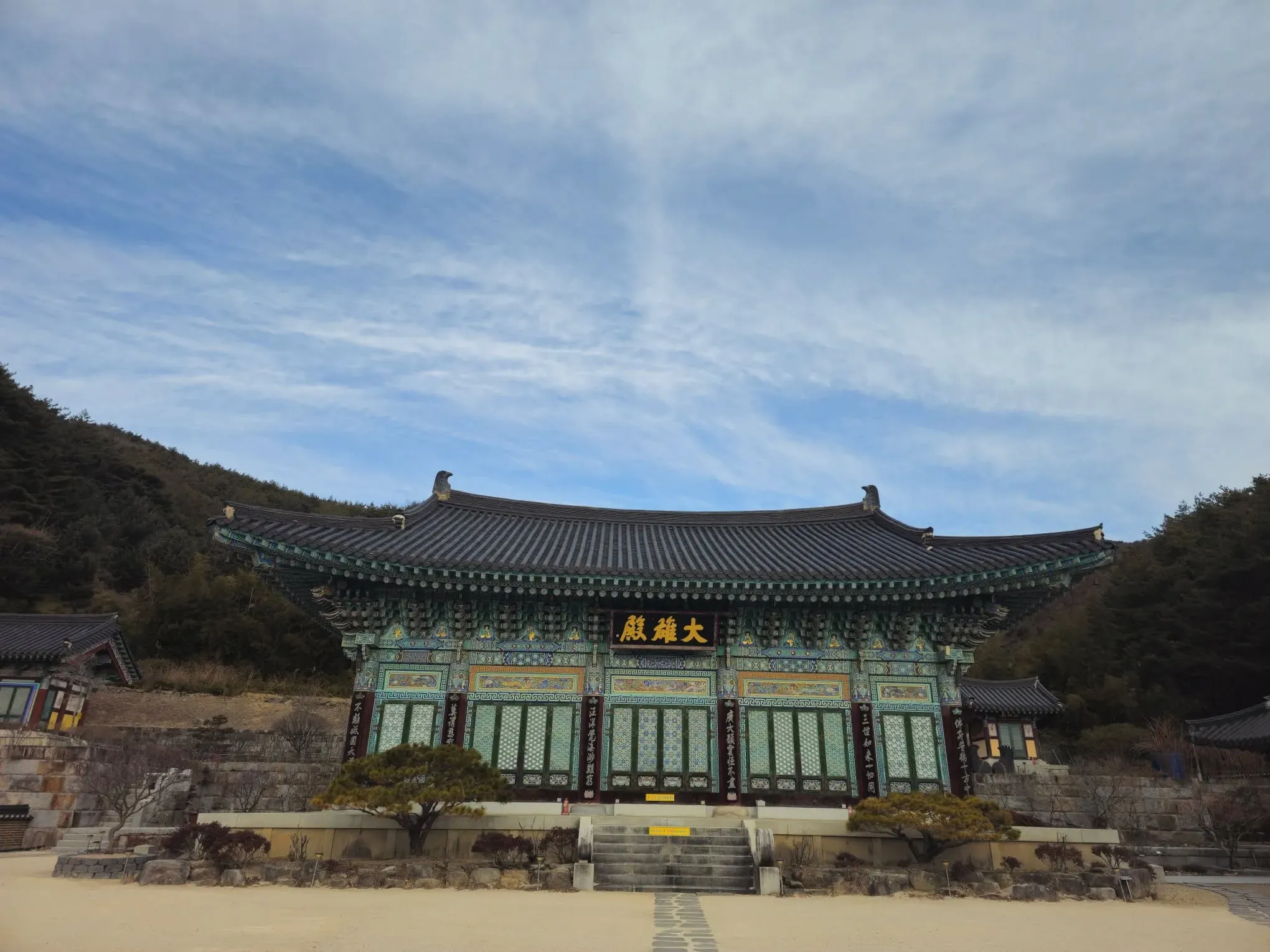
Short version: Buinsa (부인사) is a temple halfway up the southern side of Palgongsan in Daegu. It has deep ties to Queen Seondeok, the 27th ruler of the Silla kingdom: it keeps her portrait and holds a memorial rite for her every spring. It’s also where Goryeo’s First Tripitaka, the first set of Buddhist scripture woodblocks made in Korea, was kept until it burned in a Mongol invasion in 1232. I went on 6 February 2026. Deep history, plenty of cultural heritage, and a quiet, old-world atmosphere: I really liked it. It’s also a starting point for hikes up Palgongsan. Admission and parking were free, and the car park is big.
Last checked: 25 October 2026. The address, opening days, the portrait and memorial rite, the old temple site and the hiking routes come from the Korea Tourism Organization’s listing (updated December 2025). The founding theory, the First Tripitaka’s story and the temple’s names come from the information board on site (in Korean, photographed February 2026), news reports and the Korea Tourism Organization; where they differ, the note says so. Free admission and parking and my impressions are from my own visit. Tell me if anything has changed.
Queen Seondeok’s temple
Buinsa is a branch temple of Donghwasa, the head temple of the Jogye Order’s 9th district (Korea Tourism Organization; board on site).
When it was founded isn’t certain. The Korea Tourism Organization’s listing says its founding date and even its original location are much debated, and that it’s said to date from the early 7th century. The board on site and a May 2026 Gyeongbuk Maeil report say the leading theory is that Queen Seondeok herself founded it in the mid-7th century.
What’s certain is the bond with her today. According to the Korea Tourism Organization, the temple keeps a portrait of Queen Seondeok, and every year on the 15th day of the third lunar month, the people of Sinmu-dong (the neighbourhood the temple is in), the temple and the Gyeongju Kim clan hold a memorial rite for her. A 2012 Maeil Shinmun column says villagers began holding the rite in the mid-1920s, and that the small shrine to her was rebuilt as a hall called Sungmojeon (숭모전). In 2026 the rite was held in Sungmojeon on 1 May, with about 500 people attending (Gyeongbuk Maeil).
The First Tripitaka
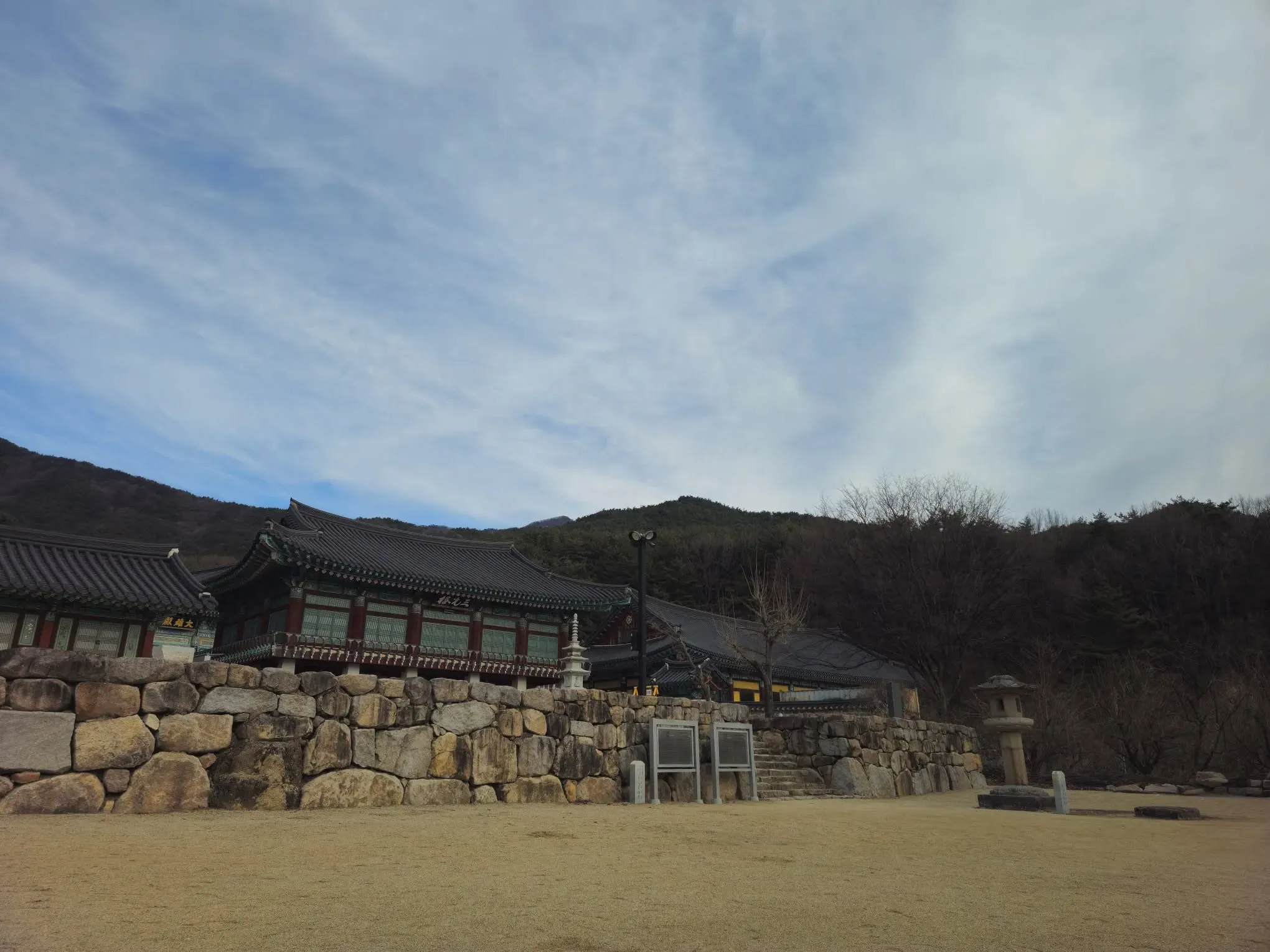 Halls on a terrace wall of huge stones.
The First Tripitaka (초조대장경) was a complete set of Buddhist scriptures carved on woodblocks, begun under Goryeo’s King Hyeonjong in the hope that the Buddha’s power would help the country overcome the Khitan invasions (Seoul Shinmun, 2010; The Korea Times, 2011). Its dates differ by source. Seoul Shinmun and The Korea Times date it to 1011, and The Korea Times says work began that year and was completed in 1087; the Korea Tourism Organization’s listing says the carving began around 1013 and was finished in 1099. The board on site gives 1011 and calls it the second such set made in East Asia.
The blocks were kept at Buinsa until they were burned in 1232, during the Mongol invasions (board on site; Seoul Shinmun, 2010; The Korea Times, 2011). The famous Tripitaka Koreana now at Haeinsa, the Palman Daejanggyeong, was made after that loss (The Korea Times, 2011; Maeil Shinmun, 2012).
Was it also carved here? The Korea Tourism Organization’s listing says Buinsa is widely known as the place where it was carved. But the board on site and the news reports cited here only say the blocks were kept here, and The Korea Times (2011) says they were first stored at Heungwangsa and then moved to Buinsa. I couldn’t confirm where they were carved.
In July 2024, Daegu’s Dong-gu district office, the temple and a heritage research institute said a Goryeo-period roof tile inscribed with the temple’s name, 符仁寺, had turned up on the old temple site, the first one found in nine rounds of excavation since 1989. It was reported as evidence that this was where the First Tripitaka was kept (News Seoul; Gyeongbuk Maeil). The name itself has been written in different ways over the centuries (夫人寺, 符仁寺 and 夫仁寺), according to the board and the same reports.
The temple and the old temple site
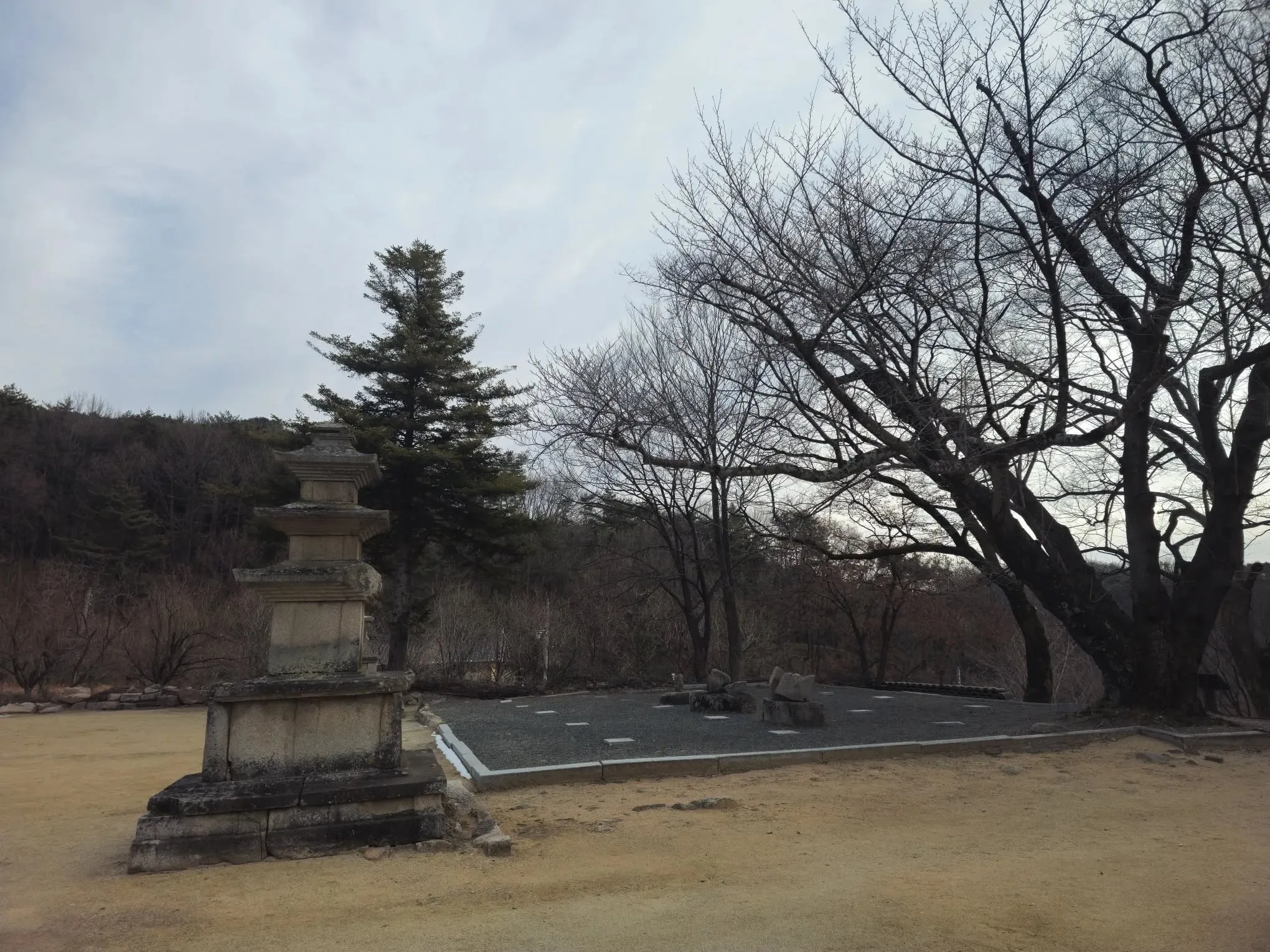 A weathered stone pagoda at Buinsa.
The board on site says the temple today is in two parts: the practice space of Buinsa itself, centred on its main hall and the Ilhwa Seonwon meditation hall, and the site of the old temple, which is protected as a Daegu monument (Buinsaji, No. 3). The Korea Tourism Organization says the old temple site has turned into vineyards, but its flagpole supports still stand about 200 m south of the present temple, showing how far the temple grounds once reached.
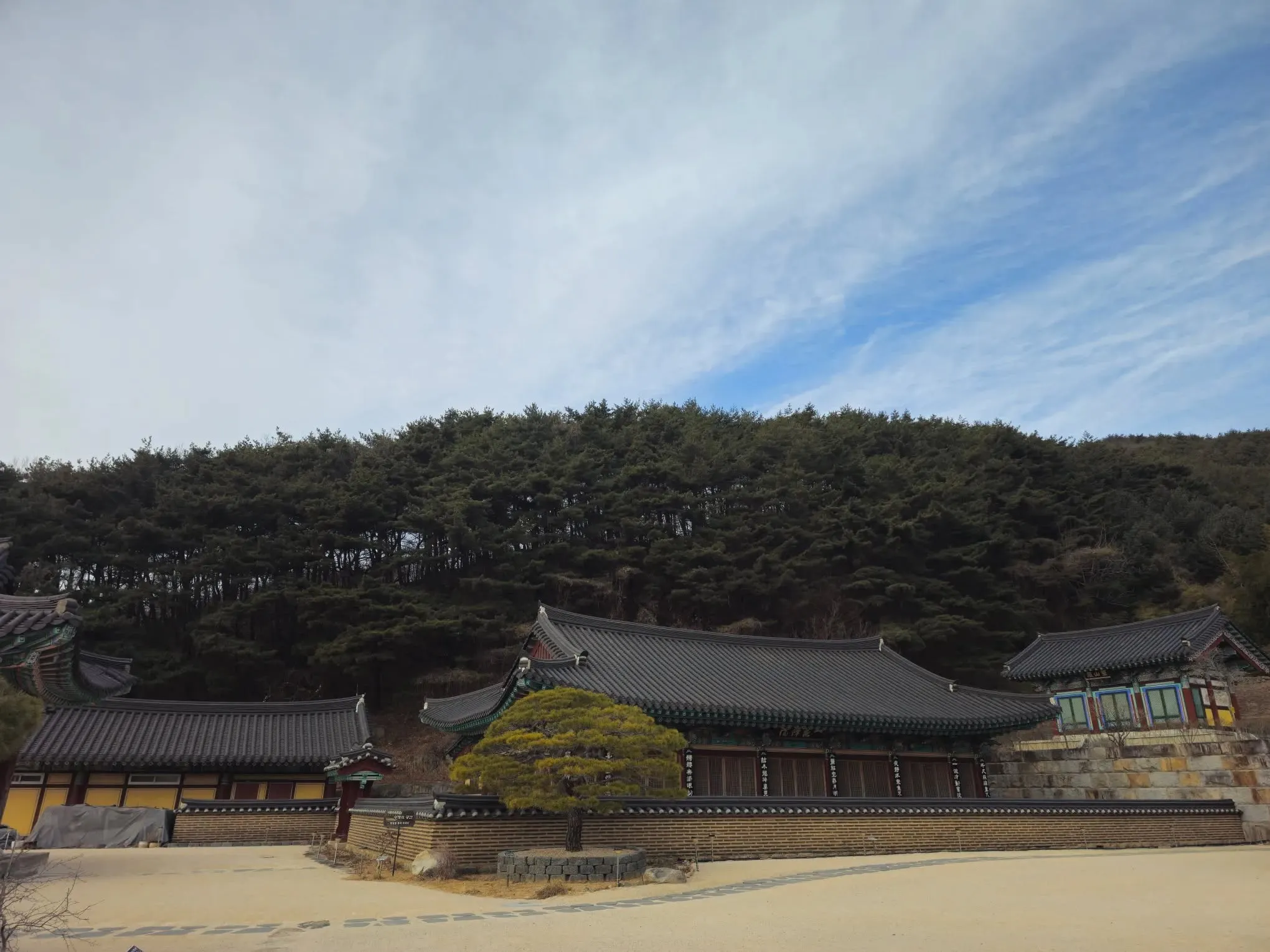 Halls below the pine-covered slope.
Hiking from Buinsa
Buinsa is a trailhead for the ridge of Palgongsan National Park (Korea Tourism Organization). From the temple you can climb past Imaljae (이말재) to the peaks of Seobong, Birobong and Dongbong, or do a loop that comes back to Buinsa over the Topnal (“saw-tooth”) ridge and Madangjae. As I said in my notes, it’s a good starting point for hiking Palgongsan.
Visiting
| Buinsa Temple (Daegu) | |
|---|---|
| Address | 967-28 Palgongsan-ro, Dong-gu, Daegu (대구광역시 동구 팔공산로 967-28) |
| Open | Every day of the year (Korea Tourism Organization) |
| Admission | Free when I visited (February 2026) |
| Parking | Big car park, free when I visited (February 2026) |
| Memorial rite | Queen Seondeok’s memorial rite, 15th day of the third lunar month (Korea Tourism Organization) |
How to get there
By car: I drove. The car park is big and free, and there’s no admission fee.
By public transport: check the live route in Naver Map (switched to English): search Buinsa, or paste 부인사.
How to check buses in English: install Naver Map and switch it to English in its settings. When I checked it in October 2026, the English version showed bus routes, stop names and live arrival times (minutes and stops away) in English. Google Maps also gives public transport directions in Korea, but as of late September 2026 it still had no turn-by-turn walking or driving navigation here. Stuck? Call the Korea Travel Hotline: dial 02-1330 from a Korean mobile phone (+82-2-1330 from abroad). It has English-speaking staff. More in our guide to taking buses in Korea in English.
Tips
- More in Daegu: Bukjijangsa, an old temple beside a clear stream on the southern side of Palgongsan, with a Treasure-listed hall and twin stone pagodas. I went there the same day.
- The history board is in Korean. The one I photographed has the temple’s history and a site map.
Who it’s for
Likely to suit (estimate): anyone interested in Queen Seondeok or Korean Buddhist history, hikers starting up Palgongsan, and anyone who likes quiet temples.
Sources
Checked against the Korea Tourism Organization’s listing (updated 1 December 2025: the address, branch temple of Donghwasa, founding date and location debated, said to date from the early 7th century, widely known as the carving site, carving begun around 1013 and finished in 1099, Queen Seondeok’s portrait and the memorial rite on the 15th day of the third lunar month by Sinmu-dong residents, the temple and the Gyeongju Kim clan, the old temple site now vineyards with flagpole supports 200 m south, the trailhead and routes, open every day of the year), the information board on site (in Korean, photographed February 2026: branch of Donghwasa, the mid-7th-century founding theory, the rite for over 100 years, the three ways of writing the name, the First Tripitaka begun in 1011 as the second in East Asia, kept here and burned in 1232 in the second Mongol invasion, the two parts of today’s temple, Buinsaji as Daegu monument No. 3), Gyeongbuk Maeil (May 2026: the founding theory, the 2026 rite in Sungmojeon on 1 May with about 500 people; July 2024: the inscribed roof tile), News Seoul (July 2024: the roof tile, nine excavations since 1989, the names by period, the 1232 loss), Maeil Shinmun (2012 column: the rite since the mid-1920s, Sungmojeon, the later Tripitaka made after the loss), Seoul Shinmun (2010: made from 1011 against the Khitan invasions, kept at Buinsa, lost in 1232) and The Korea Times (2011: begun in 1011, completed in 1087, stored at Heungwangsa and then moved to Buinsa, destroyed by Mongol troops in 1232, the Tripitaka Koreana at Haeinsa made after the loss). Free admission and parking, the big car park and my impressions are from my own visit.