Home / Jeolla / Yangnim History and Culture Village (Gwangju)
Things to do in Gwangju, Korea: Yangnim-dong and Penguin Village
A Gwangju neighborhood where American missionaries built schools and a hospital in the early 1900s, with hanok and Western-style buildings side by side and the junk-art alleys of Penguin Village next door. I went in March 2026.
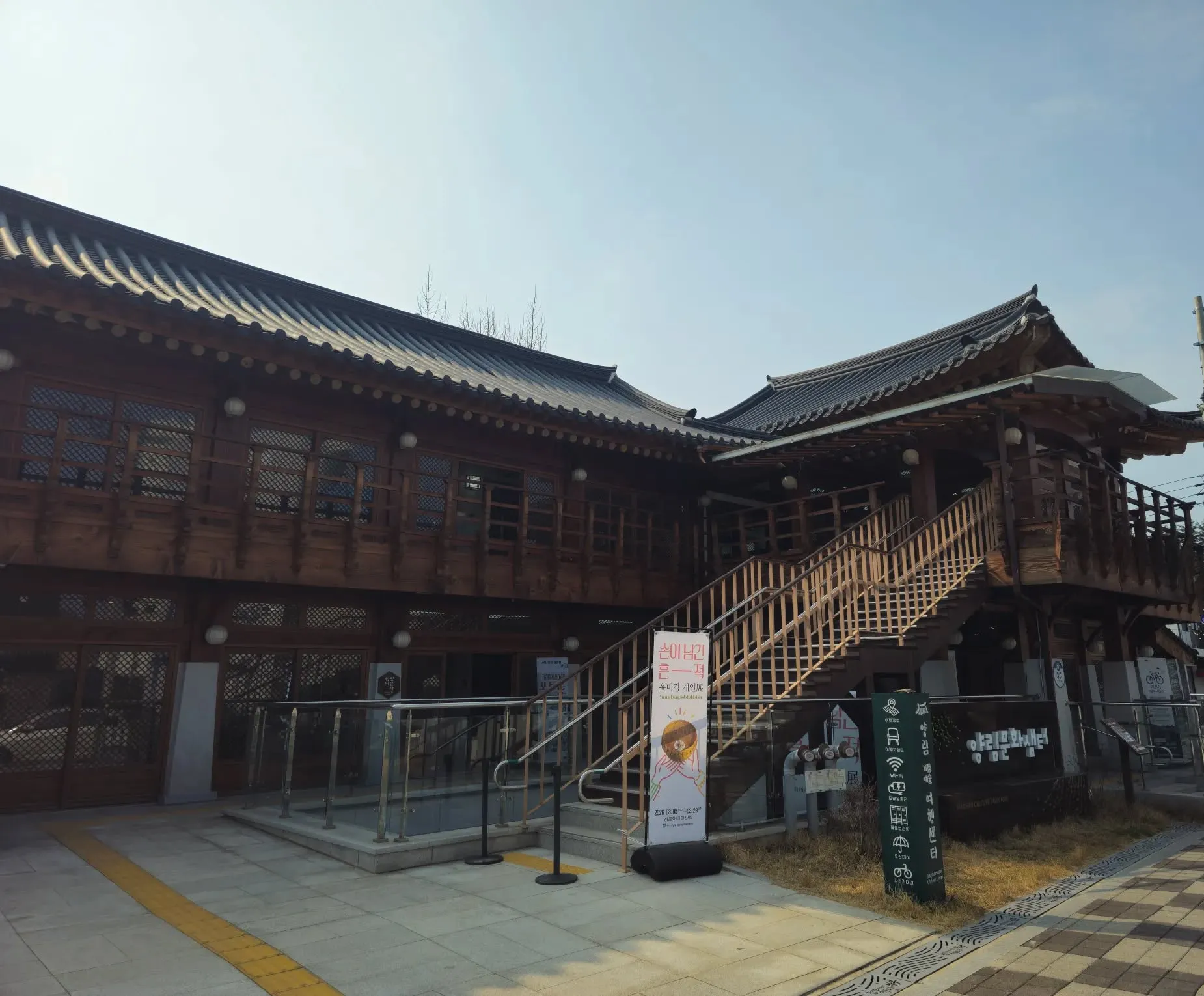
- Getting there
- Yangnim-dong, Nam-gu, Gwangju (Korea Tourism Organization). I drove and used the public parking lot, free for the first 2 hours when I went (March 2026). For buses, check the live route in Naver Map (in English).
- Cost
- Free: it's open alleys, with no admission fee. The public parking lot was free for up to 2 hours when I went (March 2026).
- Time needed
- About 1.5 to 2 hours for the village and Penguin Village (estimate)
- Best time
- The village is open at all times (Korea Tourism Organization). In Penguin Village, the craft studios open 10:00 to 18:00 and close on Mondays.
Tap any Korean name on this page to hear it. Prefer Naver Map? In the app (set to English), search Yangnim History and Culture Village Gwangju, or paste the Korean name:양림역사문화마을
Short version: Yangnim-dong (양림동), in Nam-gu, Gwangju, is the neighborhood once called “the Jerusalem of Gwangju.” In the early 1900s American missionaries came and built schools and a hospital, and some of their buildings still stand. Today hanok and Western-style modern buildings stand together, just an alley apart, and strangely it doesn’t feel awkward, as if they’ve simply lived together. Penguin Village, an alley residents decorated themselves with junk, is right next door. I went on 11 March 2026. So there’s a place like this right in central Gwangju. If you’re coming to Gwangju, be sure to walk Yangnim-dong too.
Last checked: 21 October 2026. The missionary history and the nicknames come from Bizhankook (2022) and Aju Business Daily (2019), with Segye Ilbo (2016). The village’s address, open-at-all-times status and parking, and Penguin Village’s story, hours and parking, come from the Korea Tourism Organization’s listings (updated June and October 2026); the 2013 and 2014 dates and the “Penguin Uncle” story come from Aju Business Daily. The free first 2 hours of parking and my impressions are from my own visit. Tell me if anything has changed.
“The Jerusalem of Gwangju”
I turned into one alley and suddenly time felt different. Yangnim-dong has been nicknamed “the Jerusalem of Gwangju” and “the Western village” (Bizhankook, 2022; Aju Business Daily, 2019).
American Presbyterian missionaries first came to Gwangju in 1904, according to Bizhankook, and Segye Ilbo (2016) says they made the Yangnim hill area the center of their work in the Jeolla region that year. They built schools and a hospital here (Bizhankook; Aju Business Daily). Among the buildings still standing, both reports describe the Owen Memorial Hall, completed in 1914, and a missionary’s house that is the oldest surviving Western-style house in Gwangju. The Korea Tourism Organization lists these alongside other historic houses and memorial halls in the village.
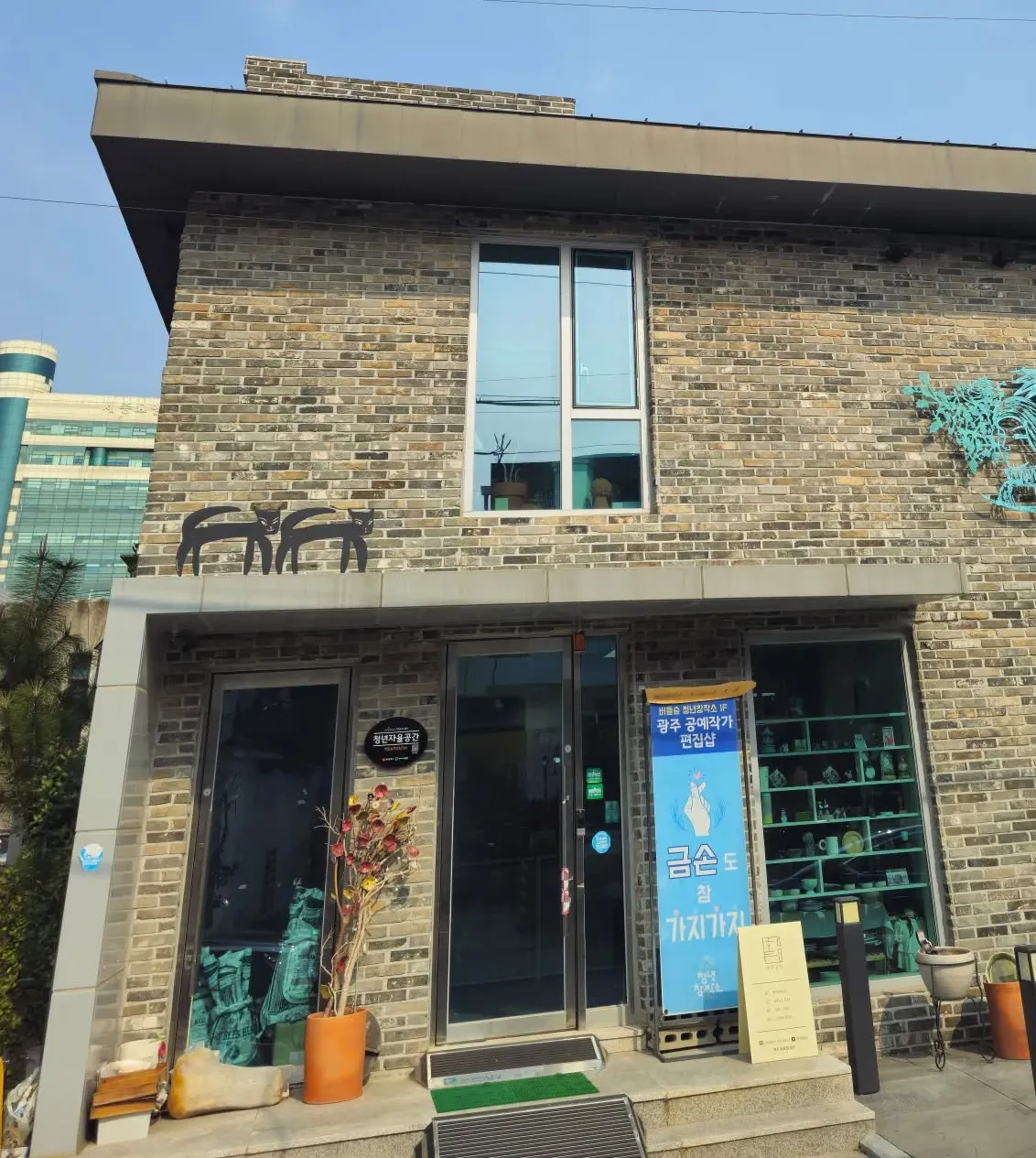 A brick building in the village.
Hanok and Western houses, an alley apart
Hanok and Western-style modern buildings stand together, just an alley apart. Strangely, it doesn’t feel awkward. It’s as if they’ve just lived together. It feels natural. The Korea Tourism Organization describes the village the same way: a place where Western modern buildings and hanok blend together.
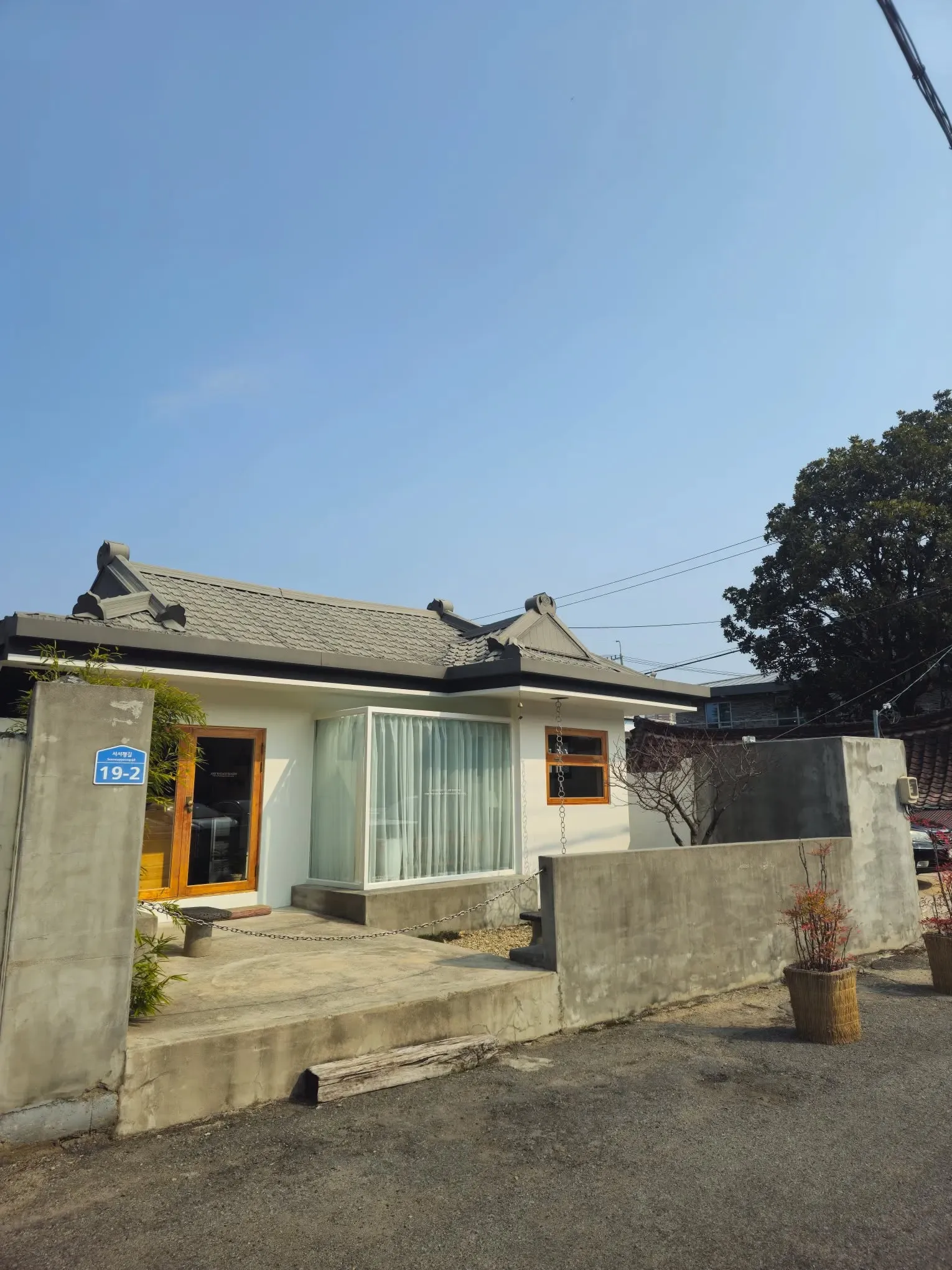 An old house in the village.
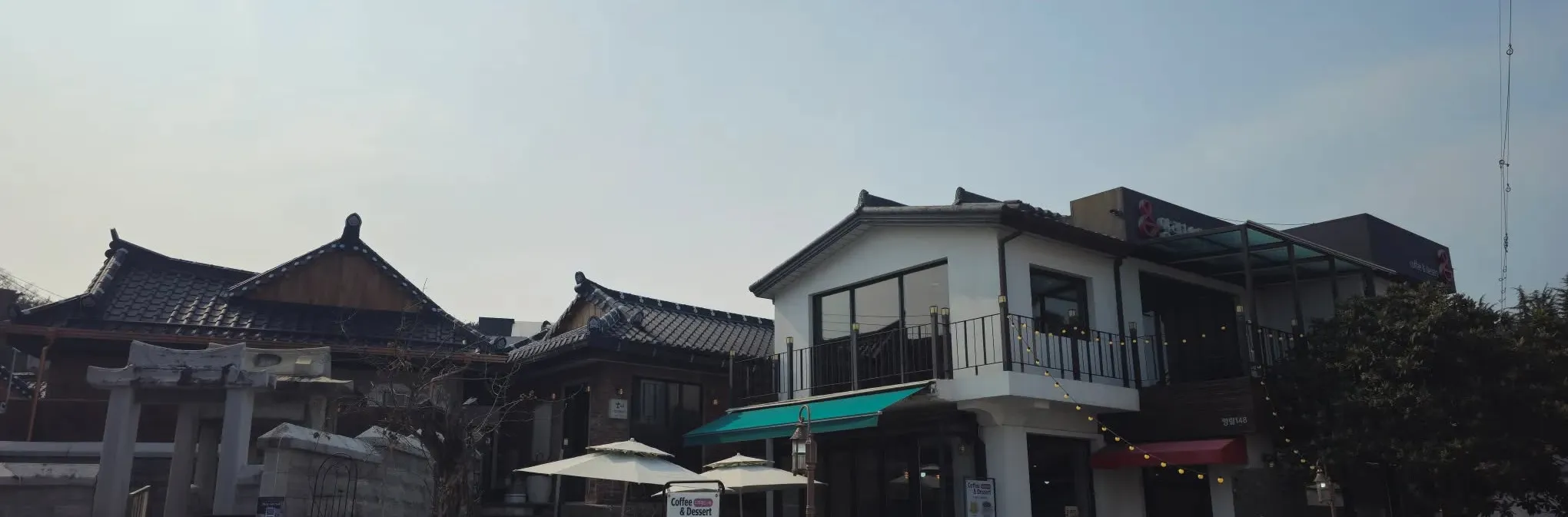 Old tiled-roof houses and a Western-style house, side by side.
Penguin Village next door
Penguin Village (펭귄마을) is right next door too. It’s an alley the residents decorated themselves with junk. According to the Korea Tourism Organization, residents cleared out an empty house left derelict after a fire, then hung discarded clocks, pots and picture frames on the walls; Aju Business Daily dates the fire to 2013 and the wall decorations to 2014. The name comes from a penguin-like waddling walk: the Korea Tourism Organization says elderly residents with sore knees walk like penguins, while Aju Business Daily traces it to one elderly man nicknamed “Penguin Uncle.”
Look around the history village and then cross into Penguin Village, and a heavy mood suddenly turns light. I like that difference in temperature too!
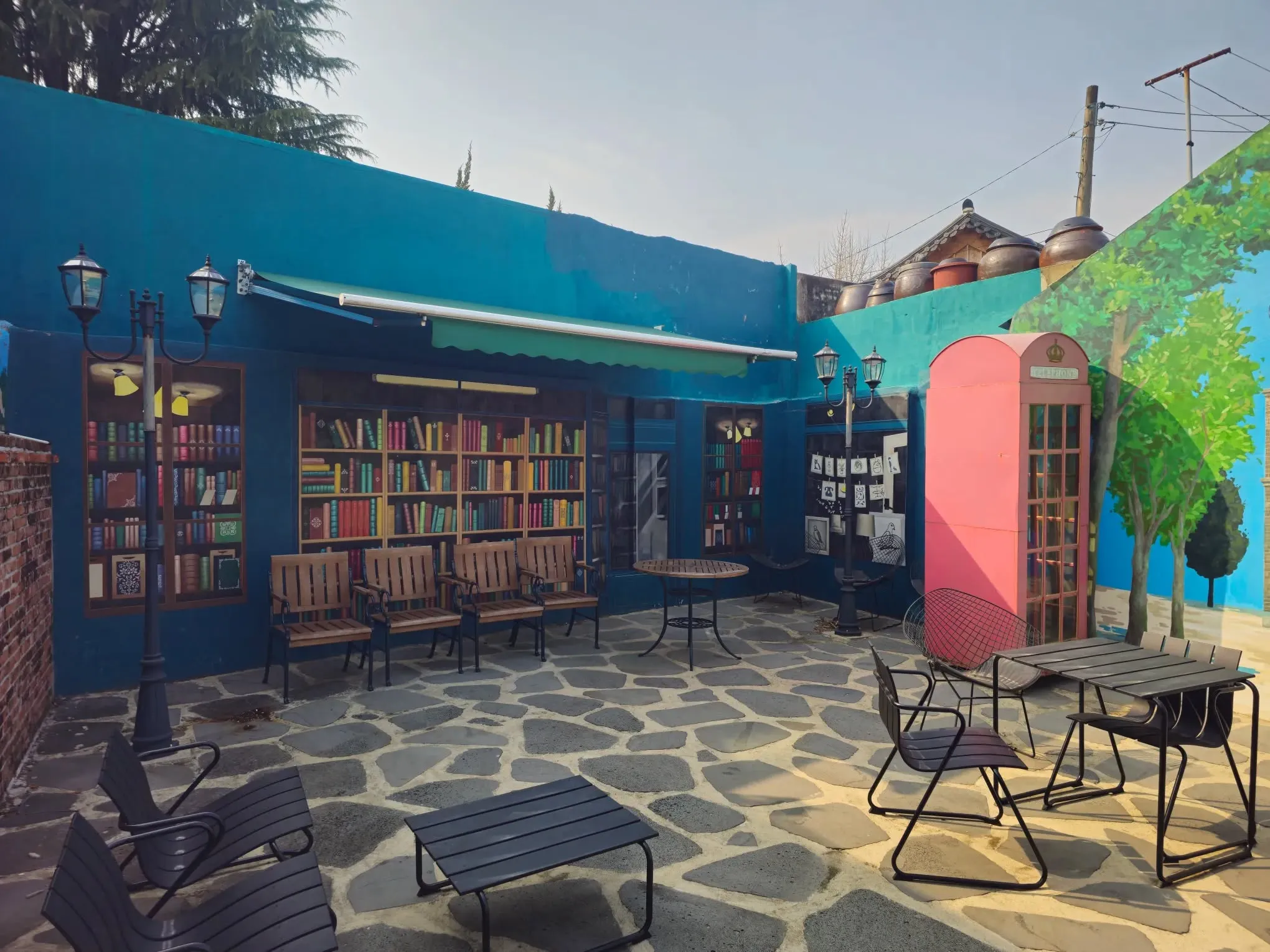 A courtyard painted with bookshelves.
There are lots of pretty cafés and photo spots here and there!
Visiting
| Yangnim History and Culture Village (Gwangju) | |
|---|---|
| Where | Yangnim-dong, Nam-gu, Gwangju (Korea Tourism Organization). Gwangju merged with Jeollanam-do in July 2026, so Korean addresses now begin 전남광주통합특별시 |
| Hours | The village is open at all times (Korea Tourism Organization). Penguin Village craft studios: 10:00 to 18:00, closed Mondays (Korea Tourism Organization) |
| Cost | Free: open alleys, no admission fee (my visit) |
| Parking | Public parking lot, really clean, free for up to 2 hours when I went (March 2026). The Korea Tourism Organization points to the Yangnim History and Culture Village No. 1 public parking lot |
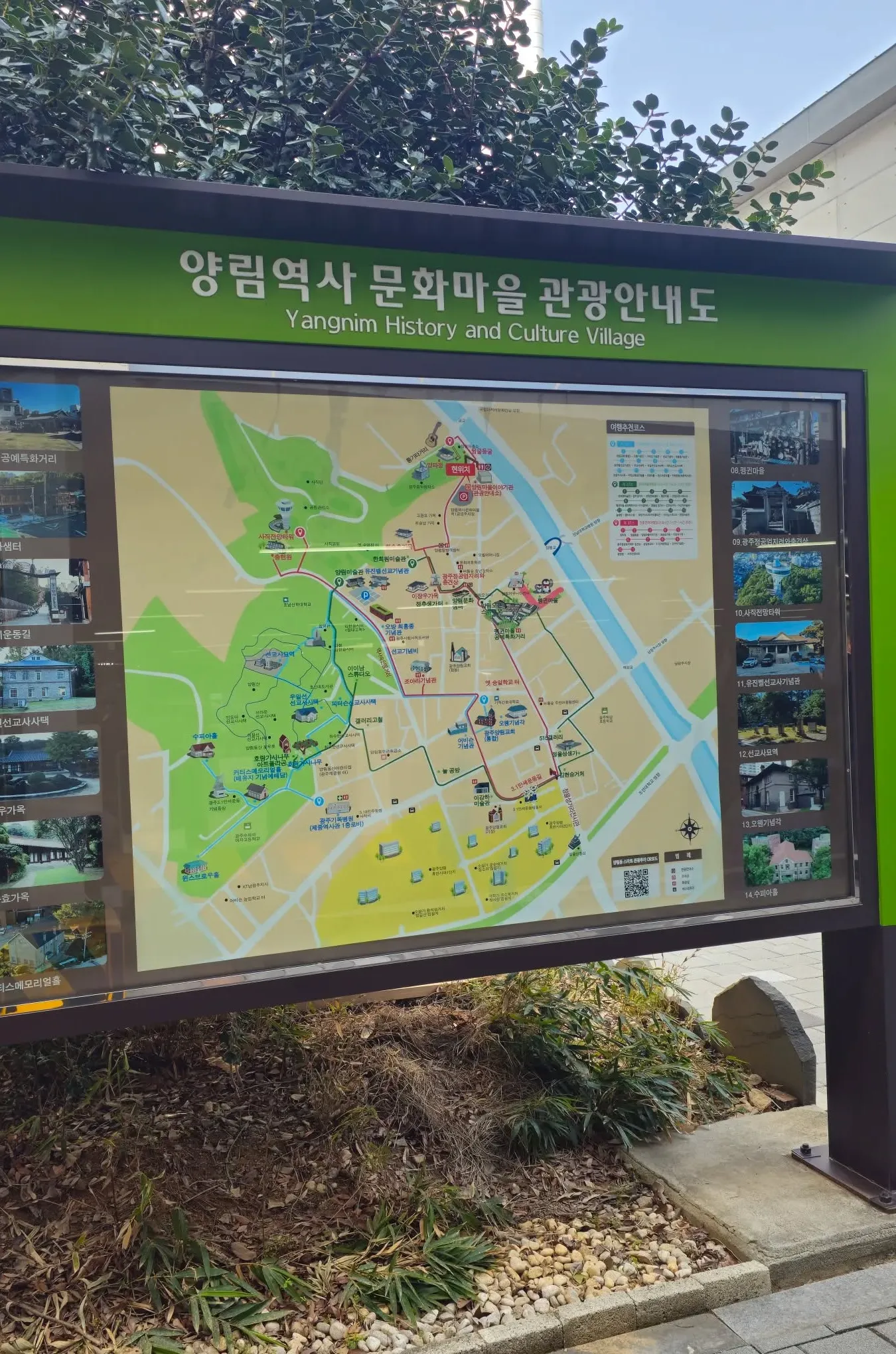 The village tourist map, with an English title.
How to get there
By car: I drove and used the public parking lot. It’s really clean, and it was free for up to 2 hours.
By public transport: check the live route in Naver Map (switched to English): search Yangnim History and Culture Village Gwangju, or paste 양림역사문화마을.
How to check buses in English: install Naver Map and switch it to English in its settings. When I checked it in October 2026, the English version showed bus routes, stop names and live arrival times (minutes and stops away) in English. Google Maps also gives public transport directions in Korea, but as of late September 2026 it still had no turn-by-turn walking or driving navigation here. Stuck? Call the Korea Travel Hotline: dial 02-1330 from a Korean mobile phone (+82-2-1330 from abroad). It has English-speaking staff.
Tips
- From the history village into Penguin Village. Cross from the history village into Penguin Village, and a heavy mood suddenly turns light. I like that difference in temperature.
- Penguin Village studios close on Mondays (Korea Tourism Organization); the alleys themselves are always open.
- More in Gwangju: Chungjangsa, the shrine of the general behind Chungjang-ro, and Gyeongnyeolsa.
Who it’s for
Likely to suit (estimate): history fans, photographers, café hoppers, and anyone planning a day in Gwangju.
Sources
Checked against Bizhankook (January 2022: “Jerusalem of Gwangju” and “Western village”, missionaries from 1904, schools and a hospital, Owen Memorial Hall in 1914, the oldest Western-style house in Gwangju), Aju Business Daily (May 2019: the nicknames, missionaries building churches, schools and hospitals, Owen Memorial Hall in 1914, the oldest Western-style house, Penguin Village’s fire in 2013, decorations from 2014, the “Penguin Uncle” story), Segye Ilbo (February 2016: the Yangnim hill area as the missionaries’ center from 1904), and the Korea Tourism Organization’s listings for the village (updated June 2026: address, hanok and Western buildings, open at all times, parking) and for Penguin Village’s craft street (updated October 2026: the fire and the junk on the walls, the name, studio hours, closing day, the No. 1 public parking lot). The free 2 hours of parking and my impressions are from my own visit.