Home / Jeolla / Chungjangsa Shrine (Gwangju)
Free things to do in Gwangju, Korea: Chungjangsa Shrine below Mudeungsan
Gwangju's busy Chungjang-ro is named after General Kim Deok-ryeong. His quiet shrine, tomb and museum sit below Mudeungsan, about 20 minutes on. Free entry and parking when I went in March 2026.
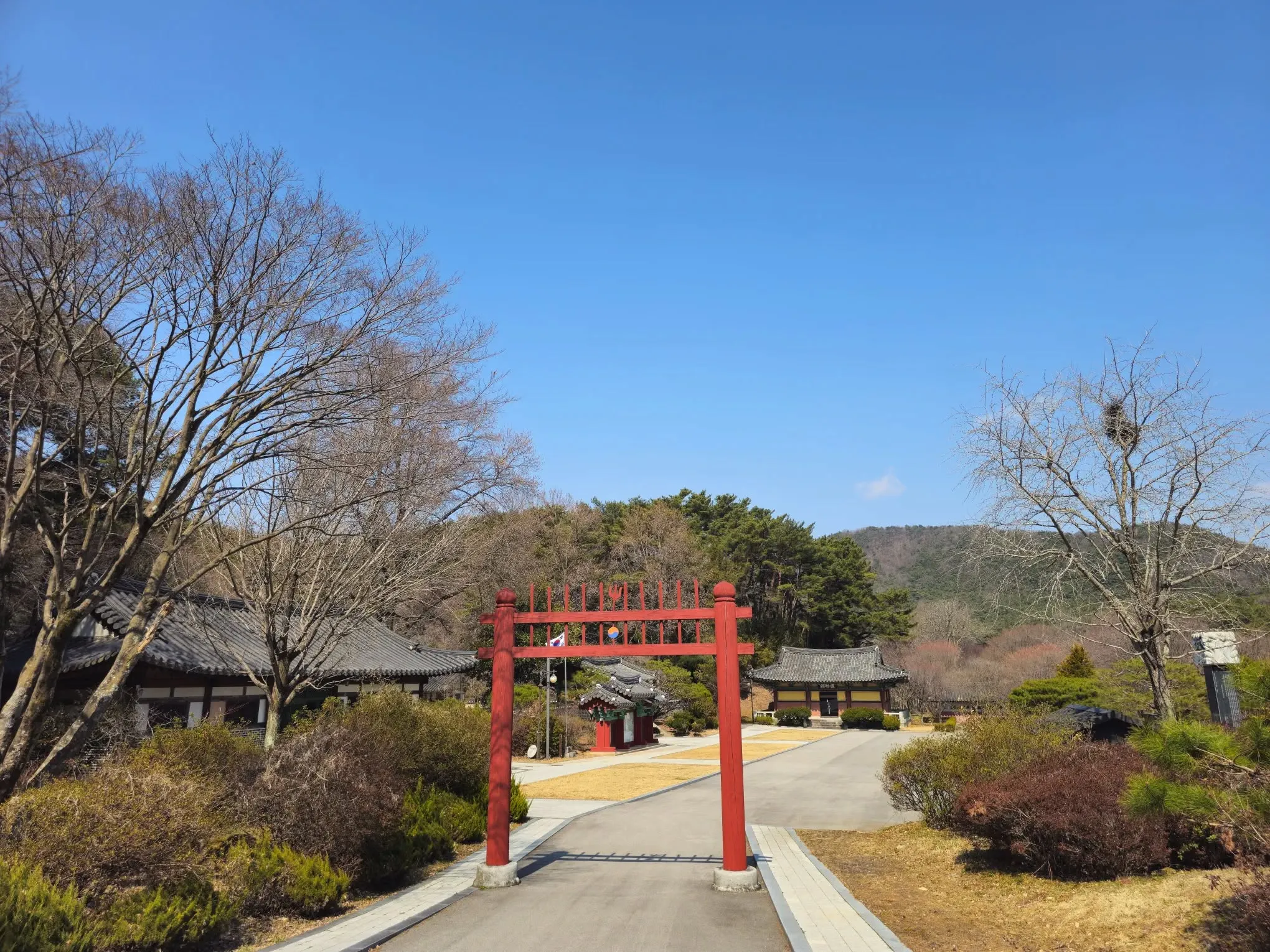
- Getting there
- 13 Songgang-ro, Buk-gu, Gwangju (Korea Tourism Organization). About 20 minutes on from Chungjang-ro (my trip). I drove; parking was easy and free. For buses, check the live route in Naver Map (in English).
- Cost
- Free admission and free parking when I visited (March 2026)
- Time needed
- About 45 minutes to 1 hour, including the museum (estimate)
- Best time
- 9:00 to 18:00 in summer, 9:00 to 17:00 in winter, open every day (Korea Tourism Organization)
Tap any Korean name on this page to hear it. Prefer Naver Map? In the app (set to English), search Chungjangsa Shrine Gwangju, or paste the Korean name:충장사 광주
Short version: Everyone who comes to Gwangju goes to Chungjang-ro, a shopping street in the city center, but not many people know where the name comes from. It’s the posthumous title of Kim Deok-ryeong (1568–1596), a militia general of the Imjin War who was falsely accused and died in prison. His shrine, Chungjangsa (충장사), sits at the foot of Mudeungsan, about 20 minutes on from Chungjang-ro: quiet, spacious, with a museum and his tomb. I went on 13 March 2026. Admission and parking were free. If you’re planning a Gwangju trip, it’s worth a visit.
Last checked: 20 October 2026. The name of Chungjang-ro, the address, the opening hours and the museum’s contents come from the Korea Tourism Organization’s listings (updated June 2026). Kim Deok-ryeong’s story comes from the information board at the shrine (photographed March 2026), checked against the Encyclopedia of Korean Culture and the Annals of the Joseon Dynasty; where they differ, the note says so. Free entry, free parking, the 20 minutes from Chungjang-ro and my impressions are from my own visit. Tell me if anything has changed.
Why it’s called Chungjang-ro
According to the Korea Tourism Organization, the name Chungjang-ro (충장로) comes from the posthumous title of Kim Deok-ryeong (김덕령), a leader of the Righteous Army, the volunteer militias that fought the Japanese invasion that began in 1592 (the Imjin War). King Jeongjo granted him the title Chungjang (충장) in 1785, and it was formally conferred in 1788 (Annals of the Joseon Dynasty).
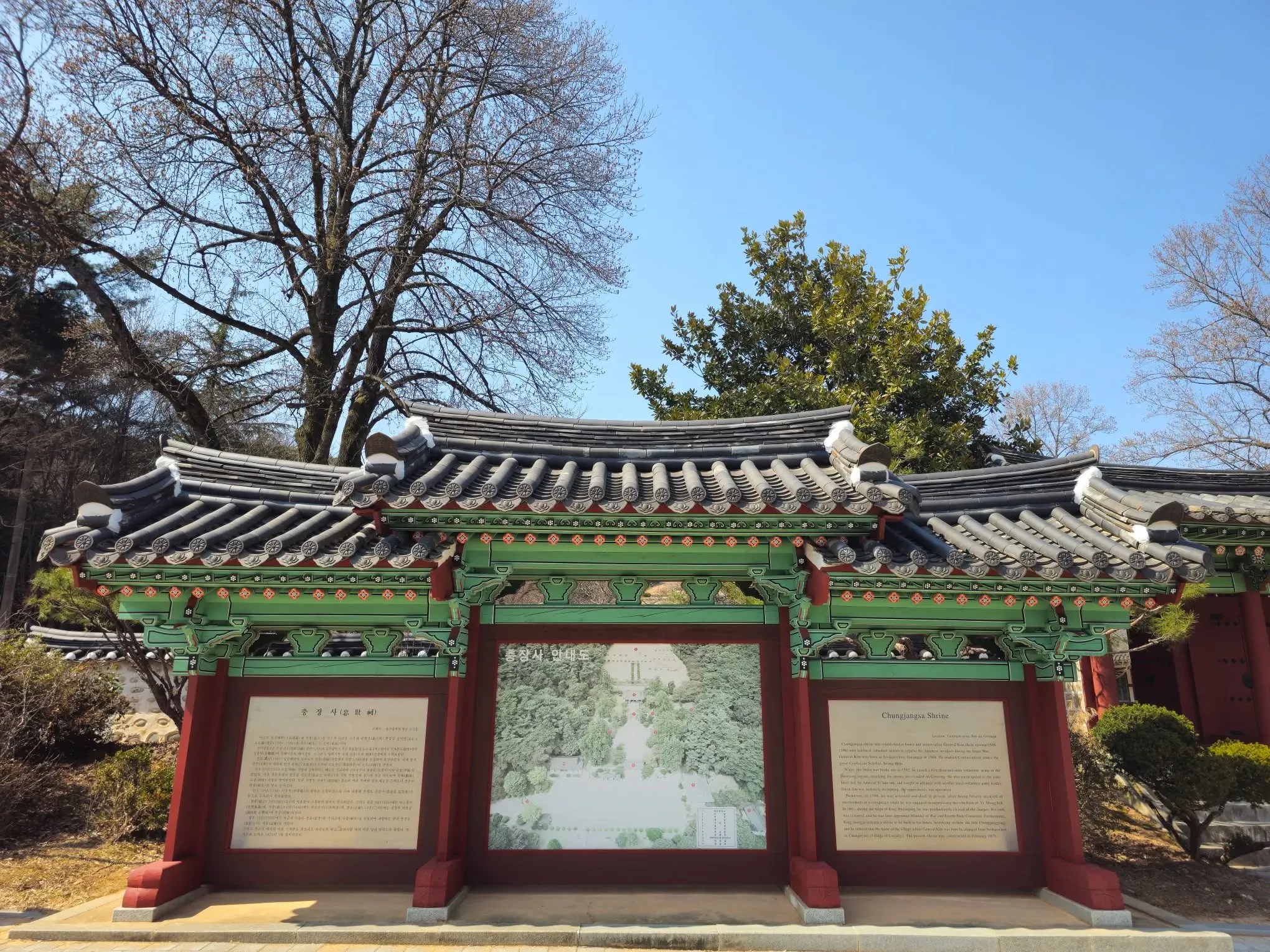 The information boards, in Korean and English.
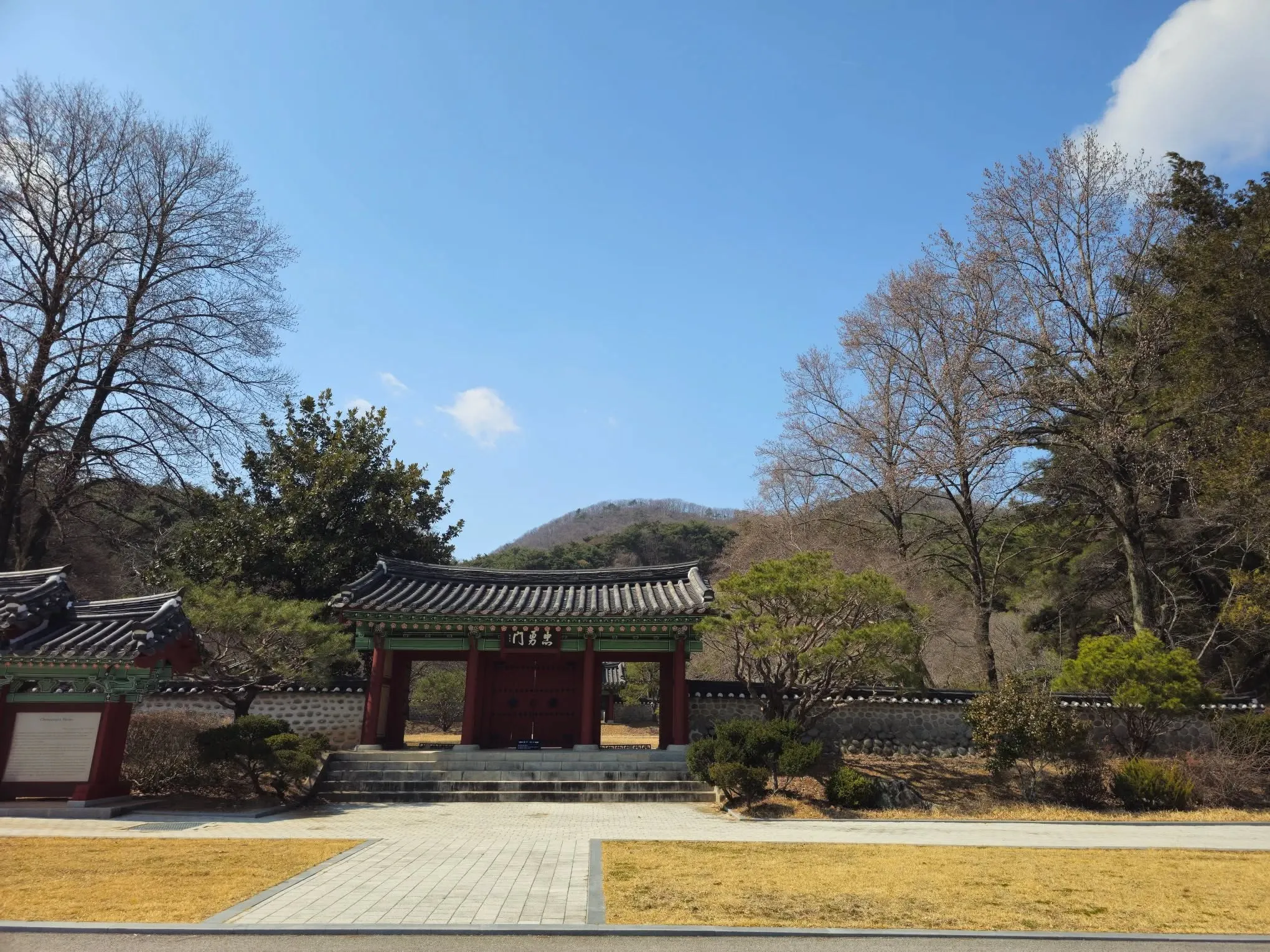 The gate signed 忠勇門 (Chungyongmun).
The general who died unjustly
The information board at the shrine tells his story (where the Encyclopedia of Korean Culture differs, both versions are given):
- He was born in 1568 in what is now Chunghyo-dong, Buk-gu, Gwangju.
- During the Imjin War he raised a volunteer army in the Damyang area and set out to fight. (The board says 5,000 men in 1592; the encyclopedia dates his own army to 1593.)
- He defended the Jinhae and Goseong areas, took part in a joint land-and-sea battle with Admiral Yi Sun-sin, and fought the Japanese several times alongside the militia leader Gwak Jae-u.
- In 1596 he marched against a rebellion led by Yi Mong-hak, but was falsely accused of being in league with the rebels, imprisoned, and died in prison (board; encyclopedia).
- In 1661 his name was cleared and his rank restored (board; encyclopedia). The board adds that in 1788 a shrine was built to honor him.
- The present shrine and tomb area were put in order in February 1975.
It’s the story of a general who died unjustly.
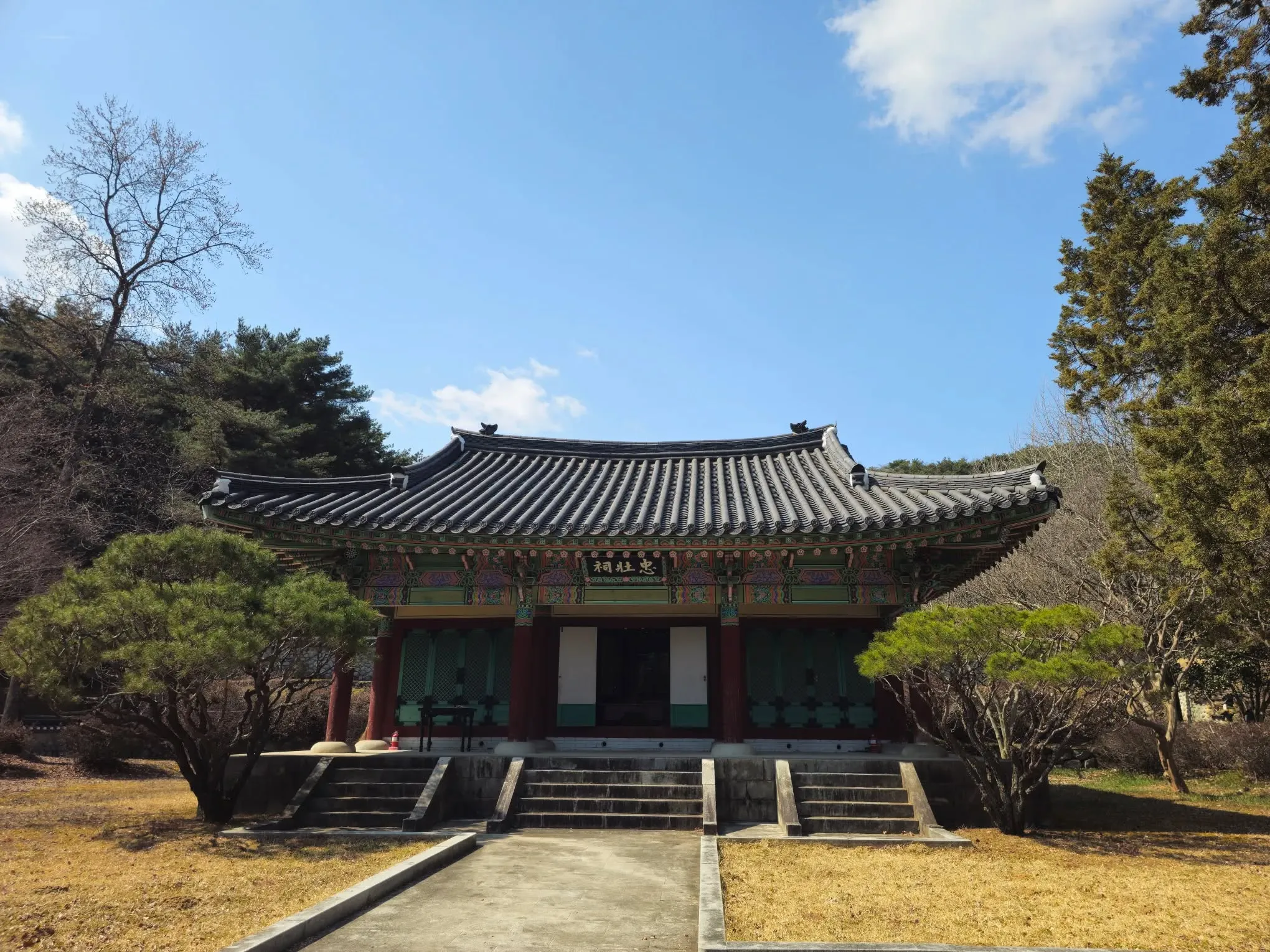 The main shrine hall. The plaque reads 忠壯祠 (Chungjangsa).
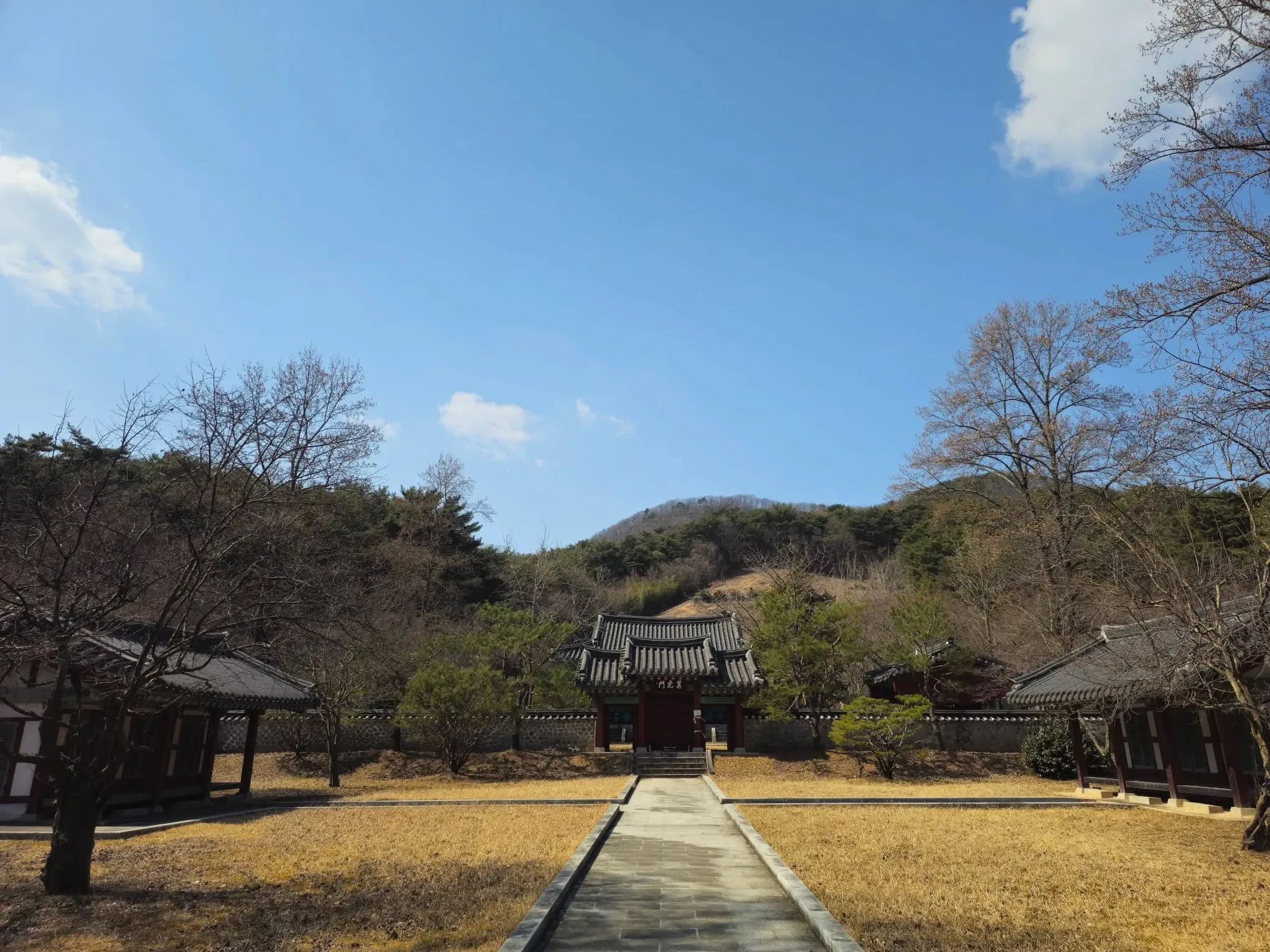 The yard between the side buildings, with another gate ahead.
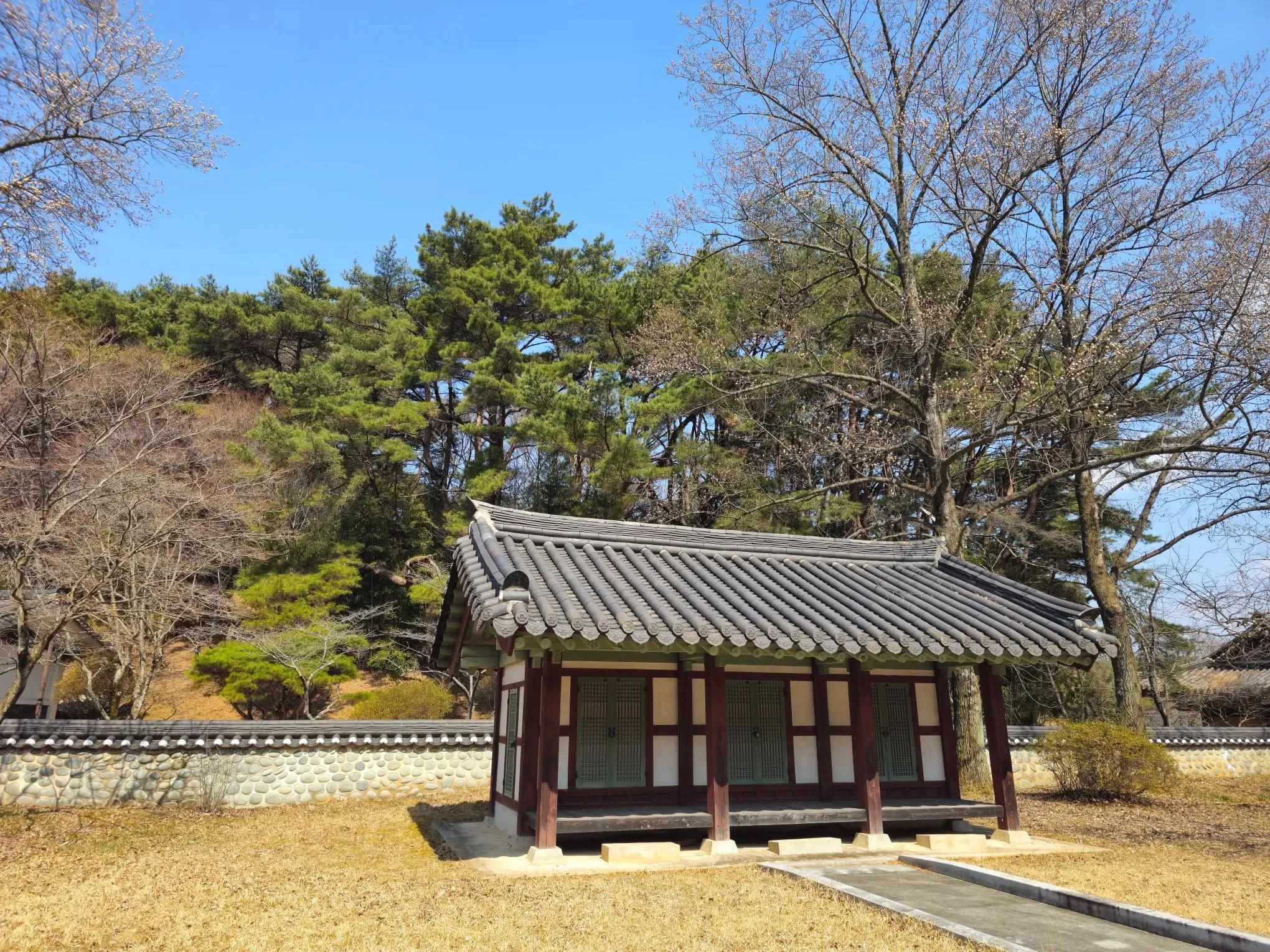 Another building in the grounds.
The museum and the tomb
Walk slowly around the grounds and there’s a museum and a tomb area too. The Korea Tourism Organization says the museum displays Kim Deok-ryeong’s clothing, which is designated national folk heritage, along with parts of the coffin excavated from his tomb and his handwriting, and that his tomb and gravestone are on the hill behind the shrine, with a family cemetery.
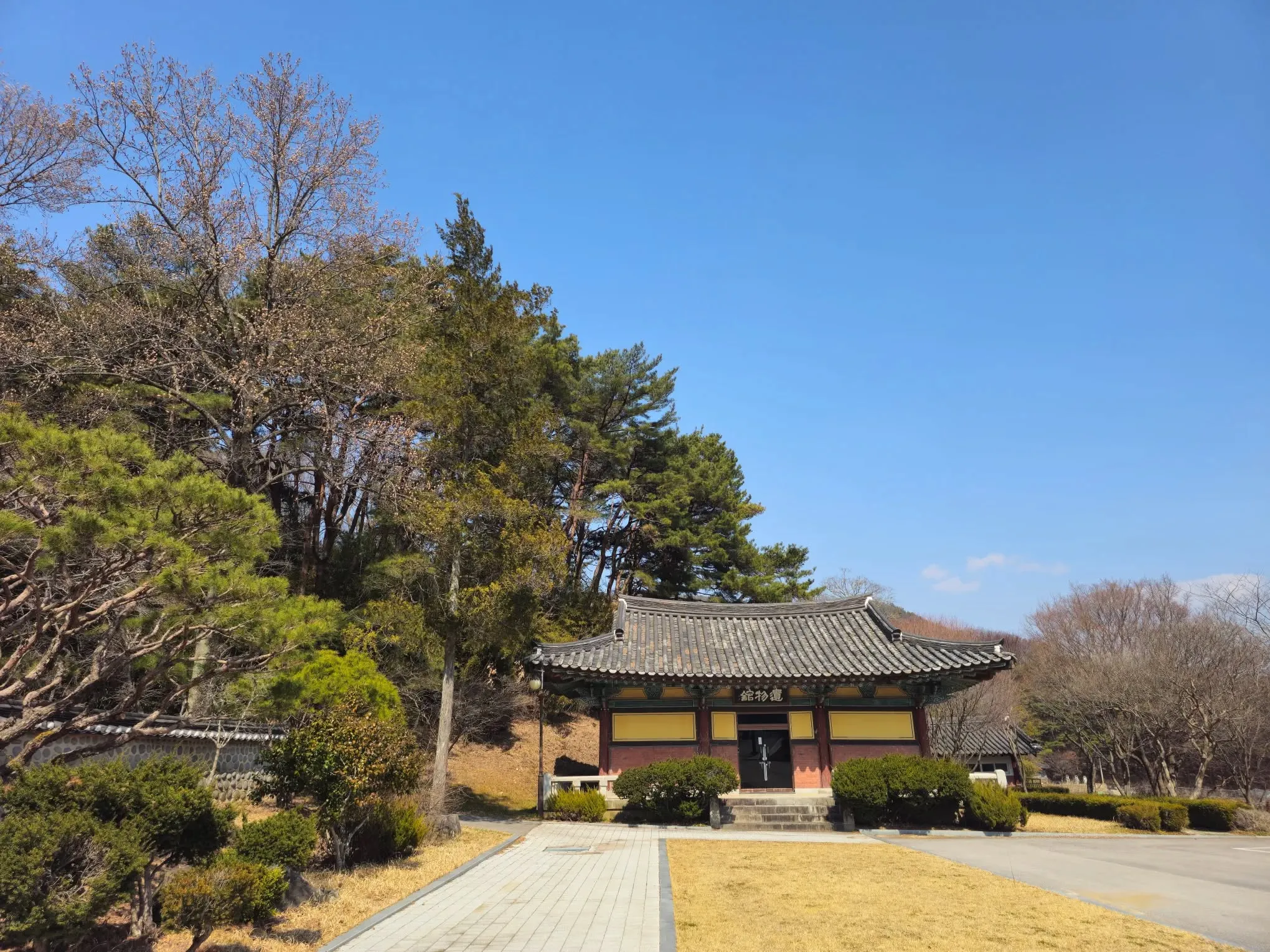 The museum building.
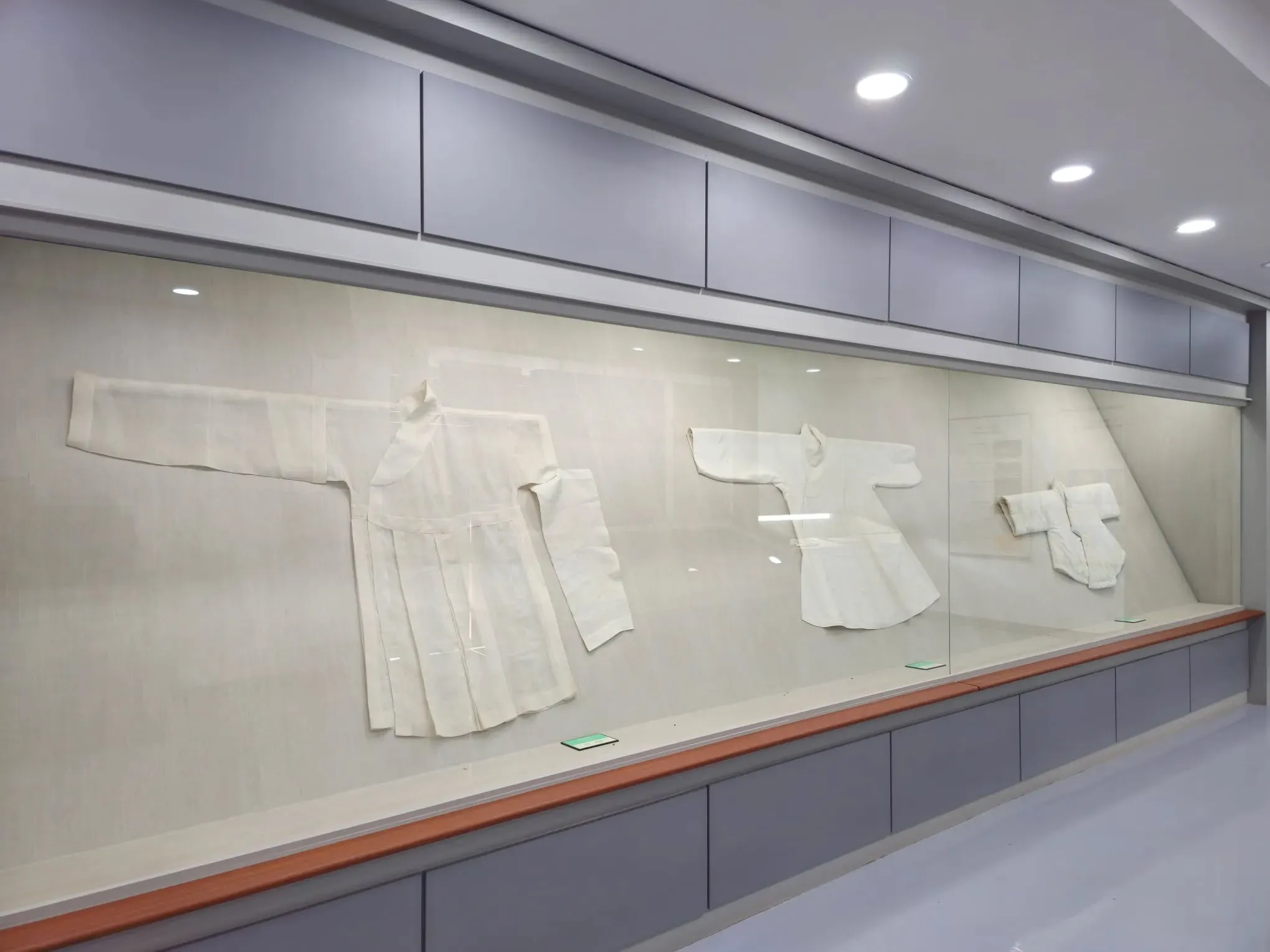 Garments on display in the museum.
Visiting
| Chungjangsa Shrine (Gwangju) | |
|---|---|
| Address | 13 Songgang-ro, Buk-gu, Gwangju (Korea Tourism Organization). Gwangju merged with Jeollanam-do in July 2026, so Korean addresses now begin 전남광주통합특별시 |
| Hours | 9:00 to 18:00 in summer, 9:00 to 17:00 in winter; open every day (Korea Tourism Organization) |
| Admission | Free when I visited (March 2026) |
| Parking | Easy and free when I went (March 2026) |
After walking around the busy city center, even the air feels different here.
How to get there
By car: I drove; it’s about 20 minutes on from Chungjang-ro. Parking was easy and free.
By public transport: check the live route in Naver Map (switched to English): search Chungjangsa Shrine Gwangju, or paste 충장사 광주.
How to check buses in English: install Naver Map and switch it to English in its settings. When I checked it in October 2026, the English version showed bus routes, stop names and live arrival times (minutes and stops away) in English. Google Maps also gives public transport directions in Korea, but as of late September 2026 it still had no turn-by-turn walking or driving navigation here. Stuck? Call the Korea Travel Hotline: dial 02-1330 from a Korean mobile phone (+82-2-1330 from abroad). It has English-speaking staff.
Tips
- Make it a Mudeungsan drive. I think it would be good to combine it with a drive around Mudeungsan.
- Add Gyeongnyeolsa. After Chungjangsa I went on to Gyeongnyeolsa, the shrine of the Goryeo general Jeong Ji, also in Buk-gu.
- More in Gwangju: Yangnim-dong and Bitgoeul Rural Theme Park.
Who it’s for
Likely to suit (estimate): anyone planning a Gwangju itinerary, history fans, and travelers who want a quiet break from the city center.
Sources
Checked against the information board at the shrine (Korean; photographed March 2026: Kim Deok-ryeong’s dates, birthplace, the Damyang militia, his battles, the 1596 false accusation and death in prison, the 1661 exoneration, the 1788 shrine, the 1975 restoration), the Encyclopedia of Korean Culture (his militia from 1593, the 1596 march, false accusation and death in prison, 1661), the Annals of the Joseon Dynasty (the title granted in 1785 and conferred in 1788) and the Korea Tourism Organization’s listings for Chungjangsa (updated June 2026: address, hours, open every day, parking, the museum’s contents, the tomb behind the shrine) and for Chungjang-ro (updated June 2026: the name taken from Kim Deok-ryeong’s posthumous title). Free entry, free parking, the drive from Chungjang-ro and my impressions are from my own visit.