Home / Jeolla / Gyeongnyeolsa Shrine (Gwangju)
Gyeongnyeolsa, Gwangju, Korea: free shrine and tomb of General Jeong Ji
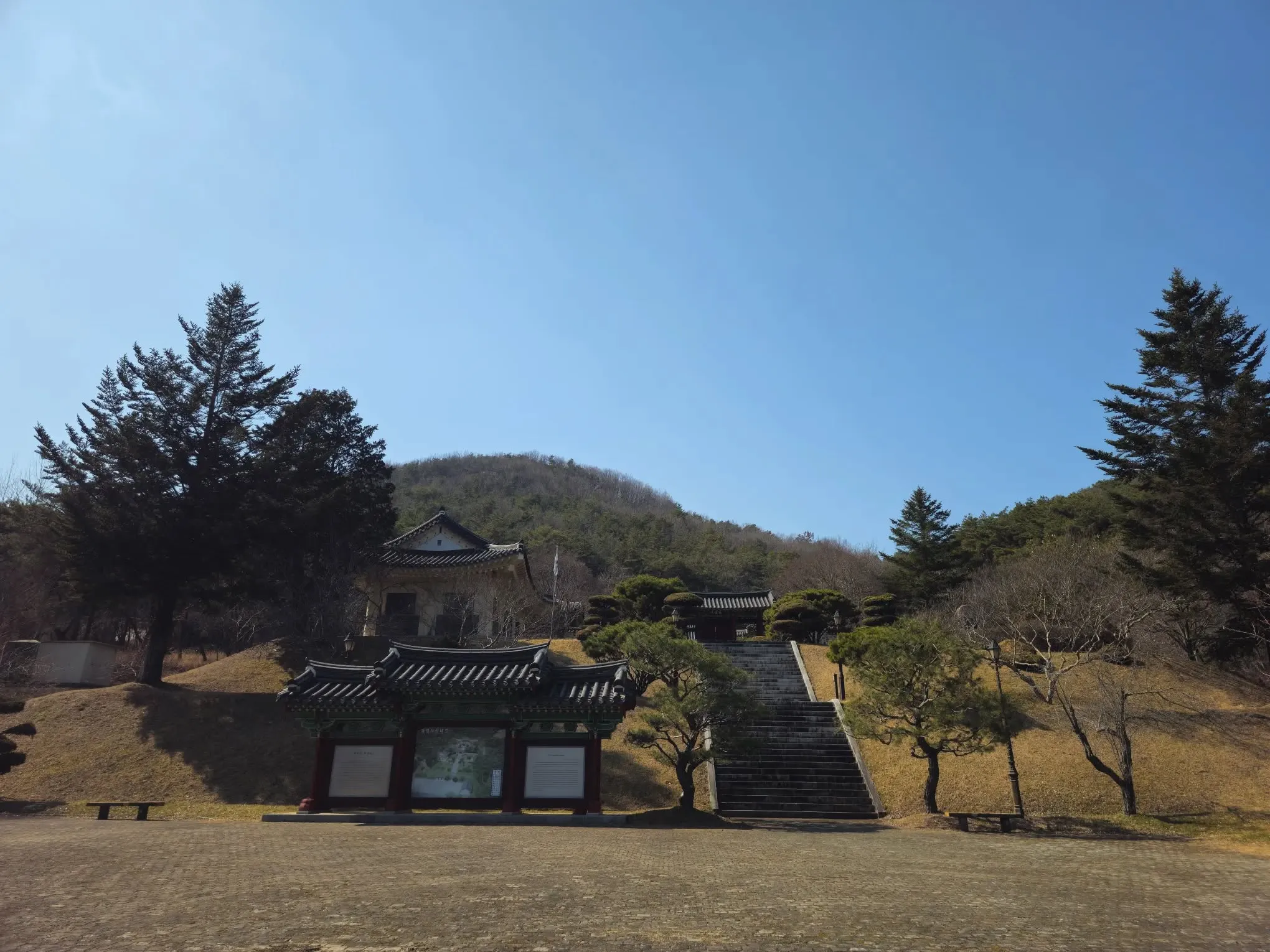
A quiet shrine in Gwangju to Jeong Ji, the Goryeo general who first proposed a Korean navy to fight pirates, with his tomb on the hill behind. Free entry and parking when I went in March 2026.
- Getting there
- Mangwol-dong, Buk-gu, Gwangju (on-site board). I drove; the parking lot was huge and free. For buses, check the live route in Naver Map (in English).
- Cost
- Free admission and free parking when I visited (March 2026)
- Time needed
- About 30 to 45 minutes, including the walk up to the tomb (estimate)
- Best time
- Opening hours: couldn't confirm
Tap any Korean name on this page to hear it. Prefer Naver Map? In the app (set to English), search Gyeongnyeolsa Shrine Gwangju, or paste the Korean name:경열사 광주 북구
Short version: Gyeongnyeolsa (경열사) is a quiet shrine in Mangwol-dong, Buk-gu, Gwangju, to Jeong Ji (1347–1391), a general of the late Goryeo period who fought Japanese pirates and, according to the board at his tomb, was the first in Korea’s history to propose creating a navy. His tomb is on the hill behind the shrine. I went on 13 March 2026, after Chungjangsa. The parking lot was huge and free, and admission was free. It’s a quiet heritage site, worth stopping by once.
Last checked: 19 October 2026. Jeong Ji’s life, the shrine’s history and the tomb details come from the two information boards on site (photographed March 2026; the tomb’s board is in Korean and English) a 2021 feature in Today Gwangju and the Encyclopedia of Korean Culture. The tomb’s designation as a Gwangju Monument and the Treasure-listed armor also come from the boards. Free entry, free parking and my impressions are from my own visit. I couldn’t confirm opening hours. Tell me if anything has changed.
Who was Jeong Ji?
The English board at the tomb describes Jeong Ji (정지, 1347–1391) as a renowned general of the Goryeo period. The late Goryeo years he lived in were chaotic because of frequent raids by Japanese pirates. To stop them, it says, he proposed the establishment of a navy for the first time in Korean history, arguing that an enemy who crosses the sea should be stopped at sea by training people familiar with the sea, and went on to win several battles against the pirates.
The shrine’s own board (in Korean) adds that he was born in Naju in 1347 and won a great victory at Gwaneumpo in Namhae. Today Gwangju and the Encyclopedia of Korean Culture date that battle to 1383. He died in 1391 (shrine board).
Strictly, the board at his tomb says he proposed a navy. Today Gwangju (2021), citing the Annals of the Joseon Dynasty, writes that the founding of Korea’s navy began with Jeong Ji.
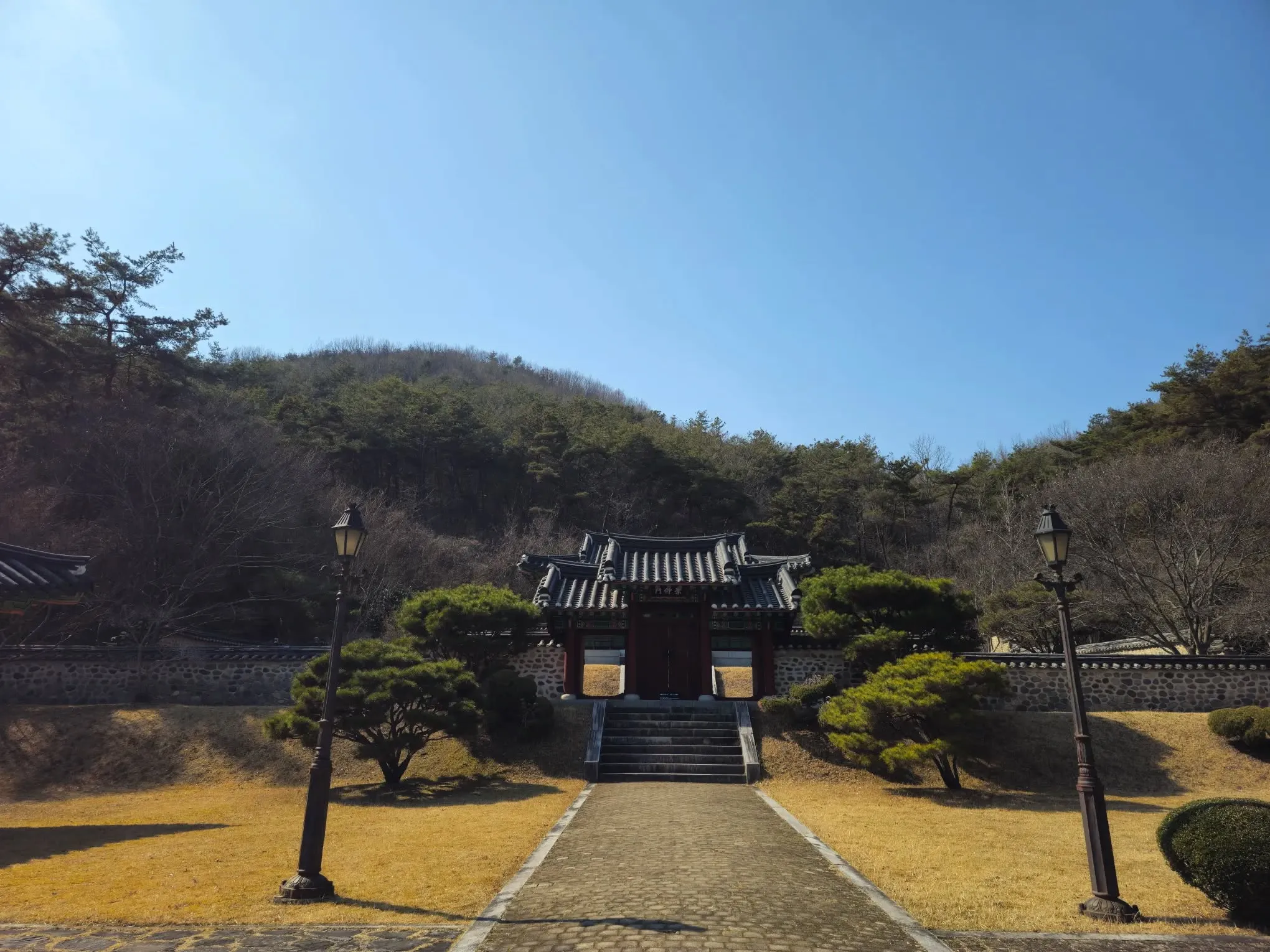 The path to the shrine gate.
The shrine
According to the shrine’s board, Gyeongnyeolsa was first founded in Gwangju in 1644 to honor Jeong Ji, and was torn down in 1871. Today Gwangju says the first shrine stood in what is now Dongmyeong-dong, and that it was rebuilt here, at the site of his tomb, from 1978, with the work completed in 1981; the shrine’s board says the present grounds were made into a memorial site in a three-year project starting in 1979.
The tomb on the hill
His tomb is on the hill behind the shrine. The board there calls it the Tomb of Jeong Ji (정지 장군 예장석묘), a Gwangju Monument. It says the tomb was built in keeping with his status as a meritorious subject and is typical of the late Goryeo period: a burial mound with a stone wall around it, with a tombstone, a stone table and two stone statues in front.
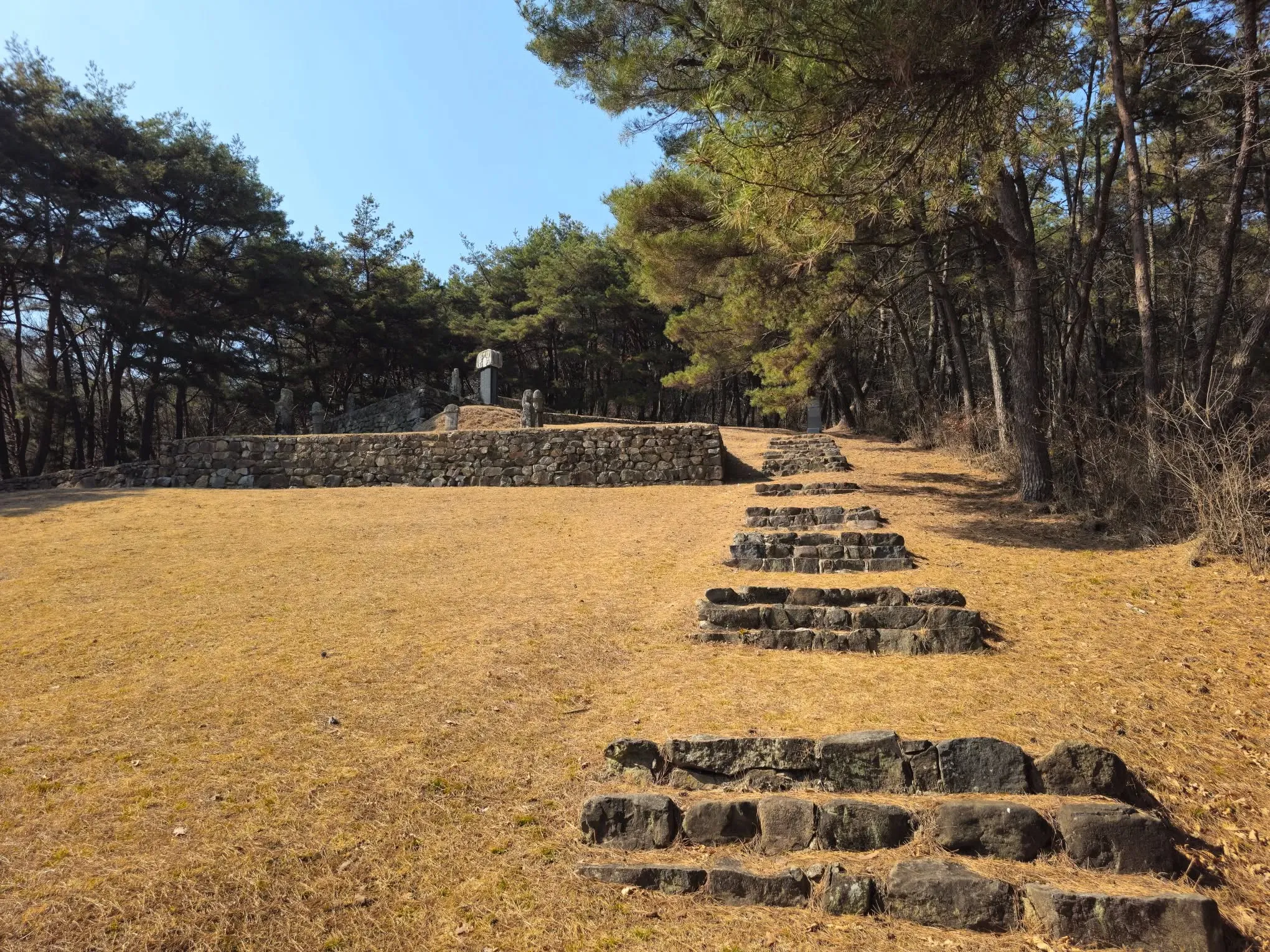 Stone steps on the hill behind the shrine.
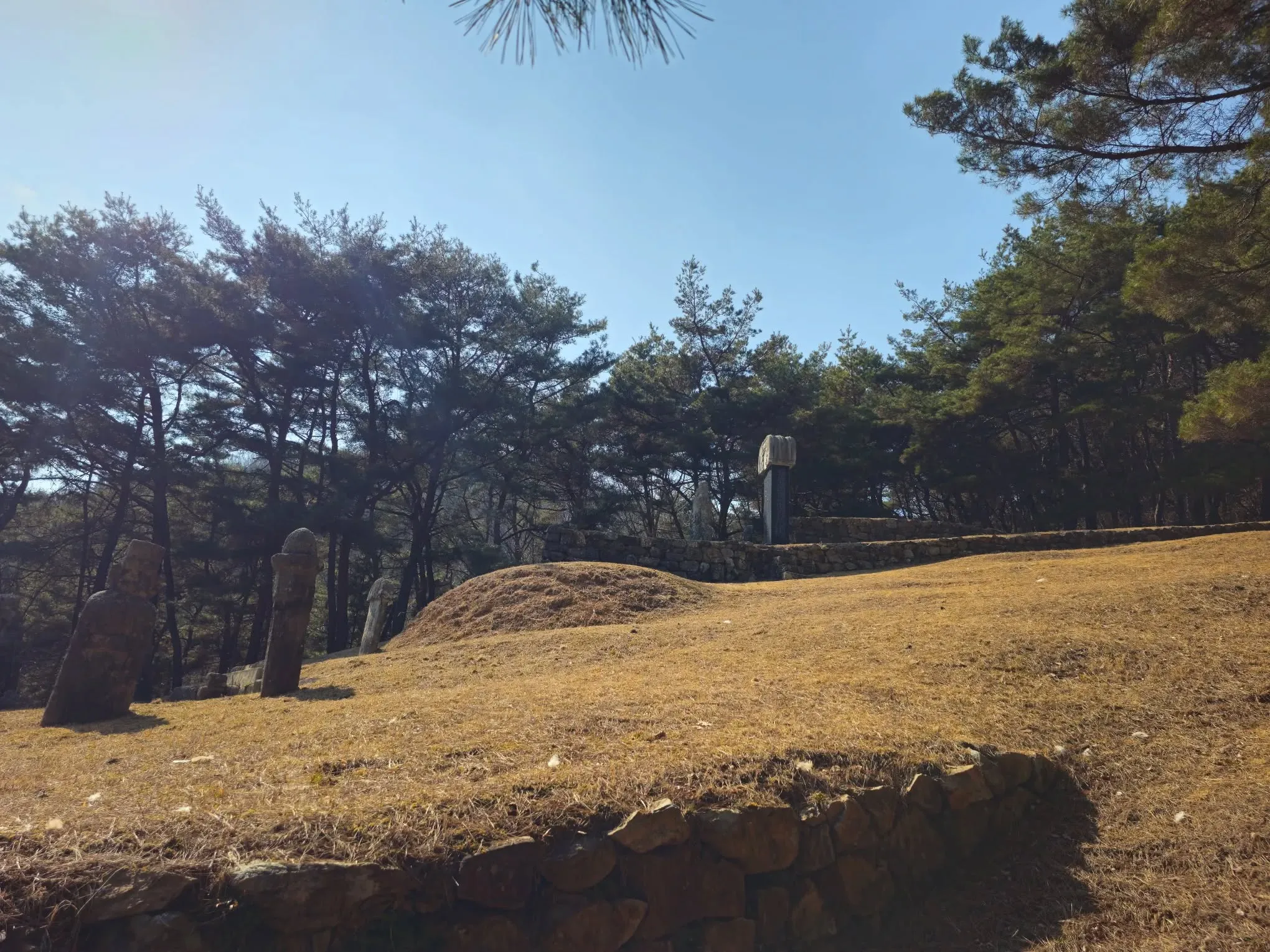 A burial mound on the hillside.
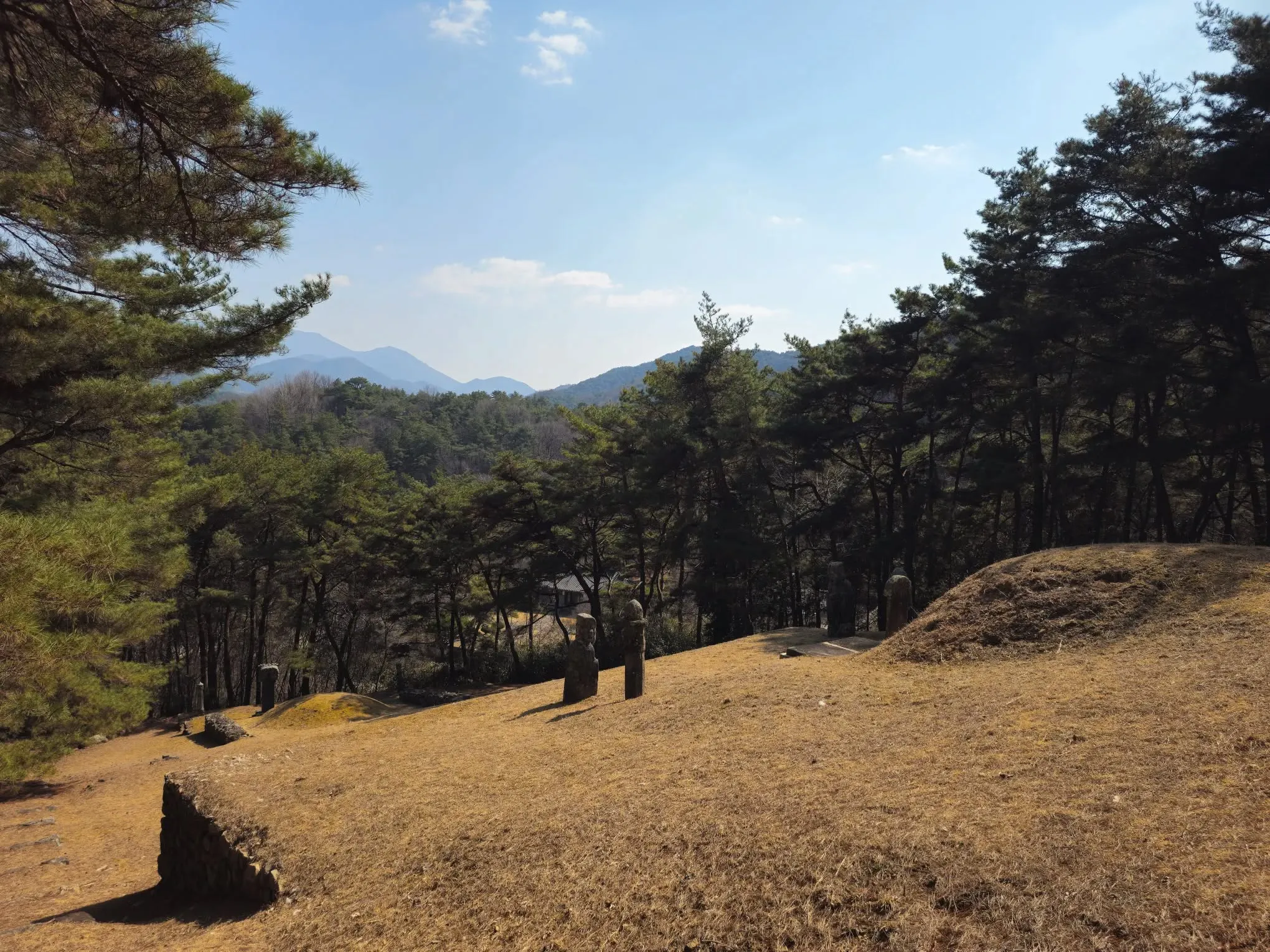 The view from the hillside.
His armor, preserved by his descendants, was designated a Treasure in 1963 and is on display at the Gwangju History & Folk Museum, according to the tomb’s board.
Visiting
| Gyeongnyeolsa Shrine (Gwangju) | |
|---|---|
| Where | Mangwol-dong, Buk-gu, Gwangju (shrine board) |
| Hours | Couldn’t confirm |
| Admission | Free when I visited (March 2026) |
| Parking | A huge lot, free when I went (March 2026) |
How to get there
By car: I drove. The parking lot is huge, and it was free when I went.
By public transport: check the live route in Naver Map (switched to English): search Gyeongnyeolsa Shrine Gwangju, or paste 경열사 광주.
How to check buses in English: install Naver Map and switch it to English in its settings. When I checked it in October 2026, the English version showed bus routes, stop names and live arrival times (minutes and stops away) in English. Google Maps also gives public transport directions in Korea, but as of late September 2026 it still had no turn-by-turn walking or driving navigation here. Stuck? Call the Korea Travel Hotline: dial 02-1330 from a Korean mobile phone (+82-2-1330 from abroad). It has English-speaking staff.
Tips
- Read the English board at the tomb. It tells Jeong Ji’s story in English; the shrine’s board and the site map are in Korean only.
- Walk up the hill. The tomb is behind the shrine, up stone steps.
- More in Gwangju: Yangnim-dong and Bitgoeul Rural Theme Park.
Who it’s for
Likely to suit (estimate): anyone interested in Korean history, and travelers who want a quiet stop in Gwangju.
Sources
Checked against the information board at the shrine (Korean; photographed March 2026: location, Jeong Ji’s life, Gwaneumpo, the shrine founded in 1644 and torn down in 1871, the 1979 restoration project, the armor), the information board at the tomb (Korean and English; photographed March 2026: Jeong Ji’s dates and role, the navy proposal, the tomb’s form, Gwangju Monument status, the armor’s 1963 Treasure designation and where it’s shown); Today Gwangju (August 2021: 1644 founding in today’s Dongmyeong-dong, 1871 demolition, rebuilding at the tomb site from 1978 to 1981, the tomb behind the shrine, the 1383 Gwaneumpo battle, the navy beginning with Jeong Ji); and the Encyclopedia of Korean Culture (Jeong Ji’s dates, Gwaneumpo in 1383). Free entry, free parking and my impressions are from my own visit.