Home / Gyeongsang / Upo Wetland
Upo Wetland, South Korea: a free, quiet morning in Korea's largest natural wetland
Upo Wetland in Changnyeong: Korea's largest natural inland wetland, a Ramsar site at the heart of a UNESCO Biosphere Reserve. Free entry and parking, open all year. Quiet and peaceful on an early winter morning.
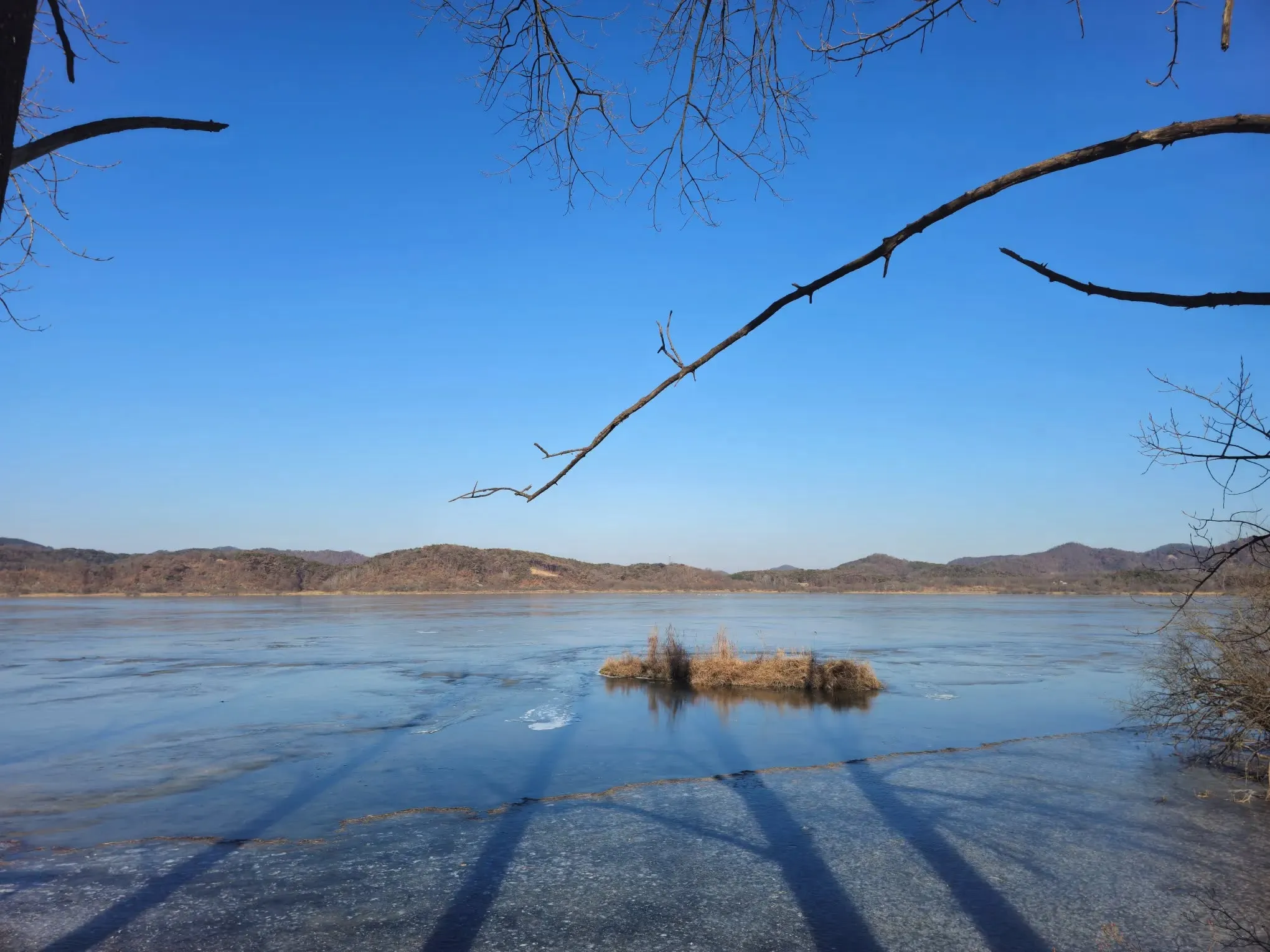
- Getting there
- In Yueo-myeon, Changnyeong County. I drove; there's a large free car park (Korea Tourism Organization). I couldn't confirm bus connections.
- Cost
- Free entry and free parking (my visit, January 2026; Korea Tourism Organization).
- Time needed
- 1–3 hours (estimate), depending on how far you walk
- Best time
- Open all year, at all times (Korea Tourism Organization). I went early on a winter morning, when it was quiet.
Tap any Korean name on this page to hear it. Prefer Naver Map? In the app (set to English), search Upo Wetland Changnyeong, or paste the Korean name:우포늪
Short version: Upo Wetland in Changnyeong, South Gyeongsang, is the largest natural inland wetland in Korea: a wide, flat world of water, reeds and hills, protected as a Ramsar site. It’s free, parking is free, and it’s open all year. I went early on a Monday morning in January. The marsh was frozen, which was a bit of a shame, but there were hardly any people, all I could hear was the birds, and I loved how natural it looked.
Last checked: 31 October 2026. Facts, opening times and parking come from the Korea Tourism Organization (KTO) listing (updated June 2026), checked against Korean news reports. Free entry, free parking and what it was like are from my own visit. Tell me if anything has changed.
What it is
The KTO calls Upo Wetland a vast marsh of about 2.5 km² (2,505,000 m²) spread over four townships of Changnyeong County, and a Korean news report (Kukinews, April 2025) calls it Korea’s largest natural inland wetland. It’s made up of three marshes, Upo, Mokpo and Saji, plus two wetland areas, Jjokjibeol and Sanbakbeol (Kukinews). The KTO says the wetland first began to form about 140 million years ago.
It’s heavily protected. According to the KTO, it was registered as a Ramsar wetland of international importance on 2 March 1998, and in October 2018 Changnyeong was certified as a Ramsar Wetland City, which the KTO calls a world first. In July 2024 the whole of Changnyeong County was named a UNESCO Biosphere Reserve, with the Upo Wetland protected area as part of its core zone (Metro Seoul and Aju News, July 2024).
The KTO lists more than 800 kinds of plants, 209 bird species, 28 fish species and 17 mammal species living here.
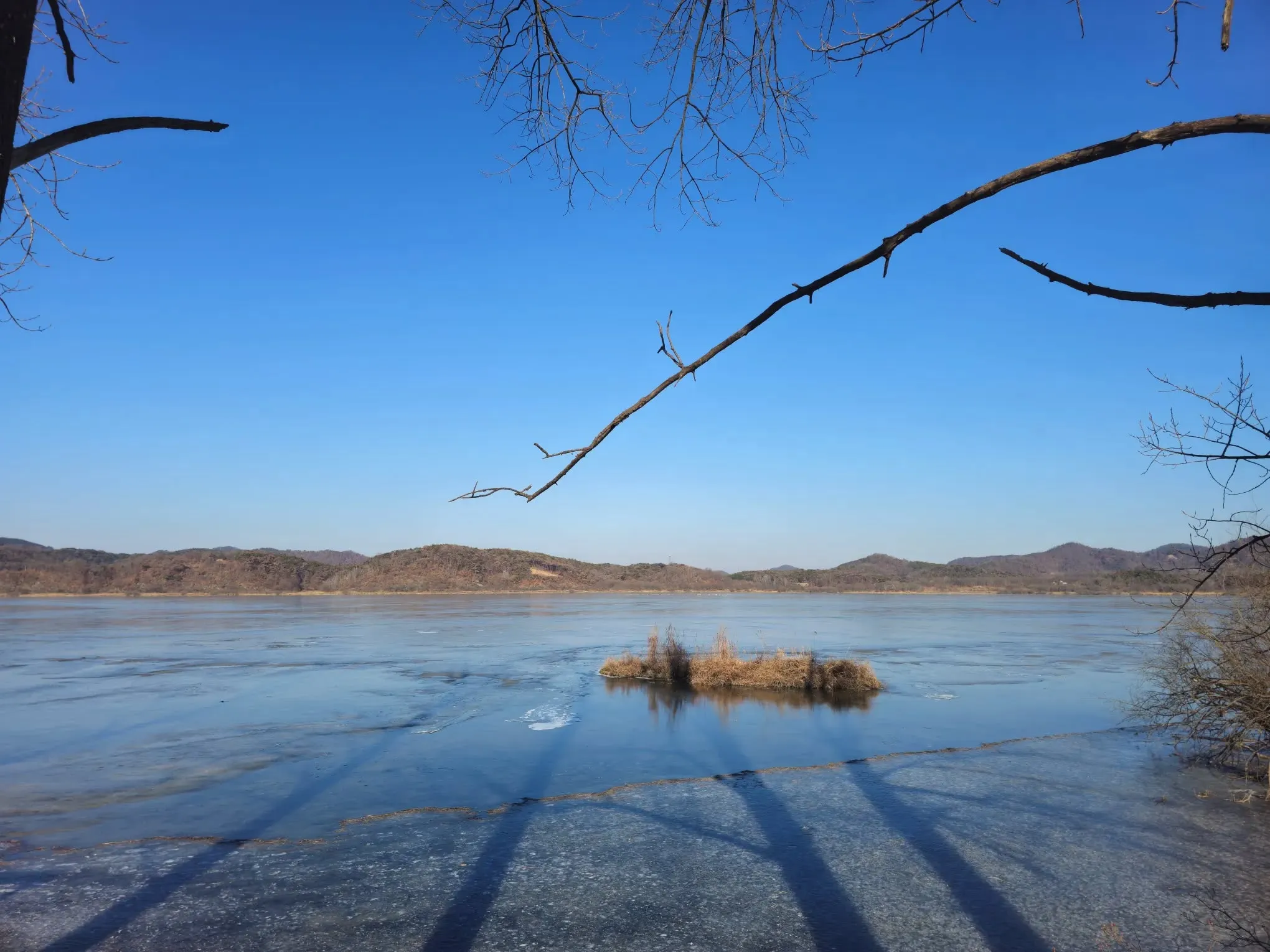 The marsh, frozen, on a January morning.
What I saw
I went early in the morning, so there weren’t many people, and all I could hear was the birds. It was winter, so the marsh was frozen.
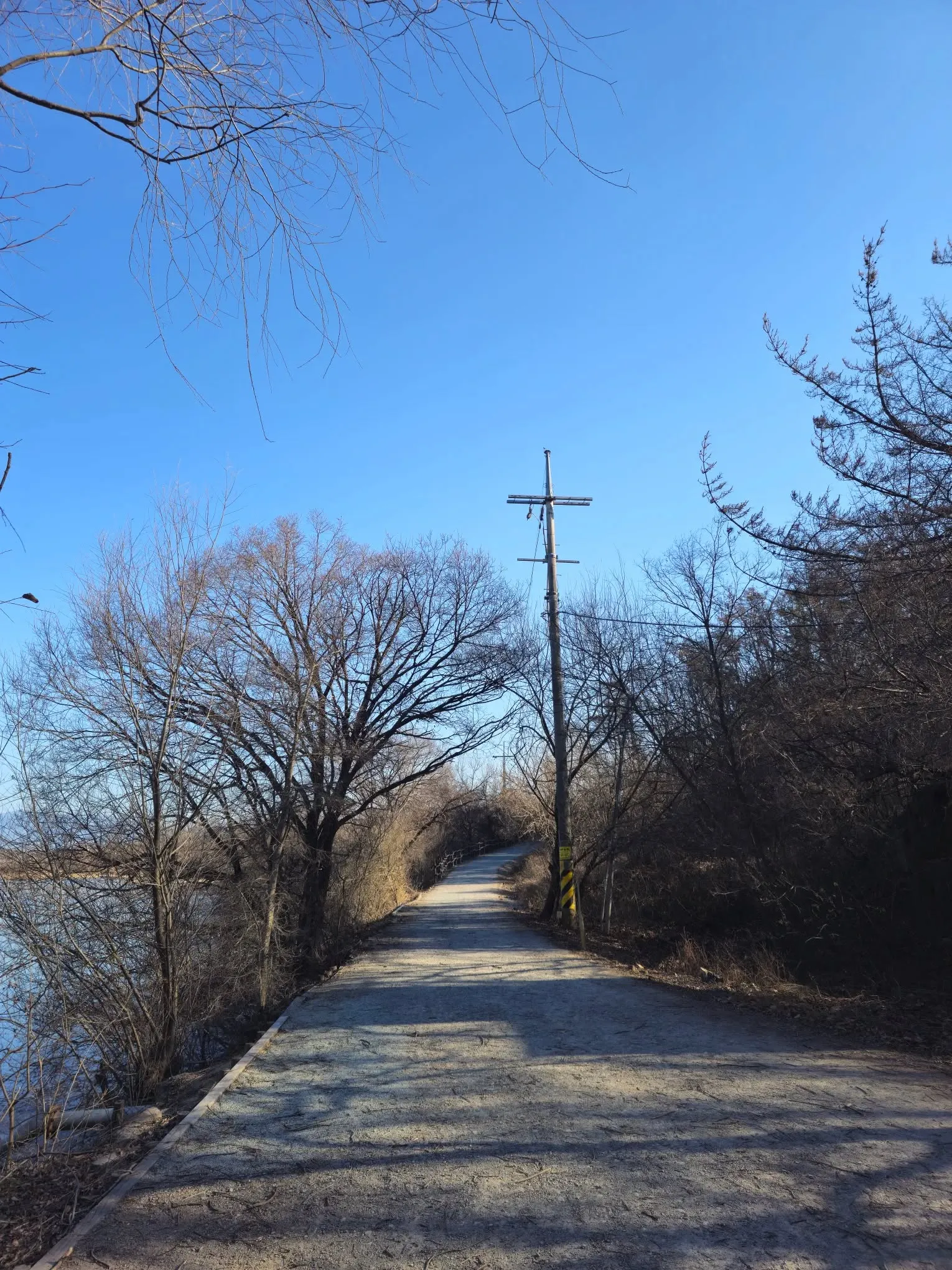 An unpaved path between bare trees.
In the visitor area by the ecology center there’s a small pond with a statue of a fisherman poling a narrow wooden boat. In January the pond was frozen too.
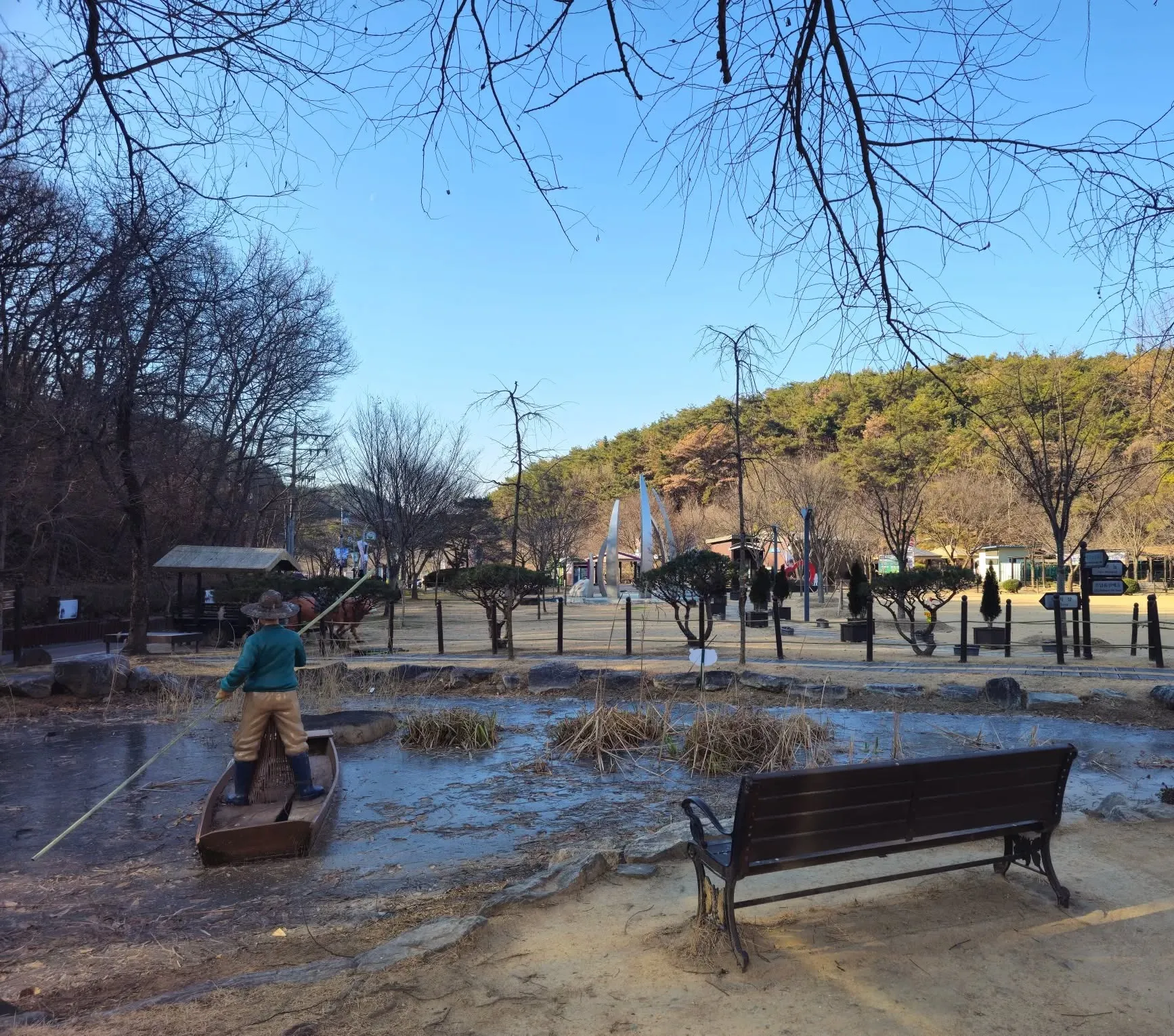 The boatman statue on the frozen pond in the visitor area.
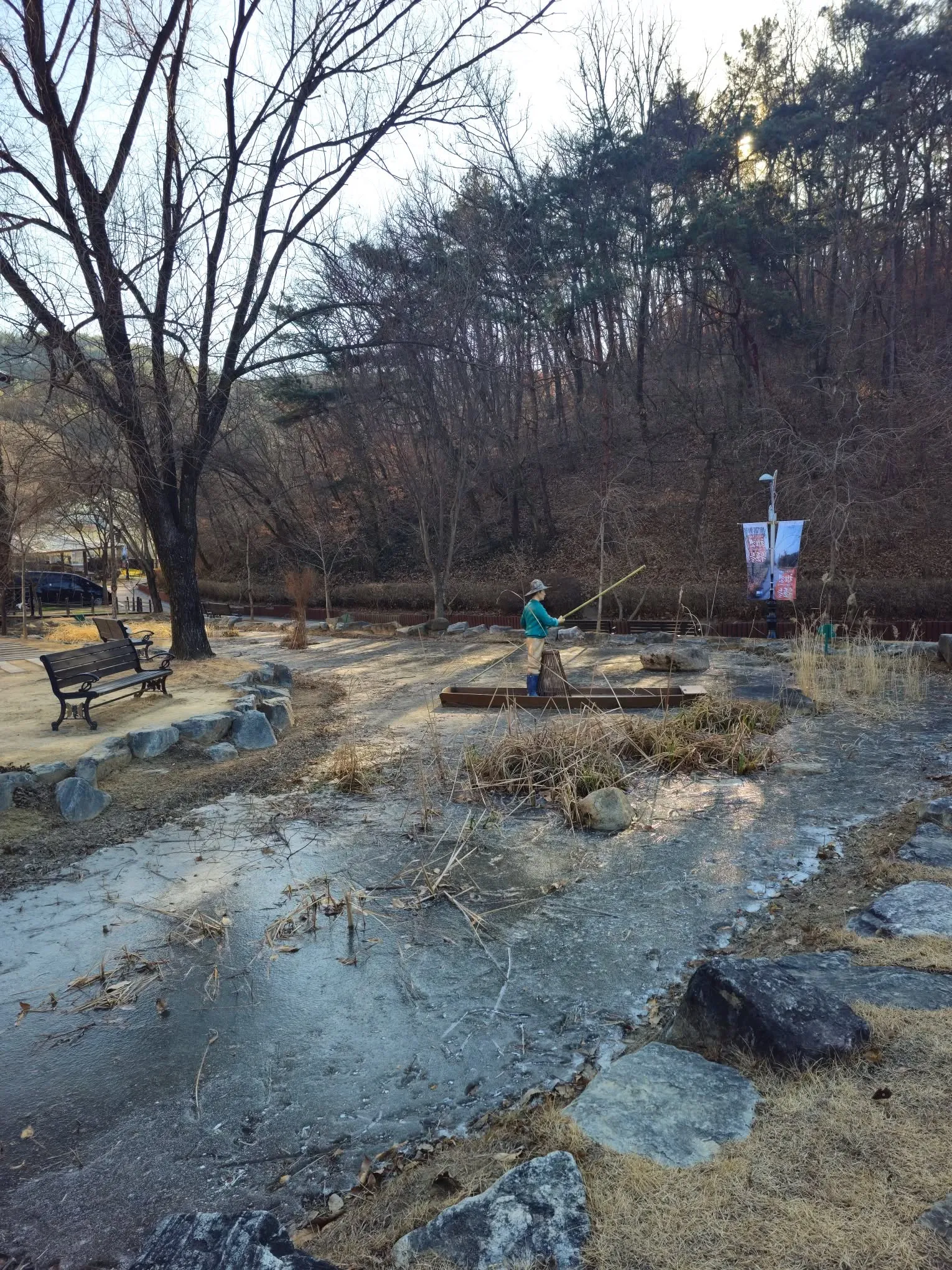 The pond from the other side.
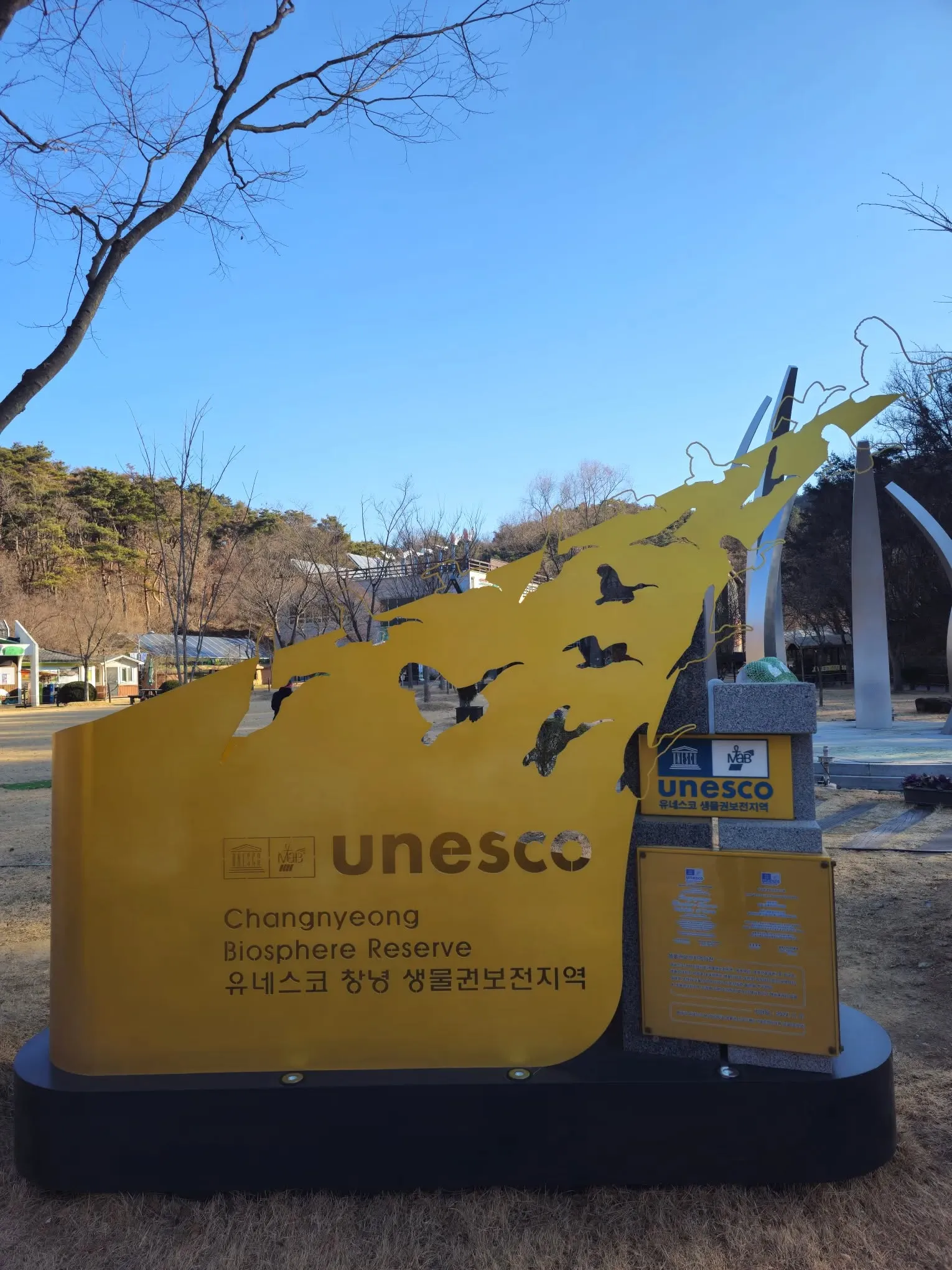 The Changnyeong UNESCO Biosphere Reserve sign in the visitor area.
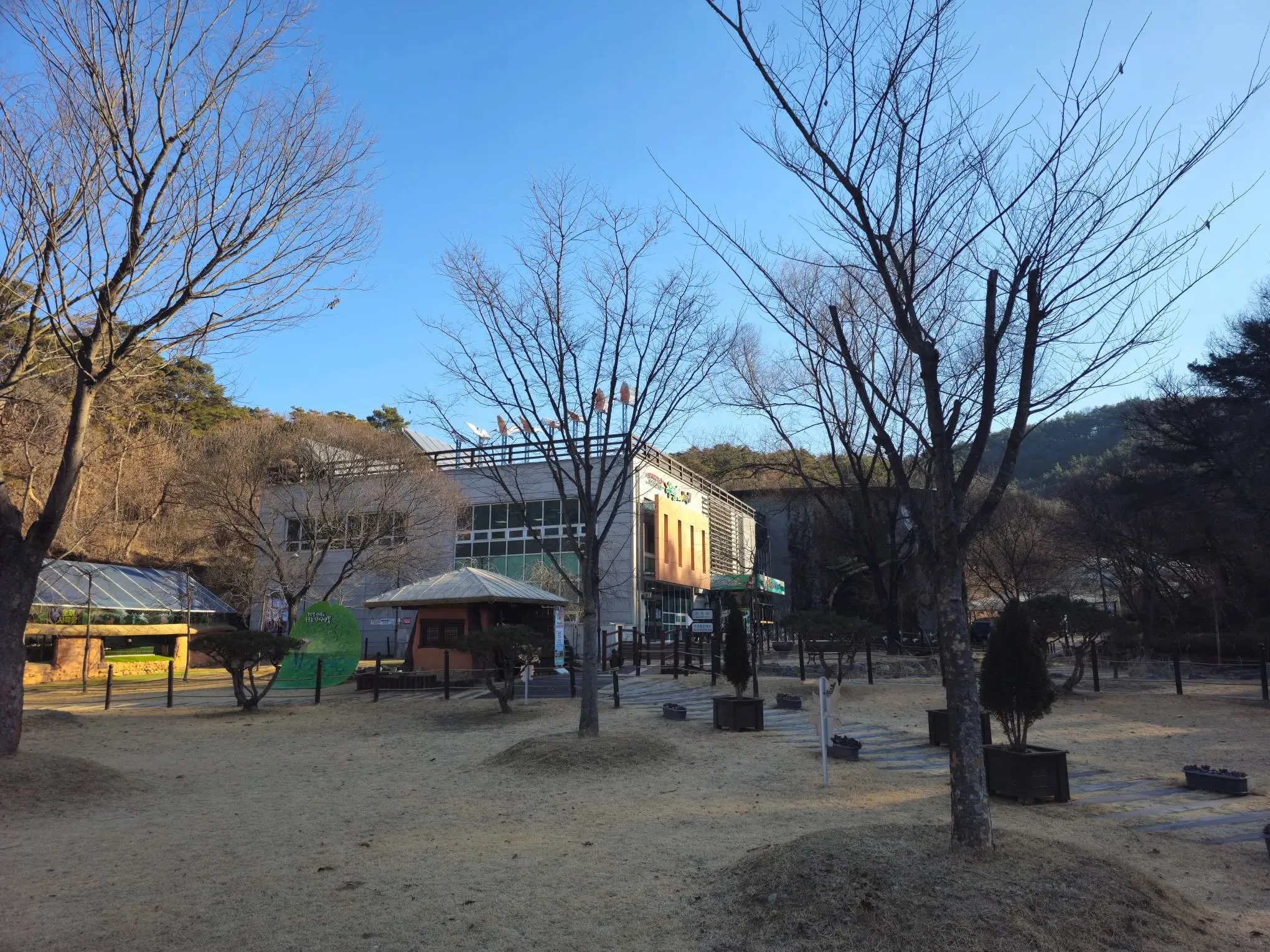 Buildings in the visitor area.
Visiting
| Upo Wetland | |
|---|---|
| Hours | Open at all times, every day of the year (KTO); visits may be restricted during bird-flu outbreaks (Kukinews, April 2025) |
| Admission | Free (my visit; KTO) |
| Parking | Free; 291 car spaces plus spaces for buses and disabled drivers (KTO) |
| Address | 220 Uponeup-gil, Yueo-myeon, Changnyeong-gun (KTO) |
- Ecology center: the Upo Wetland Ecology Center is free and open 9:00–18:00 (last entry 17:00); it’s closed on Mondays (Tuesday if Monday is a public holiday) and on 1 January (KTO, June 2026; free since 25 November 2021, per Kukinews). The wetland itself stays open. The KTO’s English page shows different figures (adults 2,000 won, closed Mondays, 100 parking spaces) that seem to describe the center, not the wetland.
- Crested ibis: Upo is linked with the restoration of the Asian crested ibis, a Natural Monument. A Kukinews report (April 2025) says viewing the ibises is only possible by booking on the Changnyeong County website at least two days ahead, four times a day, and may not be possible during bird-flu alerts. I couldn’t confirm the booking works in English.
- Winter: in January the marsh was frozen. The water birds you see change with the seasons; in October 2026 the county reported its first hooded crane of the year and about 30 Eurasian spoonbills (Kyunghyang Shinmun).
How to get there
By car: the wetland is in Yueo-myeon, Changnyeong County. The KTO lists a large free car park, and parking was free when I went.
By public transport: I couldn’t confirm bus connections, so I haven’t listed any. Check the live route in Naver Map before you go: search the Korean name, 우포늪.
How to check buses in English: install Naver Map and switch it to English in its settings. When we checked it in October 2026, the English version showed bus routes, stop names and live arrival times in English. Google Maps also gives public transport directions in Korea, but as of late September 2026 it still had no turn-by-turn walking or driving navigation here. Stuck? Call the Korea Travel Hotline: dial 02-1330 from a Korean mobile phone (+82-2-1330 from abroad). It has English-speaking staff.
Tips
- Go early. I went early in the morning, and there were hardly any people; all I could hear was the birds.
- Winter means ice. The marsh was frozen in January, which was a bit of a shame for me.
- Nearby: I saw the East Three-story Stone Pagoda in Changnyeong town the same day, and Gwak Jae-u’s birthplace in Uiryeong the next day.
Who it’s for
Likely to suit (estimate): nature lovers, birdwatchers, walkers, photographers, and anyone who wants a big, quiet natural landscape without paying for it.
Sources
Checked against the Korea Tourism Organization listings (wetland, updated June 2026: the address, area, four townships, about 140 million years, Ramsar 1998, Ramsar Wetland City October 2018, species counts, open at all times, every day, free entry and parking, parking spaces; ecology center, updated June 2026: hours, Monday closure, free) and the KTO English page (adult fee 2,000 won, closed Mondays, 100 parking spaces), Kukinews (April 2025: largest natural inland wetland, the three marshes and two wetland areas, ecology center free since November 2021, ibis center booking, bird-flu restrictions), Metro Seoul and Aju News (July 2024: the whole county a UNESCO Biosphere Reserve, Upo in the core zone), Kyunghyang Shinmun (October 2026: hooded crane and spoonbills, Ramsar site and Biosphere Reserve). Free entry, free parking and my impressions are from my own visit.