Home / Gyeongsang / Gwak Jae-u's Birthplace
Imjin War hero's birthplace in Uiryeong, Korea, by a centuries-old ginkgo
Uiryeong, South Korea: the restored hanok birthplace of Gwak Jae-u, the 'Red Robe General' who raised a Righteous Army against the 1592 Japanese invasion, in a quiet park with a Natural Monument ginkgo. Free entry and parking.
- Getting there
- In Segan-ri, Yugok-myeon, Uiryeong County. I drove; there's a large car park. I couldn't confirm bus connections.
- Cost
- Free entry and free parking (my visit, January 2026).
- Time needed
- 1 hour (estimate)
- Best time
- I couldn't confirm opening hours. The ginkgo is known for its autumn colour.
Tap any Korean name on this page to hear it. Prefer Naver Map? In the app (set to English), search Gwak Jae-u Birthplace Uiryeong, or paste the Korean name:곽재우생가
Short version: In Segan-ri, a village in Uiryeong County, South Gyeongsang, stands the restored hanok house where Gwak Jae-u was born in 1552. Forty years later, when Japan invaded Korea in 1592 (the Imjin War), he raised a volunteer “Righteous Army” from this village, and rode into battle in a red robe on a white horse. The house sits in a park with lawns, walking paths and a statue of him, and in front of it is a ginkgo tree that’s a national Natural Monument. It was quiet, bigger than I expected, and entry and parking were free. If you go to Uiryeong, visit once.
Last checked: 30 October 2026. The history and the house come from the bilingual board at the birthplace (photographed January 2026), checked against the Encyclopedia of Korean Culture and Korean news reports. The ginkgo facts come from the board by the tree, the Encyclopedia of Korean Culture, the Korea Times and Korean news reports. Free entry, free parking and what it was like are from my own visit. Tell me if anything has changed.
Who was Gwak Jae-u?
The board at the house gives his story. Gwak Jae-u was born on the 28th day of the 8th lunar month in 1552, here in Segan-ri, the home village of his mother’s family. The board dates the Japanese invasion to the 13th day of the 4th lunar month in 1592 (the Encyclopedia of Korean Culture gives the 14th), and says that nine days later, on the 22nd day, he raised a Righteous Army (a volunteer militia) in this village. The board calls it the first in the country, starting with about ten young servants of his household. After victories at Gigang and Jeongamjin it grew to about 2,000 fighters. He rode a white horse and wore a red robe, and was called the “General of the Red Robe Descended from Heaven” (the board’s English). The board says others gave him the name; the Encyclopedia of Korean Culture says he gave himself the title, and the Seoul Shinmun, quoting the royal annals, says he called himself the “Red Robe General”. He died in 1617.
The Seoul Shinmun (2022) also gives his birth in Segan-ri, his mother’s family home, the 22nd day of the 4th month for the uprising, and the red robe as his symbol. It says his men grew to about 1,000, and quotes the royal annals crediting him with stopping the Japanese from crossing at Jeongamjin towards the Honam region (today’s Jeolla). Numbers differ by source; each is given with its source.
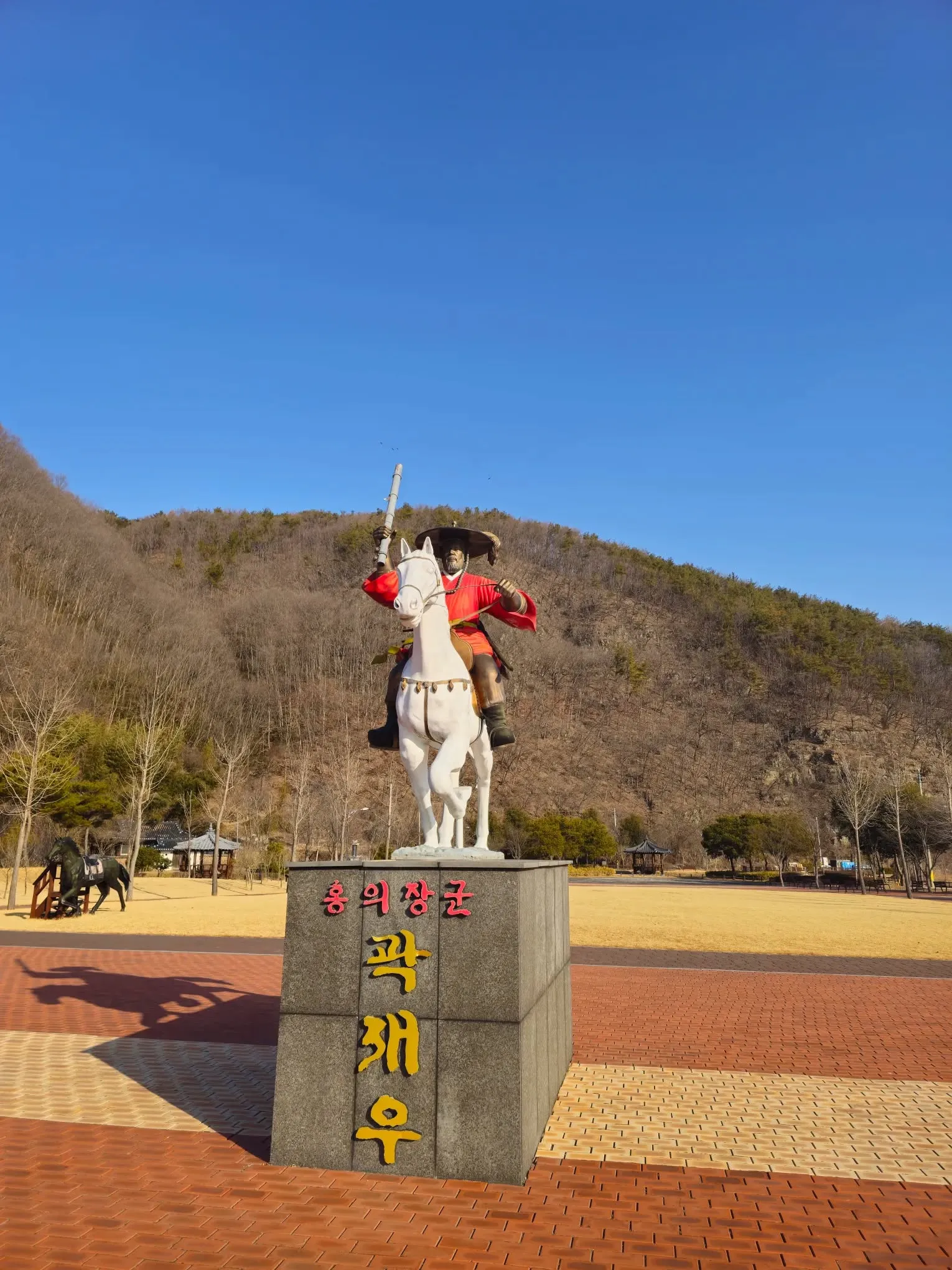 The statue of Gwak Jae-u in the park. The plinth reads 홍의장군 곽재우: “Red Robe General Gwak Jae-u”.
The house
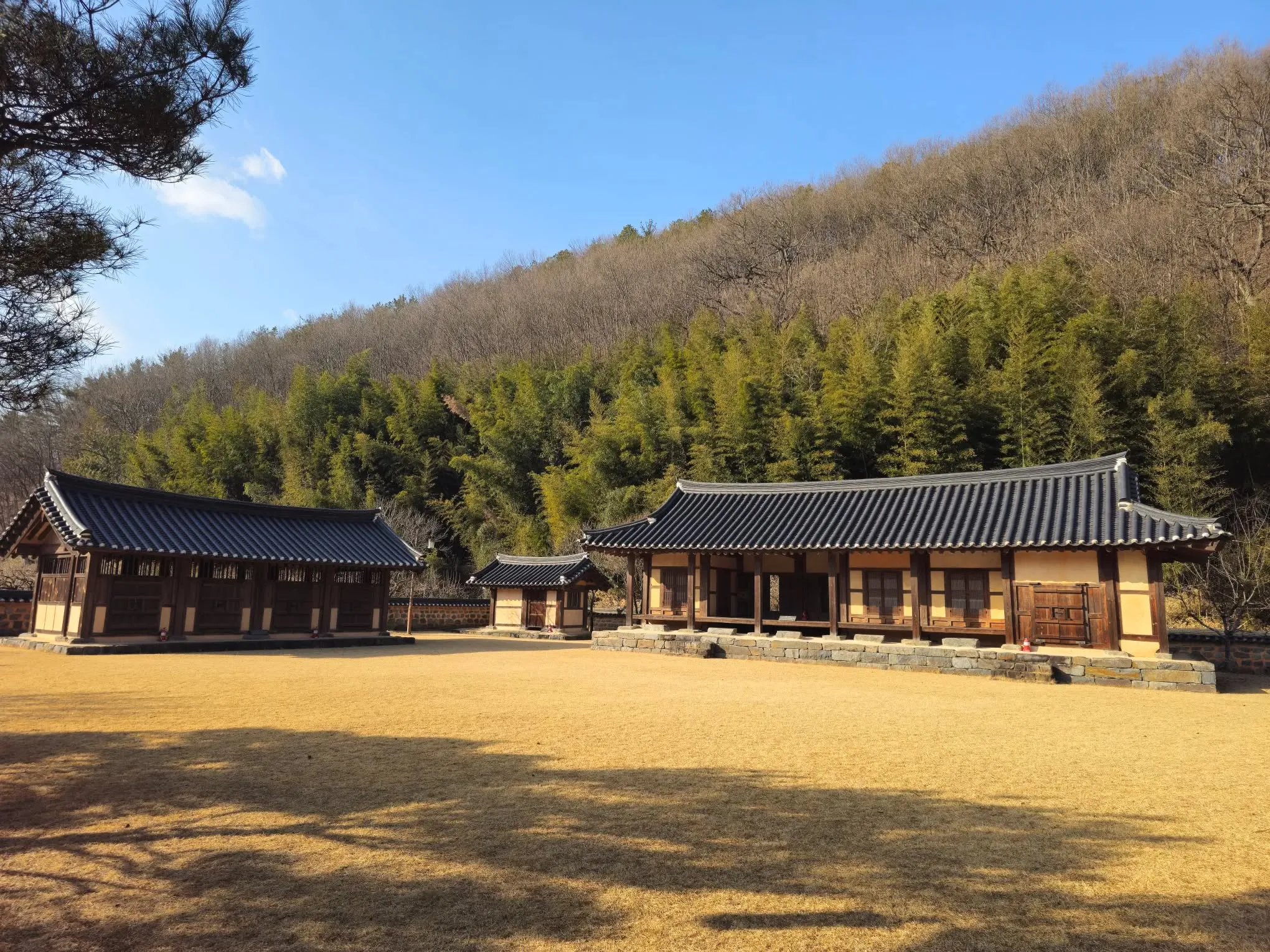
According to the board, the house shows the typical layout of a local aristocratic family’s home in southern Korea in the mid-Joseon period: a main house, a guesthouse, an annex and two storehouses (a 2009 Maeil Shinmun report also lists the gate buildings). It was restored in 2005 (the board; a 2009 Maeil Shinmun report also says 2005). The house has been restored as a hanok, and as I wrote, the park around it is nicely done, so it’s good for a walk around.
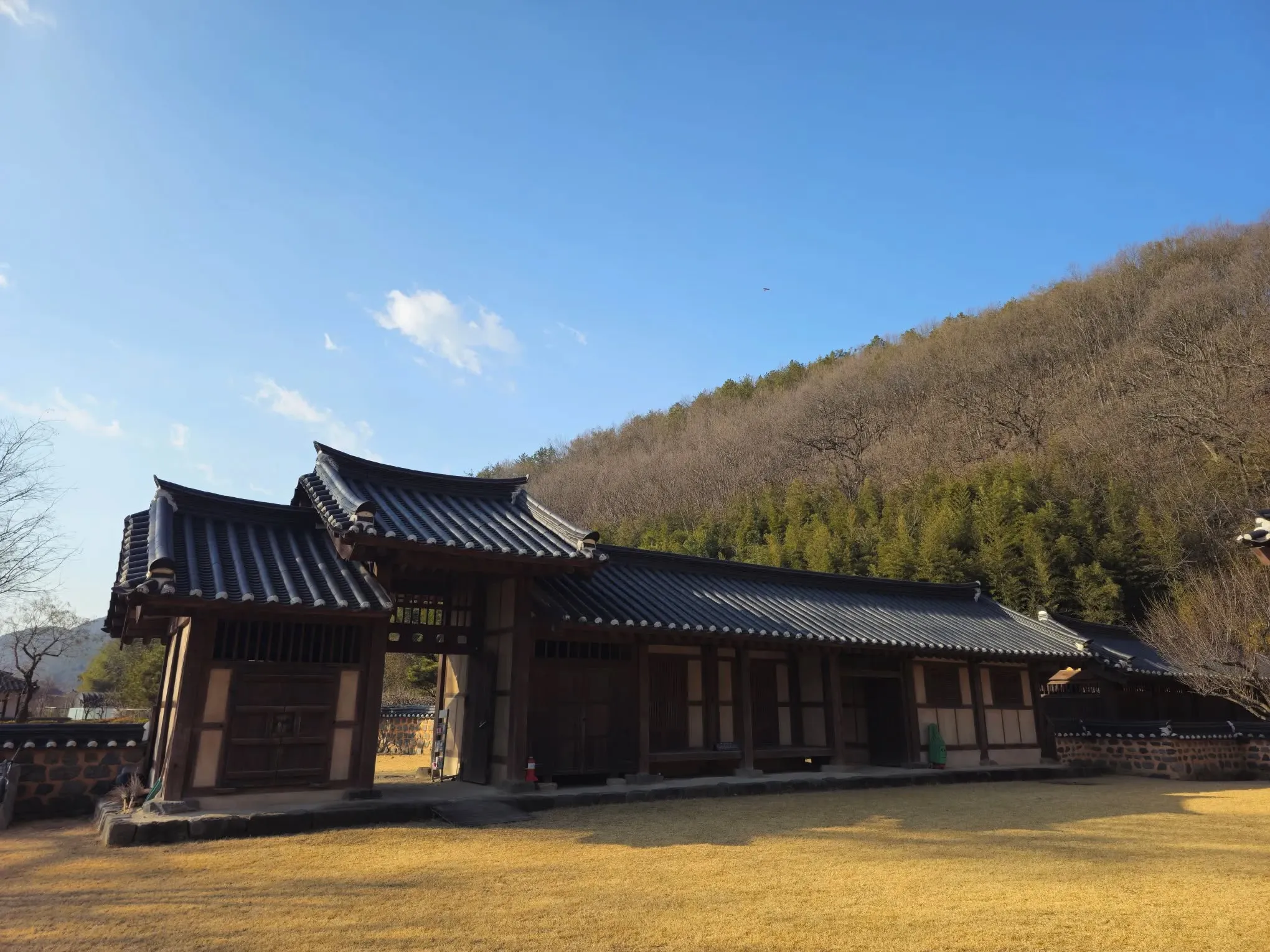 The gate building, seen from the lawn.
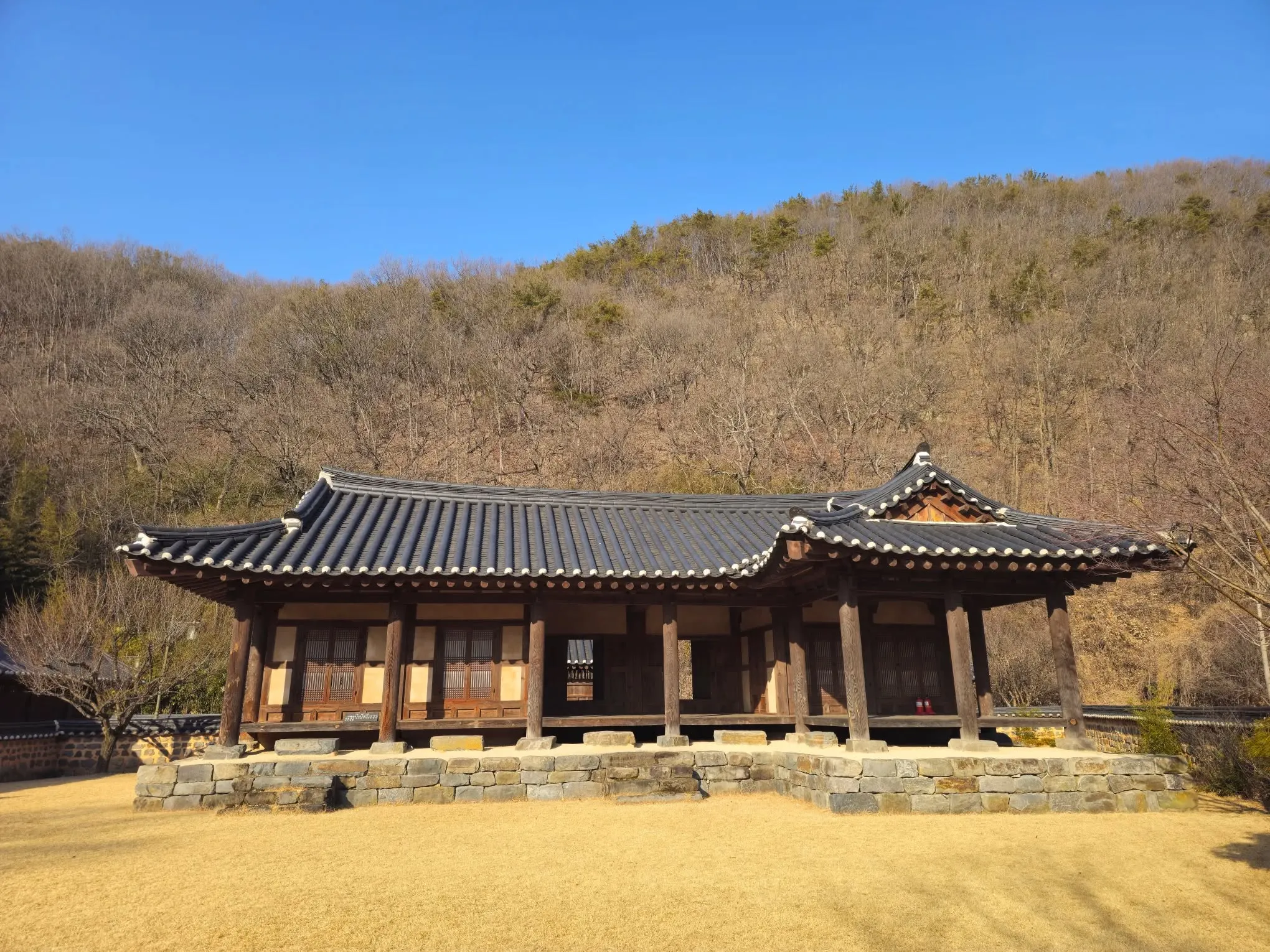 One of the restored buildings.
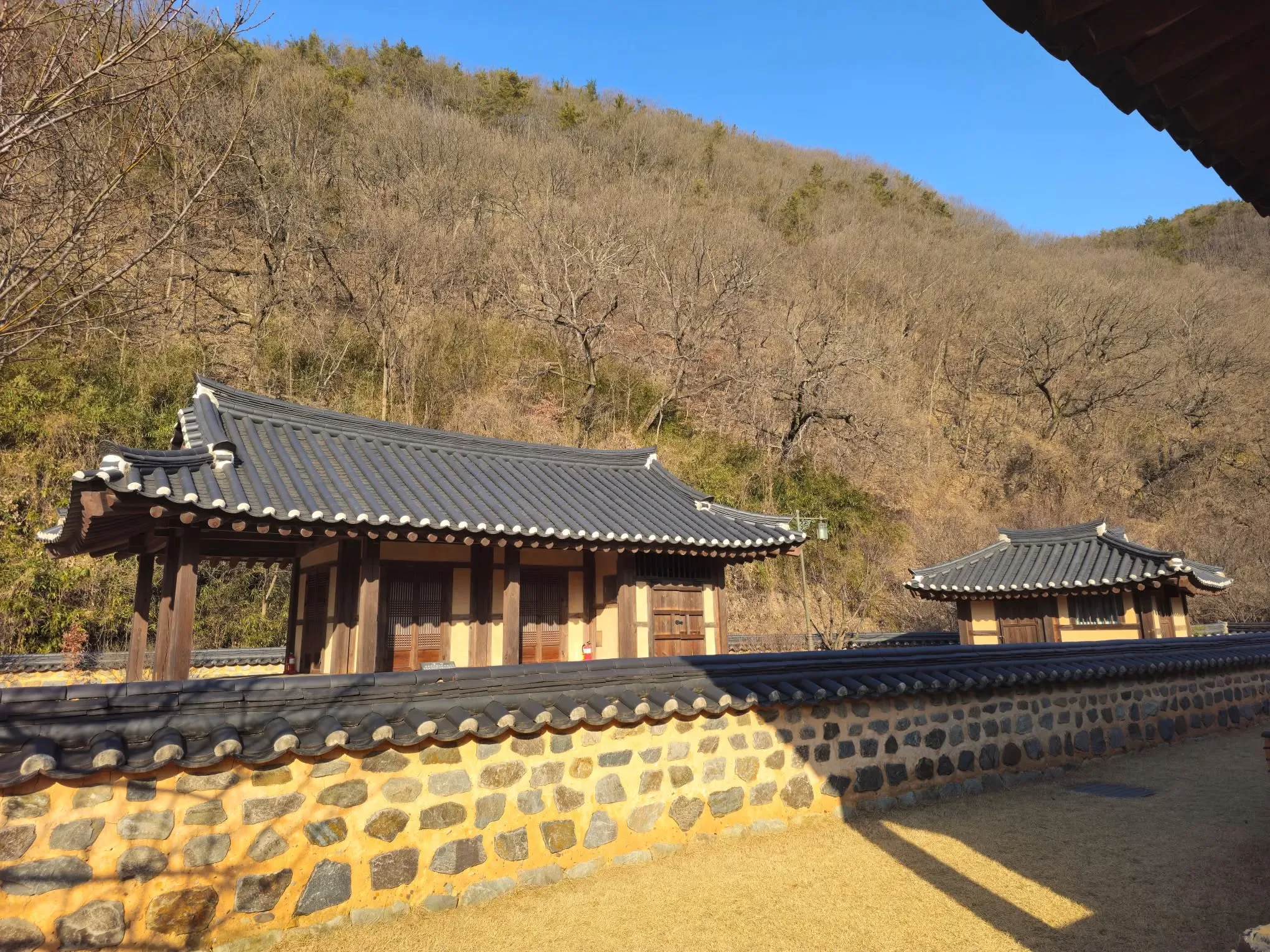 Buildings inside the walls.
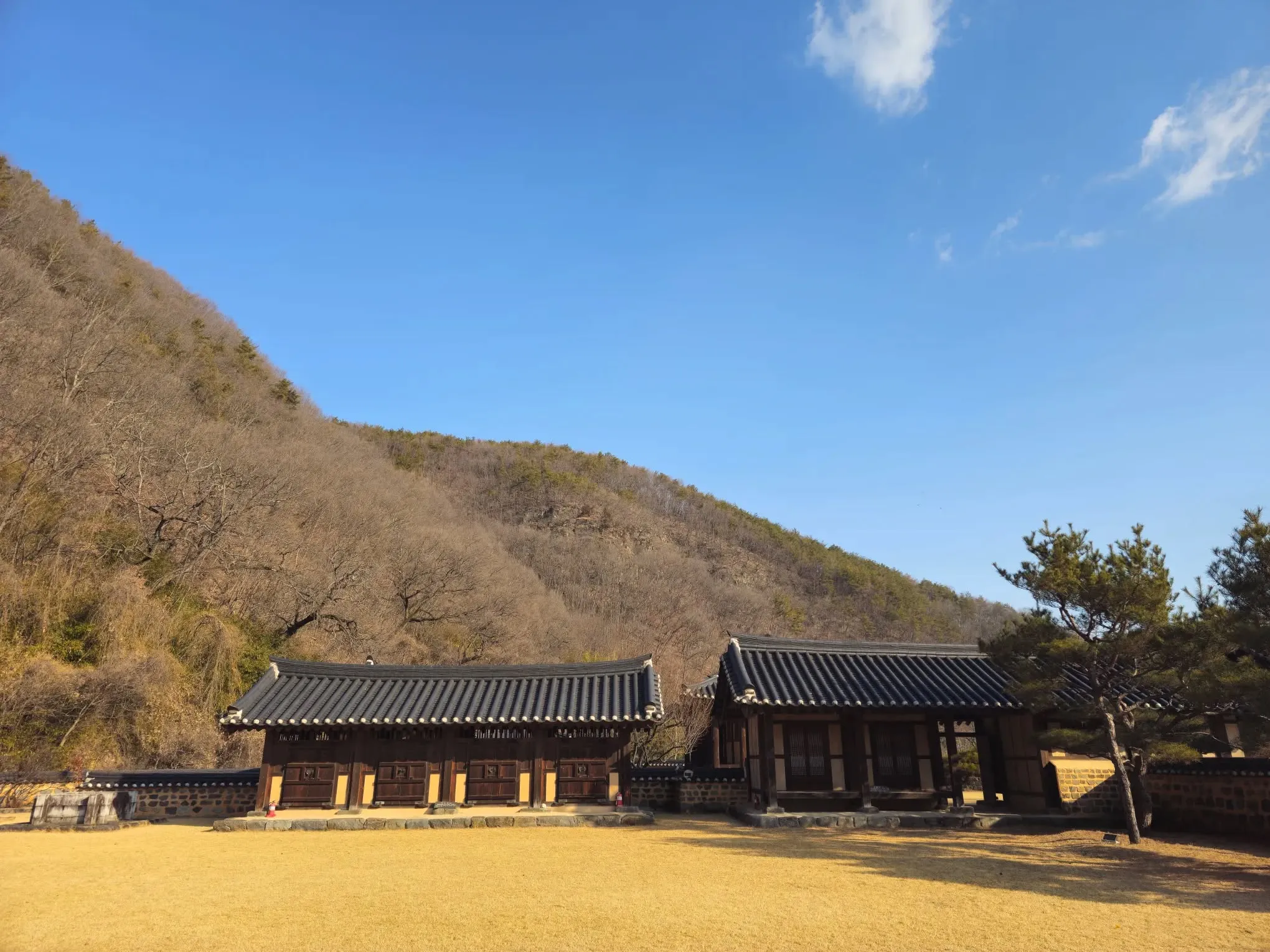 More of the buildings around the lawn.
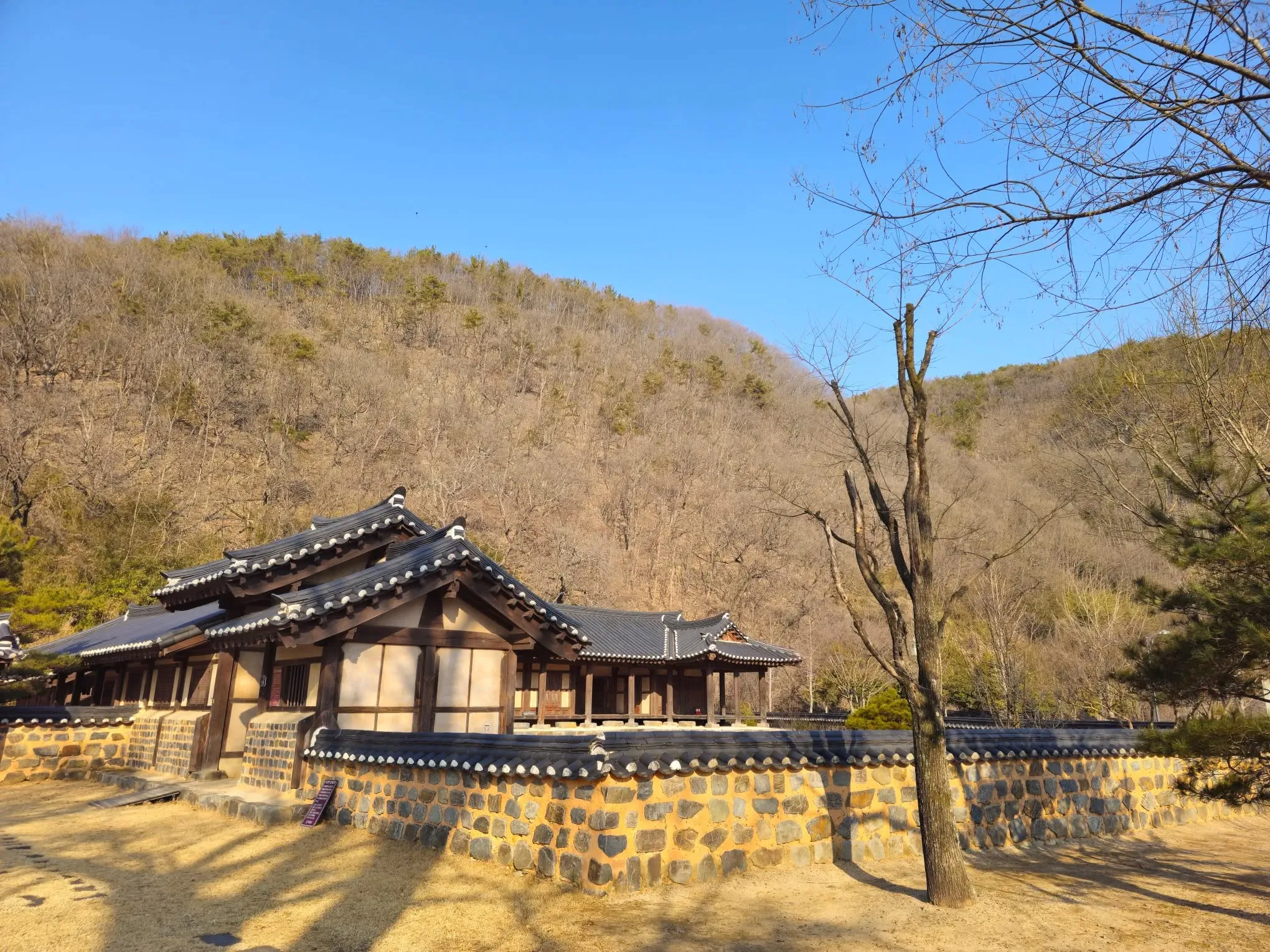 The house from outside the wall.
The park around it
The map board at the site lists, among other things, a stream, a wooden bridge, a pond viewpoint, a lawn, a drum experience area, a traditional games area, a walking path, a management office, toilets, the statue, the ginkgo and the car park. In my photos the paths are paved in red brick, there are a few pavilions and horse sculptures on the lawn, and there’s a big drum in a wooden pavilion.
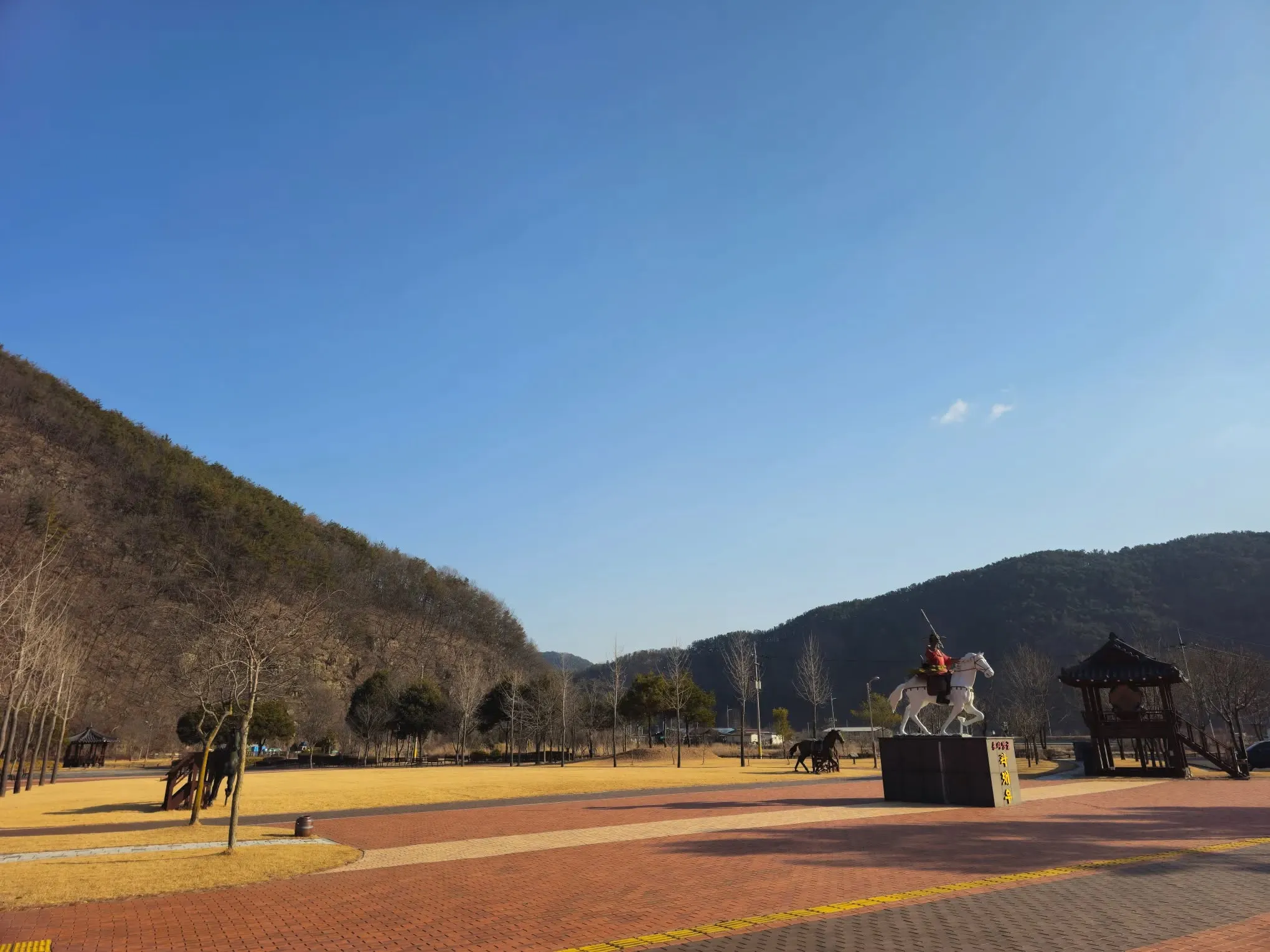 The park: lawns, the statue and the drum pavilion.
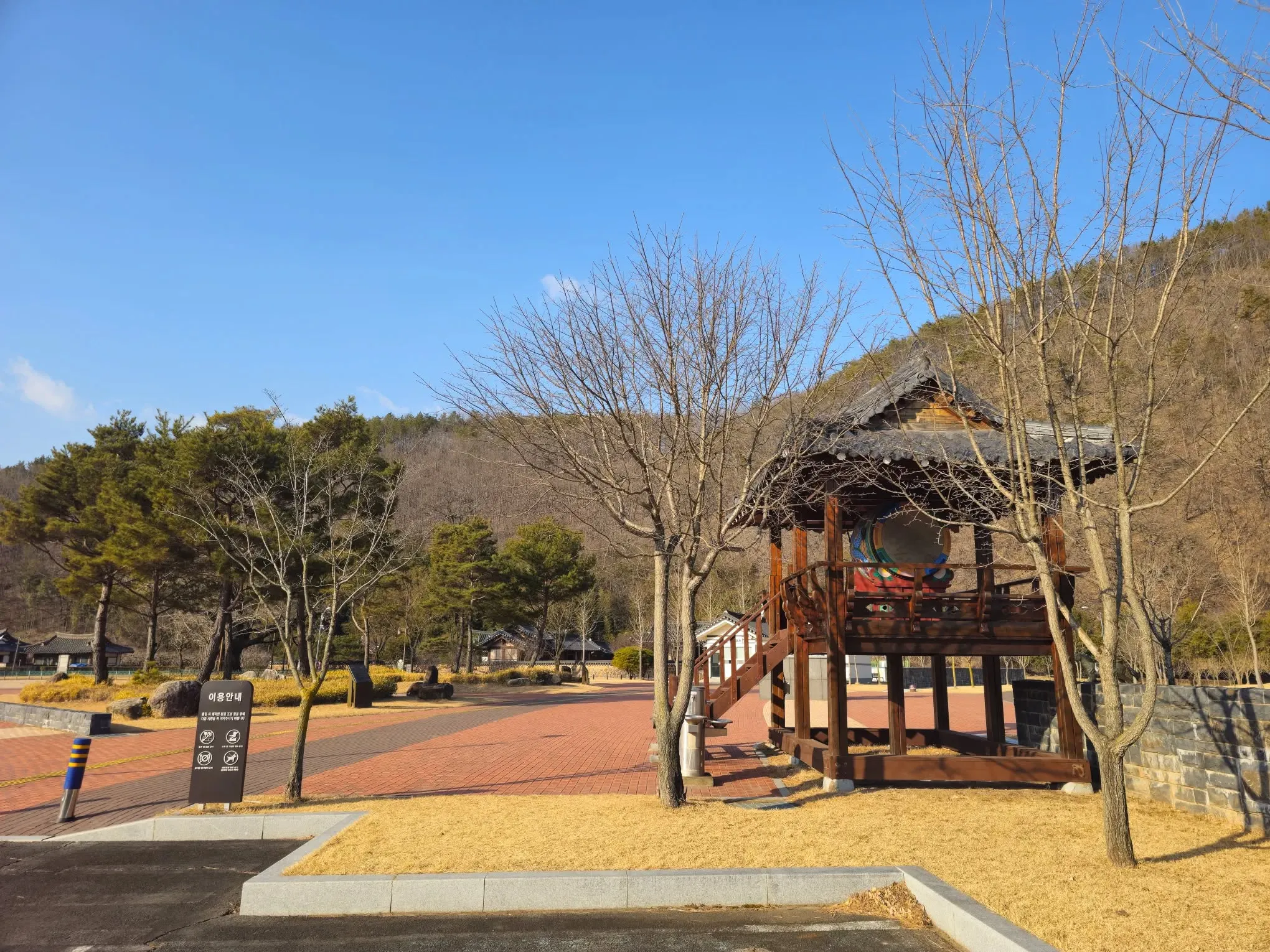 The drum pavilion near the car park.
The ginkgo
In front of the house is the Ginkgo Tree of Segan-ri, a national Natural Monument (designated in November 1982, per the Encyclopedia of Korean Culture and the Academy of Korean Studies heritage wiki). The board by the tree says it’s presumed to be about 600 years old, 24.5 m tall and 10.3 m round at chest height. A Korea Times report (October 2026) says “more than 600 years old”. The Encyclopedia of Korean Culture gives about 550 years and 21 m, and a 2009 Maeil Shinmun report 500 years, so the figures depend on the source.
It’s a female tree that bears fruit, and it’s known for its shape and autumn colour (the board). Two bumps on a southern branch are said to look like a woman’s breasts, and the story goes that a nursing mother without enough milk can pray here for more. Traditionally, in the first lunar month, villagers have held a rite for the village’s guardian trees: first an oak on the hill, then this ginkgo, then a zelkova at the village entrance (the board’s English). My photos are from January, so the branches are bare.
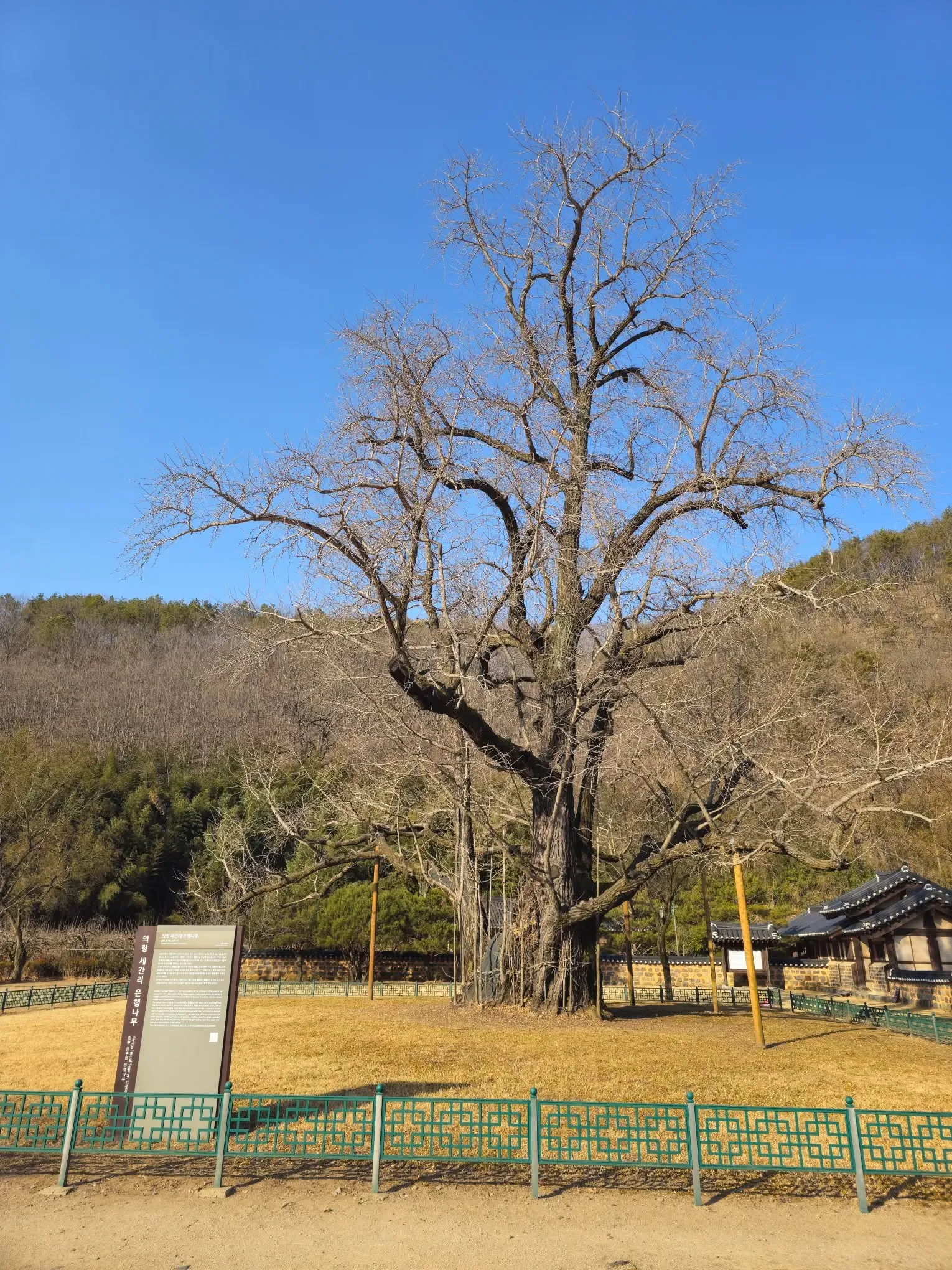 The Segan-ri ginkgo in winter, with its board on the left.
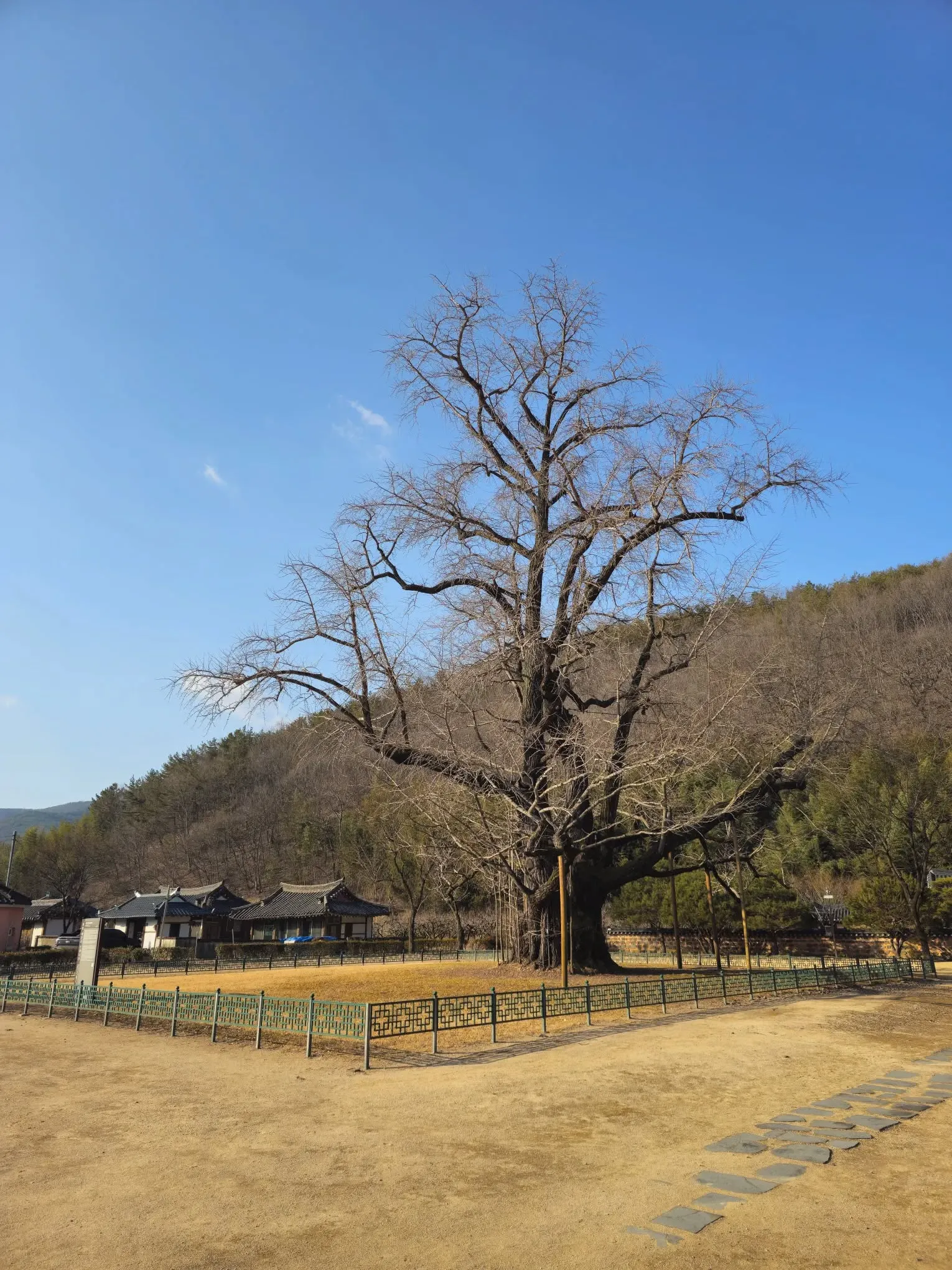 The ginkgo with Segan-ri village behind it.
That zelkova is the Hyeongosu Tree, also a Natural Monument (Korea Times, 2026). The board, the Korea Times and Korean news reports place it at the village entrance; the Encyclopedia of Korean Culture says it grows beside the ginkgo. Its name means “drum-hanging tree”: Gwak Jae-u is said to have hung a drum on it to gather and train his men (Encyclopedia of Korean Culture, Seoul Shinmun, Maeil Shinmun). It isn’t in my photos here.
Visiting
| Gwak Jae-u’s Birthplace | |
|---|---|
| Hours | Couldn’t confirm |
| Closed | Couldn’t confirm |
| Admission | Free (my visit) |
| Parking | Large car park, free (my visit) |
| Address | 33 Segan 2dong-gil, Yugok-myeon, Uiryeong-gun, Gyeongsangnam-do (per the board at the house) |
- English: the board at the house and the board by the ginkgo are in Korean and English.
- Crowds: there weren’t many people when I went on a Tuesday in January.
How to get there
By car: the birthplace is in Segan-ri, Yugok-myeon, Uiryeong County. There’s a large car park, and it was free when I went.
By public transport: I couldn’t confirm bus connections, so I haven’t listed any. Check the live route in Naver Map before you go: search the Korean name, 곽재우생가, and check it’s the one in Yugok-myeon, Uiryeong.
How to check buses in English: install Naver Map and switch it to English in its settings. When we checked it in October 2026, the English version showed bus routes, stop names and live arrival times in English. Google Maps also gives public transport directions in Korea, but as of late September 2026 it still had no turn-by-turn walking or driving navigation here. Stuck? Call the Korea Travel Hotline: dial 02-1330 from a Korean mobile phone (+82-2-1330 from abroad). It has English-speaking staff.
Tips
- Take it slowly. As I wrote, it’s quiet and peaceful, and good for looking around at your own pace.
- Read the boards. The history board at the house is in English too, so you learn some history.
- Autumn for the ginkgo. The tree is known for its autumn colour (the board); my January photos show it bare.
- Nearby on the same trip: I visited the Patriots’ Shrine in Changwon the same day.
Who it’s for
Likely to suit (estimate): anyone interested in the Imjin War and Korea’s Righteous Armies, road-trippers in South Gyeongsang, people who like hanok and old trees, and travellers who want a quiet place off the usual route.
Sources
Checked against the boards on site (photographed January 2026: the bilingual history board at the house, with the address, his life story and the 2005 restoration; the map board listing the park’s facilities; the bilingual board by the ginkgo), the Academy of Korean Studies heritage wiki (the Segan-ri ginkgo: Natural Monument, designated November 1982), the Encyclopedia of Korean Culture (Gwak Jae-u’s life; the ginkgo and the Hyeongosu Tree), the Korea Times (October 2026, from South Gyeongsang Province and the Gyeongnam Tourism Foundation: the ginkgo in front of the birthplace, the Hyeongosu Tree at the village entrance), the Seoul Shinmun (February 2022: his birth in Segan-ri, the 22nd-day uprising, the red robe, Jeongamjin, the Hyeongosu Tree) and the Maeil Shinmun (2009: the 2005 restoration, the gate buildings, a 500-year age for the ginkgo; 2015: the Hyeongosu drum story). Free entry, free parking and my impressions are from my own visit.