Home / Gyeongsang / Sangju Gotgam Park (Dried Persimmon Park)
Sangju dried persimmon park, Korea: free Gotgam Park and a tiger tale
A free park in Sangju, Korea's dried persimmon (gotgam) country: an exhibition hall on how gotgam is made, a thatched house hung with persimmons and a tiger story. Parking was free when I visited.
- Getting there
- 59-12 Gotgamgongwon-gil, Oenam-myeon, Sangju, North Gyeongsang. About 1 hour by car from Daegu and 2 hours from Seoul (Sangju city). I drove; the car park is big and was free. For buses, check the live route in Naver Map (in English).
- Cost
- Free admission (Korea Tourism Organization). Parking was free when I visited (January 2026).
- Time needed
- About an hour for the hall and a walk round the park (estimate)
- Best time
- Not on a Monday: the Gamrakwon hall closes on Mondays, 1 January and the days of Seollal and Chuseok (Korea Tourism Organization; Sangju city).
Tap any Korean name on this page to hear it. Prefer Naver Map? In the app (set to English), search Sangju Gotgam Park, or paste the Korean name:상주곶감공원
Short version: Sangju’s own English site calls the city the “dried persimmon capital”, and this park in the village of Soeun-ri, Oenam-myeon, is built around that: an exhibition hall called Gamrakwon (감락원) on how dried persimmons, gotgam (곶감), are made, a thatched house hung with strings of persimmons, and a story about a tiger who is scared of gotgam. I went on 30 January 2026. A park all about dried persimmons might sound obvious for Sangju, but actually seeing one was something. Admission is free, and the big car park was free too.
Last checked: 26 October 2026. The address, opening hours, closing days and free admission come from the Korea Tourism Organization’s listing (updated 16 October 2026) and its 2024 travel article. The park’s facilities, the hall’s floors, the heritage designation and the persimmon tree come from Sangju city’s English site. The story on the board and the stone is from my own photos (in Korean, January 2026). Free parking and my impressions are from my own visit. Tell me if anything has changed.
A park for Sangju’s dried persimmons
Gotgam are persimmons that are peeled and hung up to dry. Sangju city’s English site calls the city the “dried persimmon capital”, and in 2019 its traditional dried persimmon farming was designated Korea’s 15th Nationally Important Agricultural Heritage (Sangju city; Money Today, 2026).
The park covers about 32,000 m². Besides the Gamrakwon hall it has an outdoor plaza, walking trails, an information centre and a shop selling local products (Sangju city). That’s the same list as in my notes.
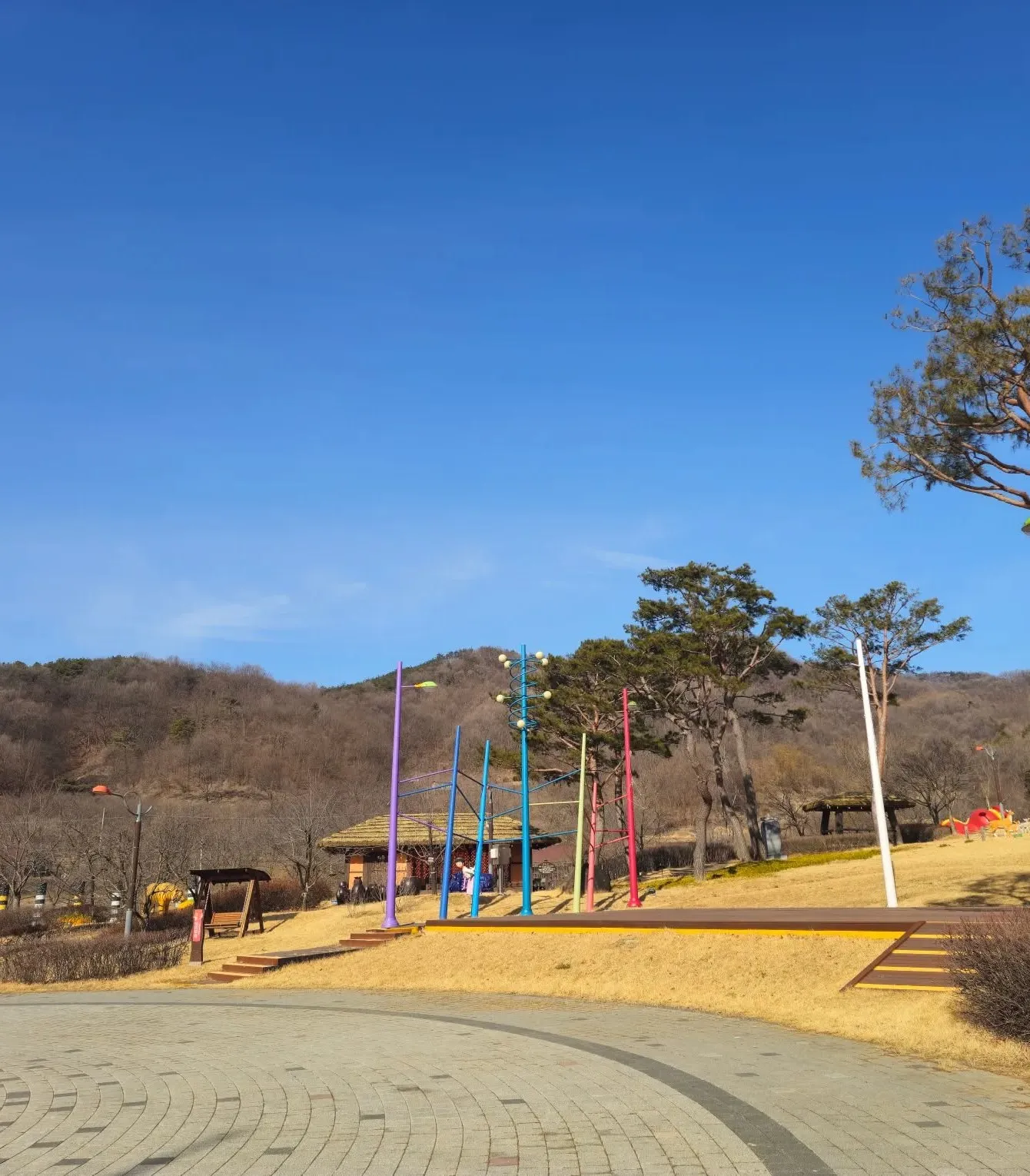 A paved plaza in the park.
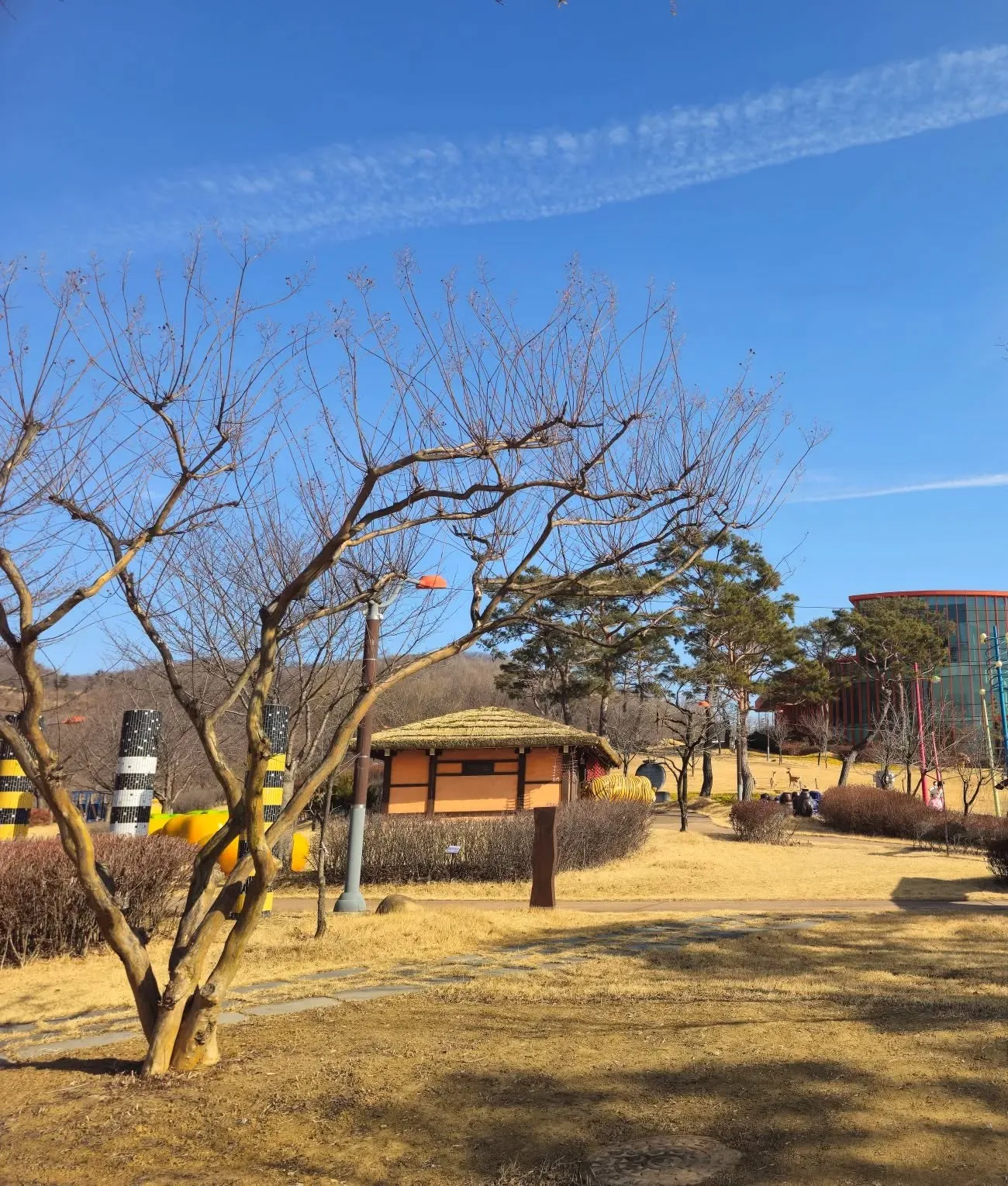 Across the park, with Gamrakwon on the right.
Gamrakwon, the exhibition hall
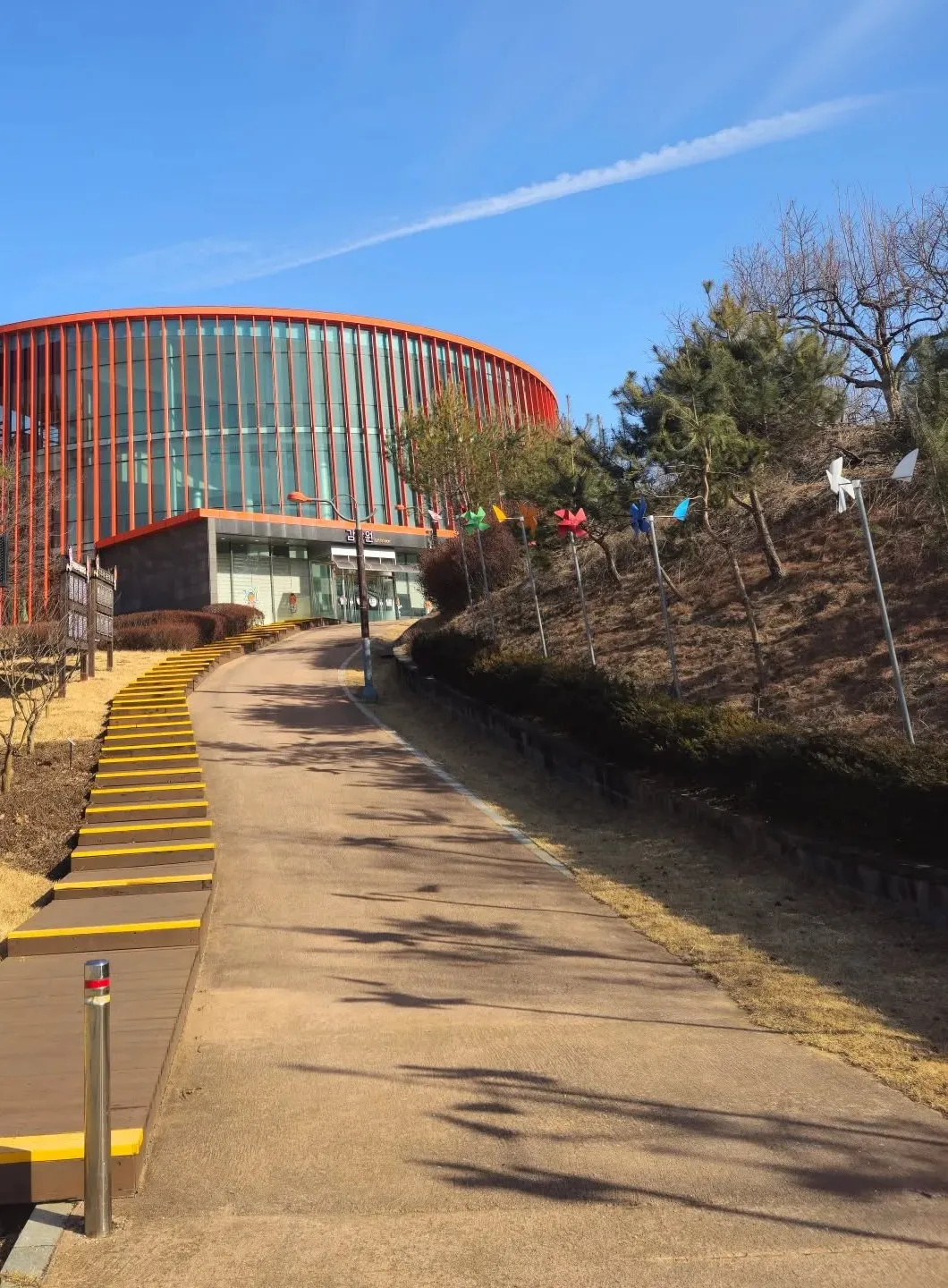 Gamrakwon, the round exhibition hall, at the top of a sloping path.
Sangju city’s English site lists three floors:
- 1st floor: a 202-seat auditorium and a lobby with a rest area and a play area.
- 2nd floor: the dried persimmon exhibition and experience hall. It covers the dried persimmons once offered to the king, how persimmons are grown and harvested, and the story of the tiger and dried persimmons, with hands-on activities (grafting, peeling and hanging persimmons) and a souvenir shop.
- 3rd floor: a cafeteria, a rest area and children’s play facilities.
As I wrote at the time, in the exhibition hall you can see the history of dried persimmons and how they’re made in detail, and there are hands-on programmes too, so it looks good for families. I couldn’t confirm what the activities cost or when they run; ask at the hall.
The tiger who was scared of gotgam
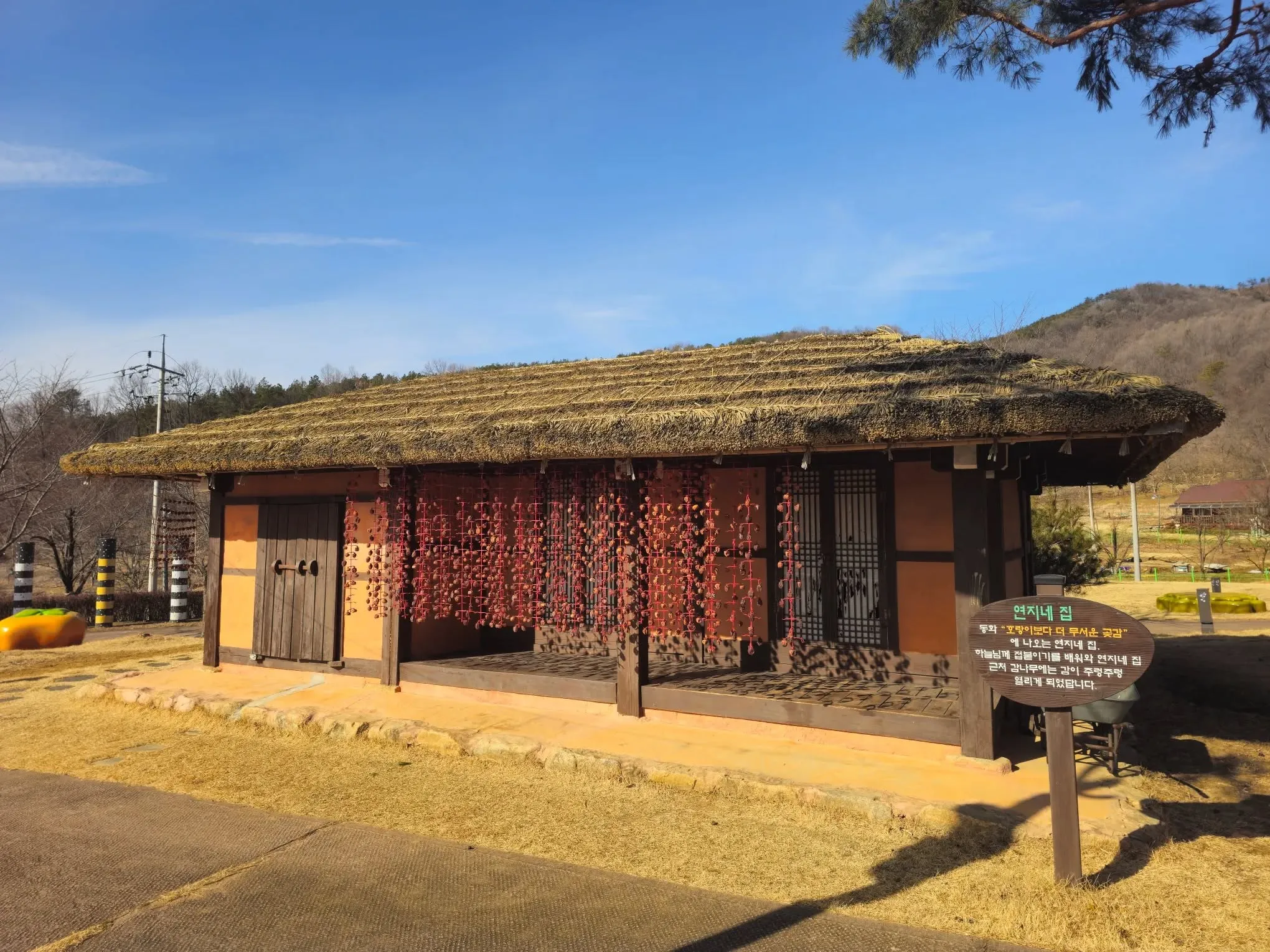
The park is themed on a story called “Dried Persimmons Scarier than Tigers” (호랑이보다 더 무서운 곶감) (Sangju city; Korea Tourism Organization). The sign at the thatched house (in the photo at the top of this page) says this is Yeonji’s house from that story, and that once grafting had been learned from the god of heaven (하늘님), the persimmon trees near Yeonji’s house were heavy with fruit. Gyeongbuk Maeil (2022) says persimmons are hung under its eaves every year as something to see.
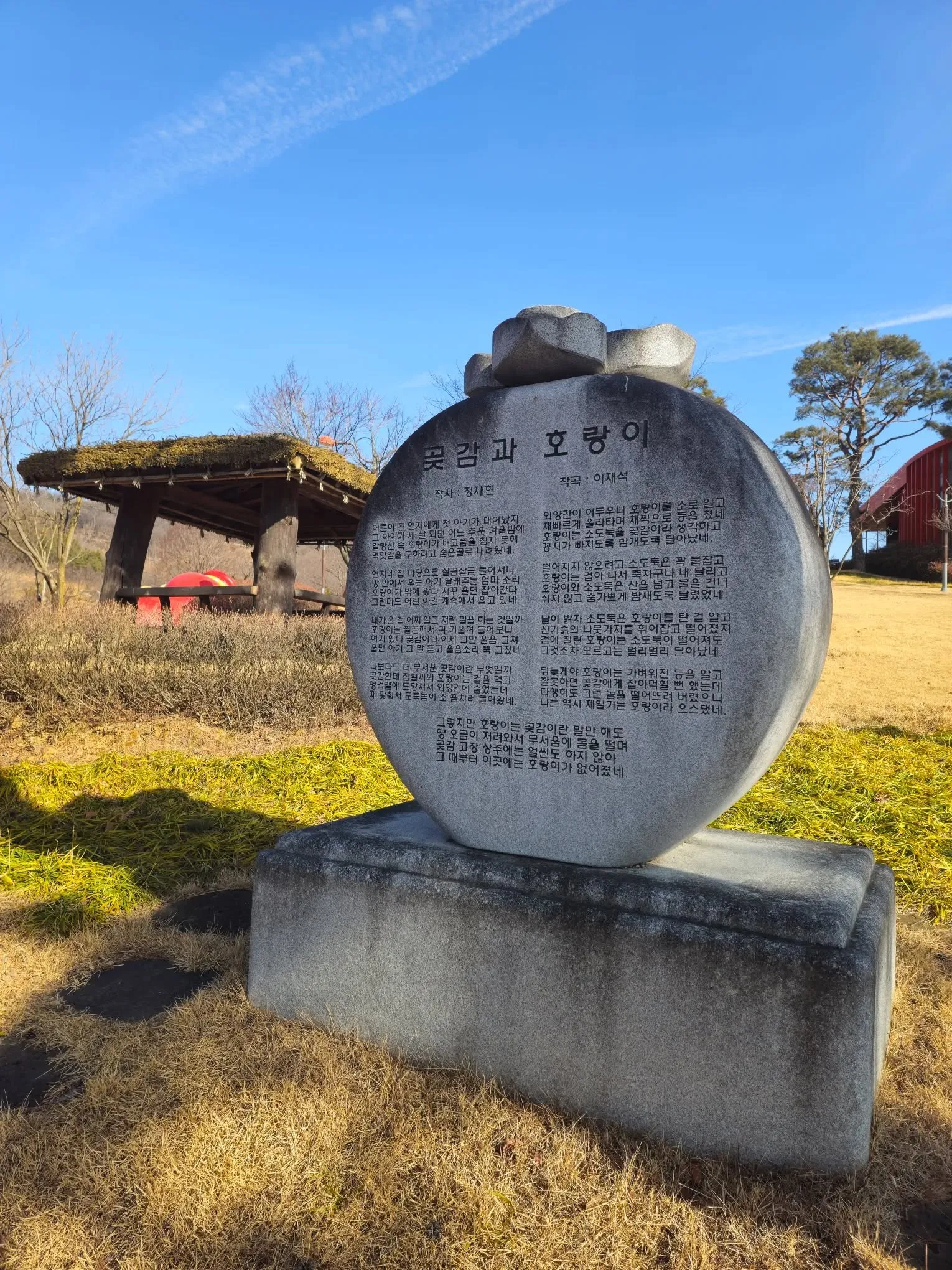 The song stone “Gotgam and the Tiger”.
Nearby, a persimmon-shaped stone is carved with the words of a song, “Gotgam and the Tiger” (곶감과 호랑이). In short: Yeonji has grown up and has a baby. On a cold winter night a hungry tiger comes down from the mountain. The baby won’t stop crying, even when told a tiger is outside, but goes quiet the moment it hears “gotgam”. The tiger wonders what this gotgam, scarier than he is, could be, and takes fright. From then on, the song says, tigers have stayed away from Sangju.
Where the story comes from isn’t clear-cut. The Korea Tourism Organization’s listing and a 2022 Gyeongbuk Maeil report call it a newly written story; Sangju city’s heritage-trail page calls it a traditional fairy tale, and a 2013 Gyeongbuk Maeil report calls it an old folk tale that started in Songgol, a part of Soeun-ri. Money Today (2026) retells a folk tale called “Gotgam and the Tiger” with a similar crying-baby scene. I couldn’t confirm which came first or how the park’s version relates to it.
The oldest persimmon tree
Also in Soeun-ri is a persimmon tree known as “the first persimmon tree under the sky”, which Sangju city calls the oldest grafted tree in Korea. Its age is told two ways: local legend says 750 years, but a 2009 study by the National Institute of Forest Science put it at about 530 (Sangju city). The city’s heritage trail links it with the park. I couldn’t confirm how far it is from the park on foot.
Visiting
| Sangju Gotgam Park | |
|---|---|
| Address | 59-12 Gotgamgongwon-gil, Oenam-myeon, Sangju (경상북도 상주시 외남면 곶감공원길 59-12) |
| Park | Open every day, all day, says the Korea Tourism Organization’s listing. Sangju city’s English site and the tourism organization’s 2024 article list the Monday and holiday closures without saying whether they cover only the hall. I couldn’t confirm whether the outdoor park closes on those days |
| Gamrakwon hall | 09:30–17:30 in summer, 09:30–17:00 in winter. The tourism organization’s 2024 article gives summer as March to October and winter as November to February |
| Closed (hall) | Mondays, 1 January, and the days of Seollal (Lunar New Year) and Chuseok (Korea Tourism Organization; Sangju city) |
| Admission | Free (Korea Tourism Organization) |
| Parking | Big car park, free when I visited (January 2026) |
How to get there
By car: I drove. Sangju city says it’s about 1 hour from Daegu, 2 hours from Seoul and 2 hours 30 minutes from Busan by car. The car park is big and was free.
By public transport: check the live route in Naver Map (switched to English): search Sangju Gotgam Park, or paste 상주곶감공원.
How to check buses in English: install Naver Map and switch it to English in its settings. When I checked it in October 2026, the English version showed bus routes, stop names and live arrival times (minutes and stops away) in English. Google Maps also gives public transport directions in Korea, but as of late September 2026 it still had no turn-by-turn walking or driving navigation here. Stuck? Call the Korea Travel Hotline: dial 02-1330 from a Korean mobile phone (+82-2-1330 from abroad). It has English-speaking staff. More in our guide to taking buses in Korea in English.
Tips
- The Sangju Gotgam Festival wasn’t held here in 2025 or 2026. Both years it was at Taepyeongseongdae Gyeongsang Gamyeong Park, elsewhere in Sangju: 9–12 January 2025 (Aju News; Money Today) and 23–25 January 2026 (Newsis; Hankyung).
- Signs are in Korean. The house sign and the song stone I photographed have no English.
- Avoid Mondays. The hall is closed; whether the outdoor park stays open depends on which source you read (see Visiting).
Who it’s for
Likely to suit (estimate): families with children, anyone curious about Korean dried persimmons, and anyone passing through Sangju who wants a free, easy walk.
Sources
Checked against the Korea Tourism Organization’s listing (updated 16 October 2026: the address, the park open every day, the hall’s summer and winter hours, closed on Mondays, 1 January and the days of Seollal and Chuseok, free admission, parking available, the hall themed on “Dried Persimmons Scarier than Tigers”, called a newly written story) and its February 2024 article (summer March to October, winter November to February, the closures, free), Sangju city’s English site (the “dried persimmon capital”, the park’s area and facilities, the three floors of Gamrakwon, the story called a traditional fairy tale, Monday and holiday closures, driving times, the 15th Nationally Important Agricultural Heritage in 2019, the oldest grafted persimmon tree in Soeun-ri, 750 years by legend and 530 by the 2009 study, the heritage trail), Money Today (January 2026: the 2019 designation, the tiger-and-dried-persimmon folk tale, the 2025 festival venue), Gyeongbuk Maeil (2013: the story as a folk tale from Songgol in Soeun-ri; 2022: the story as newly written, persimmons hung at Yeonji’s house every year), Aju News (January 2025: festival dates and venue), Newsis and Hankyung (January 2026: festival dates and venue), the sign at Yeonji’s house and the song stone (in Korean, photographed January 2026). Free parking, the big car park and my impressions are from my own visit.