Home / Jeolla / Jonsimdang Hall and Gate (Goheung)
Things to do in Goheung: Jonsimdang, a Joseon magistrate's hall and gate
A Joseon-era magistrate's hall and its three-door gate in Goheung town, inside a historic park that opened in 2023 on the old county office site. Quiet walk; small car park.
- Getting there
- In Goheung-eup, the main town of Goheung County, South Jeolla. I drove; the car park is small. For buses, check the live route in Naver Map (in English).
- Cost
- Free admission when I visited (February 2026)
- Time needed
- About 30 minutes to walk around (estimate)
- Best time
- Open all the time, every day (Korea Tourism Organization)
Tap any Korean name on this page to hear it. Prefer Naver Map? In the app (set to English), search Jonsimdang Goheung, or paste the Korean name:고흥 존심당
Short version: Jonsimdang (존심당) was the hall where the magistrate of Heungyang-hyeon, Goheung’s name in the Joseon period, carried out his official business, and Goheung Amun (고흥 아문) is the gate of that government office. Both stand in Goheung town (Goheung-eup), inside a historic park that the county opened in 2023 on the site of the old county office. I went on 26 February 2026. It was clean and well looked after, and pleasant enough for a quiet walk all the way around. The car park is a bit small. It’s good enough for a one-time look at a heritage site in Goheung.
Last checked: 23 October 2026. The history of the hall and the gate comes from the information board on site (Korean and English, photographed February 2026), checked against the national heritage service’s record and the Korea Tourism Organization’s listing; where they differ, the note says so. The park’s opening comes from two 2023 news reports. Opening times come from the Korea Tourism Organization (updated June 2026). Free admission, the small car park and my impressions are from my own visit. Tell me if anything has changed.
The gate
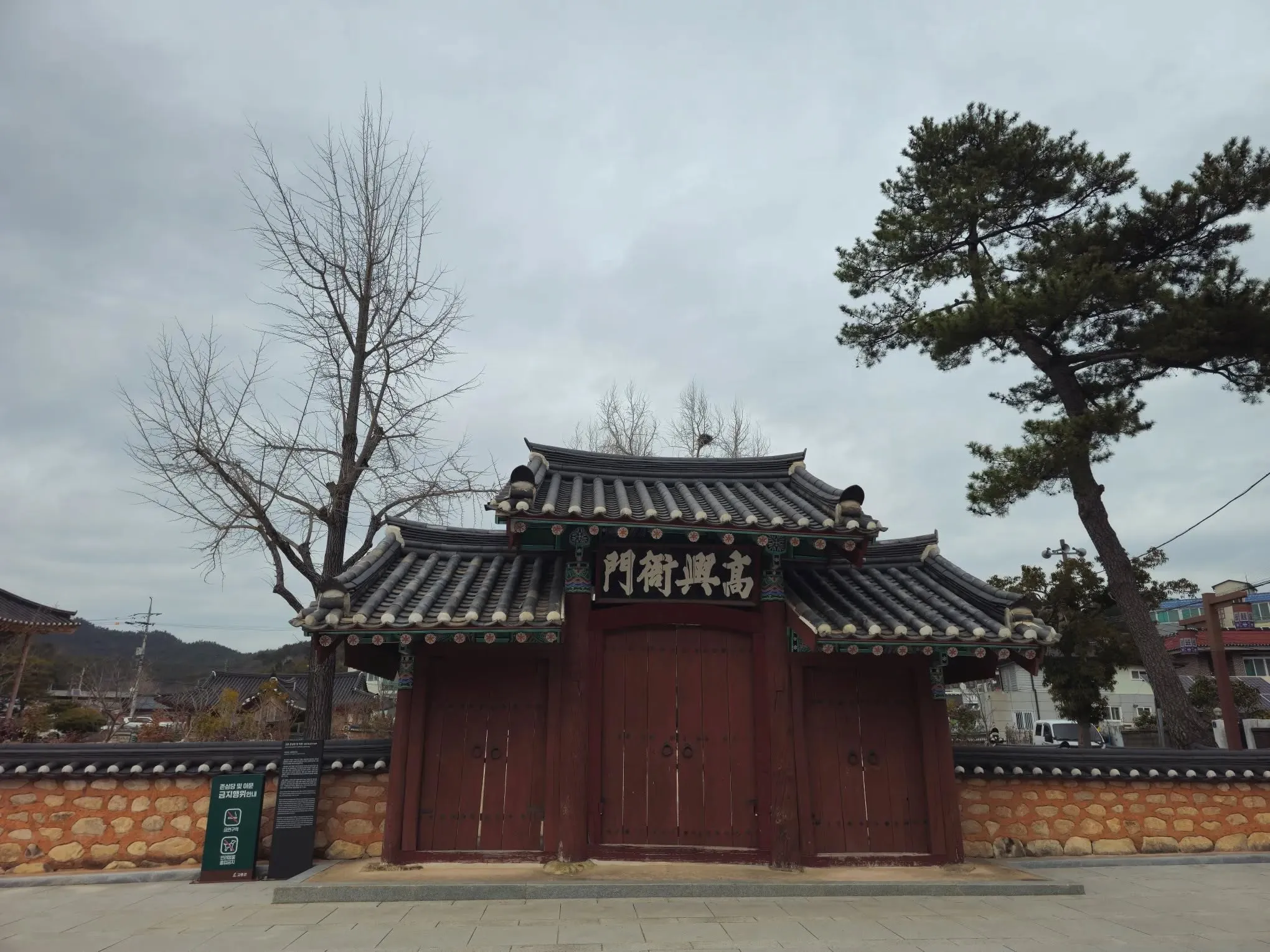
The gate’s signboard reads 高興衙門 (Goheung Amun). The board on site says the gate was the entrance to the Heungyang-hyeon government office. It has three bays, each under its own gable roof, and the middle one is raised higher than the two beside it. The board’s English text says this three-bay design is typical of Joseon-period palaces, government offices, shrines and upper-class houses, and its Korean text adds that only a few gates with amun in their name, the main gates of old government offices, survive in the whole country. A piece of roof tile inscribed with a year in the reign of the Qing emperor Qianlong (건륭삼십년) dates the gate to 1765, according to the board.
Jonsimdang Hall
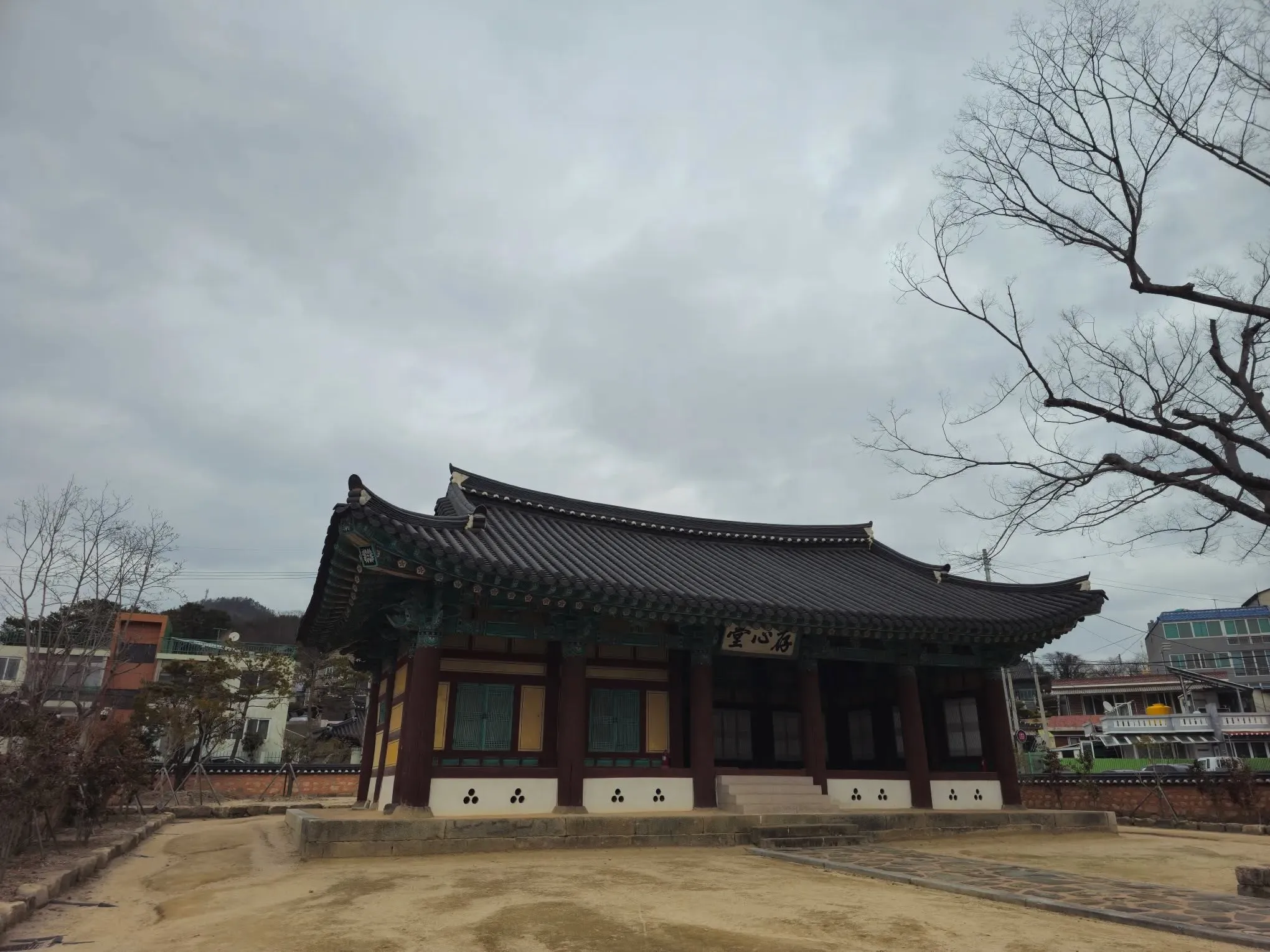 Jonsimdang. The signboard reads 存心堂 (Jonsimdang).
The board says Jonsimdang was the dongheon, the building where the magistrate sent by the central government did his official work. Its English text translates the name as “Hall of Upholding the Mind-Heart”. The board gives these details:
- It was built in 1739 by the magistrate Kim Si-geol, under King Yeongjo, and renovated in 1871, under King Gojong.
- It’s five bays wide and three bays deep, with a hip-and-gable roof.
- Holes at the corners of the roof suggest it once had wind chimes hanging from the eaves.
- Its Korean text says it’s one of about 20 magistrate’s halls in Korea that keep their original form relatively well, and almost the only one in South Jeolla that still looks as it did.
The national heritage service’s record says the buildings appear to date from 1765, and doesn’t give 1739 for the hall; a listing by the Ministry of Oceans and Fisheries’ coastal travel site gives 1739 for the hall and 1765 for the gate, like the board. The hall and gate were designated a South Jeolla provincial cultural heritage in December 1974 (national heritage service). The Korea Tourism Organization’s listing adds that the buildings were used as the county office from the Japanese colonial period until 1985, and were taken apart and restored in June 1987.
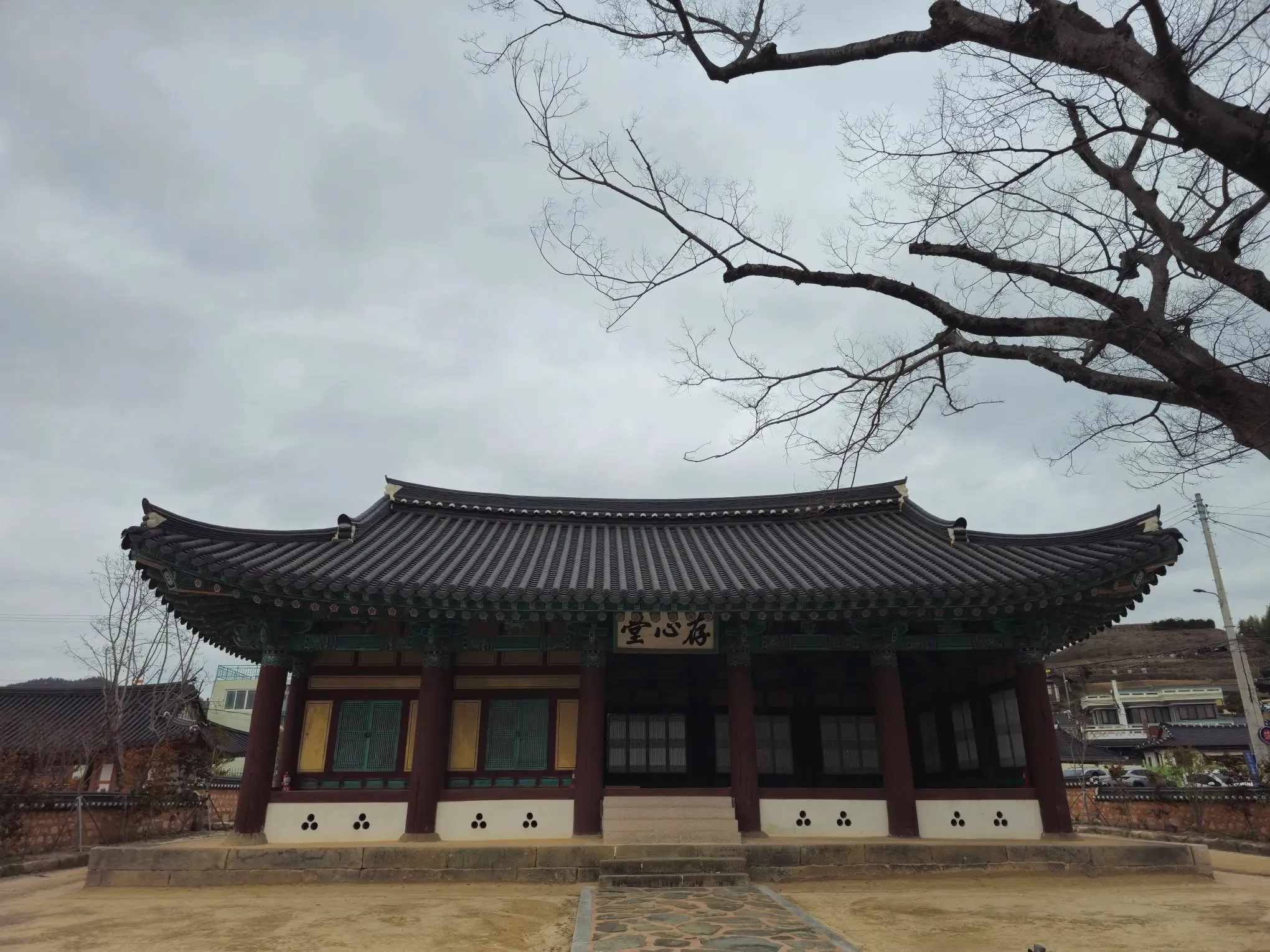 Jonsimdang from the front, with its 存心堂 signboard.
The park
Goheung County moved to a new office building, and the old county office site was turned into a historic and cultural park, completed in July 2023 (Kwangju MBC and Newsstep, July 2023). Kwangju MBC puts the site at about 7,000 square metres.
It’s inside the Jonsimdang historic and cultural park, and it’s clean and well looked after. A quiet stroll all the way around was pleasant enough.
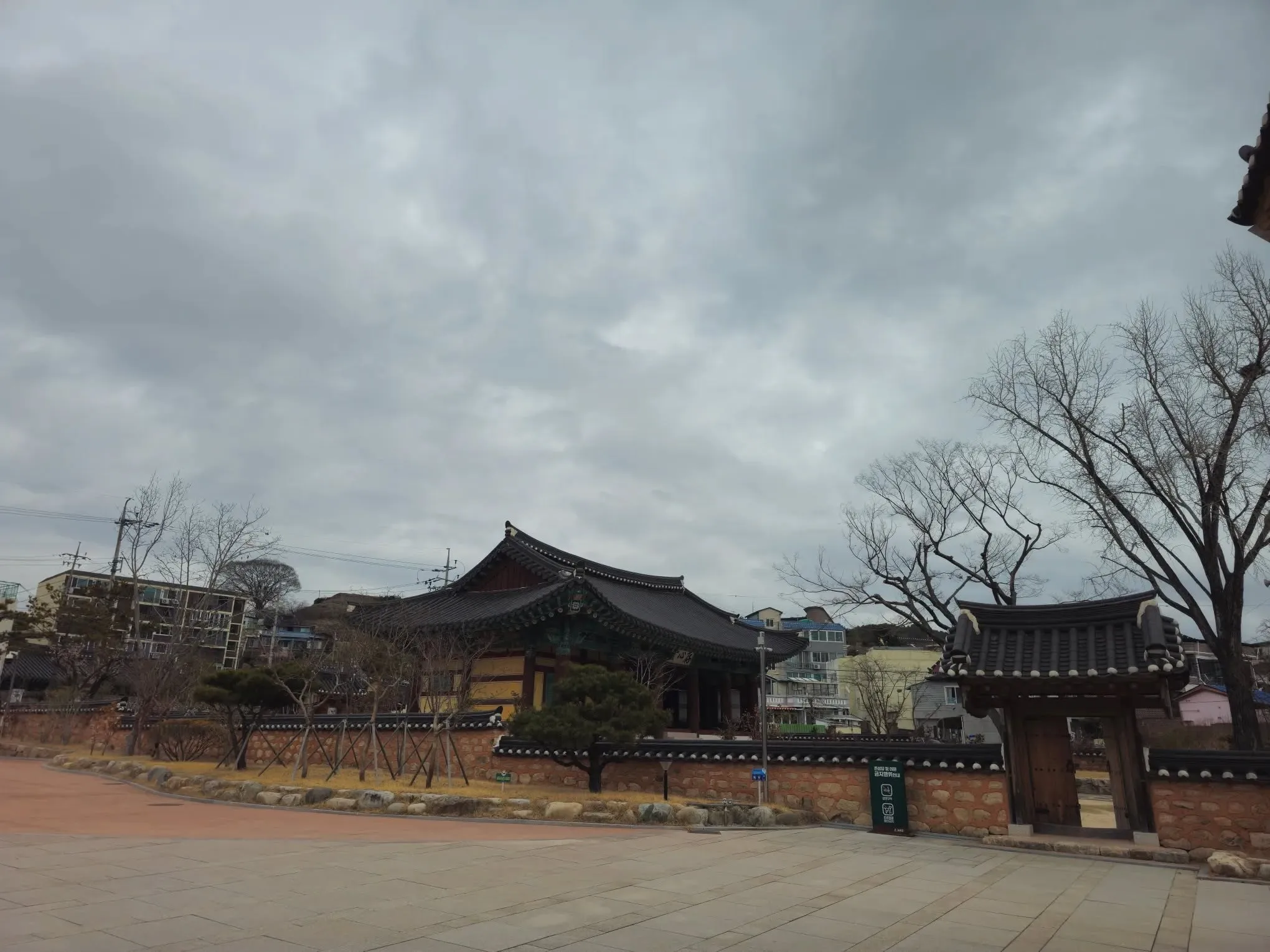 The park, with Jonsimdang behind its wall and a side gate on the right.
Visiting
| Jonsimdang Hall and Gate (Goheung) | |
|---|---|
| Where | Goheung-eup, Goheung County. Two official listings give different street addresses, so search Jonsimdang Goheung or 고흥 존심당 in your map app. Jeollanam-do merged with Gwangju in July 2026, so Korean addresses now begin 전남광주통합특별시 |
| Hours | Open all the time, every day (Korea Tourism Organization) |
| Admission | Free when I visited (February 2026) |
| Parking | There’s a car park, but it’s a bit small (my visit, February 2026) |
How to get there
By car: I drove. The car park is a bit small. That’s a slight downside.
By public transport: check the live route in Naver Map (switched to English): search Jonsimdang Goheung, or paste 고흥 존심당.
How to check buses in English: install Naver Map and switch it to English in its settings. When I checked it in October 2026, the English version showed bus routes, stop names and live arrival times (minutes and stops away) in English. Google Maps also gives public transport directions in Korea, but as of late September 2026 it still had no turn-by-turn walking or driving navigation here. Stuck? Call the Korea Travel Hotline: dial 02-1330 from a Korean mobile phone (+82-2-1330 from abroad). It has English-speaking staff.
Tips
- Read the board by the gate. It has an English version that explains both buildings.
- Same day in Boseong: I also went to Deungnyang Station, a small country station with a 1970s–80s street of memories.
Who it’s for
Likely to suit (estimate): anyone passing through Goheung, fans of Joseon-period architecture, and travelers who want a short, quiet stop in town.
Sources
Checked against the information board at the gate (Korean and English; photographed February 2026: the dongheon’s role, Heungyang-hyeon, the 1739 build by Kim Si-geol, the 1871 rebuild, five by three bays, the hip-and-gable roof, the wind-chime holes, the name’s meaning, about 20 surviving halls, the gate’s raised middle roof, few surviving amun gates, the 1765 tile inscription), the national heritage service’s digital record (provincial cultural heritage designated 26 December 1974; appears to date from 1765), the Ministry of Oceans and Fisheries’ coastal travel listing (1739 for the hall, 1765 for the gate), the Korea Tourism Organization’s listing (updated June 2026: open all the time, every day; county office until 1985; restored June 1987; the park created in 2023) and news reports from Kwangju MBC (July 2023: the county office move, the park’s completion, about 7,000 m²) and Newsstep (July 2023: the county office move, the park’s completion ceremony). Free admission, the small car park and my impressions are from my own visit.