Home / Jeolla / Deungnyang Station (Boseong)
Things to do in Boseong besides the green tea fields: Deungnyang Station's retro street
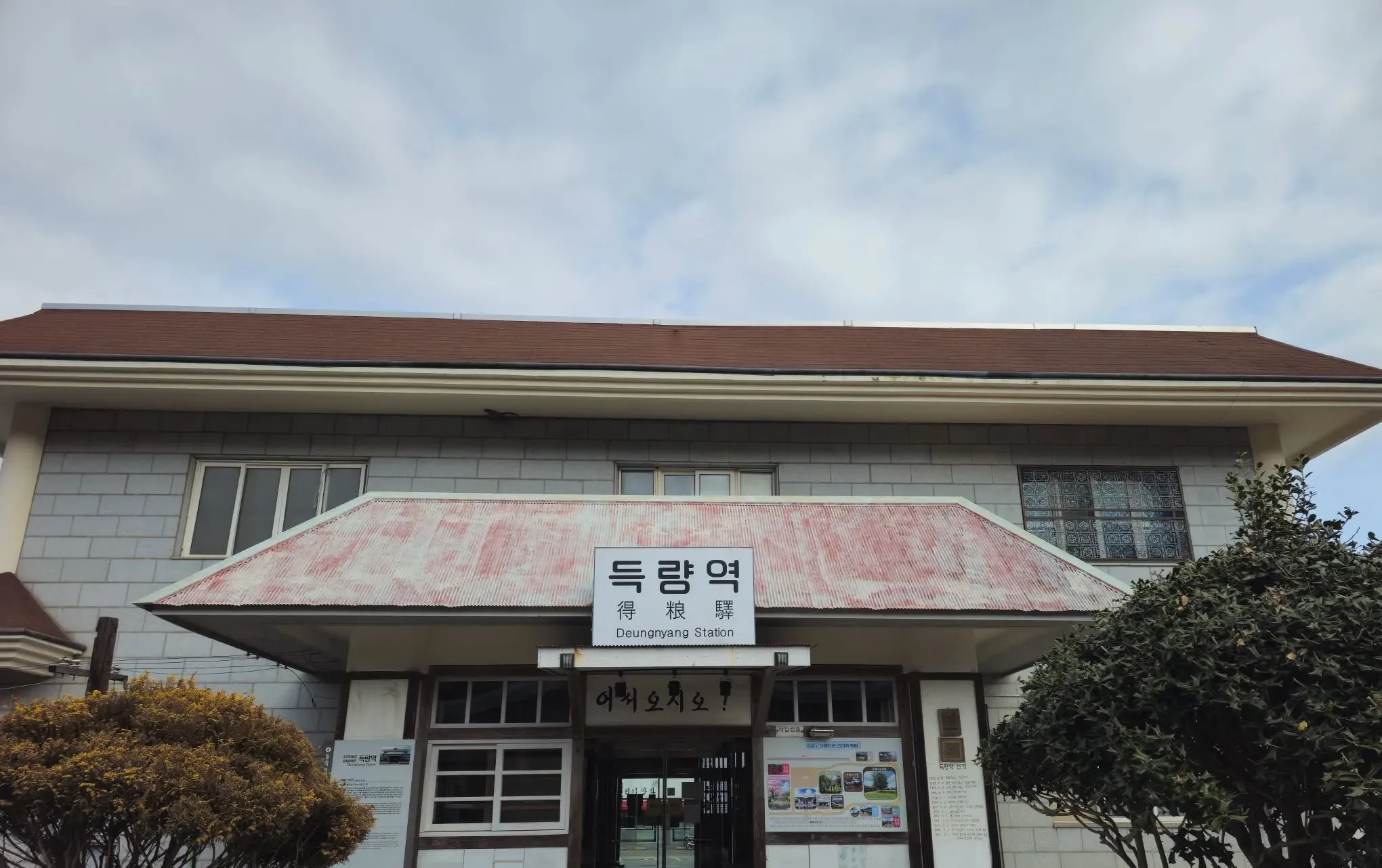
A small country station in Boseong with a free 1970s–80s 'street of memories' outside: an old barber's, a rice shop, an arcade. It's been decorated, but it doesn't look decorated. I went in February 2026.
- Getting there
- Deungnyang-myeon, Boseong County, South Jeolla. I drove. When I visited it was a small station where only a few trains stop a day (the Korea Tourism Organization's listing calls it a closed station); if you want to come by train, check the timetable first (the Korea Travel Hotline, 02-1330, can help in English).
- Cost
- Free (Korea Tourism Organization). Plenty of free parking nearby when I went (February 2026), though the Korea Tourism Organization's listing says parking isn't available.
- Time needed
- About 30 minutes to 1 hour (estimate)
- Best time
- Open all the time, every day (Korea Tourism Organization). The station attendant told me it's best when the cherry blossoms are out.
Tap any Korean name on this page to hear it. Prefer Naver Map? In the app (set to English), search Deungnyang Station, or paste the Korean name:득량역
Short version: Deungnyang (득량역) is a small country station in Boseong County, South Jeolla, and the street in front of it has been made into a “street of memories” of the 1970s and 80s: an old barber’s, a rice shop, a tailor’s, an arcade. I went on 26 February 2026 because I’d heard about it. It’s been decorated, but it doesn’t look decorated: these days “retro” usually means similar props and similar signs, and here it just feels like the things that were left behind are still there. It’s a small station where only a few trains stop a day, and honestly, it was moving that it’s still alive like this. If you go to Boseong, don’t just see the green tea fields. Come to Deungnyang Station too.
Last checked: 23 October 2026. The station’s history comes from the boards at the station (photographed February 2026) and the Korea Tourism Organization’s listing for the street (updated June 2026), which also gives the address, opening times and free entry. Where they differ, the note says so. The few trains a day, the station attendant’s tip, the free parking nearby, the shops and my impressions are from my own visit. Tell me if anything has changed.
The street of memories
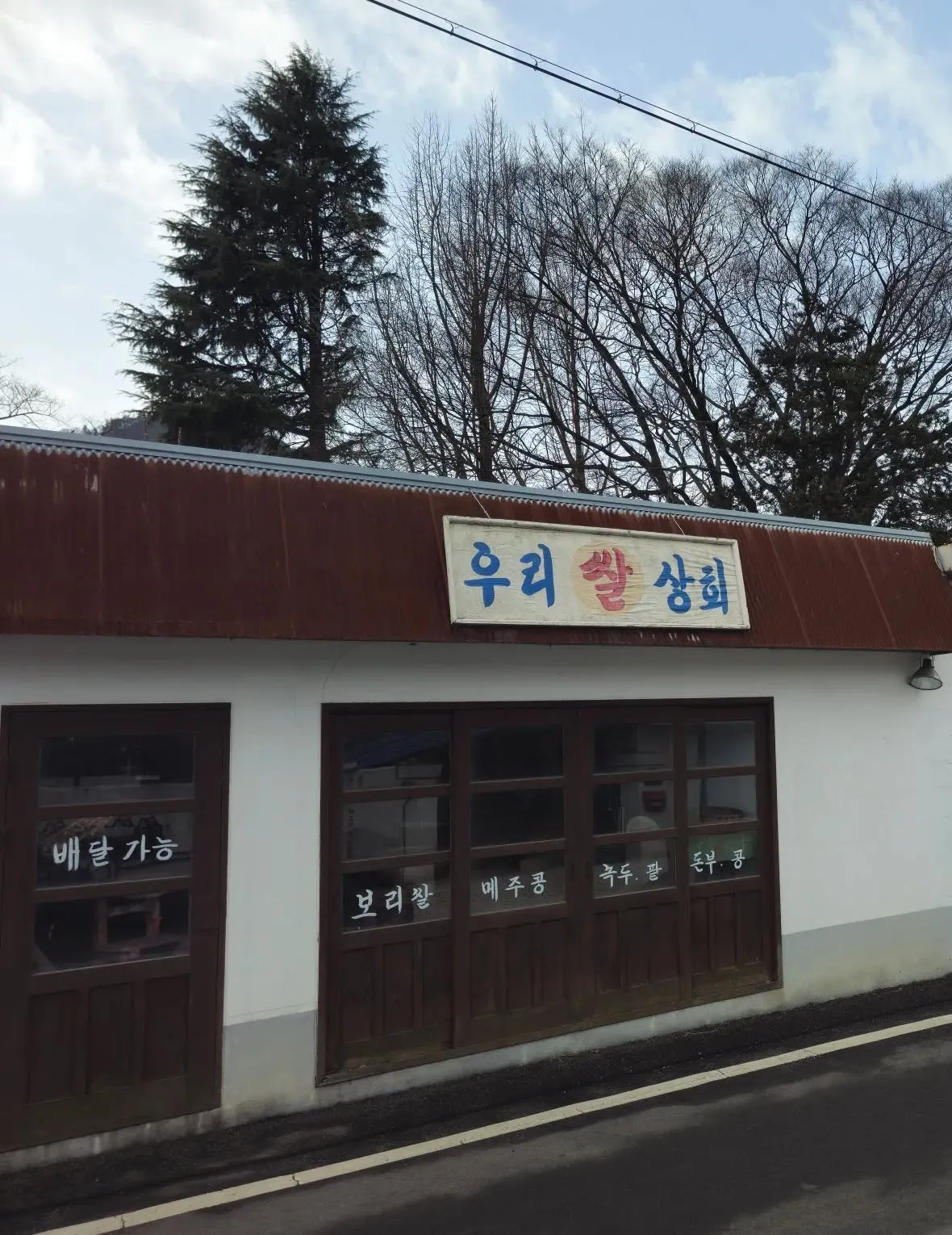 The rice shop (우리쌀상회) on the street.
The Korea Tourism Organization describes the street as a recreation of a 1970s–80s country town, built from 2011 as part of a culture ministry project to design train stations around culture. Along it are shop fronts with hand-painted signs, an old barber’s, a rice shop, a tailor’s and an arcade.
It’s been decorated, but it doesn’t look decorated. These days “retro” usually means similar props and similar signs. Here it just feels like the things that were left behind are still there.
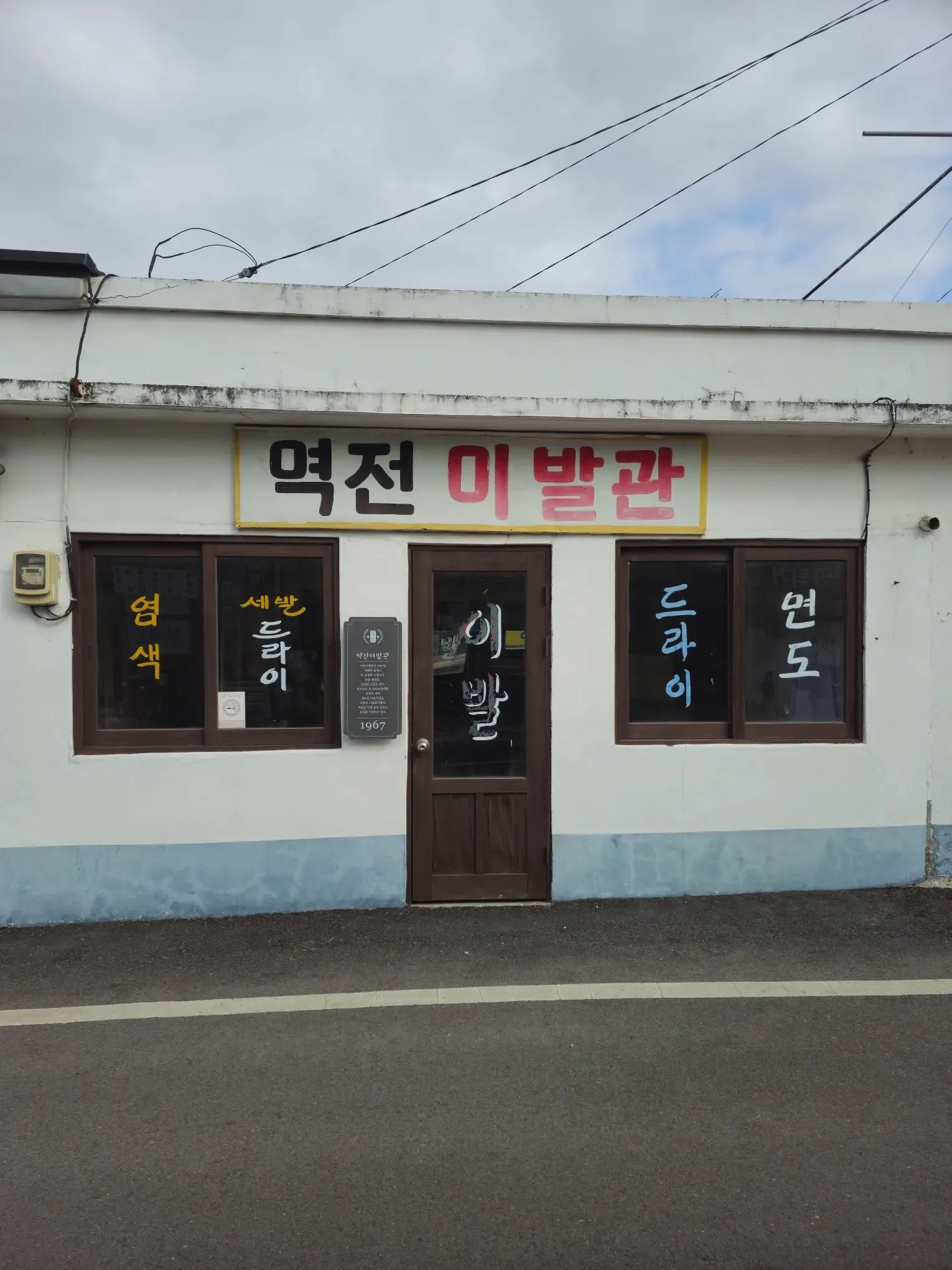 The station barber’s (역전 이발관).
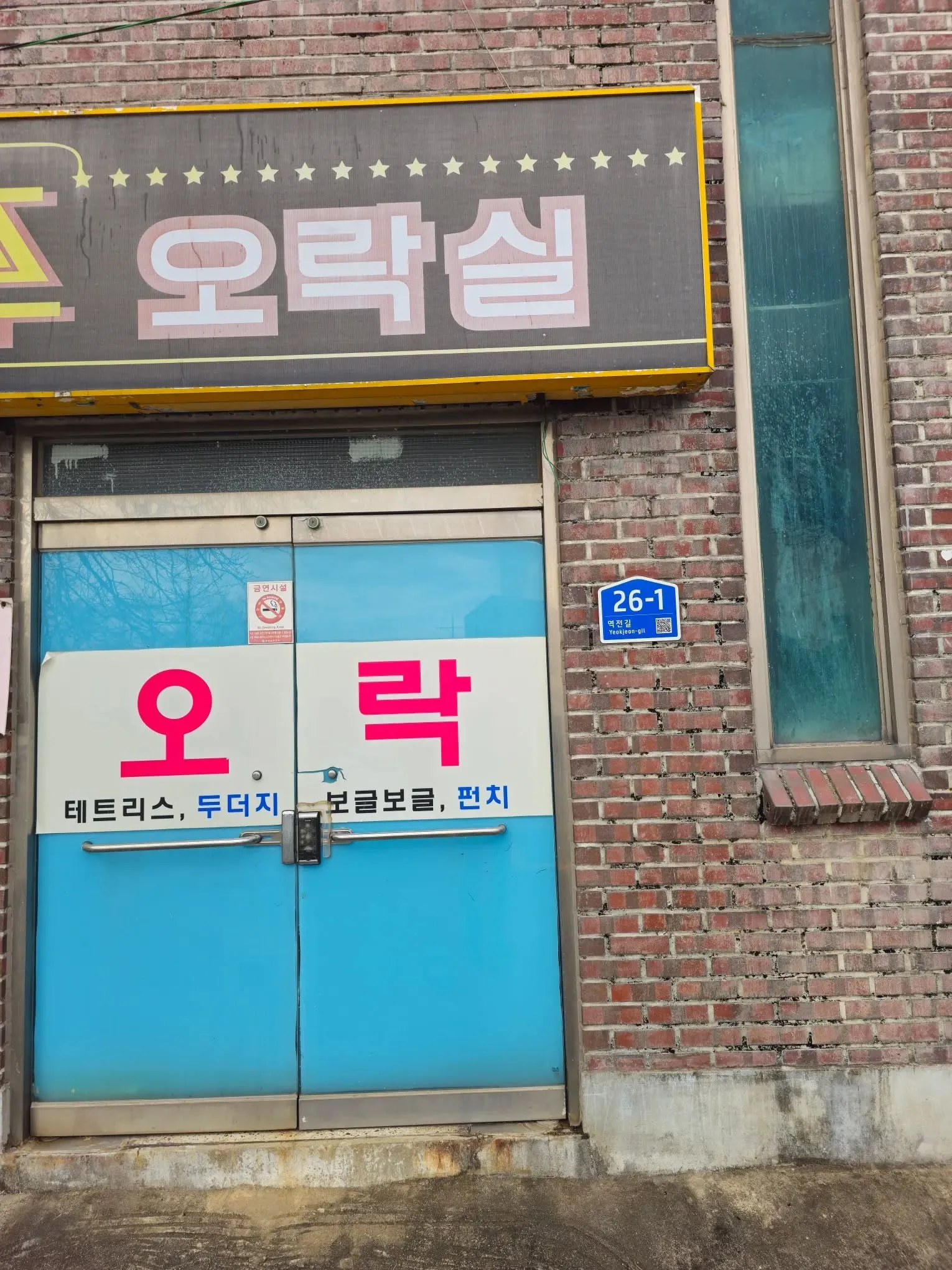 The arcade door. The games listed are Tetris, Whac-a-Mole, Bubble Bobble and a punching machine.
Tetris, Whac-a-Mole, Bubble Bobble written on the arcade door. So nostalgic.
The station
The boards at the station give its history:
- It opened as an ordinary station on 25 December 1930. The board and the Korea Tourism Organization say it opened along with the Gyeongjeon Line, the railway it stands on today.
- The present station building was completed in May 1994.
- As fewer people lived in the area, fewer passengers used it, and the board says the station was in danger of closing. In 2011 it was chosen for a culture ministry design project, and the street of memories grew up around it.
- The board says the place name Deungnyang (득량, 得粮) comes from the Imjin War of 1592: Admiral Yi Sun-sin’s forces ran short of food and got supplies in this area. The name is written with the characters for “gain” and “food”.
- Plaques by the door show it won an award (최우수상) in the 2015 Korea Landscape Awards from the land ministry, and a South Jeolla eco-friendly design award in 2016.
It’s a small station where only a few trains stop a day. Honestly, it was moving that this station is still alive like this. It was comforting that a place like this still exists somewhere in the country.
The Korea Tourism Organization’s listing, on the other hand, calls Deungnyang a closed station, while also saying it still carries passengers. I couldn’t confirm the current timetable, so if you want to come by train, check it first; the Korea Travel Hotline (see below) has English-speaking staff who can help.
Inside, the waiting room is set up like an old station.
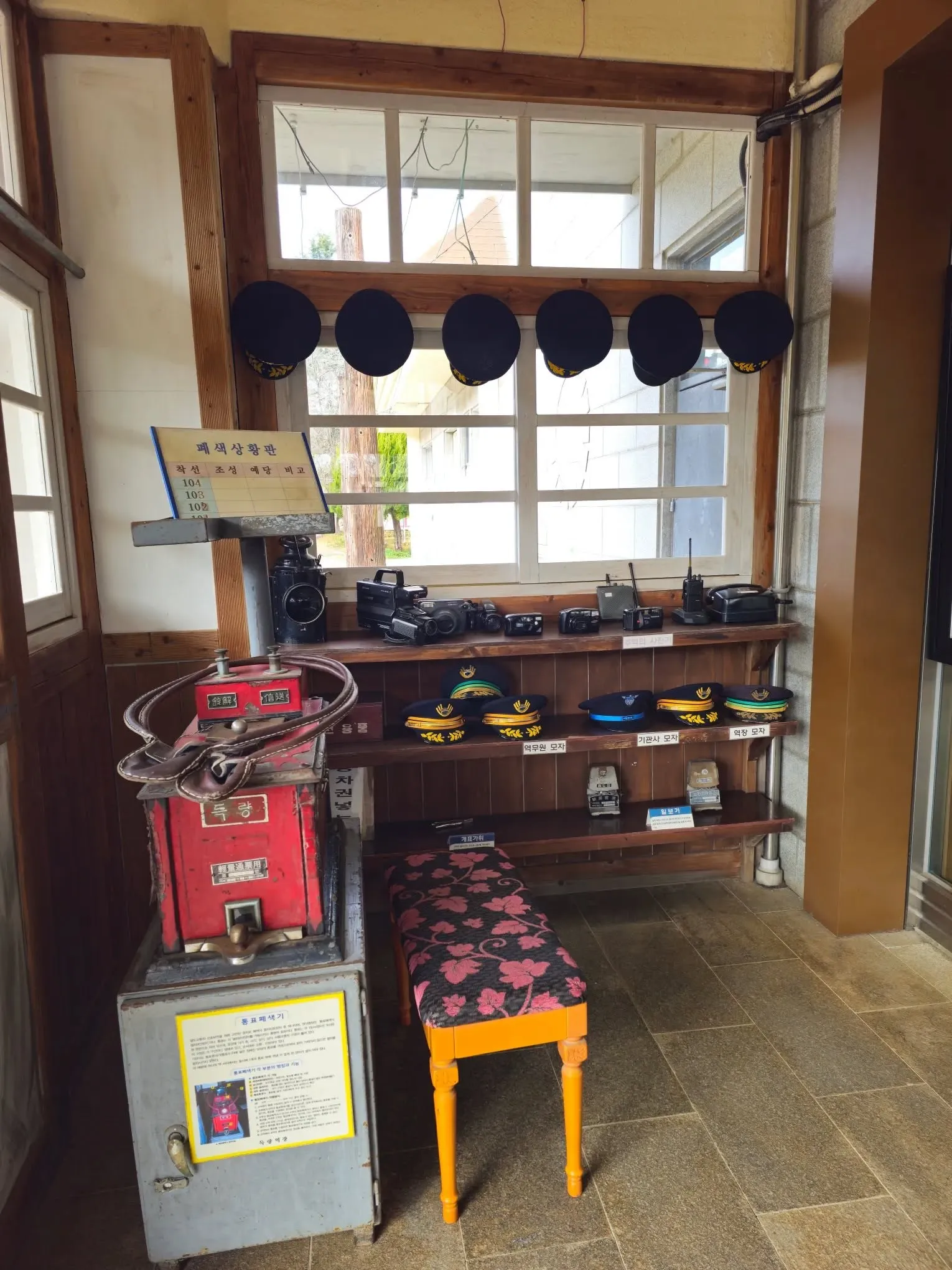 Old staff caps, cameras and railway equipment in the waiting room.
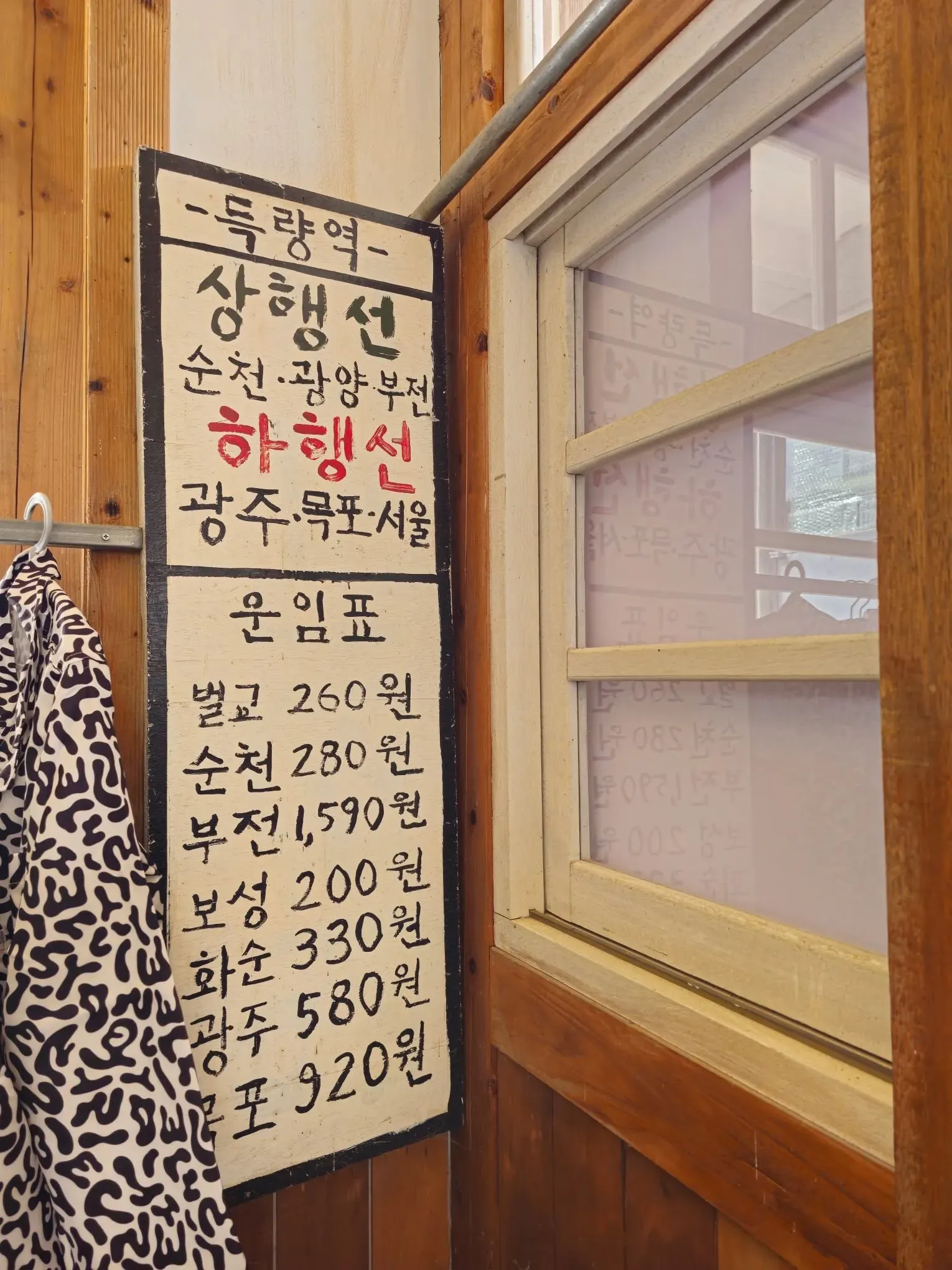 An old hand-painted fare board, kept on display. The fares are not current.
The station attendant told me it’s best when the cherry blossoms are out. We chatted about this and that, and it was a small, simple pleasure.
Visiting
| Deungnyang Station street of memories | |
|---|---|
| Address | 28 Yeokjeon-gil, Deungnyang-myeon, Boseong County (Korea Tourism Organization). Jeollanam-do merged with Gwangju in July 2026, so Korean addresses now begin 전남광주통합특별시 |
| Hours | Open all the time, every day (Korea Tourism Organization) |
| Admission | Free (Korea Tourism Organization) |
| Parking | Plenty of free parking nearby when I went (February 2026); the Korea Tourism Organization’s listing says parking isn’t available |
How to get there
By car: I drove. There was plenty of free parking nearby when I went (February 2026), though the Korea Tourism Organization’s listing says parking isn’t available.
By train: when I visited it was a small station where only a few trains stop a day, and I couldn’t confirm the current timetable. Check it before you go; the Korea Travel Hotline (below) can help in English.
By bus: check the live route in Naver Map (switched to English): search Deungnyang Station, or paste 득량역.
How to check buses in English: install Naver Map and switch it to English in its settings. When I checked it in October 2026, the English version showed bus routes, stop names and live arrival times (minutes and stops away) in English. Google Maps also gives public transport directions in Korea, but as of late September 2026 it still had no turn-by-turn walking or driving navigation here. Stuck? Call the Korea Travel Hotline: dial 02-1330 from a Korean mobile phone (+82-2-1330 from abroad). It has English-speaking staff.
Tips
- Pair it with Boseong’s tea fields. If you go to Boseong, don’t just see the green tea fields. Come to Deungnyang Station too.
- Think about spring. The station attendant told me it’s best when the cherry blossoms are out.
- Same day in Goheung: I also went to Jonsimdang, a Joseon-era magistrate’s hall and gate in Goheung.
Who it’s for
Likely to suit (estimate): anyone who grew up in the 1970s–80s or likes that era, train fans, and travelers heading to Boseong’s tea fields who have an hour to spare.
Sources
Checked against the boards at the station (Korean and English; photographed February 2026: the 25 December 1930 opening, the 1994 building, the decline in passengers and risk of closing, the 2011 culture ministry design project, the origin of the name Deungnyang; award plaques: the 2015 Korea Landscape Awards (최우수상) and the 2016 South Jeolla eco-friendly design award) and the Korea Tourism Organization’s listing for Deungnyang Station street of memories (updated June 2026: a recreated 1970s–80s town, built from 2011 under the culture ministry’s train-station culture design project, the 1930 opening with the Gyeongjeon Line, the station described as closed but carrying passengers, the address, open all the time, every day, free, no parking). The few trains a day, the station attendant’s tip about cherry blossoms, the free parking nearby, the shop fronts and arcade door, and my impressions are from my own visit.