Home / Gyeongsang / Gyeongsangnam-do Arboretum
Jinju, South Korea: Gyeongnam Arboretum, gardens and a forest museum
Things to do in Jinju, South Korea: the province's big arboretum, with gardens, greenhouses, woodland paths and a forest museum. Adult entry ₩1,500, free parking, closed on Mondays. I went in winter.
- Getting there
- In Ibanseong-myeon, Jinju, South Gyeongsang. I drove; the Korea Tourism Organization lists free parking for 372 cars. We couldn't confirm bus connections.
- Cost
- Adults ₩1,500, teens and military ₩1,000, children ₩500 (Korea Tourism Organization; the same prices I gave in my post).
- Time needed
- Half a day (estimate). As I wrote, you won't get bored even if you stay all day.
- Best time
- Spring, summer or autumn (my recommendation; I went in winter). Closed on Mondays.
Tap any Korean name on this page to hear it. Prefer Naver Map? In the app (set to English), search Gyeongsangnam-do Arboretum Jinju, or paste the Korean name:경상남도수목원
Short version: In Ibanseong-myeon, Jinju, South Gyeongsang, the provincial arboretum has themed gardens, greenhouses, tree-lined roads and woodland paths, plus a large forest museum. Entry costs ₩1,500 for adults, parking is free, and it’s closed on Mondays. I went in winter, so the gardens were a bit of a shame, but the museum had lots to see. If you’re going anywhere near Jinju, go once.
Last checked: 3 November 2026. Opening hours, closing days, prices and parking come from the Korea Tourism Organization (KTO) listing (updated 22 September 2026) and the main information board (photographed January 2026). The forest museum details come from Korean newspaper reports, dated where given. What it was like is from my own visit. Tell me if anything has changed.
What it is
The Gyeongsangnam-do Arboretum (English-language news reports call it Gyeongnam Arboretum) is run by the province’s Forest Environment Research Institute, whose name is on the main information board. KTO says it collects and conserves about 3,600 species of Korean and foreign plants, mainly trees of Korea’s southern temperate zone (a 2014 newspaper report gave about 2,700). Besides the gardens it lists a forest museum, tropical and warm-temperate plant gardens, small gardens by tree species, a children’s garden and a wildlife observation area.
How big? Sources give different figures for the area depending on the year, so we’re not quoting one. As I wrote, the scale is really huge.
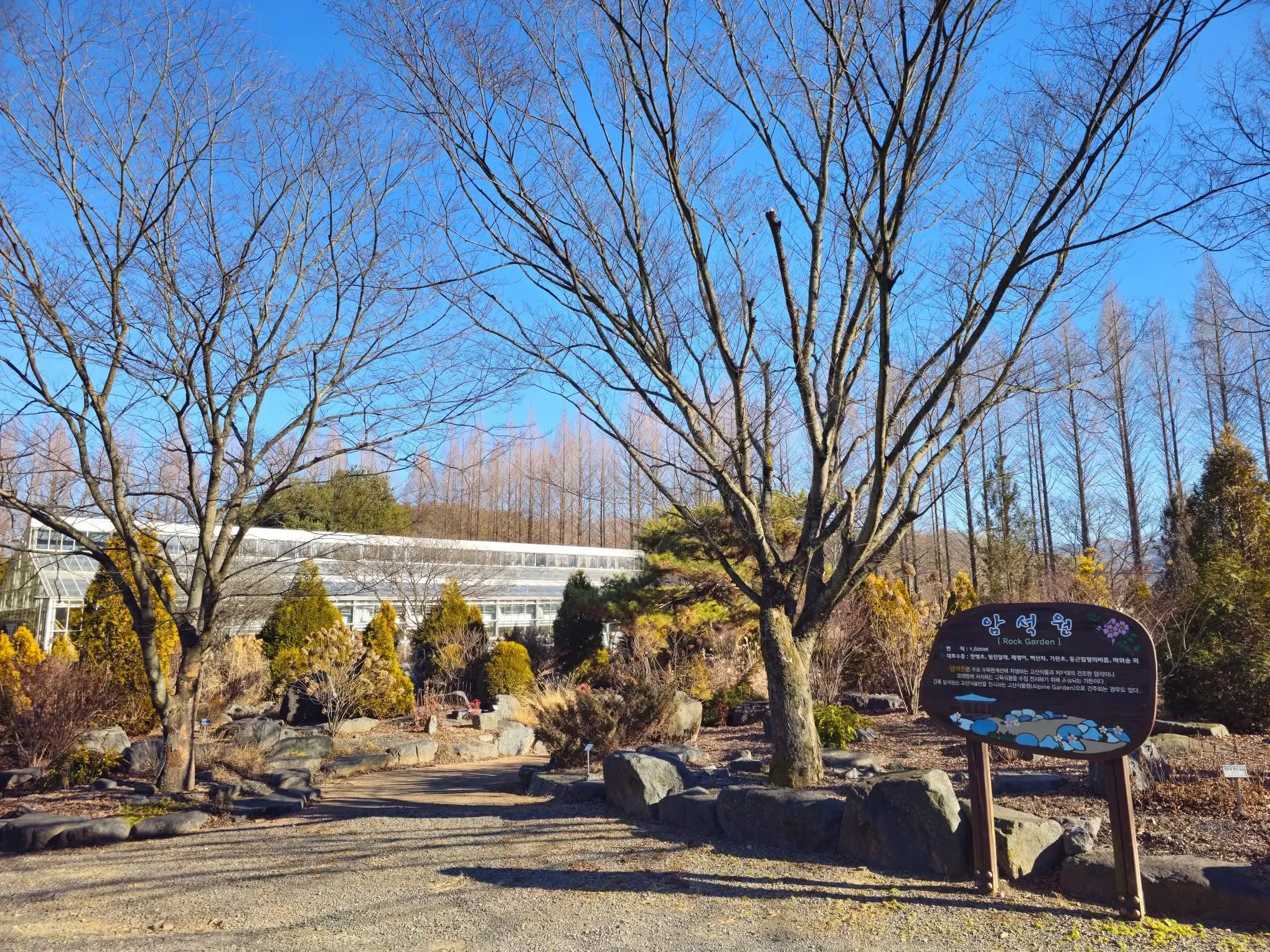
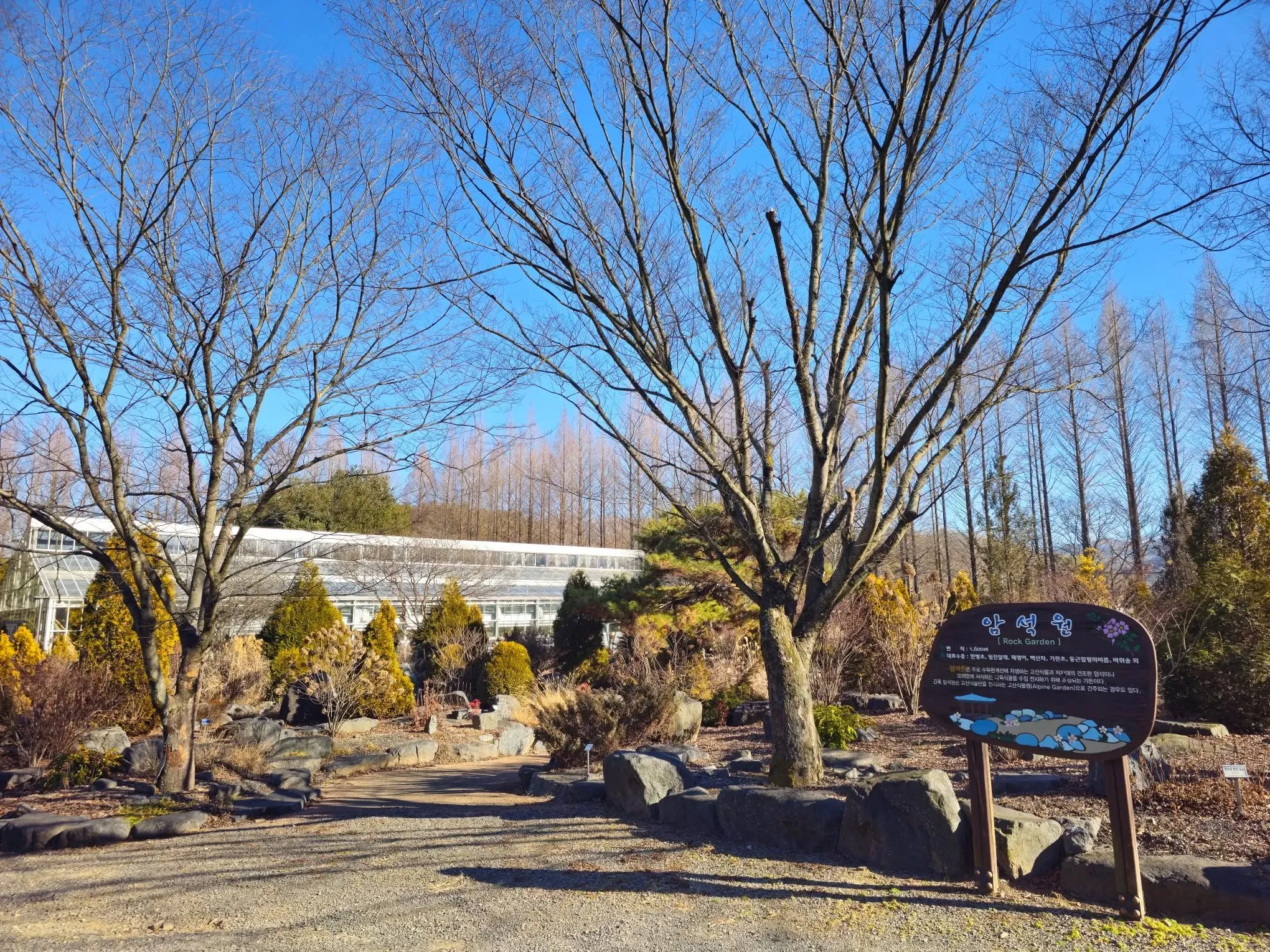 The rock garden, with a greenhouse behind.
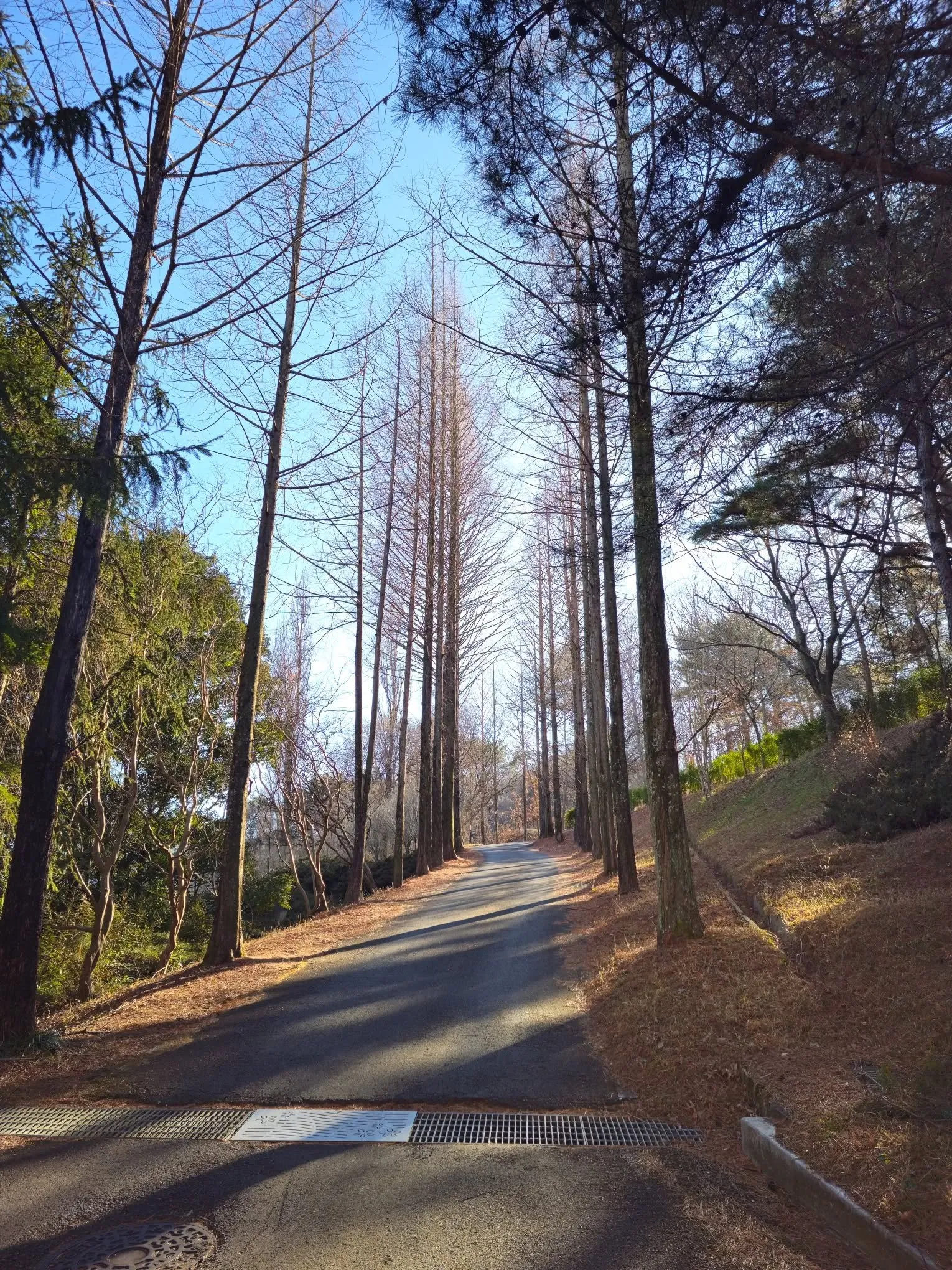 One of the tree-lined roads.
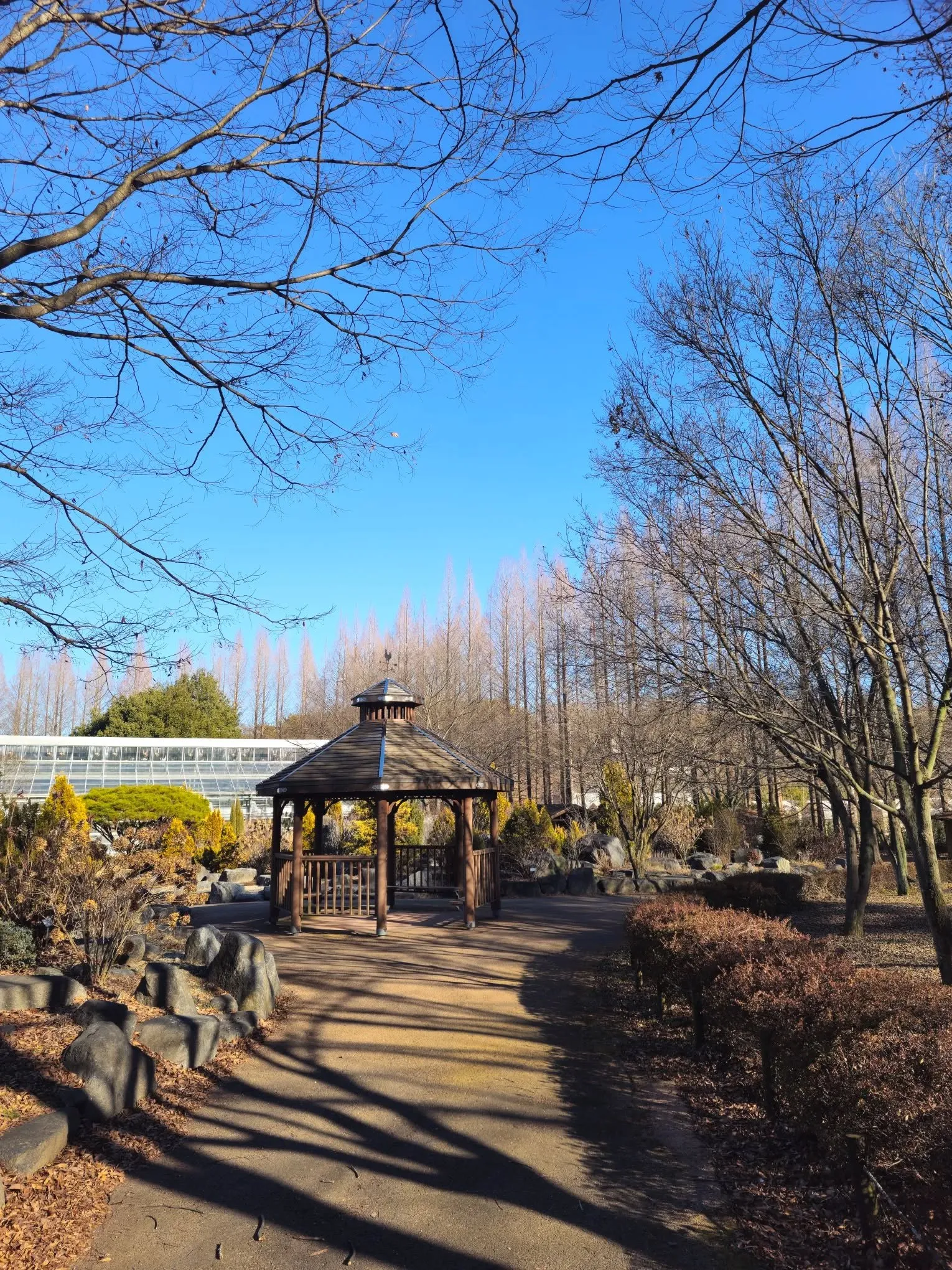 A gazebo in the gardens, with a greenhouse behind.
The forest museum
As I wrote, the gardens were a bit of a shame in winter, but the forest museum has a basement and three floors above ground with lots to see, and special exhibitions seem to be held there from time to time. In 2014, a researcher at the institute told the newspaper Seoul Shinmun it was the largest forest museum in Korea; we couldn’t find a current official statement. The same 2014 report said it opened in January 2001, has 8 exhibition rooms with about 2,400 items, and shows huge dead trunks of pine, zelkova and hackberry trees, 300 to 1,300 years old, in its first-floor lobby.
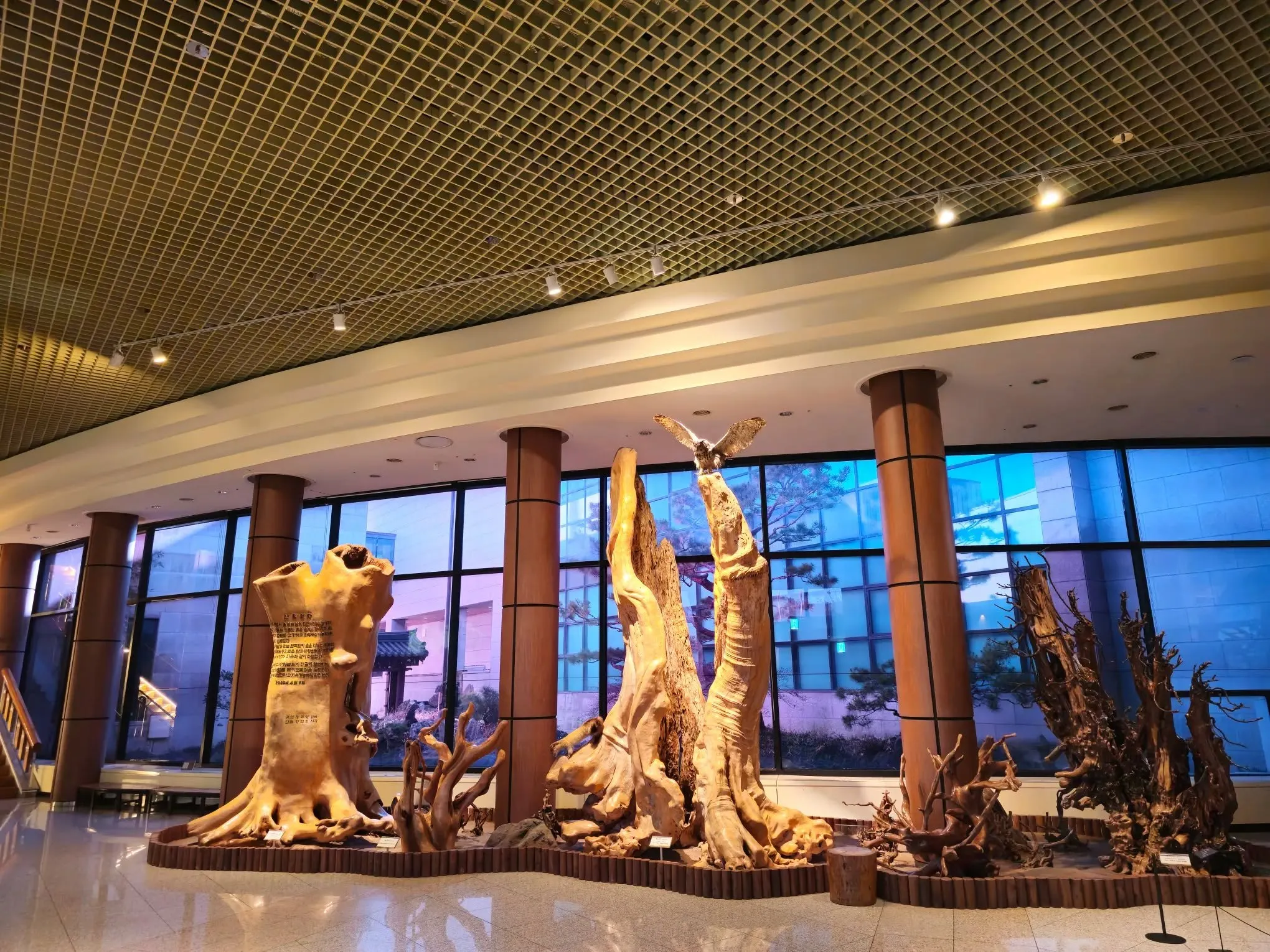 Old tree trunks and roots on display in the forest museum.
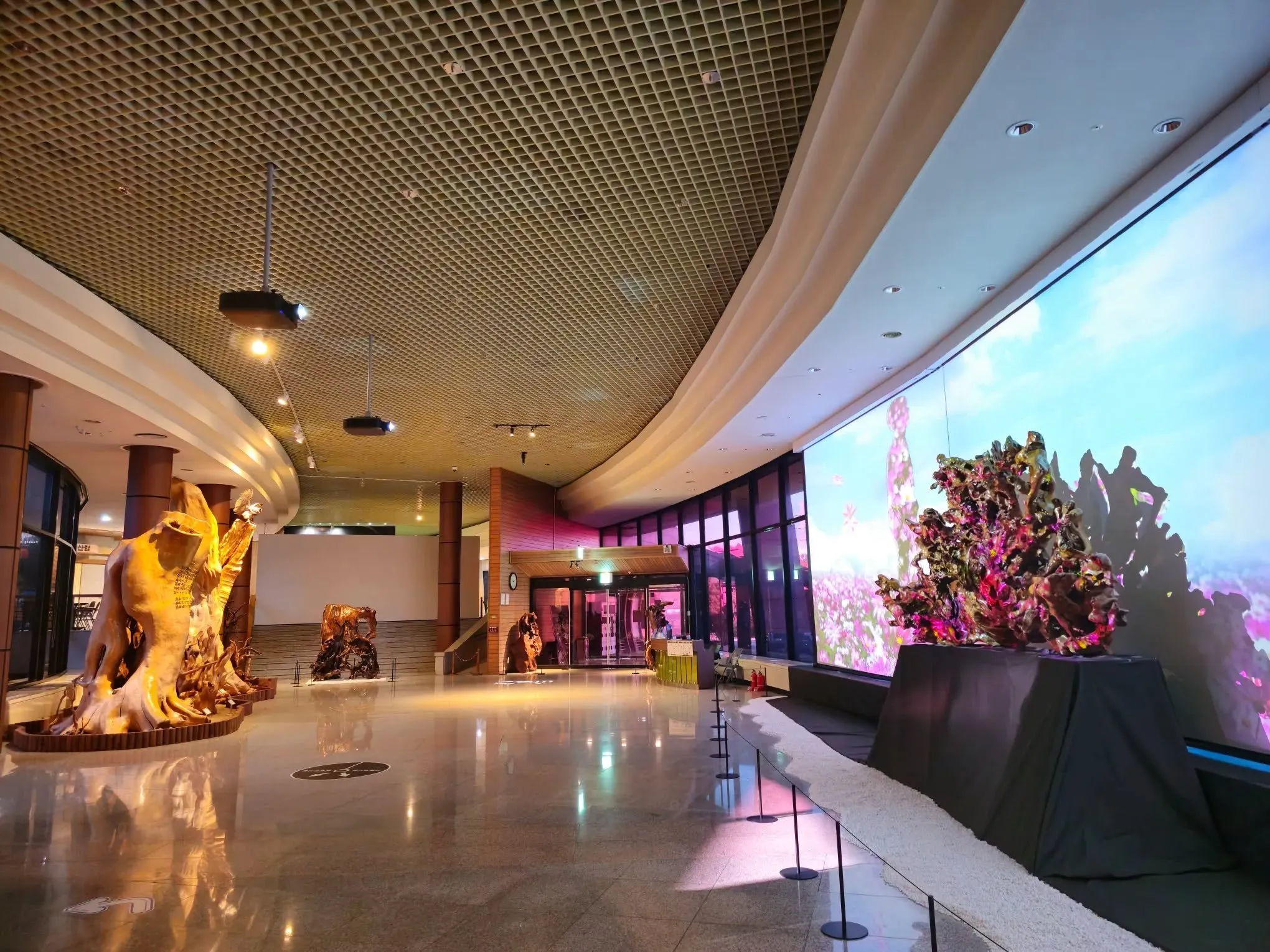 Inside the forest museum.
The gardens in winter
Photos from early January.
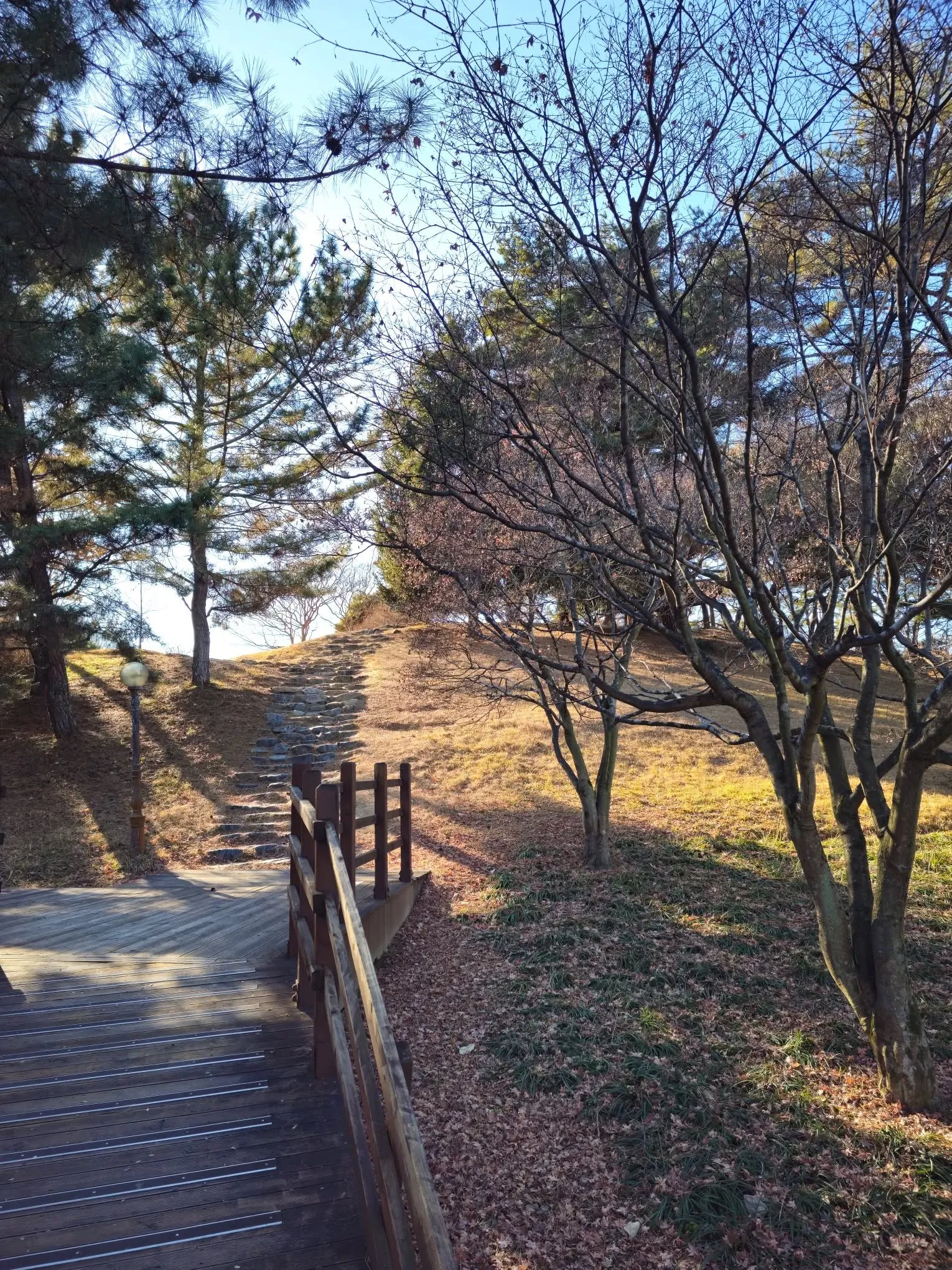 A boardwalk and steps between the gardens.
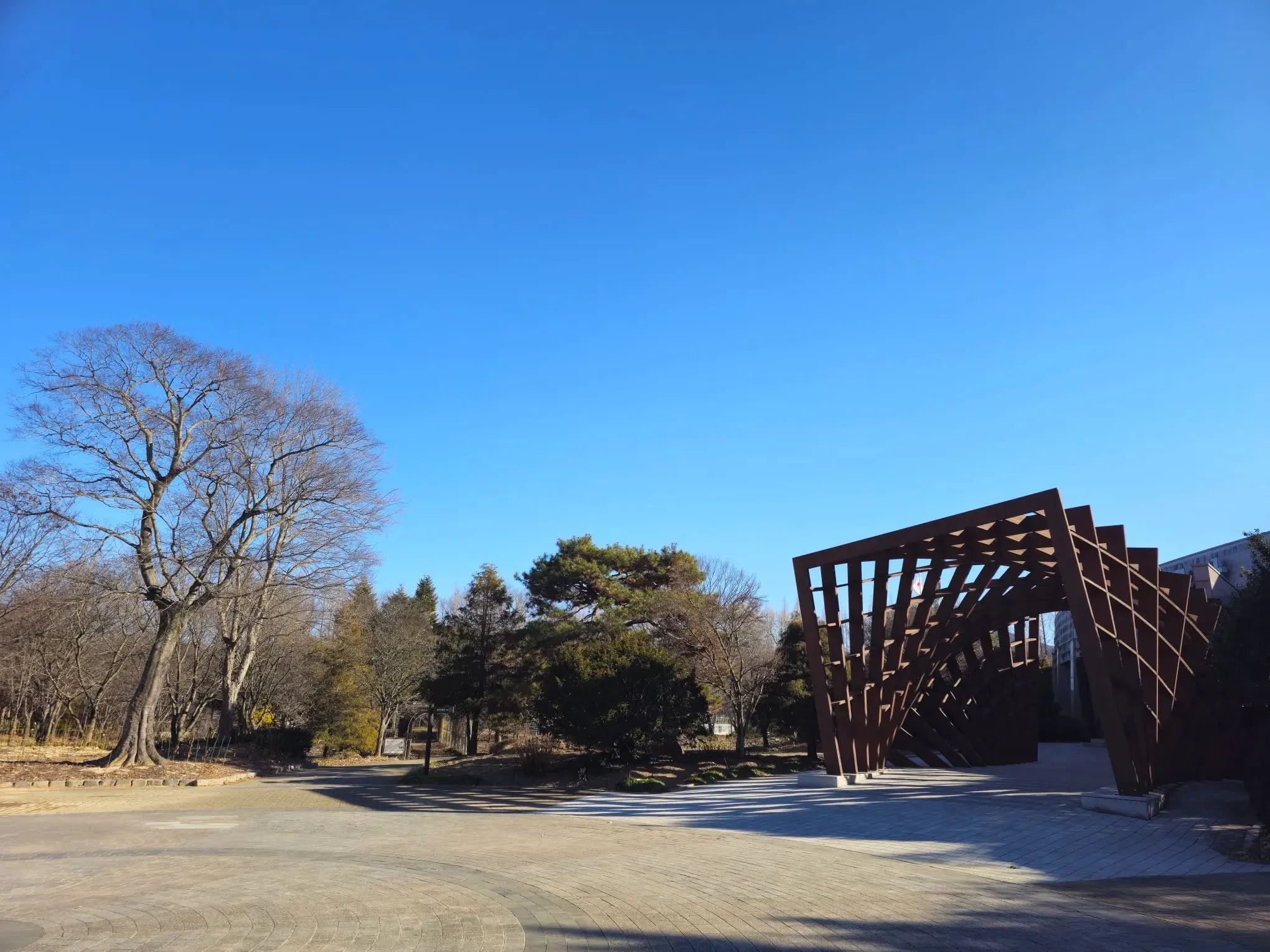 A lattice arch by a paved plaza.
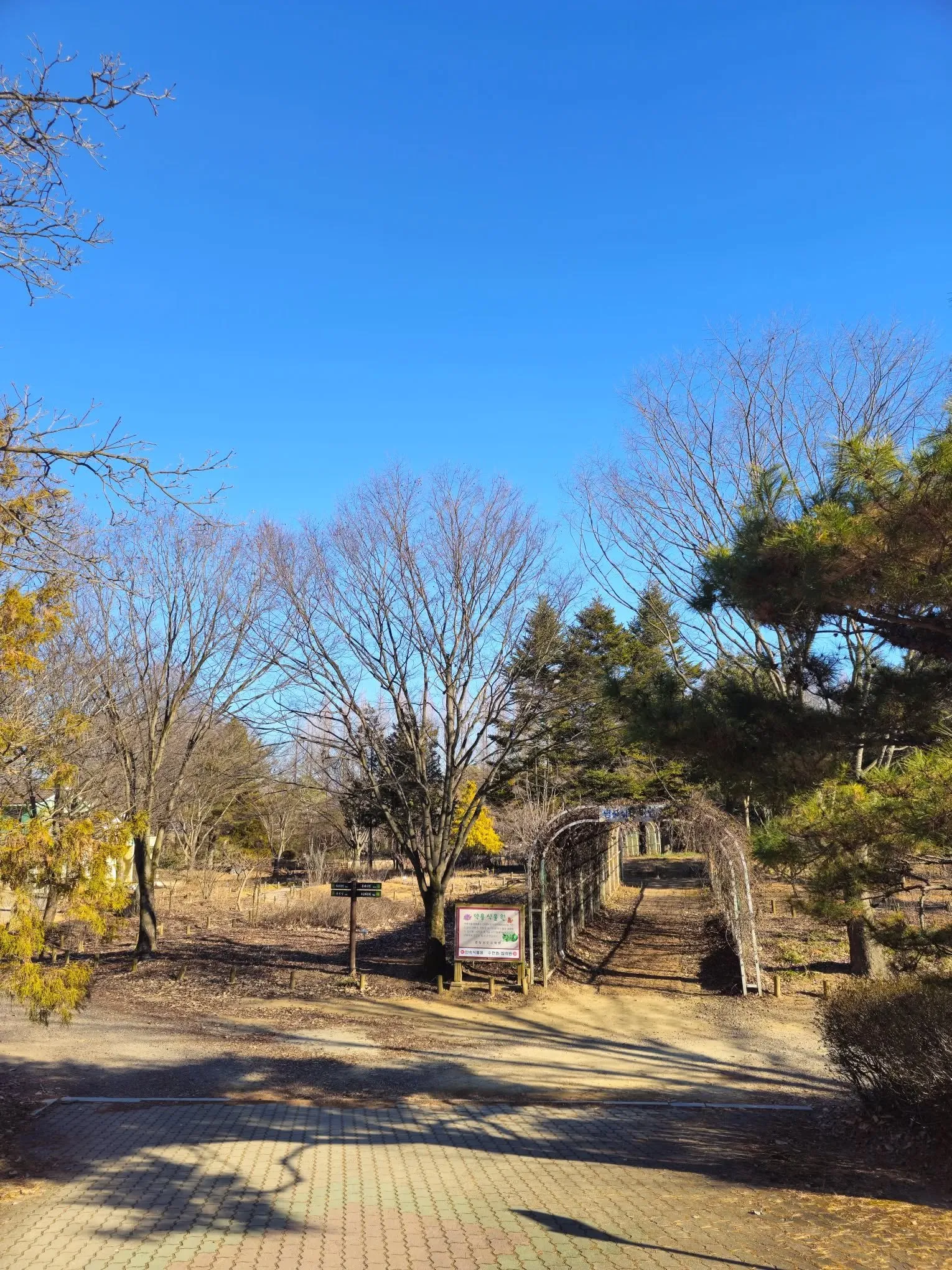 A garden with a trellis tunnel.
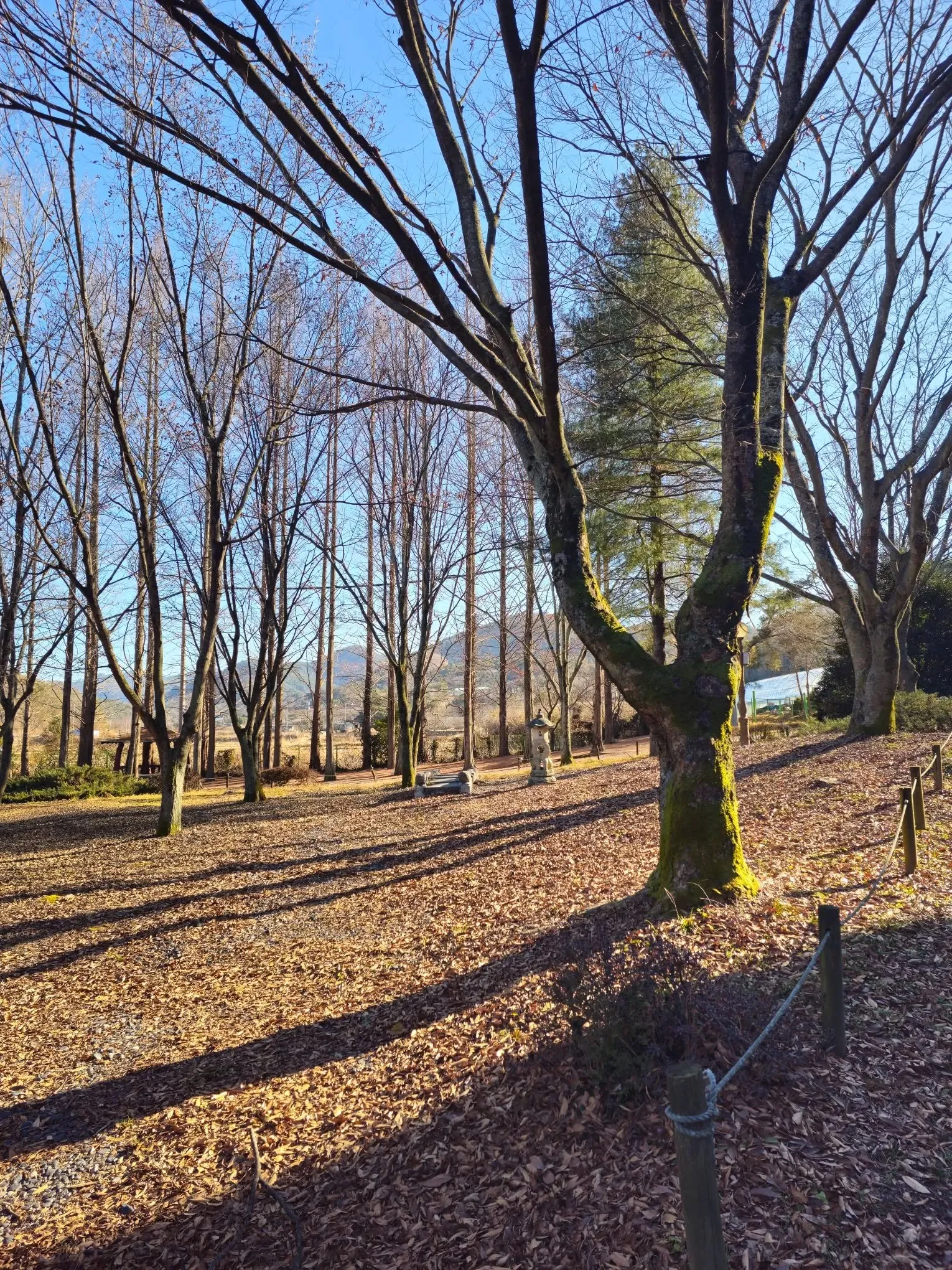 Fallen leaves in January.
And as I wrote, even the benches in the parking lot were pretty.
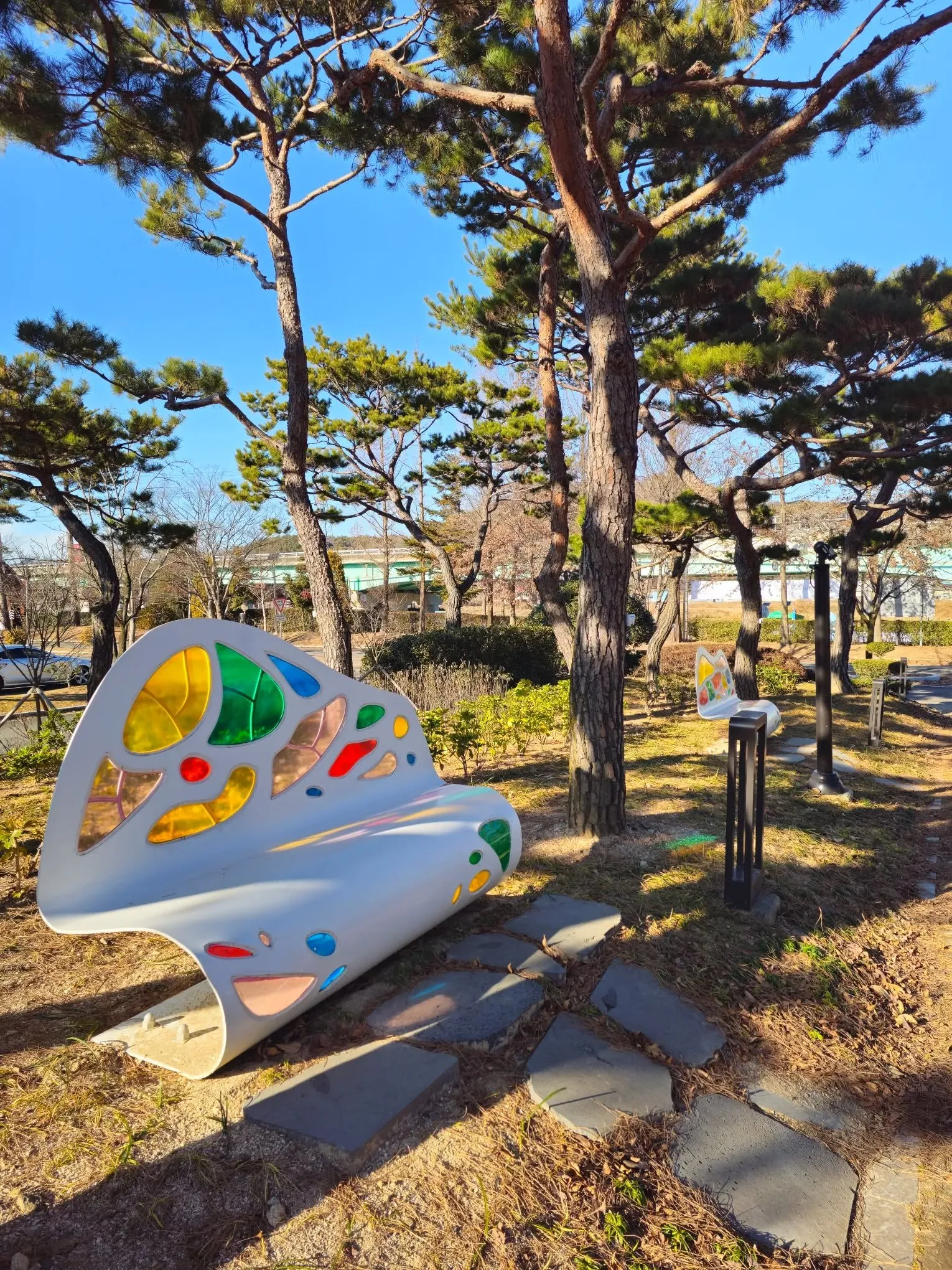 One of the benches by the parking lot.
Visiting
| Gyeongsangnam-do Arboretum | |
|---|---|
| Hours | March to October 09:00–18:00 (last entry 17:00); November to February 09:00–17:00 (last entry 16:00) (KTO; the information board gives the same hours and says tickets are sold until an hour before closing) |
| Closed | Every Monday (the next day if Monday is a public holiday), 1 January, Seollal (Lunar New Year) and Chuseok; (KTO; the board names the holiday day itself rather than the whole holiday period) |
| Admission | Adults ₩1,500, teens and military ₩1,000, children ₩500; groups of 30 or more pay less. Free for children aged 6 and under, people aged 65 and over and national merit recipients, among others (KTO). We couldn’t confirm whether the age exemptions apply to foreign visitors; if you’re claiming one, bring your passport |
| Parking | Free, 372 spaces (KTO; free when I went) |
| Address | 386 Sumogwon-ro, Ibanseong-myeon, Jinju-si (KTO) |
- Pets: the information board lists entering with animals among the things not allowed.
- Winter: I went on 2 January. It was a bit of a shame in winter; I recommend spring, summer or autumn.
- Signs: the main information board is in Korean with an English title, and the direction signs I photographed were in Korean; some garden signs, like the rock garden’s, add an English name.
How to get there
By car: the arboretum is in Ibanseong-myeon, Jinju. Search the Korean name, 경상남도수목원, in Naver Map. Parking is free.
By public transport: we couldn’t confirm bus connections, so we haven’t listed any. Check the live route in Naver Map before you go.
How to check buses in English: install Naver Map and switch it to English in its settings. When we checked it in October 2026, the English version showed bus routes, stop names and live arrival times in English. Google Maps also gives public transport directions in Korea, but as of late September 2026 it still had no turn-by-turn walking or driving navigation here. Stuck? Call the Korea Travel Hotline: dial 02-1330 from a Korean mobile phone (+82-2-1330 from abroad). It has English-speaking staff.
Tips
- Season: I recommend spring, summer or autumn. As I wrote, the forest museum has lots to see even in winter.
- Not on Mondays: it’s closed every Monday.
- Who with: as I wrote, it’s really good for a family outing or a date.
Who it’s for
Likely to suit (estimate): families, couples, anyone who likes gardens and trees, and travelers driving around South Gyeongsang who want a long day out.
Sources
Checked against the Korea Tourism Organization listing (updated 22 September 2026: the address, hours and last entry, closing days, prices and free groups, free parking for 372 cars, about 3,600 species, the list of facilities), the main information board (photographed January 2026: hours, ticket sales until an hour before closing, closing days, entering with animals not allowed, the Gyeongsangnam-do Forest Environment Research Institute), Seoul Shinmun (16 June 2014: about 2,700 species; an institute researcher calling the forest museum the largest in Korea, opened in January 2001, a basement and three floors, 8 rooms and about 2,400 items, the old trunks in the lobby) and Stars and Stripes Korea (the name Gyeongnam Arboretum, special exhibitions in the museum’s special exhibition room). Free parking and my impressions are from my own visit.