Home / Jeolla / Gwangju National Museum
Gwangju National Museum, South Korea: free entry, ceramics and Buddhist art
Gwangju National Museum in Buk-gu: a pavilion-style national museum opened in 1978, with Buddhist sculpture and Korean ceramics. Free entry, except paid special exhibitions.
- Getting there
- In Buk-gu, Gwangju. By car: the KTO lists parking as free; when I went, it was free for 3 hours (my visit). By bus: check the live route in Naver Map.
- Cost
- Free, except paid special exhibitions (Korea Tourism Organization).
- Time needed
- 1–2 hours (estimate).
- Best time
- 10:00–18:00, last entry 17:30. Closed 1 January and on Seollal and Chuseok days (KTO); sources differ on Mondays.
Tap any Korean name on this page to hear it. Prefer Naver Map? In the app (set to English), search Gwangju National Museum, or paste the Korean name:국립광주박물관
Short version: Gwangju National Museum (국립광주박물관) is a national museum in Buk-gu, Gwangju, that collects the heritage of the Honam region (Korea’s southwest). It opened in 1978 in a big building shaped like a traditional pavilion. Entry is free except for paid special exhibitions, and the KTO lists parking as free (when I went, the first 3 hours were free). My photos are from around February 2025. Ceramics like Goryeo celadon and Joseon white porcelain are really impressive.
Last checked: 18 November 2026. Hours, closing days, the garden and parking come from the KTO listings, the Monday closings also from the museum’s English site; entry, the opening date and the galleries from the Korea Tourism Organization (KTO) listings (Korean listing updated November 2026); the new Ceramic Culture Hall from the Ministry of Culture’s culture portal and the KTO. The impressions and the photos are from my own visit. I can’t confirm the exact day I went: the photos were posted on 20 February 2025. Tell me if anything has changed.
What it is
The KTO says the museum opened on 6 December 1978 to collect and keep the cultural heritage of the Honam region (Korea’s southwest), starting with the finds from the Sinan shipwreck, whose underwater excavation began in 1976. The building copies the form of a traditional pavilion, and the KTO says the collection is about 160,000 objects, including National Treasures and Treasures. My caption also called it the fifth national museum to open in Korea; we couldn’t confirm that.
Gwangju National Museum, a hidden gem of culture!
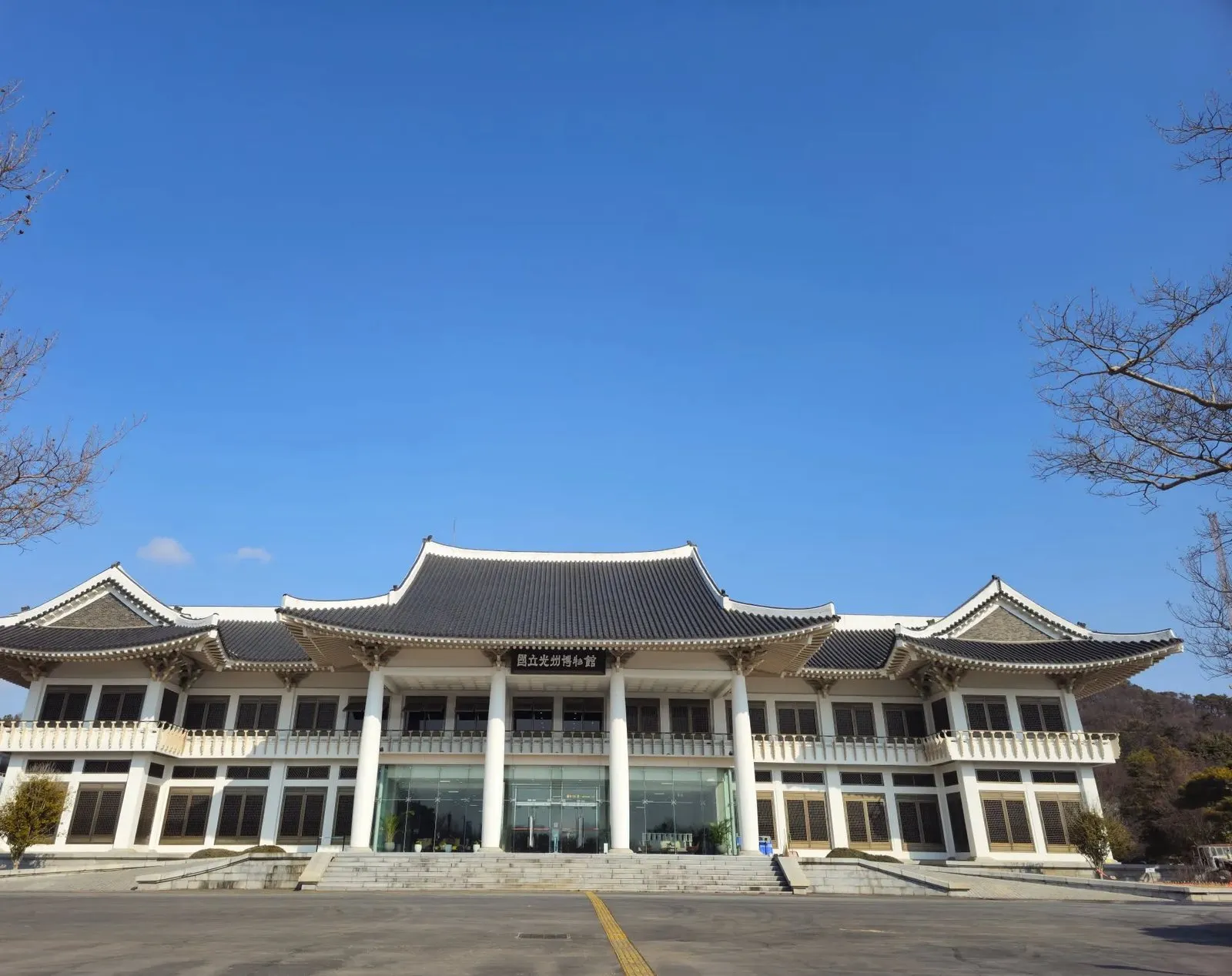
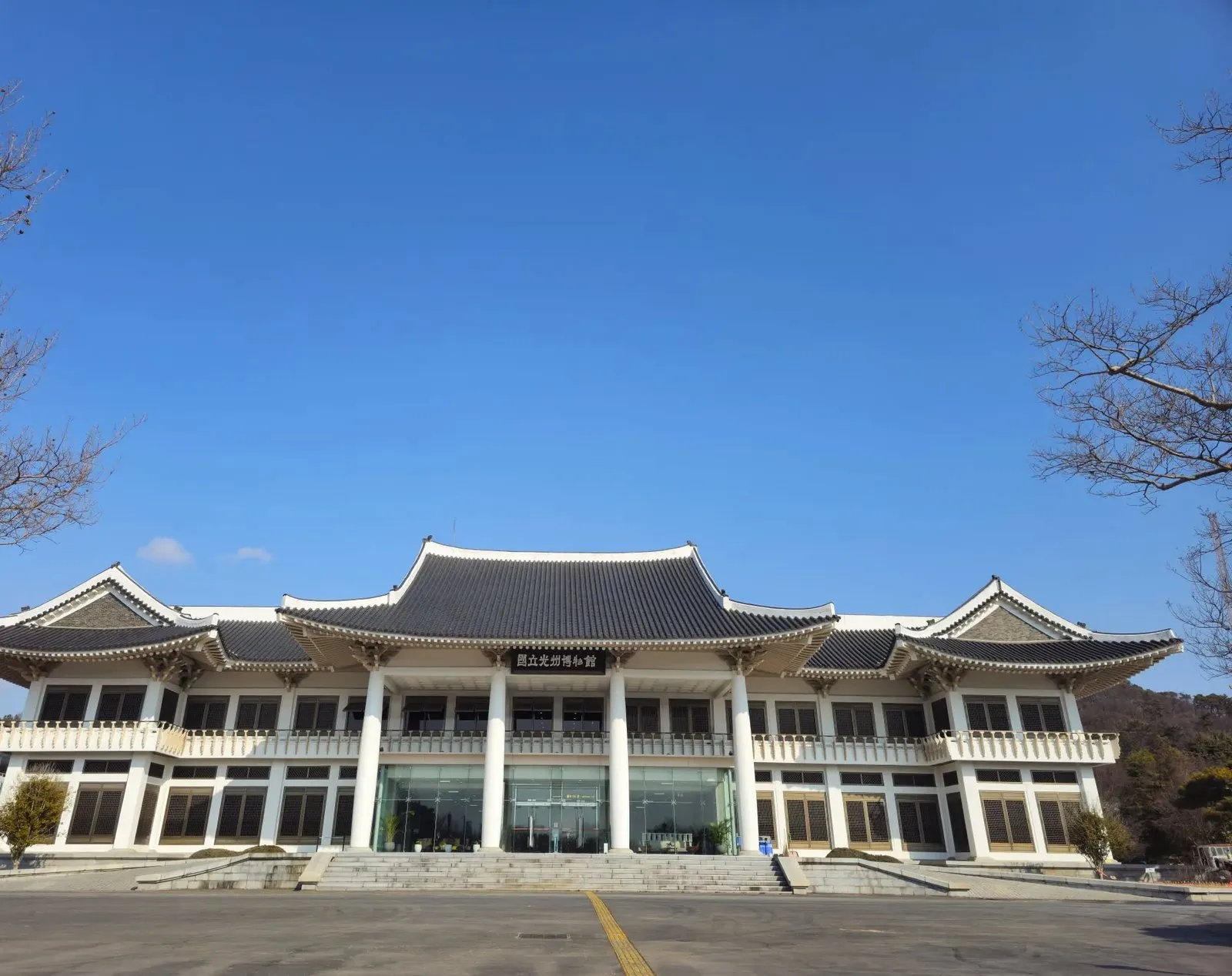 The main building. The board under the eaves reads 國立光州博物館, Gwangju National Museum.
Inside
The KTO lists seven permanent galleries: prehistoric and ancient culture, farming culture, ceramics, Buddhist art, painting and calligraphy, the Sinan shipwreck finds, and the central hall, plus an outdoor exhibition area. It says South Jeolla has so many old kiln sites, from Goryeo celadon to Joseon buncheong and white porcelain, that finds from them can be seen in the ceramics gallery. We couldn’t confirm that the galleries are still laid out this way.
Ceramics like Goryeo celadon and Joseon white porcelain are really impressive. In the Asian ceramics room you can compare ceramics from different countries. We couldn’t confirm what that room is called or where it is now: see the next section.
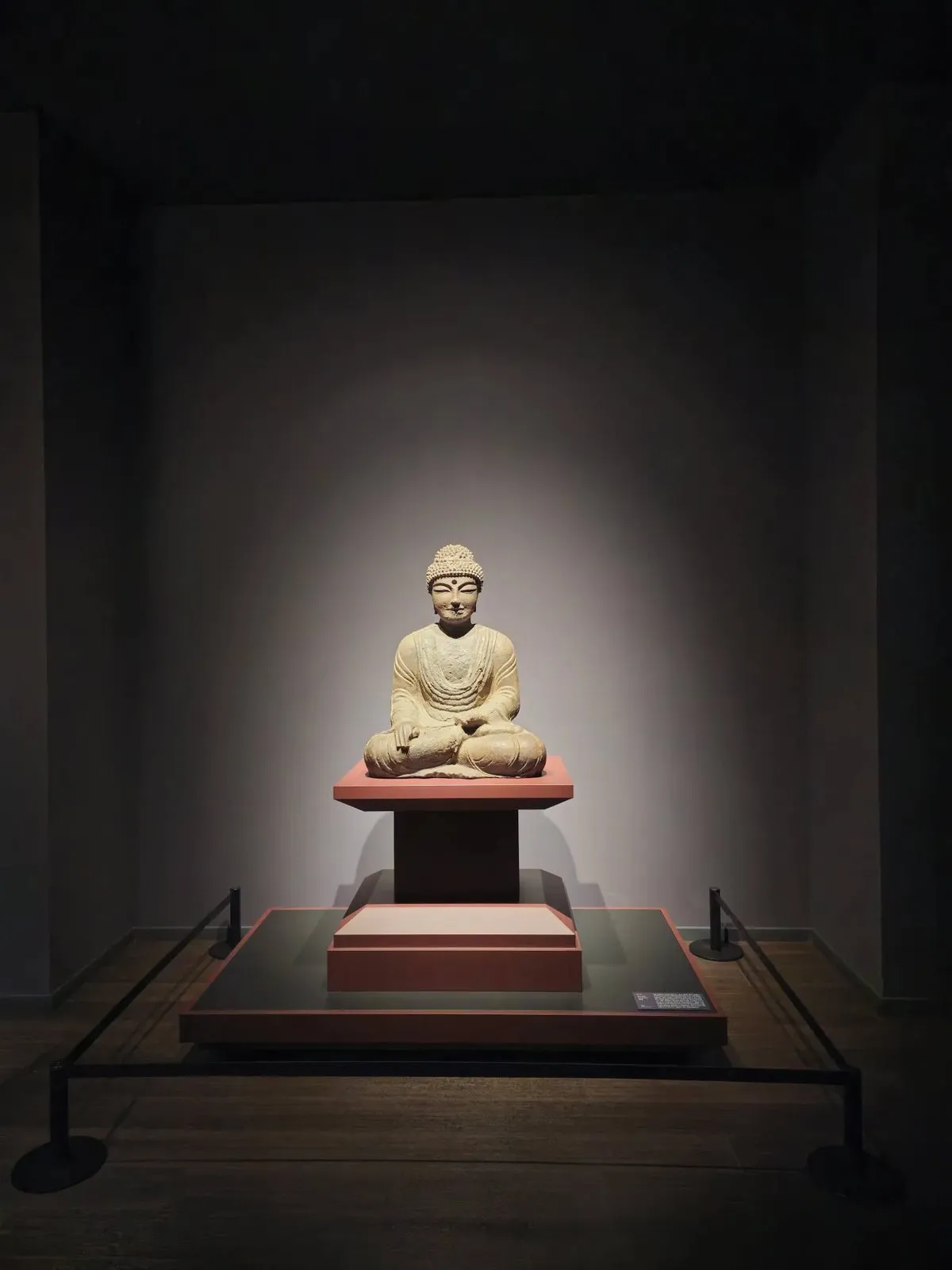 A seated stone Buddha under a spotlight.
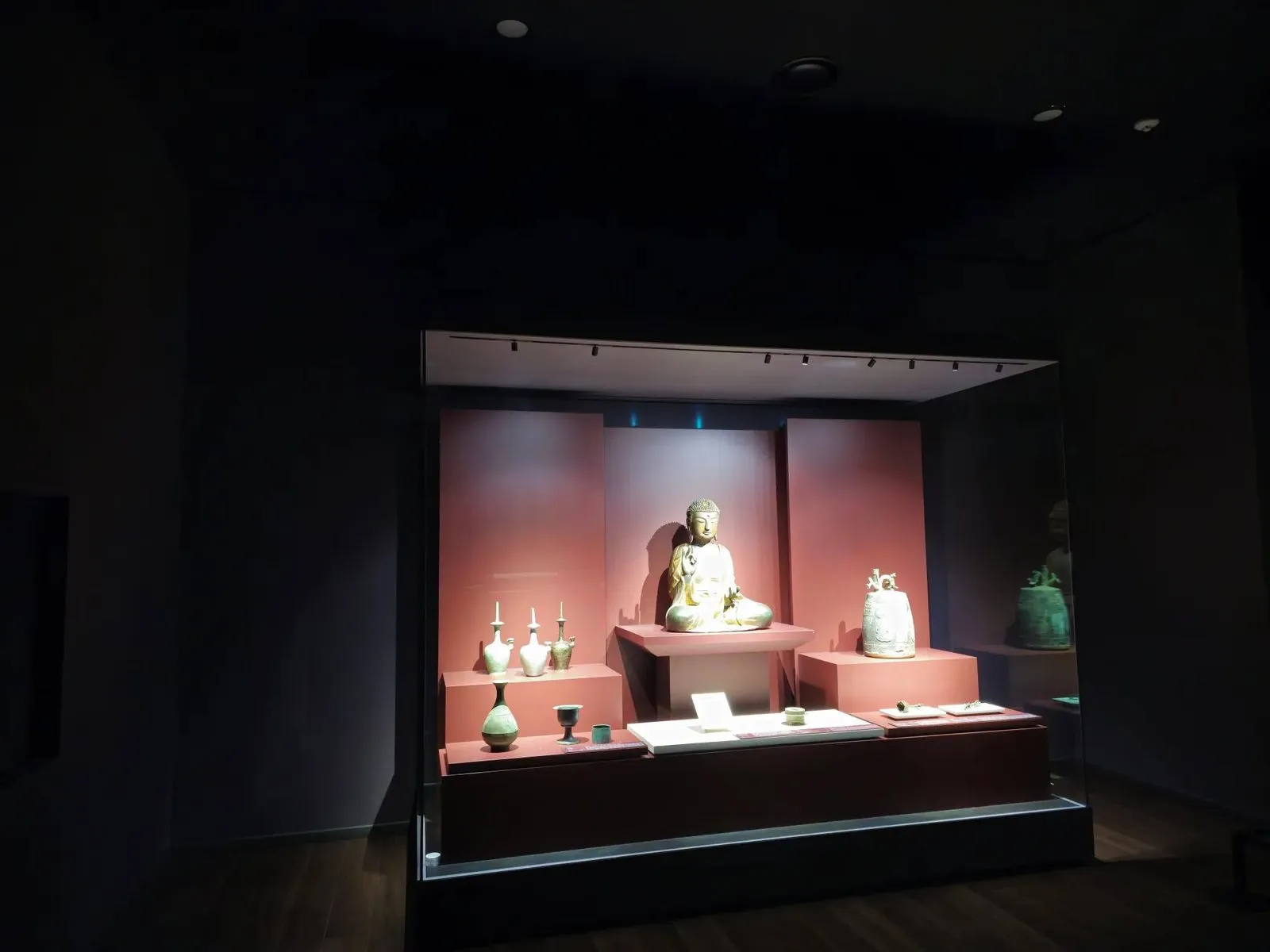 A gilded Buddha with ewers and a bronze bell.
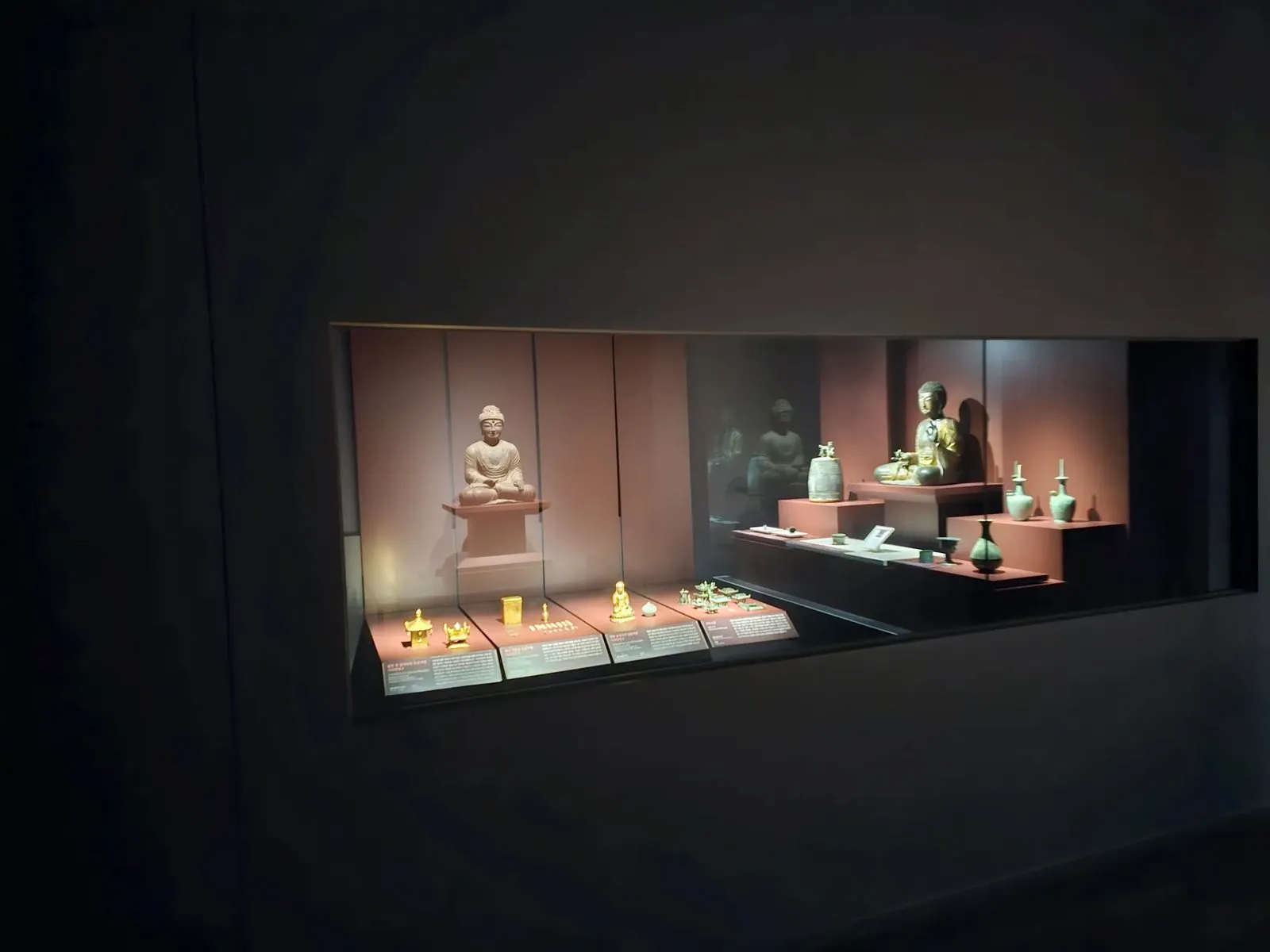 A window case of Buddhist sculpture and small gold pieces; through the glass on the right is the case with the gilded Buddha.
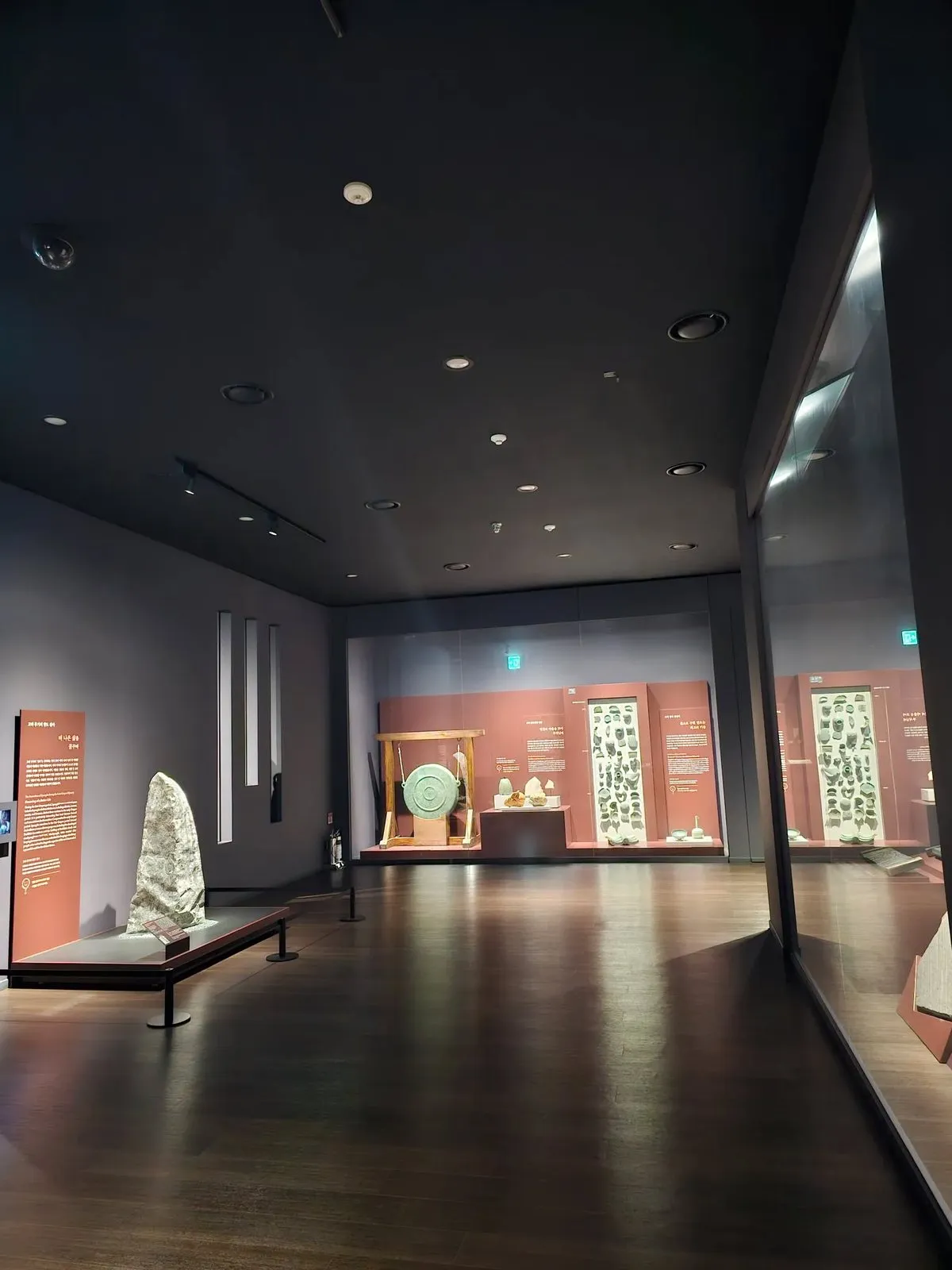 One of the galleries.
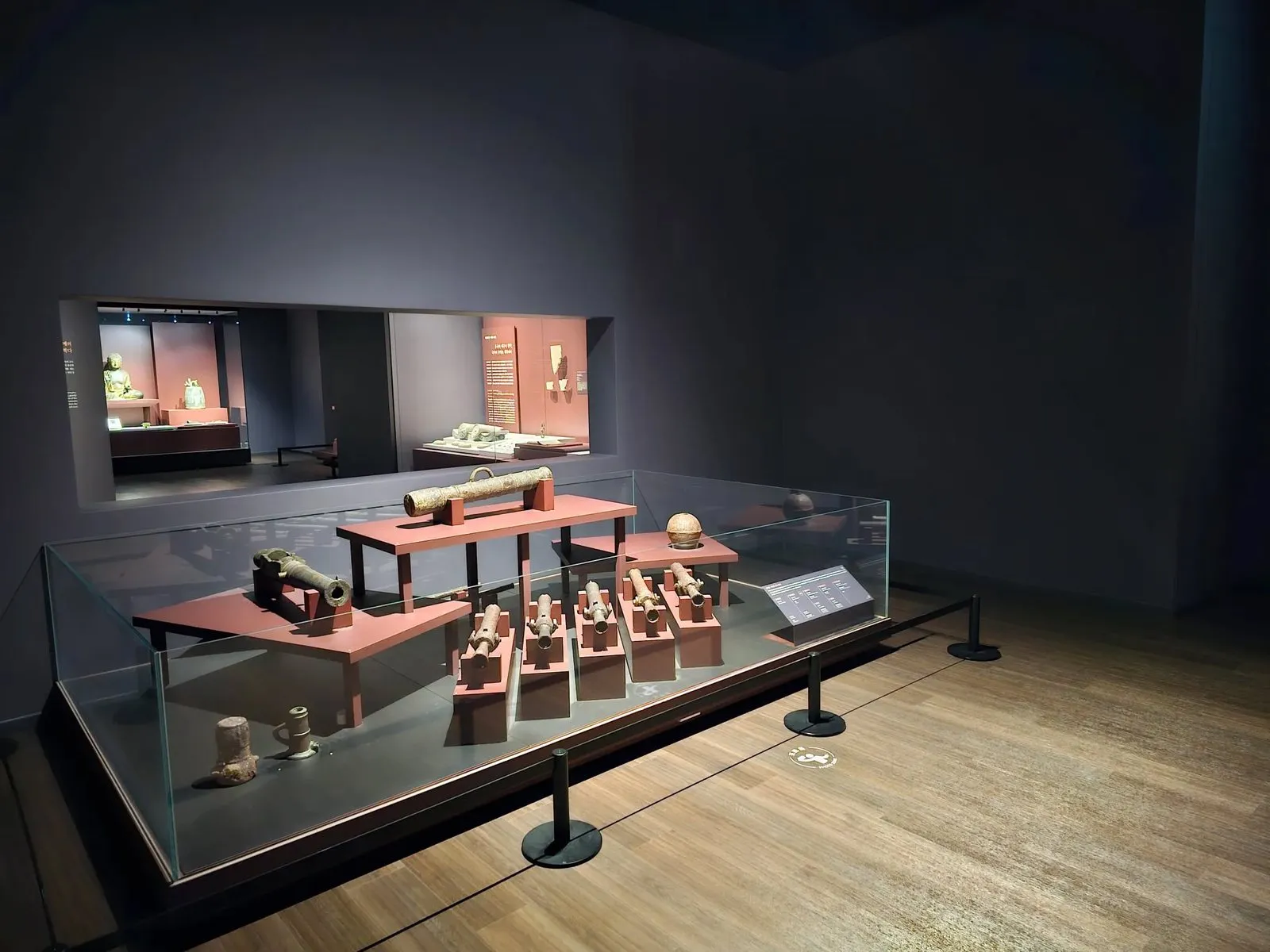 Old cannons and a cannonball.
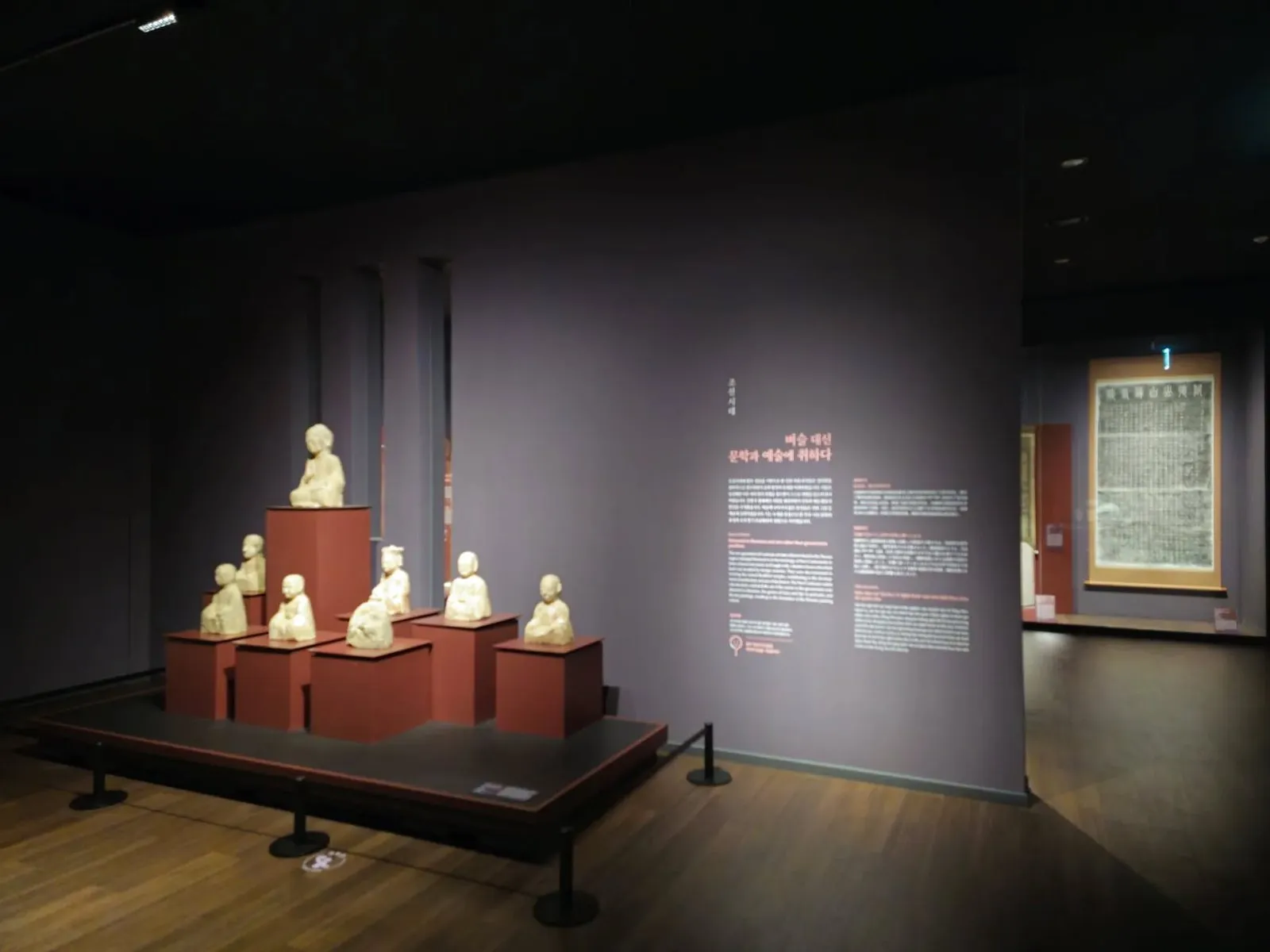 Small stone figures in the Joseon section.
Since my visit: the Ceramic Culture Hall
After my visit, the museum opened a separate two-storey Ceramic Culture Hall (도자문화관) on 18 December 2025. The Ministry of Culture’s portal lists three permanent rooms on its ground floor (Korean ceramics, ceramics from the Sinan shipwreck, and a digital art zone), with a stone-object yard, a museum shop and a café upstairs, and gives entry as free. The KTO describes the Korean ceramics room as covering about a thousand years, from Goryeo celadon to Joseon buncheong and white porcelain, and the digital art zone as a 60-metre panoramic screen. It opened after my photos were taken, so the photos here are from the main building.
Special exhibitions
Special exhibitions are held often (my caption). Entry is free except for paid special exhibitions (KTO); the 2026 exhibition on Korean earthenware (29 July–25 October), for example, was listed by the KTO as free.
Visiting
| Gwangju National Museum | |
|---|---|
| Entry | Free, except paid special exhibitions (KTO) |
| Hours | 10:00–18:00, last entry 17:30 (KTO) |
| Closed | 1 January, and Seollal and Chuseok days (KTO). Sources differ on Mondays: the museum’s English site says it closes on the Monday of the first week of April and November, the KTO English listing says every first Monday, and the culture portal’s listing for the 2026 earthenware exhibition said closed Mondays. Check before a Monday visit |
| Garden | Open 08:00–20:00 (KTO) |
| Parking | The KTO lists it as free. When I went, the big car park was free for the first 3 hours (my visit); we couldn’t confirm the current charges after that |
| Address | 110 Haseo-ro, Buk-gu, Gwangju (KTO). Official addresses now end “Jeonnam-Gwangju Special Metropolitan City”: Gwangju merged with South Jeolla on 1 July 2026 (KTO English listing; merger date from news reports). |
How to get there
By car: search the Korean name, 국립광주박물관, in Naver Map. The KTO lists parking as free; when I went, the first 3 hours were free.
By bus: we haven’t listed bus details here. Check the live route in Naver Map.
How to check buses in English: install Naver Map and switch it to English in its settings. When I checked it in October 2026, the English version showed bus routes, stop names and live arrival times (minutes and stops away) in English. Google Maps also gives public transport directions in Korea, but as of late September 2026 it still had no turn-by-turn walking or driving navigation here. Stuck? Call the Korea Travel Hotline: dial 02-1330 from a Korean mobile phone (+82-2-1330 from abroad). It has English-speaking staff. More in our guide to taking buses in Korea in English.
Tips
- Check before a Monday visit. The museum’s English site, the KTO English listing and the culture portal each give a different Monday closing.
- Parking. The KTO lists it as free, but when I went only the first 3 hours were free, so check if you’re staying long.
- The garden. In the museum garden you can enjoy culture surrounded by nature (my caption). The KTO lists it as open 08:00–20:00.
- Also in Buk-gu: the Gwangju History & Folk Museum, another free museum.
Who it’s for
Likely to suit (estimate): anyone interested in Korean ceramics or Buddhist sculpture, people spending a day in Gwangju, and anyone after a free indoor stop.
Sources
The museum’s English website (closing days); the Korea Tourism Organization’s Korean listing (updated November 2026: hours, garden hours, parking, opened 6 December 1978, the Sinan shipwreck background, the pavilion-shaped building, about 160,000 objects, the seven permanent galleries, the ceramics gallery, free entry except paid special exhibitions, the address) and its listing for the Ceramic Culture Hall; the KTO English listing (first-Monday closing, the merged city’s address); the Ministry of Culture, Sports and Tourism’s culture portal (the Ceramic Culture Hall opening on 18 December 2025, its rooms and free entry); the KTO’s listing for the 2026 earthenware exhibition (free) and the culture portal’s listing for it (Tuesday–Sunday, closed Mondays). The impressions and the photos are from my own visit.