Home / Gyeongsang / Patriots' Shrine (Changwon)
Changwon, South Korea: a quiet, free shrine to its independence fighters
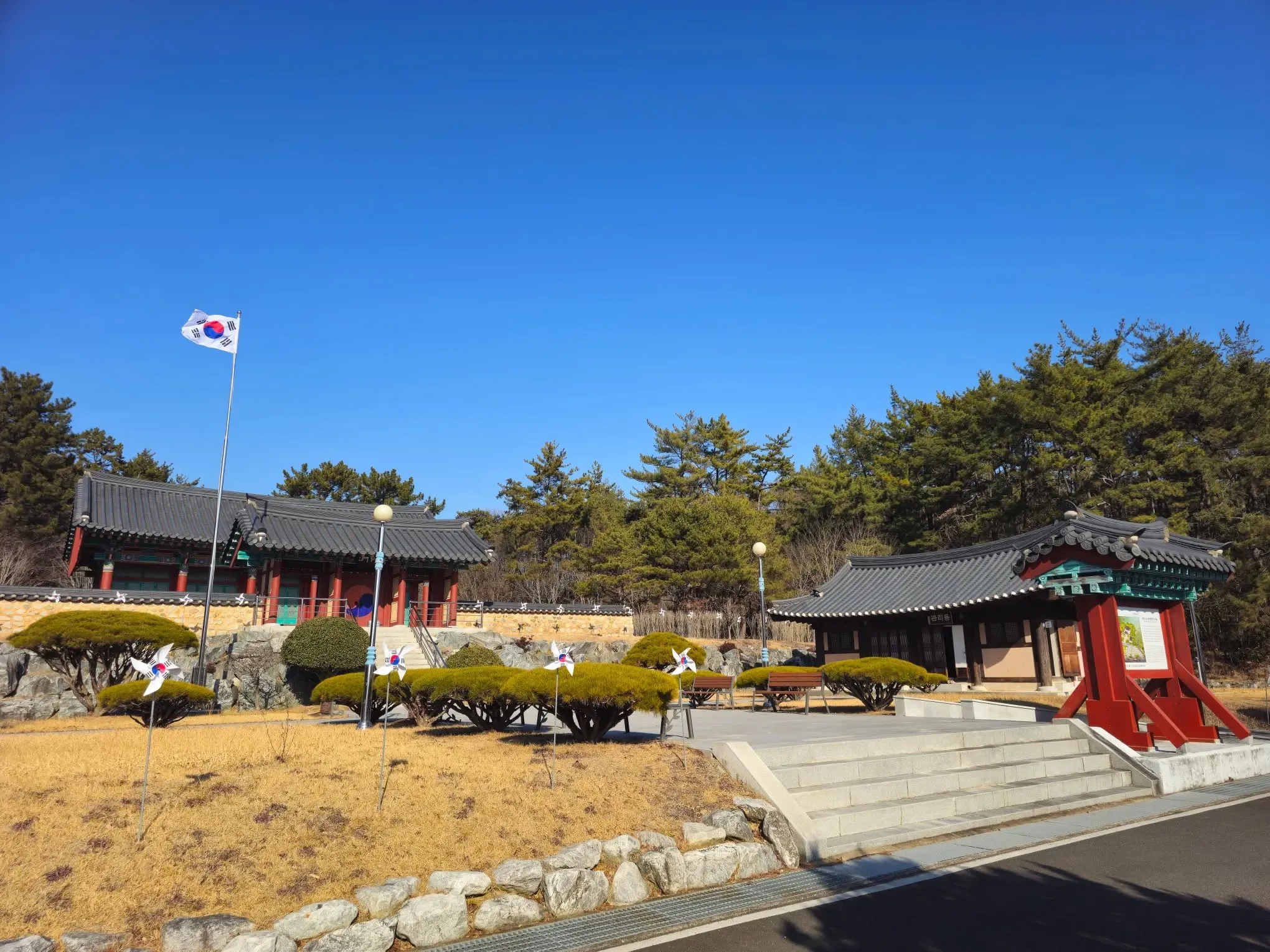
A small hanok shrine in rural Changwon (Masan) honouring more than 90 independence patriots, in one of the three districts behind the 1919 Samjin uprising. Free entry and parking.
- Getting there
- In Jinjeon-myeon, Masanhappo-gu, Changwon. Easiest by car; there's a car park. I couldn't confirm bus connections.
- Cost
- Free entry and free parking (my visit, January 2026).
- Time needed
- 30 minutes to 1 hour (estimate)
- Best time
- Daytime. A sign on site gave viewing hours of 10:00–17:00 when I visited; I couldn't confirm closing days.
Tap any Korean name on this page to hear it. Prefer Naver Map? In the app (set to English), search Patriots' Shrine Jinjeon Changwon, or paste the Korean name:애국지사사당
Short version: In a quiet corner of Jinjeon-myeon, in Changwon’s Masanhappo district, the city keeps a small shrine to the people from this region who fought for Korea’s independence from Japanese rule. There’s a shrine hall for their memorial tablets, a gate, a small exhibition hall and a few memorial panels; the shrine buildings are in traditional hanok style. It’s free, parking is free, it’s neat and well looked after, and it seems not many people come here. I’d say stop by if you’re in Changwon.
Last checked: 29 October 2026. The history comes from Changwon city and Korean news reports. The building names and the hours sign are from the boards on site (photographed January 2026). Free entry, free parking and what it was like are from my own visit. Tell me if anything has changed.
What it is
The shrine was finished in late 2008 and opened with a completion ceremony on 5 December 2008 (Gyeongnam Sinmun, Gyeongnam Domin Ilbo and Gyeongnam Maeil), to honour those killed in the 1919 Samjin uprising and other patriots who gave their lives for Korea’s independence from Japanese rule. The site covers about 7,288 m² (Gyeongnam Sinmun and Gyeongnam Domin Ilbo). It holds the memorial tablets of the patriots it honours, and the number grows as names are added: 96 according to a March 2025 news report (KPI News), up from 94 in 2023 (News Seoul).
The bilingual board at the site says it was built to pay tribute to “the previous martyrs’ lofty patriotism”, in a place where “representative anti-Japanese national movements in the Changwon area were waged”.
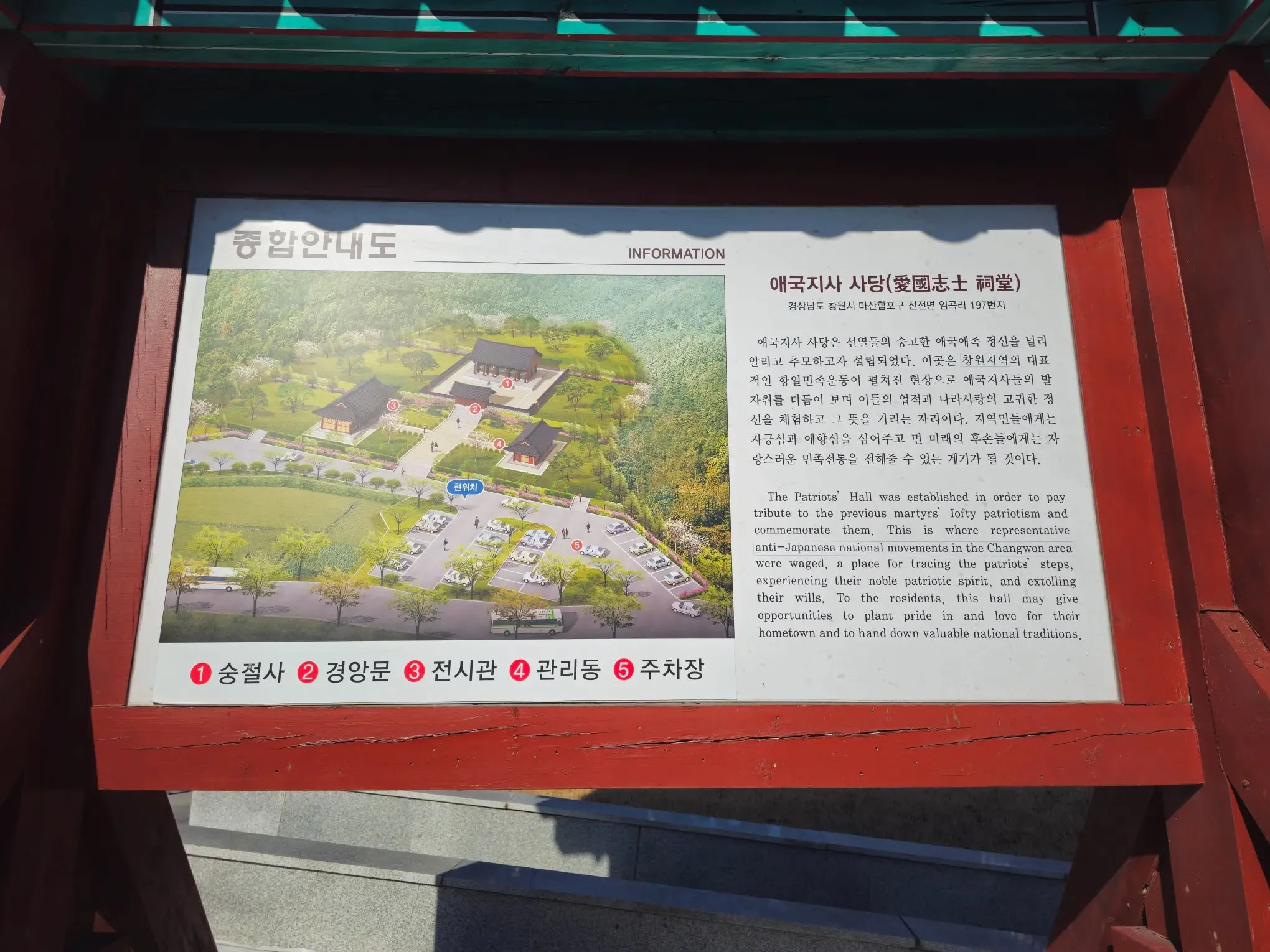 The site board, with a map of the grounds and a short explanation in Korean and English. The numbers mark the shrine hall, the gate, the exhibition hall, the caretaker’s building and the car park.
The 1919 Samjin uprising
Jinjeon is one of the three districts (Jinjeon, Jinbuk and Jindong) whose residents joined the Samjin uprising. On 3 April 1919, during the independence protests that began in Seoul on 1 March that year and spread across the country, residents of the three districts joined together in a large independence demonstration, according to several Korean news reports. About 5,000 people took part (Metro Seoul and Kukinews, 2024), and eight people were killed (TWIG24, 2022, and Metro Seoul, 2024). Sources name different spots as the place where it began, so I haven’t said how close the shrine is to them.
What you’ll see
The site board names five parts: the shrine hall (Sungjeolsa), the gate in front of it (Gyeongangmun), an exhibition hall, a caretaker’s building and the car park. In my January 2026 photos, small pinwheels with the Korean taegeuk symbol line the lawns.
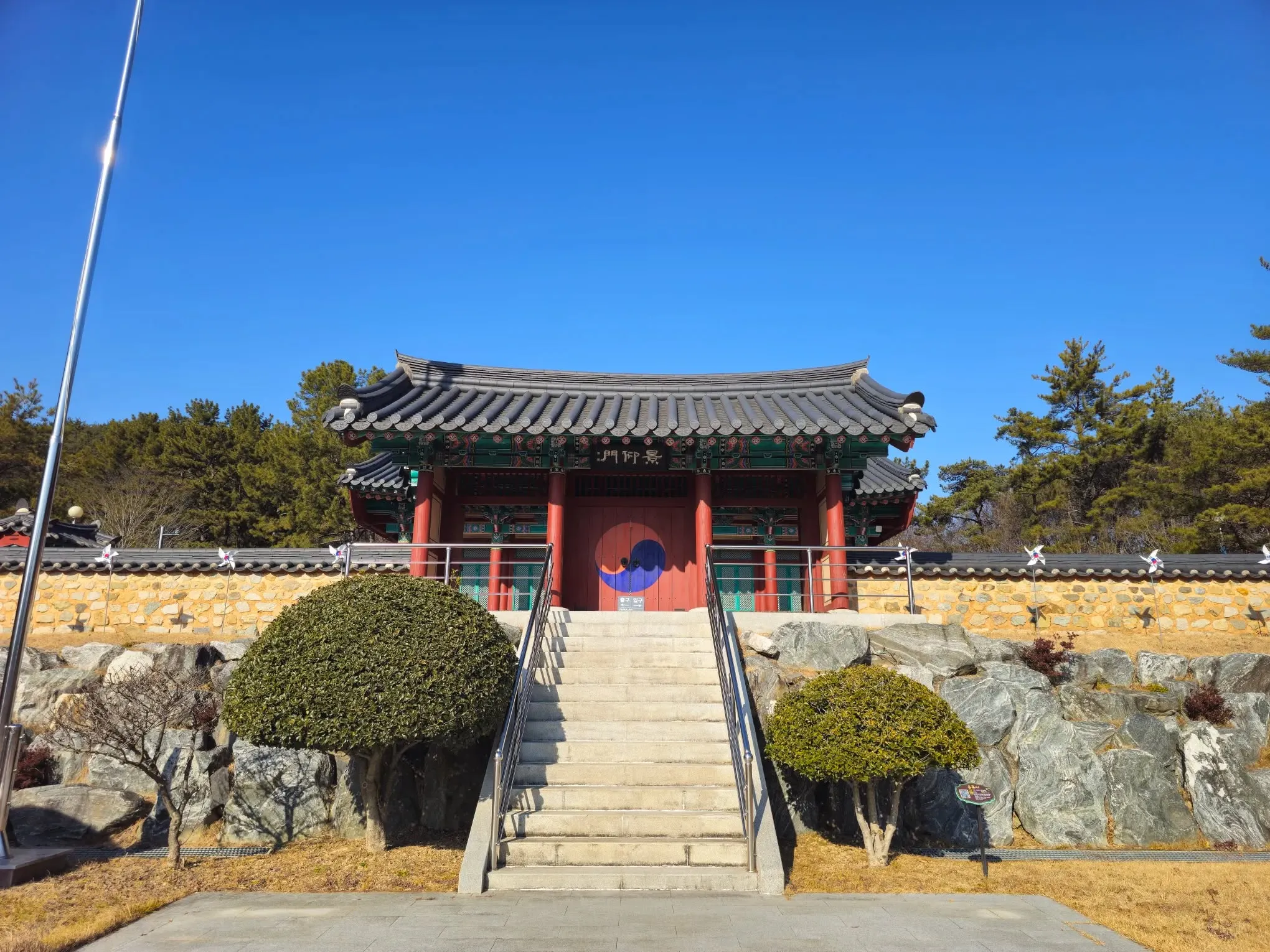 The gate up to the shrine hall, with the taegeuk symbol on its doors.
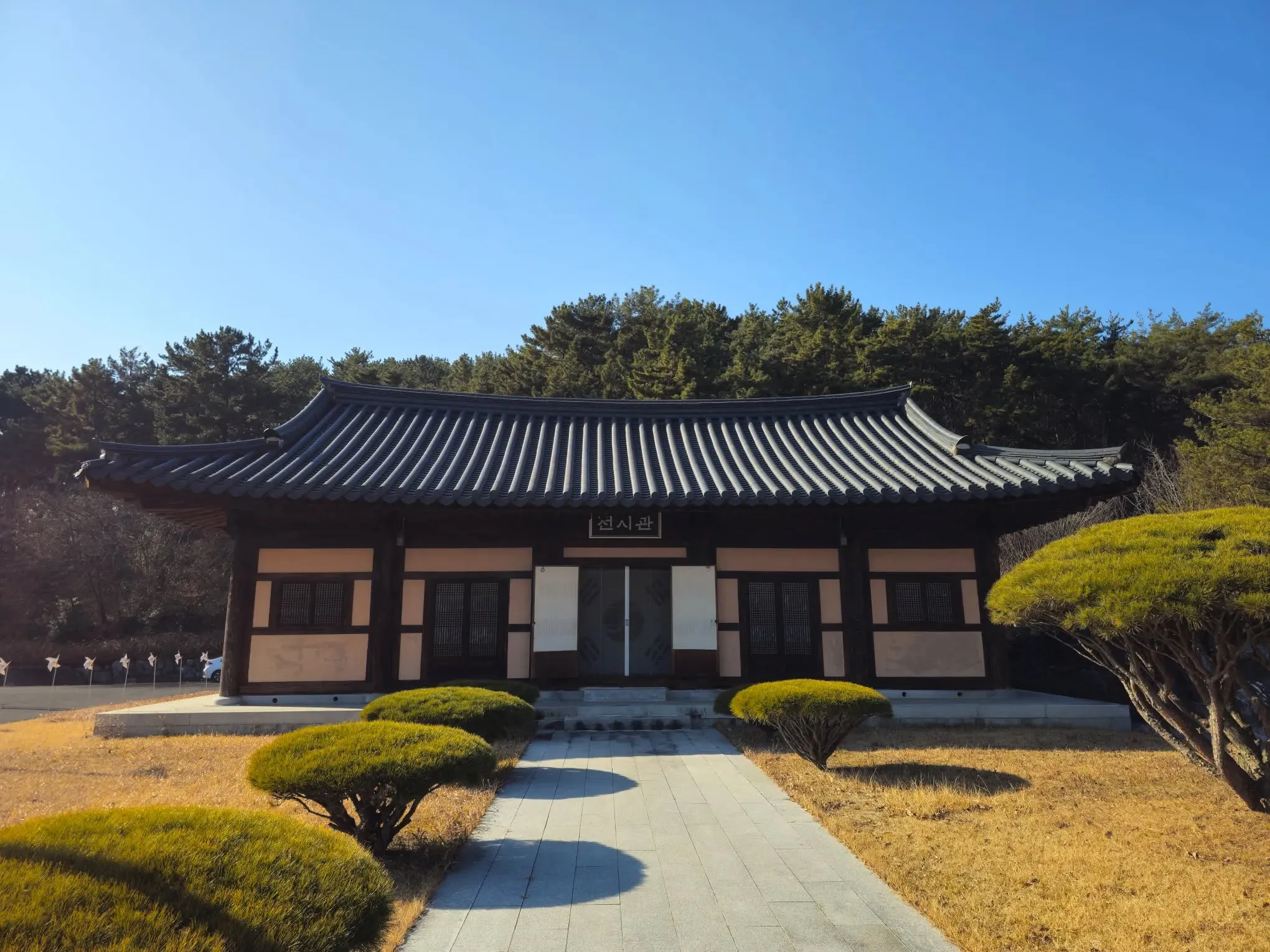 The exhibition hall.
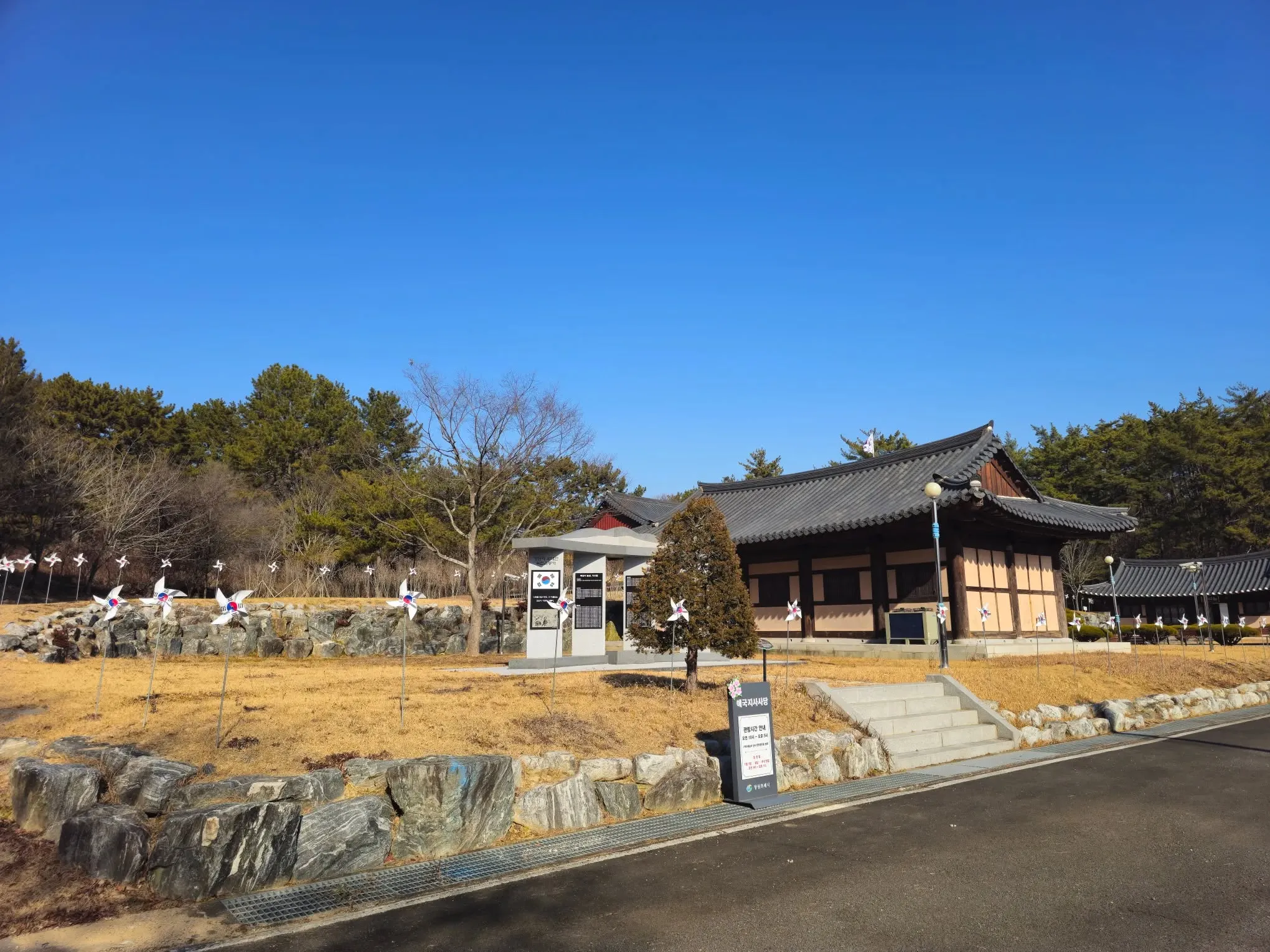 Memorial panels and a hall beside the road. The standing sign by the path gives the viewing hours.
Visiting
| Patriots’ Shrine, Changwon | |
|---|---|
| Hours | 10:00–17:00, per a sign on site (January 2026) |
| Closed | Couldn’t confirm |
| Admission | Free (my visit) |
| Parking | Free car park (my visit) |
| Address | Imgok-ri, Jinjeon-myeon, Masanhappo-gu, Changwon (lot 197, per the site board) |
- Hours: the standing sign by the path lists viewing hours of 10:00 to 17:00. Below that there’s more text in red (it may be closing days), but it isn’t legible in the photo, and we couldn’t find an official listing. I went on a Tuesday.
- Inside the buildings: I couldn’t confirm whether the exhibition hall has English captions.
How to get there
By car: the shrine is in Imgok-ri, Jinjeon-myeon, Masanhappo-gu, Changwon. There’s a car park, which was free when I went.
By public transport: I couldn’t confirm bus connections, so I haven’t listed any. Check the live route in Naver Map before you go: search the Korean name, 애국지사사당, and check it’s the one in Jinjeon-myeon, Changwon.
How to check buses in English: install Naver Map and switch it to English in its settings. When we checked it in October 2026, the English version showed bus routes, stop names and live arrival times in English. Google Maps also gives public transport directions in Korea, but as of late September 2026 it still had no turn-by-turn walking or driving navigation here. Stuck? Call the Korea Travel Hotline: dial 02-1330 from a Korean mobile phone (+82-2-1330 from abroad). It has English-speaking staff.
Tips
- Keep it quiet. It’s a memorial shrine, and as I wrote, it’s a good place to pay your respects quietly.
- Combine it with other stops in Changwon. As I wrote: if you go to Changwon, stop by here too.
Who it’s for
Likely to suit (estimate): anyone interested in Korea’s independence movement, road-trippers around Changwon and Masan, and travellers who like quiet places off the usual route.
Sources
Checked against the boards on site (photographed January 2026: the name, the lot address, the five parts of the grounds, the bilingual explanation, the viewing hours), Gyeongnam Sinmun and Gyeongnam Domin Ilbo (November 2008: the completion in Imgok-ri, Jinjeon-myeon, the site area, who it honours), Gyeongnam Maeil (December 2008: the completion ceremony), News Seoul (February 2023: built in 2008, 94 tablets), KPI News (March 2025: 96 tablets, the Jinjeon-myeon location), TWIG24 (April 2022: 3 April 1919, the three districts, eight killed), Metro Seoul and Kukinews (2024: the three districts, about 5,000 taking part; Metro Seoul: eight killed) and the Korean Cultural Centre in Brussels (the 1 March 1919 protests). Free entry, free parking and my impressions are from my own visit.