Home / Gyeongsang / Hwapocheon Wetland Ecological Park
Gimhae, South Korea: a free, quiet walk at Hwapocheon Wetland Ecological Park
Hwapocheon Wetland in Gimhae, near Busan: Korea's largest river-type backwater wetland, a national wetland protected area with boardwalks and birds. Free to walk, free parking, hardly anyone around when I went.
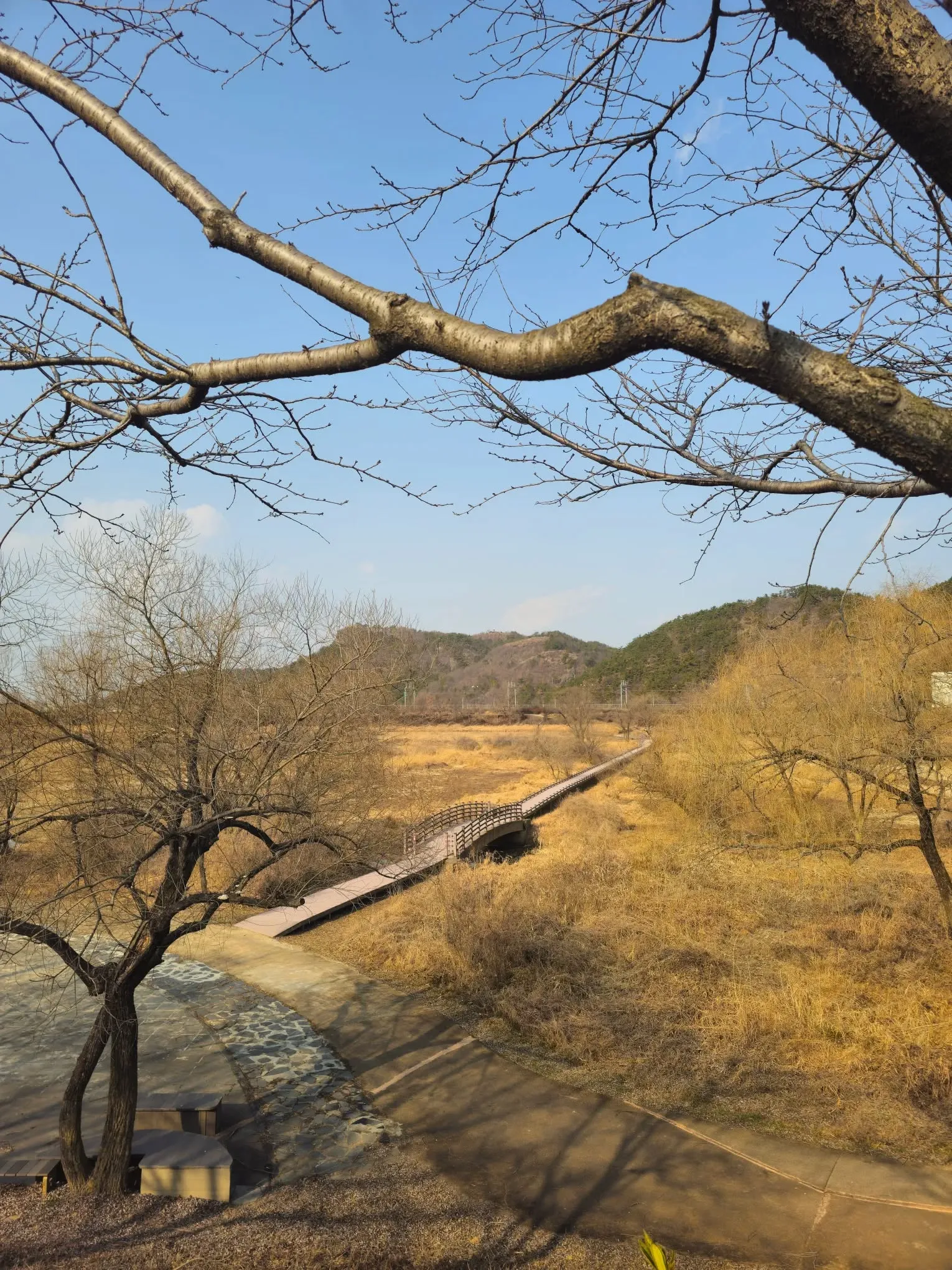
- Getting there
- In Hallim-myeon, Gimhae. I drove; the car park is free. Gimhae city also lists city buses 56 and 58-1, then about a 25-minute walk.
- Cost
- Free to walk; free parking (my visit, January 2026; Gimhae city).
- Time needed
- 20 minutes to 1 hour, depending on the trail (Gimhae city)
- Best time
- Daytime (estimate). I went in January, when it was quiet.
Tap any Korean name on this page to hear it. Prefer Naver Map? In the app (set to English), search Hwapocheon Wetland Ecological Park Gimhae, or paste the Korean name:화포천습지생태공원
Short version: Hwapocheon Wetland, in Gimhae near Busan, is a long, reedy wetland beside a stream that runs into the Nakdong River. Gimhae city calls it Korea’s largest river-type backwater wetland, and it’s a national wetland protected area. There are walking trails with boardwalks, and birds. It was free, the big car park was free and empty, and there was hardly anyone there. If you’re going near Gimhae, go once.
Last checked: 31 October 2026. Facts about the wetland, the address, parking and buses come from Gimhae city’s Hwapocheon pages, checked against Korean news reports and the Korea Tourism Organization (KTO). Free entry, free parking and what it was like are from my own visit. Tell me if anything has changed.
What it is
Gimhae city describes Hwapocheon Wetland as a natural wetland behind the Nakdong River, 8.4 km long and 3.1 km² in area, and Korea’s largest river-type backwater wetland; news reports also call it the largest (KPI News, February 2025; Kukinews, September 2025). It was designated a national wetland protected area in 2017 (Gimhae city; the board at the site gives 23 November 2017 and a protected area of 1.244 km²), and Gimhae’s certification as a Ramsar Wetland City was confirmed in January 2025, with the certificate presented in July 2025 (Gimhae city; KPI News).
The city says it’s home to 1,220 kinds of wild plants and animals, including 25 endangered species, and that 10,000–20,000 migratory birds visit each year. News reports from 2025 give smaller figures (around 800 species, 24 of them endangered), so the counts depend on the source.
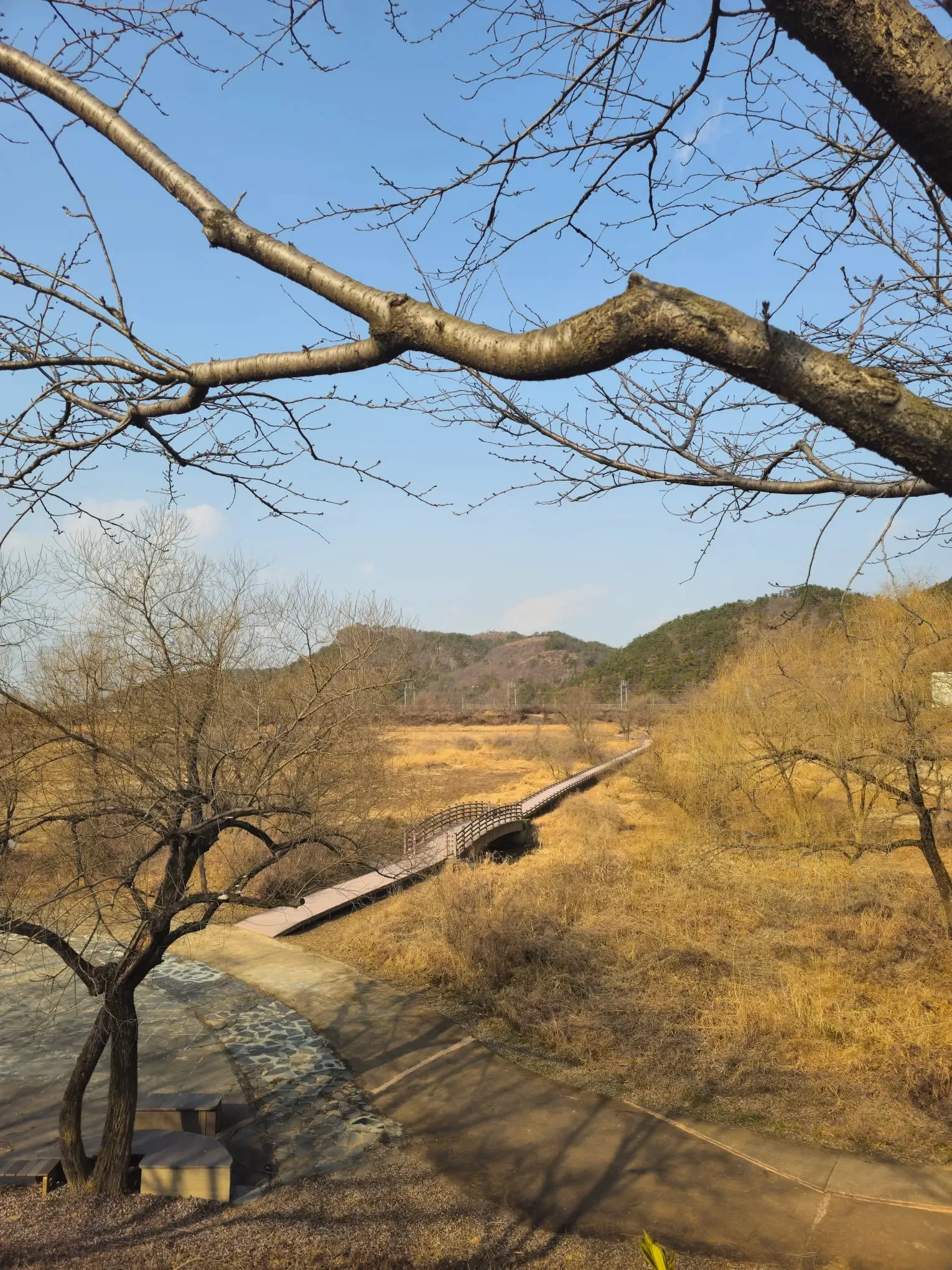 A boardwalk across the wetland, January 2026.
What I saw
The free car park was big, and there were no cars. As I wrote, walk along the trail and you see birds and the wetland, and nature is well preserved as it is. It’s near the city, yet you can feel nature like this.
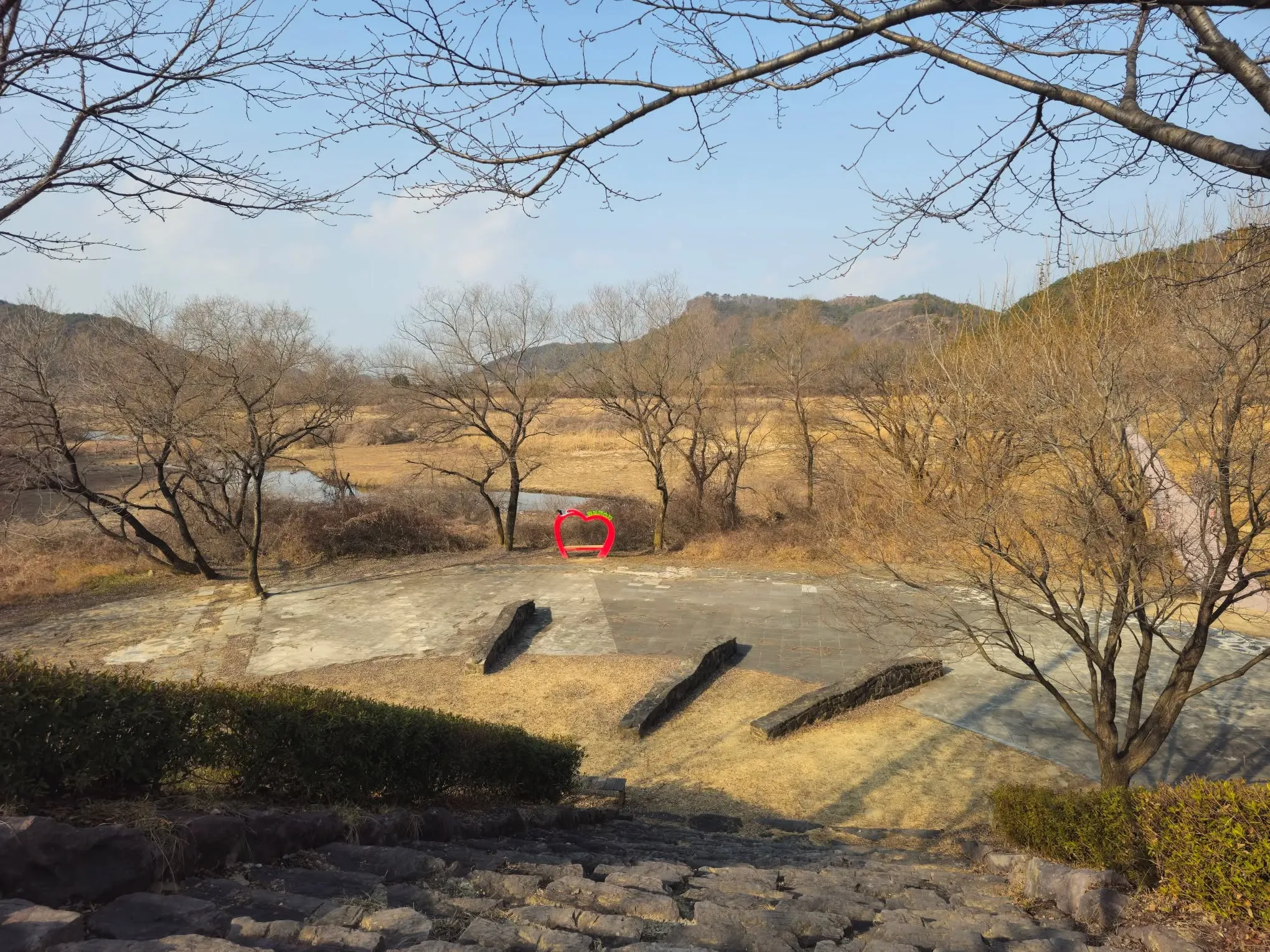 A viewpoint over the wetland, with a heart-shaped photo frame.
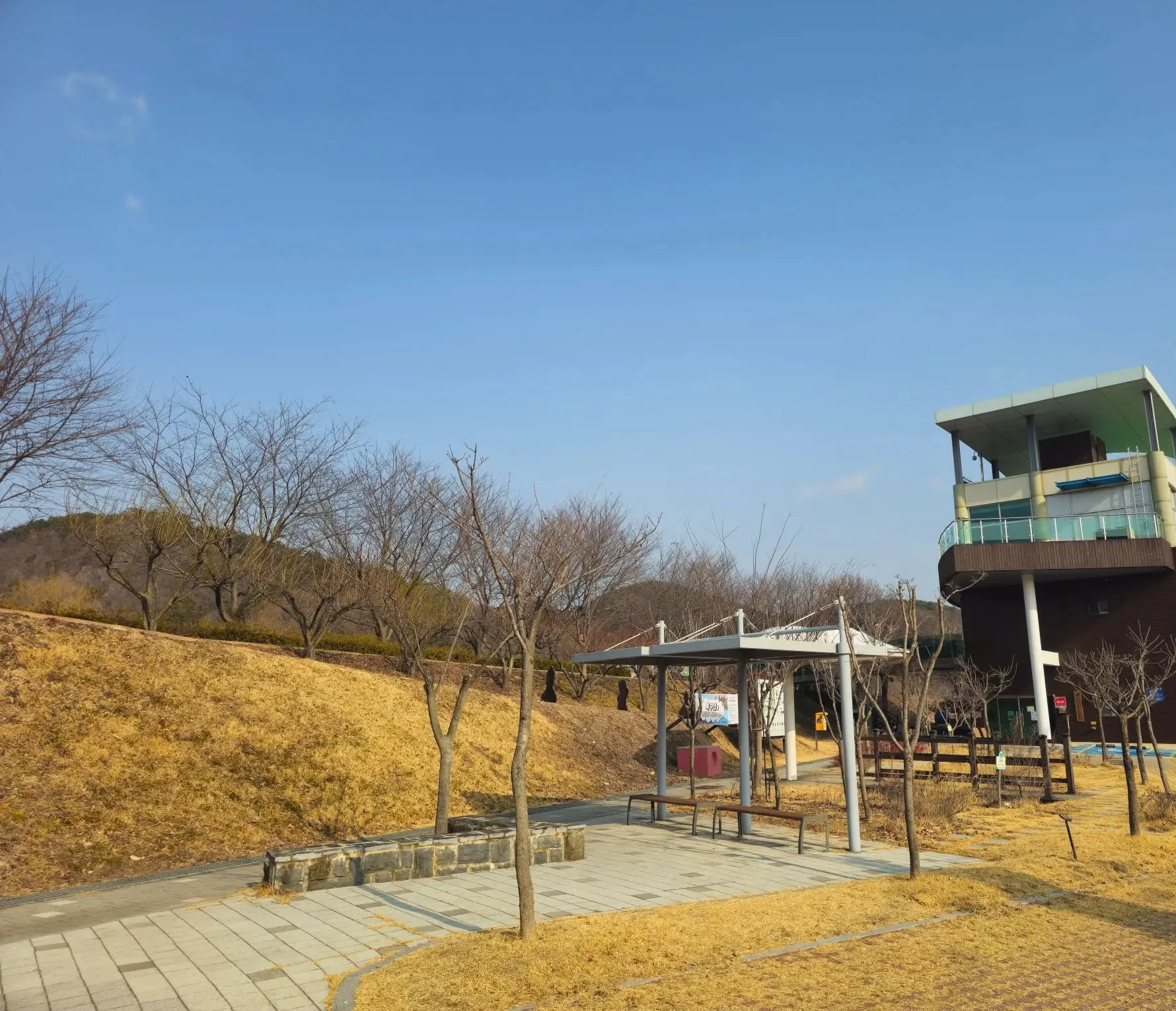 A picnic shelter and the park building.
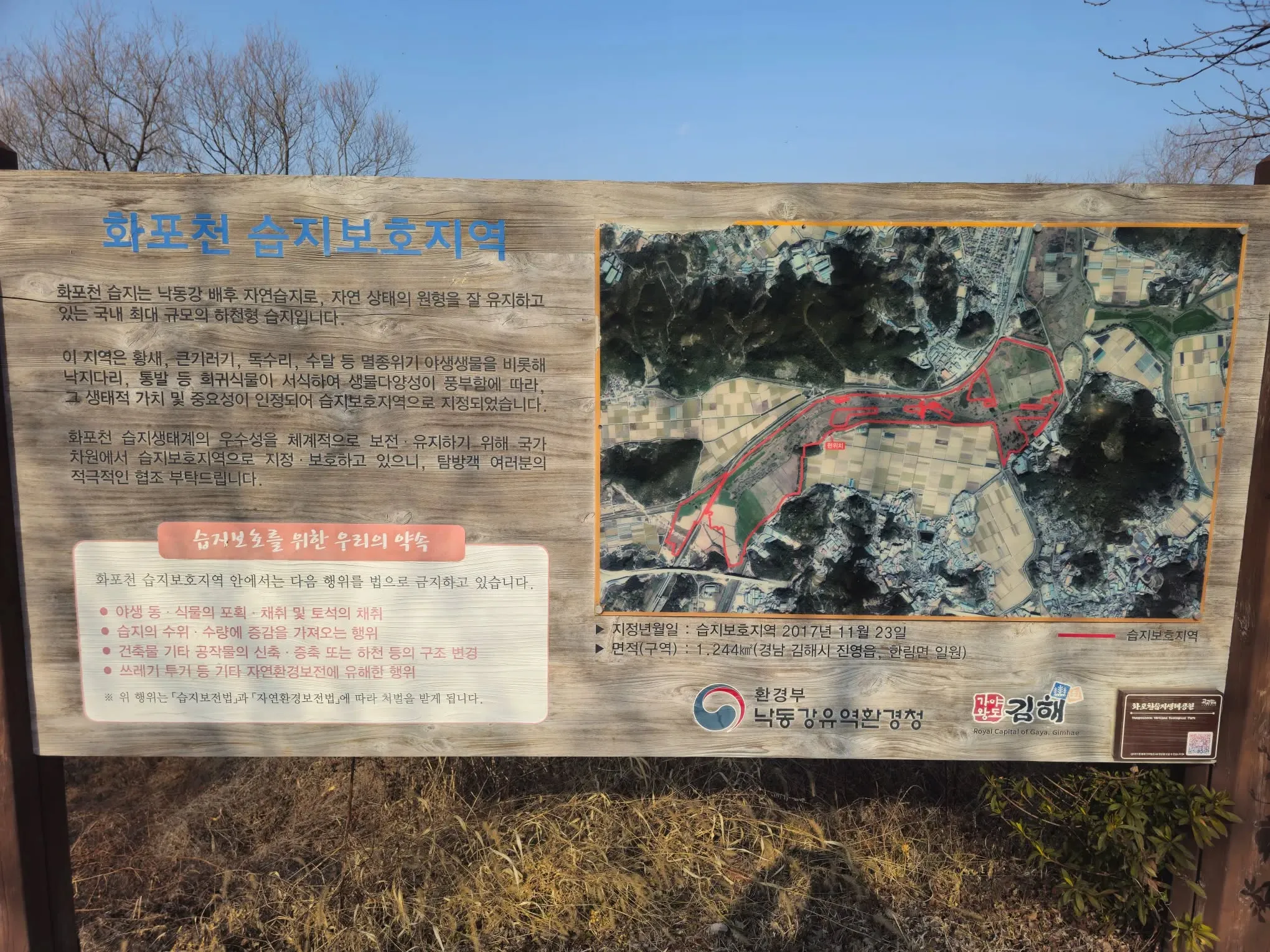 The protected-area board (Korean only). It calls Hwapocheon the largest river-type wetland in Korea.
Trails
Gimhae city lists four walking courses (three start at the park’s ecology learning center):
| Course | Length | Time |
|---|---|---|
| A (with a boardwalk and two photo spots) | about 1 km | about 20 min |
| B | about 2 km | about 40 min |
| C | about 3 km | about 60 min |
| D (with the Gaeguri-san boardwalk) | about 1 km | about 20 min |
Visiting
| Hwapocheon Wetland Ecological Park | |
|---|---|
| Admission | Free (my visit) |
| Parking | Free (my visit; Gimhae city) |
| Address | 183-300 Hallim-ro, Hallim-myeon, Gimhae (Gimhae city) |
- Indoor exhibits: the park’s ecology learning center (the city also calls it the Hwapocheon Wetland Ecology Museum) is free, open 9:00–18:00 and closed on Mondays, 1 January, and the Seollal and Chuseok holidays, with specimens and a birdwatching deck with telescopes.
- Science museum: a separate Hwapocheon Wetland Science Museum opened on 15 October 2025 in nearby Jinyeong-eup (Gimhae city; KNN; Financial News). The KTO lists it as free, 9:00–18:00 (last entry 17:00; weekend break 13:00–13:30), closed on Mondays.
- Crowds: there weren’t many people when I went, on a Thursday in January.
How to get there
By car: the park is in Hallim-myeon, Gimhae. Search the Korean name, 화포천습지생태공원, in Naver Map. The car park was free and empty when I went.
By public transport: Gimhae city says to take city bus 56 or 58-1 to the Hwapocheon Wetland Ecological Park stop (화포천습지 생태공원), then walk about 25 minutes. From Gimhae International Airport, it suggests the light rail to Bonghwang Station, then bus 56 or 58-1. I drove, so I haven’t tried this. Check the live times in Naver Map.
How to check buses in English: install Naver Map and switch it to English in its settings. When we checked it in October 2026, the English version showed bus routes, stop names and live arrival times in English. Google Maps also gives public transport directions in Korea, but as of late September 2026 it still had no turn-by-turn walking or driving navigation here. Stuck? Call the Korea Travel Hotline: dial 02-1330 from a Korean mobile phone (+82-2-1330 from abroad). It has English-speaking staff.
Tips
- Take a short course. Course A or D is about 1 km and 20 minutes (Gimhae city), enough for a short stop like mine.
- Easy parking. As I wrote, the free car park is big, so you can come without worrying about parking.
- Same day nearby: I also went to the Gimhae Nakdonggang Rail Park that day.
Who it’s for
Likely to suit (estimate): walkers, birdwatchers, anyone with an hour to spare near Busan or Gimhae airport, and travellers who want quiet nature without paying for it.
Sources
Checked against Gimhae city’s Hwapocheon pages (the wetland’s length, area, “largest river-type backwater wetland”, 2017 protected area, Ramsar Wetland City, species and migratory bird counts; the address, free parking and bus directions; the four trail courses; the ecology learning center/museum’s hours, closing days and free admission; the science museum opening), the protected-area board at the site (photographed January 2026: designated 23 November 2017, protected area 1.244 km²), KPI News (February 2025: Ramsar Wetland City, largest river-type backwater wetland, about 800 species), Kukinews (September 2025: largest river-type backwater wetland, 812 species including 24 endangered), KNN and Financial News (October 2025: the science museum opening on 15 October 2025) and the KTO listing for the science museum (updated April 2026: free, hours, weekend break, closed Mondays). Free entry, free parking and my impressions are from my own visit.