Home / Chungcheong / Gaesimsa Temple (Seosan)
Gaesimsa Temple, Seosan: green cherry blossoms and free entry
A Seosan temple said to date to 654, known for pale green cherry blossoms in spring. Not big, but quiet when I went. Free entry and parking, and a road right up.
- Getting there
- 321-86 Gaesimsa-ro, Unsan-myeon, Seosan, South Chungcheong Province. I drove: skip the big parking lot at the entrance and take the road beside it up to the temple. For buses, check the live route in Naver Map (in English).
- Cost
- Free admission and free parking when I visited (July 2026)
- Time needed
- About 1 hour (estimate)
- Best time
- Opening hours: couldn't confirm. Known for pale green cherry blossoms in spring.
Tap any Korean name on this page to hear it. Prefer Naver Map? In the app (set to English), search Gaesimsa Temple Seosan, or paste the Korean name:개심사 서산
Short version: Gaesimsa is a Buddhist temple on a forested hillside in Seosan, South Chungcheong Province. The board in front of its main hall says it was founded in 654 by a Baekje monk, and the main hall itself is a national Treasure. I drove there in July 2026. It isn’t a big temple, but it was quiet, and I liked that. Admission and parking were free. My tip: don’t stop at the big parking lot at the entrance; take the road beside it and you can drive right up to the temple.
Last checked: 16 October 2026. The temple’s history, the main hall and Simgeomdang Hall come from the official information boards on site (photographed July 2026). The address comes from Seosan City’s tourism listing and a January 2026 Travie article. The hanging Buddhist painting comes from the Encyclopedia of Korean Culture, and the green cherry blossoms from Newsis (April 2026) and Herald Kyungje USA (July 2025). Free entry, free parking and the parking tip are from my own visit. I couldn’t confirm opening hours. For public transport, use Naver Map’s live routes. Tell me if anything has changed.
What it is
The information board in front of the main hall says Gaesimsa was founded in 654, the 14th year of King Uija of Baekje, by a Baekje monk named Hyegam. If that’s right, it’s more than 1,370 years old.
The name is written 開心寺: “the temple that opens the mind”. Pretty name, right? You can see it on the big plaque that reads 象王山開心寺 (Sangwangsan Gaesimsa), on a building that sits above a tall stone wall.
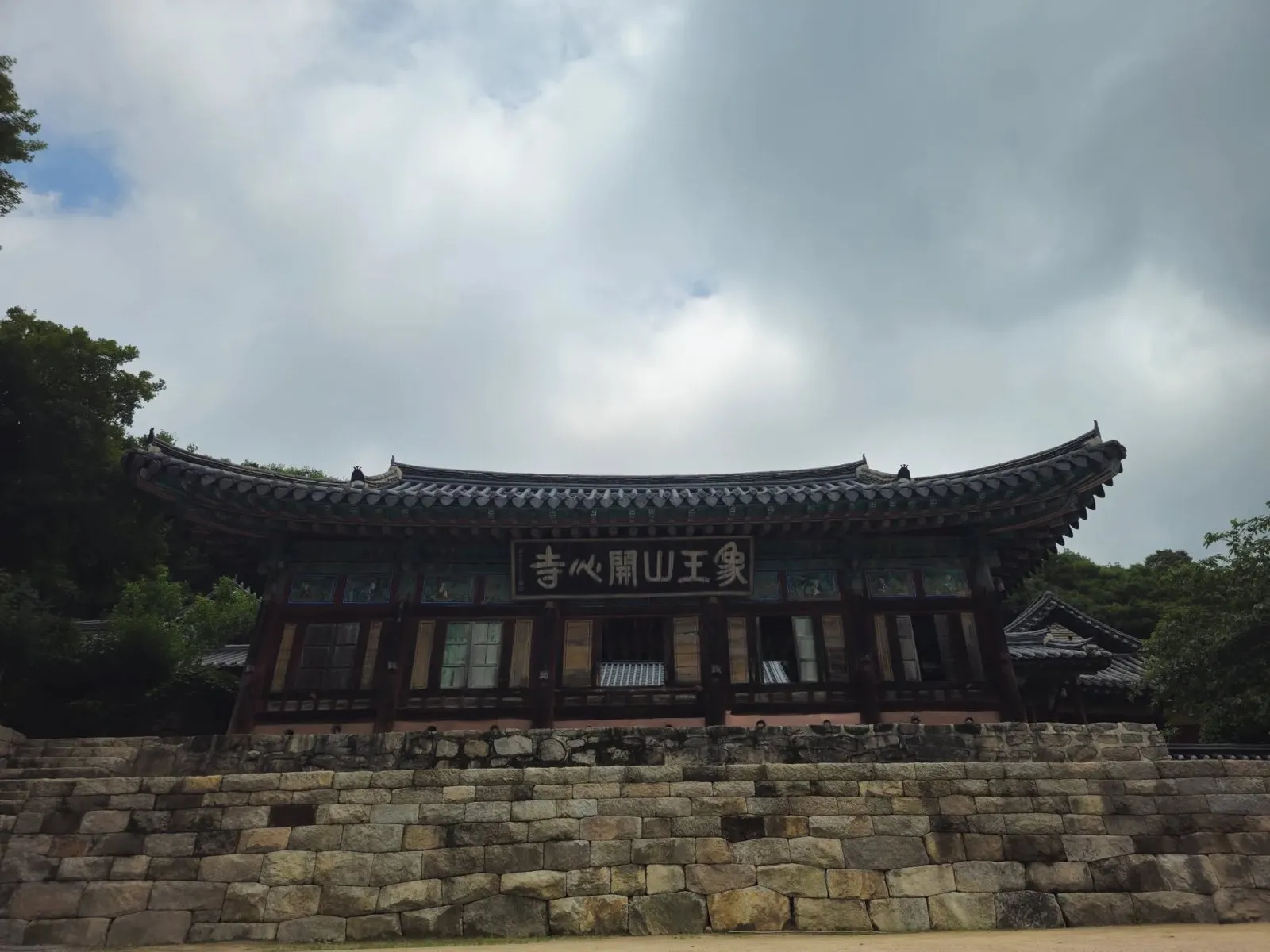 The plaque with the temple’s full name, 象王山開心寺.
It isn’t a big temple, but it was quiet, and that was nice.
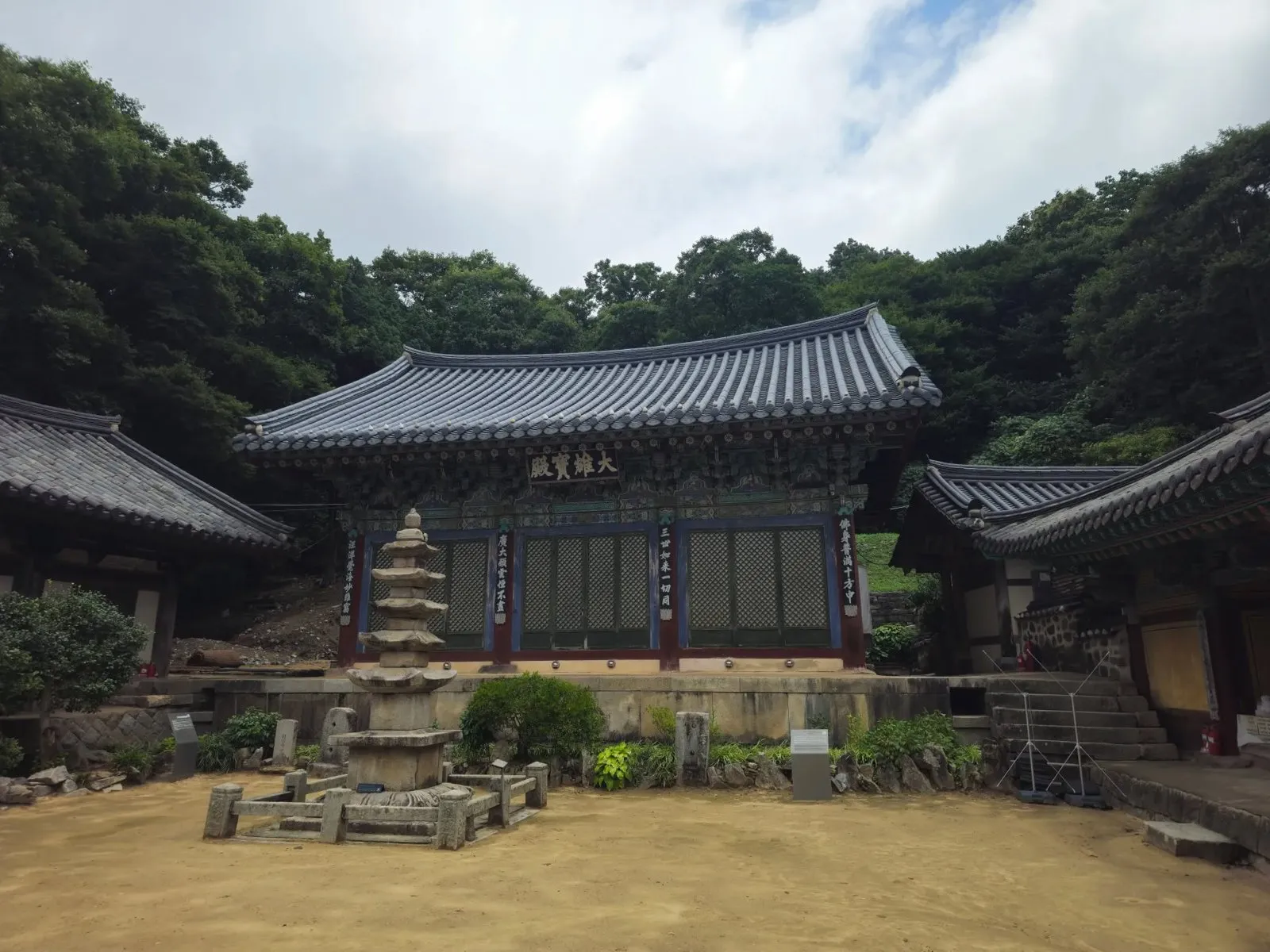
The main hall: a Treasure
The main hall (Daeungjeon) is designated Treasure No. 143 (board on site). The board says the original hall burned down in 1475 and the current building went up in 1484, with several repairs since. Inside, instead of the more usual Sakyamuni Buddha, it enshrines a seated Amitabha Buddha (Treasure No. 1619), flanked by two bodhisattvas (board on site).
The plaque above the doors reads 大雄寶殿 (Daeungbojeon), an honorific form of the hall’s name (board on site).
The temple also holds a large hanging Buddhist painting (a gwaebul) of the Vulture Peak assembly, painted in 1772 and designated a Treasure in 1997 (Encyclopedia of Korean Culture, which lists it as Treasure No. 1264).
Simgeomdang: the monks’ hall
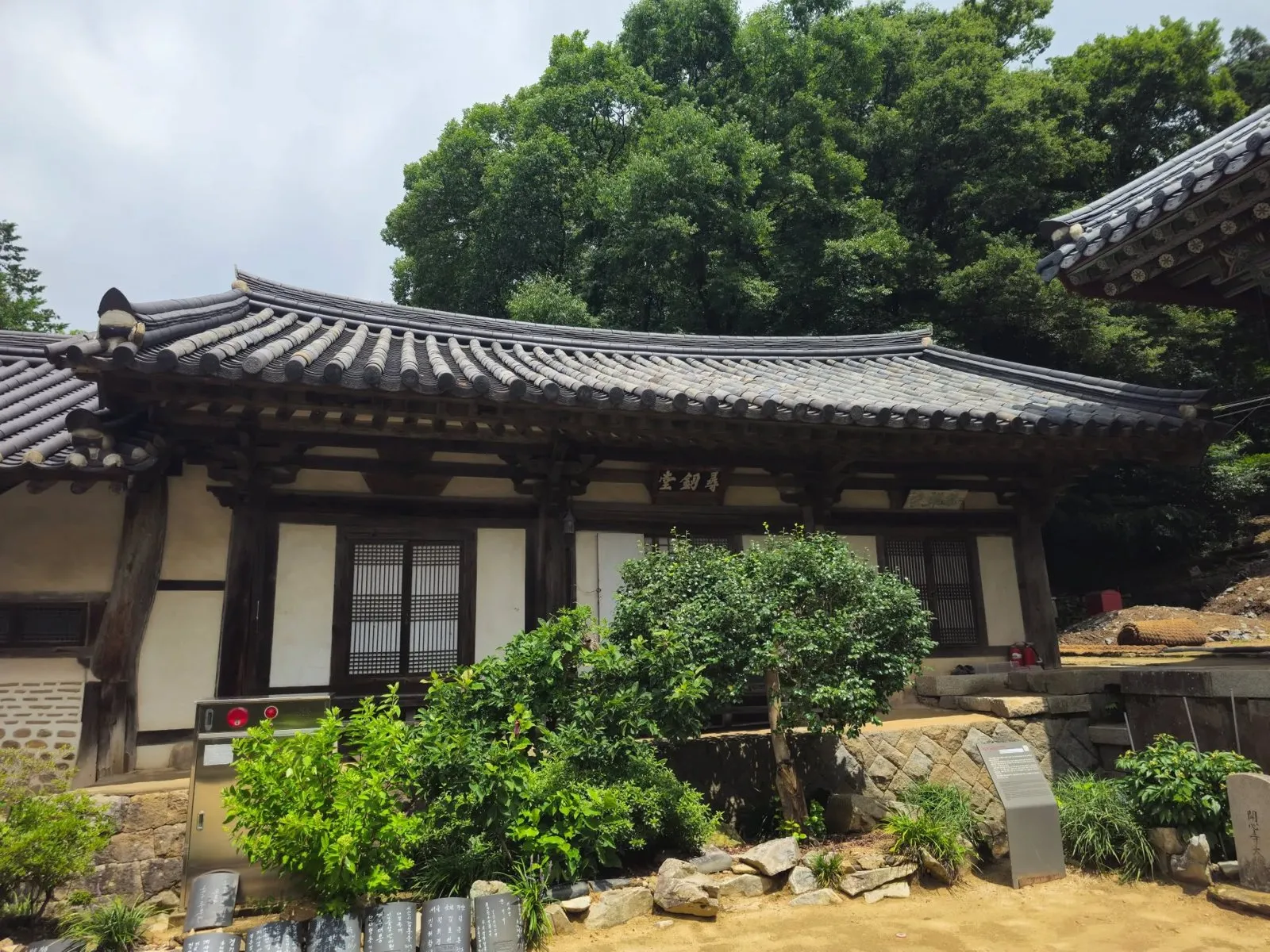 Simgeomdang Hall.
The board at Simgeomdang says it’s where monks live and meditate, and that the name means “hall of the sword of wisdom”. Nobody knows exactly when it was first built; it’s thought to date from around the 1484 rebuilding of the temple, was rebuilt again in 1731 and fully repaired in 1974. Originally the hall was just the right-hand section, under the higher roof; the lower section on the left was added later to enlarge it (board on site).
Two news outlets (Travie and Herald Kyungje USA) point out that its wooden pillars were left in their natural, curved shape.
More of the temple
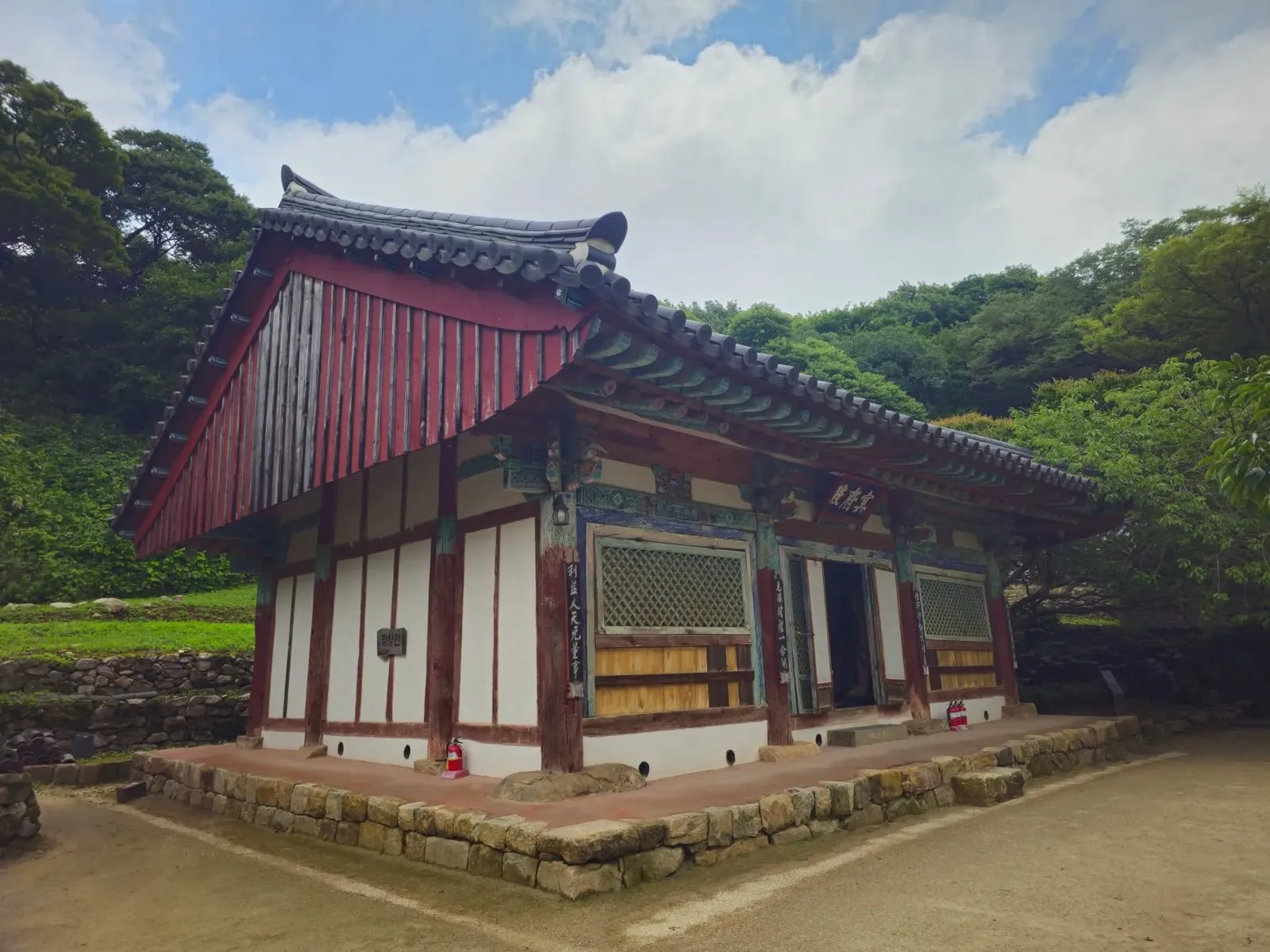 One of the smaller halls in the grounds.
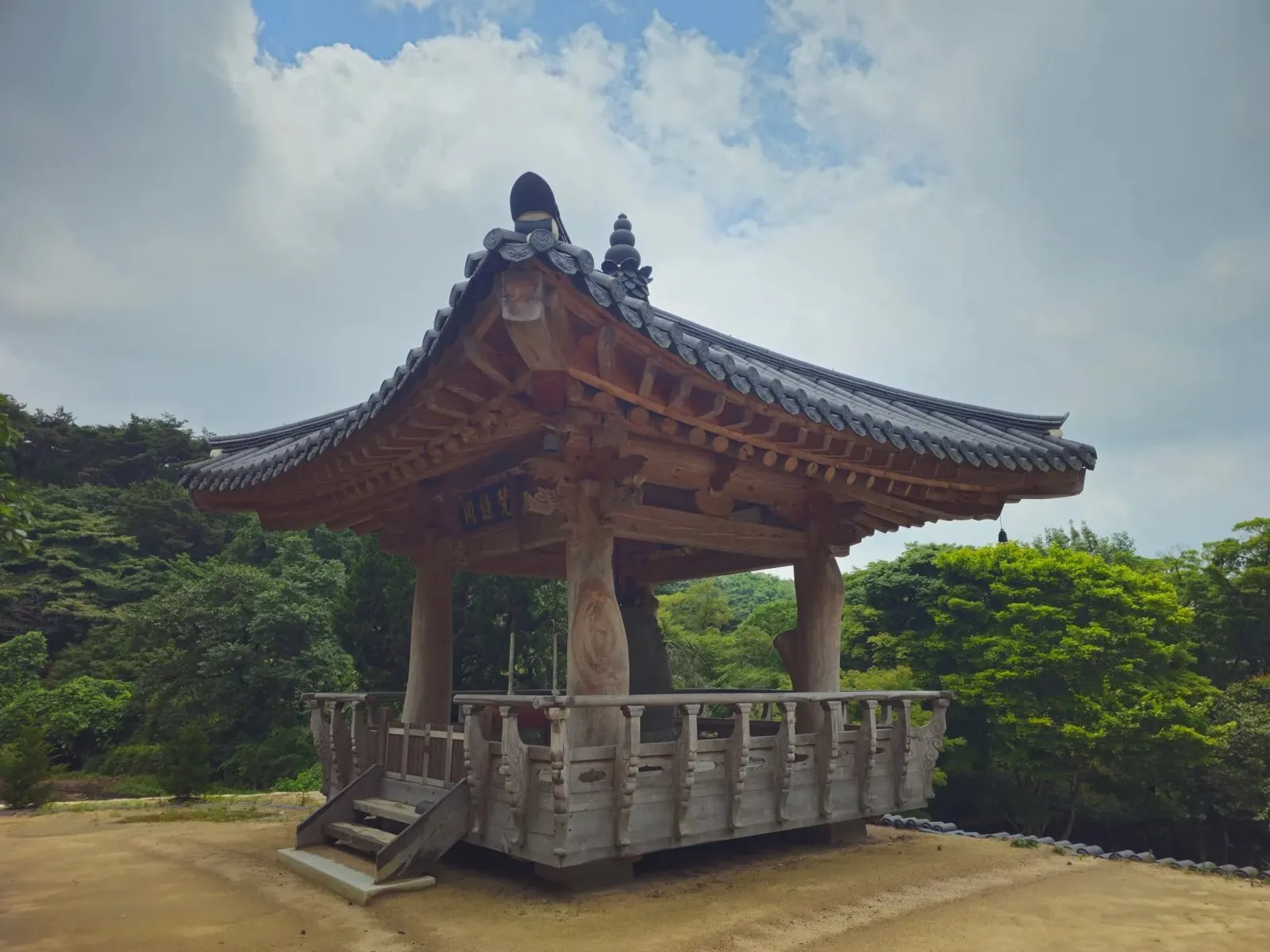 An open pavilion with pillars made from curved tree trunks.
Green cherry blossoms in spring
I went in July, outside blossom season. Gaesimsa is famous for its pale green cherry blossoms (청벚꽃), which bloom in the temple grounds each spring (Newsis, April 2026; Herald Kyungje USA, July 2025). In 2026, Newsis reported they were expected to be at their best around 20 April. Expect more visitors then (estimate).
Visiting
| Gaesimsa Temple (Seosan) | |
|---|---|
| Address | 321-86 Gaesimsa-ro, Unsan-myeon, Seosan, South Chungcheong Province (Seosan City listing; Travie) |
| Hours | Couldn’t confirm |
| Admission | Free when I visited (July 2026) |
| Parking | Free when I visited (July 2026) |
It’s a working temple. Keep your voice down near the halls.
How to get there
By car: I drove. There’s a big parking lot at the entrance. Don’t park there: take the road beside the parking lot, and you can get right up to the temple in one go. If you do park in the big parking lot, it’s a 15-minute walk up to the temple. Parking was free.
By public transport: check the live route in Naver Map (switched to English): search Gaesimsa Temple Seosan, or paste the Korean name, 개심사.
How to check buses in English: install Naver Map and switch it to English in its settings. When I checked it in October 2026, the English version showed bus routes, stop names and live arrival times (minutes and stops away) in English. Google Maps also gives public transport directions in Korea, but as of late September 2026 it still had no turn-by-turn walking or driving navigation here. Stuck? Call the Korea Travel Hotline: dial 02-1330 from a Korean mobile phone (+82-2-1330 from abroad). It has English-speaking staff.
Tips
- Drive past the big parking lot. Take the road beside it to get right up to the temple; otherwise it’s a 15-minute walk up.
- Read the boards. The boards in front of the main hall and Simgeomdang have English text.
- Spring is the busy season (estimate). The green cherry blossoms are likely to draw crowds; in summer, when I went, it was quiet.
Who it’s for
Likely to suit (estimate): people who want a quiet, old temple without crowds, history fans, and drivers exploring the Seosan area.
Sources
Checked against the official information boards for the main hall (Treasure No. 143) and Simgeomdang Hall at the temple (photographed July 2026: founding in 654, the 1475 fire and 1484 rebuilding, the Amitabha Buddha, Simgeomdang’s history), Seosan City’s tourism listing and a Travie article from January 2026 (address), the Encyclopedia of Korean Culture (the hanging painting), Newsis (April 2026) and Herald Kyungje USA (July 2025) for the green cherry blossoms, and Herald Kyungje USA and Travie for Simgeomdang’s pillars. The visit, the quiet, free admission and parking, and the parking tip are from my own trip.