Home / Gyeongsang / Chuwonjae (Miryang)
What to do in Miryang, Korea: Chuwonjae, home of a Joseon scholar
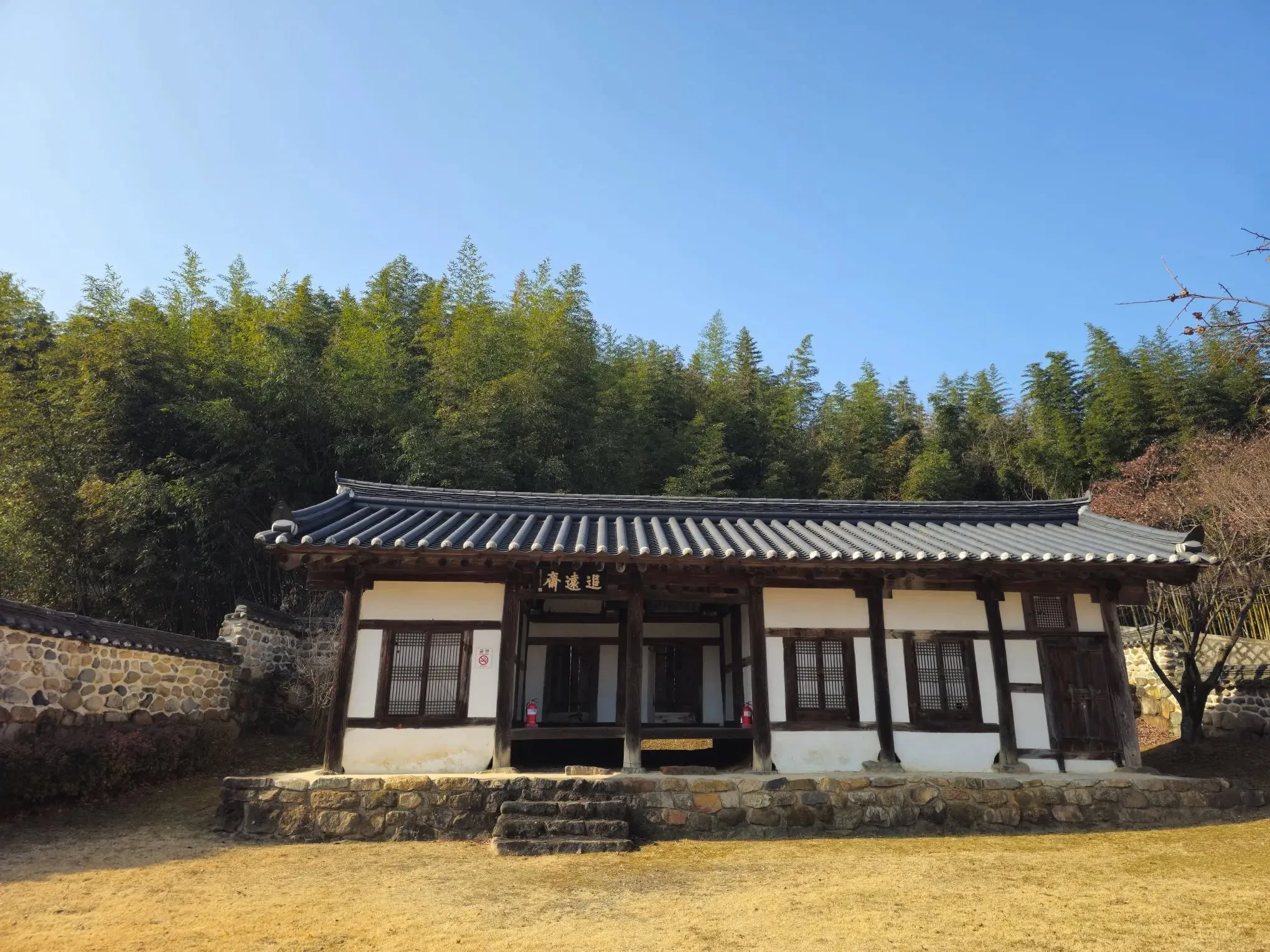
A quiet, free heritage house in Miryang on the site where the Neo-Confucian scholar Kim Jong-jik lived, rebuilt in 1810. Small but very well kept, with English signs and a big car park.
- Getting there
- 58 Chuwonjae-gil, Bubuk-myeon, Miryang, South Gyeongsang. I drove; the car park is big. For buses, check the live route in Naver Map (in English).
- Cost
- Free (Korea Tourism Organization)
- Time needed
- About 30 minutes (estimate)
- Best time
- Open every day, 09:00–18:00 (Korea Tourism Organization)
Tap any Korean name on this page to hear it. Prefer Naver Map? In the app (set to English), search Chuwonjae Miryang, or paste the Korean name:밀양 추원재
Short version: Chuwonjae (추원재) is a small ritual house in the countryside of Miryang, on the site where Kim Jong-jik (1431–1492), one of the leading Neo-Confucian scholars of the Joseon dynasty, lived with his father Kim Suk-ja. It was rebuilt in 1810 by Confucian scholars and the family’s descendants, and it’s a listed South Gyeongsang Province heritage site. I went on 18 January 2026. The building isn’t big, but it’s very well kept, and in that quiet spot I could feel the traces of the scholar who lived here. It’s free, and the car park is big.
Last checked: 26 October 2026. Opening hours, free admission and the address come from the Korea Tourism Organization’s listing (updated July 2026). The heritage designation date comes from the Korea Heritage Service. The family history, the 1498 purge and the 1810 rebuilding come from the two information boards on site (in Korean and English, photographed January 2026) and Miryang City’s blog. The big car park and my impressions are from my own visit. Tell me if anything has changed.
Father and son
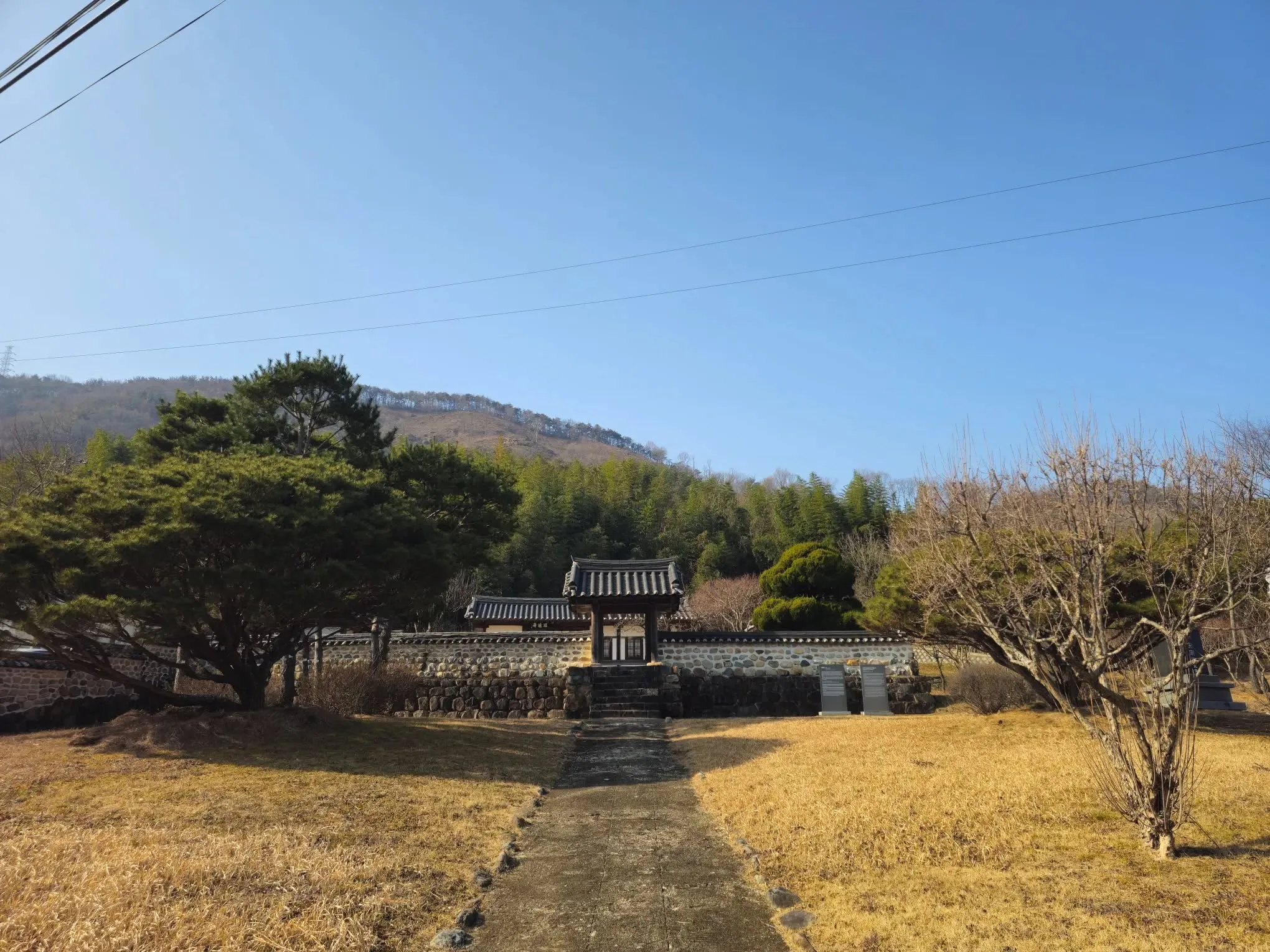 The path to the gate of Chuwonjae.
The boards on site tell the story. Kim Suk-ja (김숙자, 1389–1456) chose this site. Over some 40 years from 1423, his sons Kim Jong-seok, Kim Jong-yu and Kim Jong-jik, two daughters and grandchildren were born here, and among them were four passers of the higher civil service examination and eight of the lower ones (board on site).
The board traces a line of Neo-Confucian teaching (성리학) from Jeong Mong-ju to Gil Jae, then to Kim Suk-ja and Kim Jong-jik. It calls Kim Jong-jik (김종직) the leading figure of the sarim (사림), the Neo-Confucian literati. He passed the civil service examination in 1459 and rose to be Minister of Punishments (형조판서); after his death he was named Chief State Councillor, with the posthumous title Munchung-gong (board on site).
The Korea Tourism Organization calls the house Kim Jong-jik’s birthplace and says Jedae-ri, the village, was his mother’s family’s home. Its listing and Miryang City’s blog both date the house to 1389, the year Kim Suk-ja was born, while the board starts its 40 years of births here in 1423. I couldn’t confirm when the first house was built.
Purged after his death, rebuilt in 1810
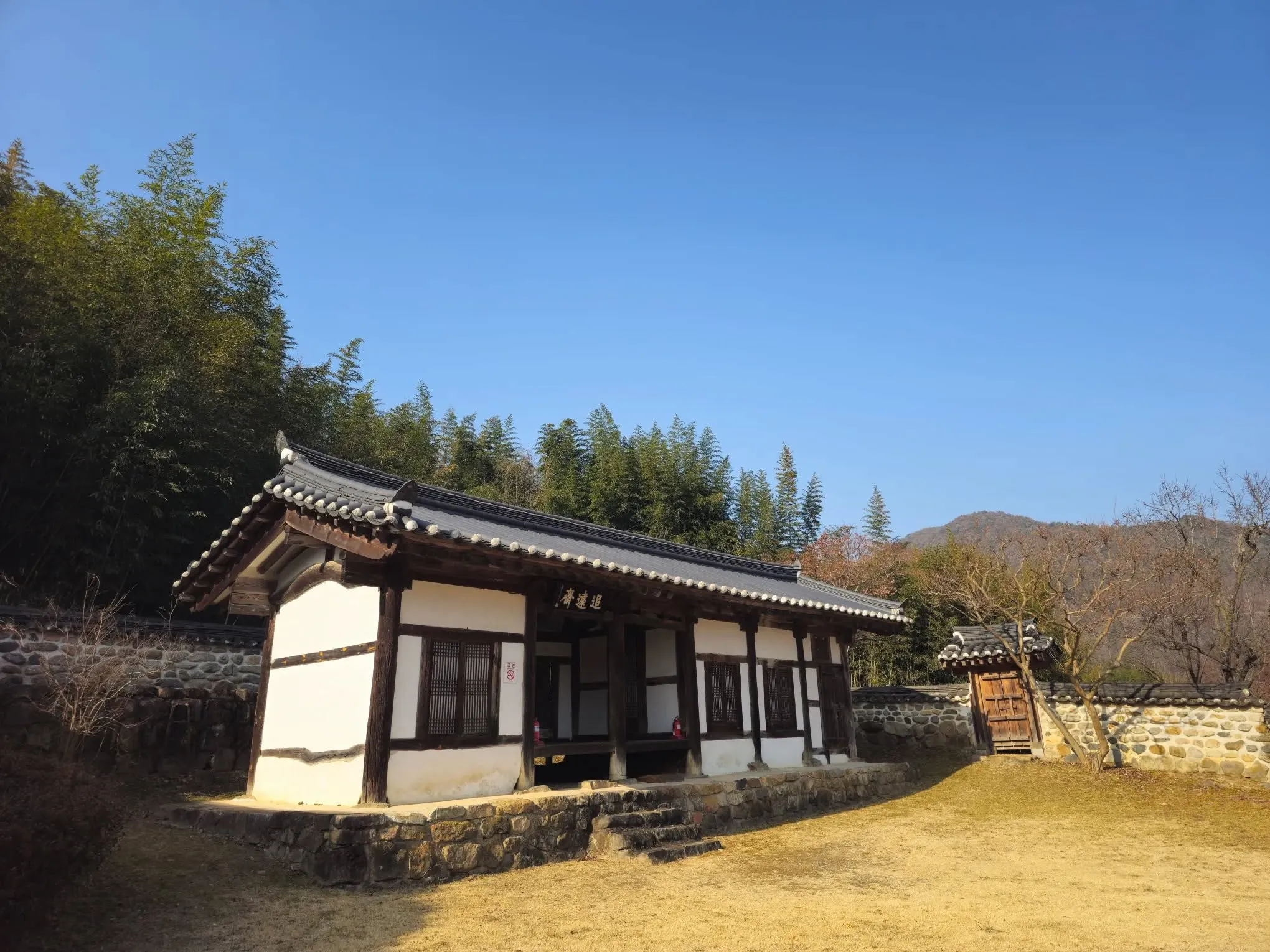 The house at an angle, with the bamboo grove behind.
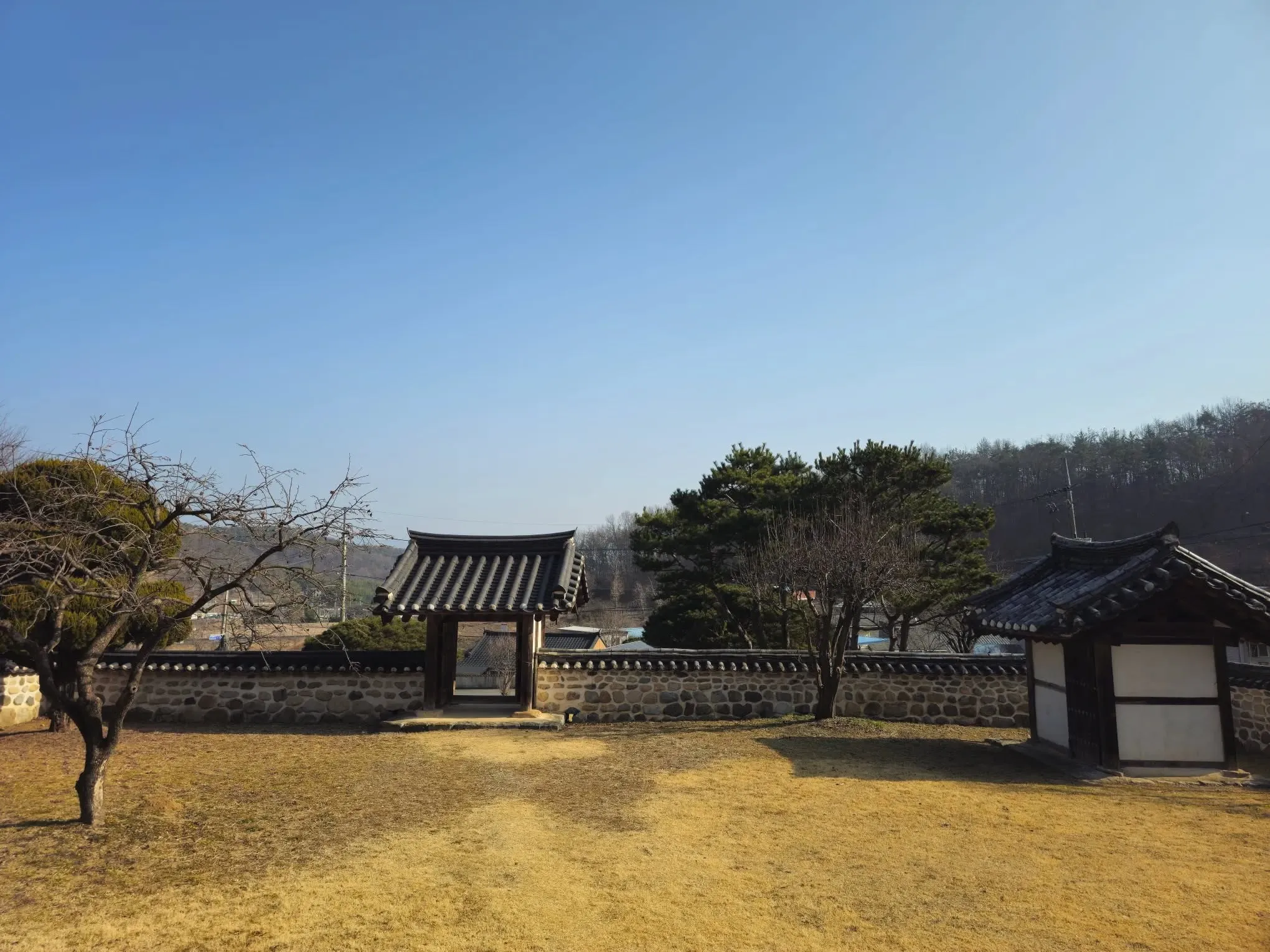 The yard, looking back towards the gate.
In 1498, the fourth year of King Yeonsangun, the Muo literati purge (무오사화) broke out and Kim Jong-jik was punished after his death with bugwan-chamsi (부관참시), which the board explains as digging up the grave, taking out the coffin, and cutting the body or cutting off the head to hang in the street (board on site). His descendants scattered and the house fell into ruin. In 1810, Confucian scholars and his descendants rebuilt it as a six-bay wooden house with a gabled tile roof and named it Chuwonjae: in the words of the board’s English text, “a ritual house for commemorating the virtues of ancestors” (board on site; Miryang City blog, 2023). It also carries the name Jeonsimdang (전심당), “bearer of Neo-Confucianism”: the Korean text on the board calls it the house’s name, and Miryang City’s blog says that name plaque hangs in the main hall. The board’s English text uses Jeonsimdang for the earlier house built by Kim Suk-ja.
The Korea Heritage Service lists it as South Gyeongsang Province Cultural Heritage Material, designated on 6 August 1986. The board on site says the descendants think of it as their home at heart, and calls it the holy place of the Seonsan (Ilseon) Kim clan.
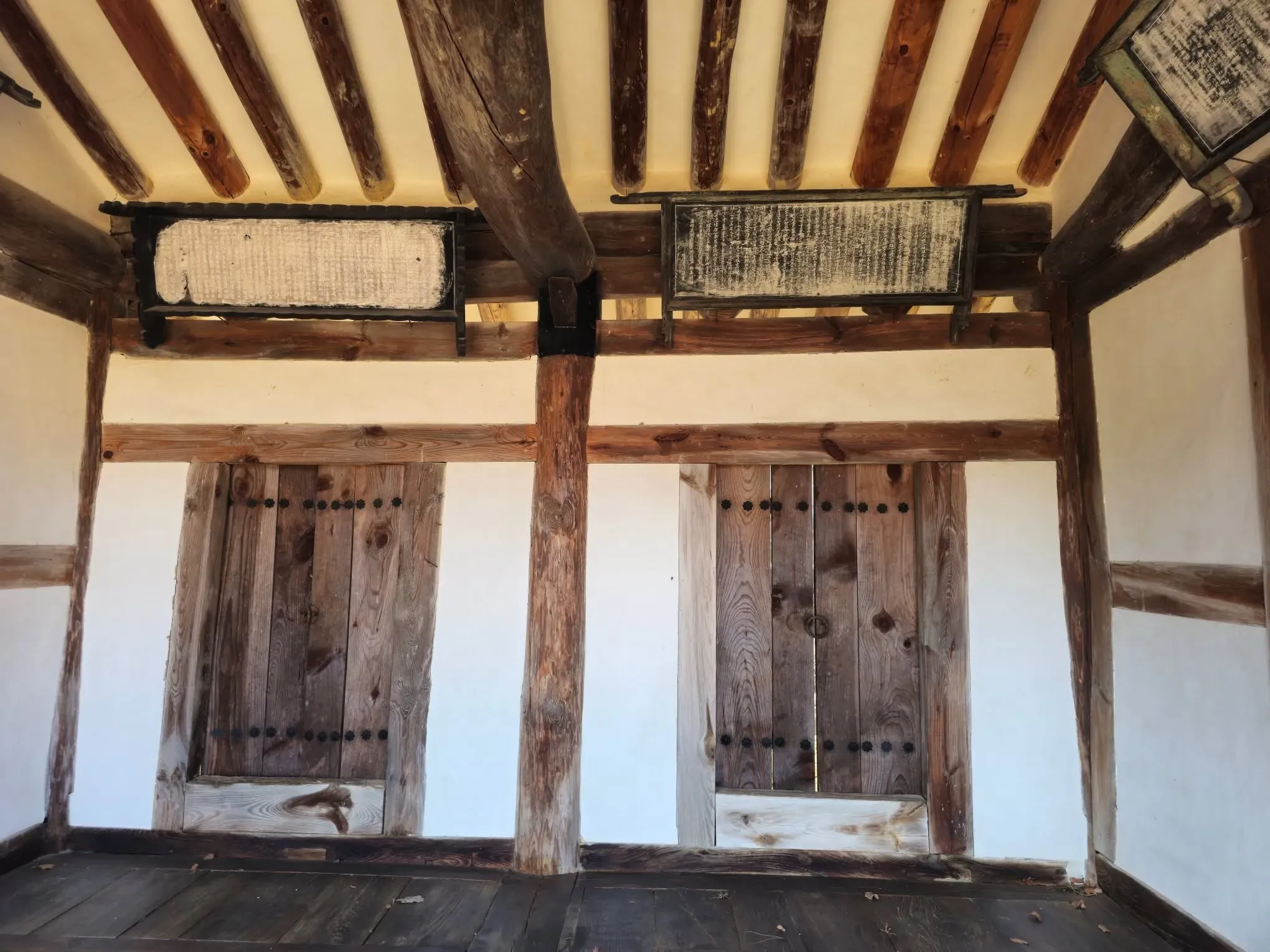 Inside the open hall: wooden doors and old plaques.
As I wrote after my visit, the building isn’t big, but it’s in very good condition. In that quiet, out-of-the-way spot I could feel the traces of the scholar who carried on Joseon Neo-Confucianism.
Visiting
| Chuwonjae (Miryang) | |
|---|---|
| Address | 58 Chuwonjae-gil, Bubuk-myeon, Miryang (경상남도 밀양시 부북면 추원재길 58) |
| Open | Every day, 09:00–18:00 (Korea Tourism Organization) |
| Admission | Free (Korea Tourism Organization) |
| Parking | A big car park when I visited (January 2026) |
| Signs | Two information boards at the gate, in Korean and English |
How to get there
By car: I drove. The car park is big.
By public transport: check the live route in Naver Map (switched to English): search Chuwonjae Miryang, or paste 밀양 추원재.
How to check buses in English: install Naver Map and switch it to English in its settings. When I checked it in October 2026, the English version showed bus routes, stop names and live arrival times (minutes and stops away) in English. Google Maps also gives public transport directions in Korea, but as of late September 2026 it still had no turn-by-turn walking or driving navigation here. Stuck? Call the Korea Travel Hotline: dial 02-1330 from a Korean mobile phone (+82-2-1330 from abroad). It has English-speaking staff. More in our guide to taking buses in Korea in English.
Tips
- Read the boards first. Both boards by the gate have an English section, so you can get the story before you go in.
- Search with “Miryang”. There’s another house called Chuwonjae in Bonghwa, North Gyeongsang, so don’t mix them up (my own tip; Bonghwa County’s SNS supporters have written about that one too). Put Miryang in front of the name (or paste 밀양 추원재) so your map app finds this one.
Who it’s for
Likely to suit (estimate): anyone interested in Joseon history or Confucian scholars, people who like quiet traditional houses, and anyone passing through Miryang with half an hour to spare.
Sources
Checked against the Korea Tourism Organization’s listing (updated 3 July 2026: the address, open every day 09:00–18:00, free, parking available, called Kim Jong-jik’s birthplace, dated to 1389, Jedae-ri as his mother’s family’s village), the Korea Heritage Service’s heritage portal (South Gyeongsang Province Cultural Heritage Material, designated 6 August 1986, the site where Kim Suk-ja settled and Kim Jong-jik spent his life, with their life dates), the two information boards on site (in Korean and English, photographed January 2026: children and grandchildren born here over some 40 years from 1423, the sons and the examination passers, the line of teaching from Jeong Mong-ju, Kim Jong-jik’s career and posthumous honours, the 1498 Muo purge and his posthumous punishment, the 1810 rebuilding as a six-bay gabled tile-roofed house, the names Chuwonjae and Jeonsimdang, the holy place of the Seonsan (Ilseon) Kim clan) and Miryang City’s blog (October 2023: No. 159, dated to 1389, the decay after 1498, the 1810 rebuilding, the Jeonsimdang plaque in the main hall). The big car park and my impressions are from my own visit.