Home / Gangwon / Samtan Art Mine
Descendants of the Sun filming location: Samtan Art Mine, Jeongseon
A closed coal mine in the Jeongseon mountains turned into an art complex, and a Descendants of the Sun filming location. Prices, hours, closing days and tips.
- Getting there
- In the mountains above Gohan-eup, Jeongseon County, Gangwon Province. I drove; Jeongseon County's English page says parking is free.
- Cost
- Adults ₩13,000; teenagers ₩11,000 (Korea Tourism Organization; Jeongseon County's English page gives ₩10,000 to ₩13,000). Preschoolers (5 and under) free (Korea Tourism Organization).
- Time needed
- About 1.5 to 2 hours (estimate)
- Best time
- Opens 09:00 (in winter 09:30 per KTO; 10:00 on weekdays per Jeongseon County's English page). Closed on Mondays, and also on Tuesdays according to most official listings; call before you go.
Tap any Korean name on this page to hear it. Prefer Naver Map? In the app (set to English), search Samtan Art Mine, or paste the Korean name:삼탄아트마인
Short version: Samtan Art Mine is an old coal mine high in the mountains of Jeongseon County, Gangwon Province, turned into an art complex. The mine closed in 2001, and since 2013 its buildings, rail yard and tunnels have held galleries, a museum of primitive art and outdoor pieces among the old machinery. The drama Descendants of the Sun (2016) was filmed here. Admission is ₩13,000 for adults. In my view it stays with you longer than you’d expect.
Last checked: 9 November 2026. Prices, hours and closing days come from Jeongseon County’s English tourism page and the Korea Tourism Organization (KTO); they don’t all agree on hours and closing days, so I’ve said where they differ. The history comes from the county’s pages and Korean and English news reports. My visit was in September 2025, so call before you go. Tell me if anything has changed.
What it is
The Samcheok Tanjwa coal mine here opened in the 1960s (Jeongseon County and the Korea Times give 1964; the JoongAng Daily and Pressian give 1962) and shut in 2001 (JoongAng Daily, 2013; Korea Times, 2018; Pressian, 2024). Jeongseon County’s tourism page says the site reopened in 2013 as Korea’s first “art mine”. It once employed thousands of miners: about 3,000 according to Jeonbuk Ilbo (2016) and the JoongAng Daily (2013), about 2,700 in the 1980s according to Pressian (2024). The county’s English page describes it as an industrial heritage site that reuses the mine buildings, machines and records of the miners’ lives, and says it’s divided into the Art Center (the main building), an outdoor Memory Garden and the Rail by Museum.
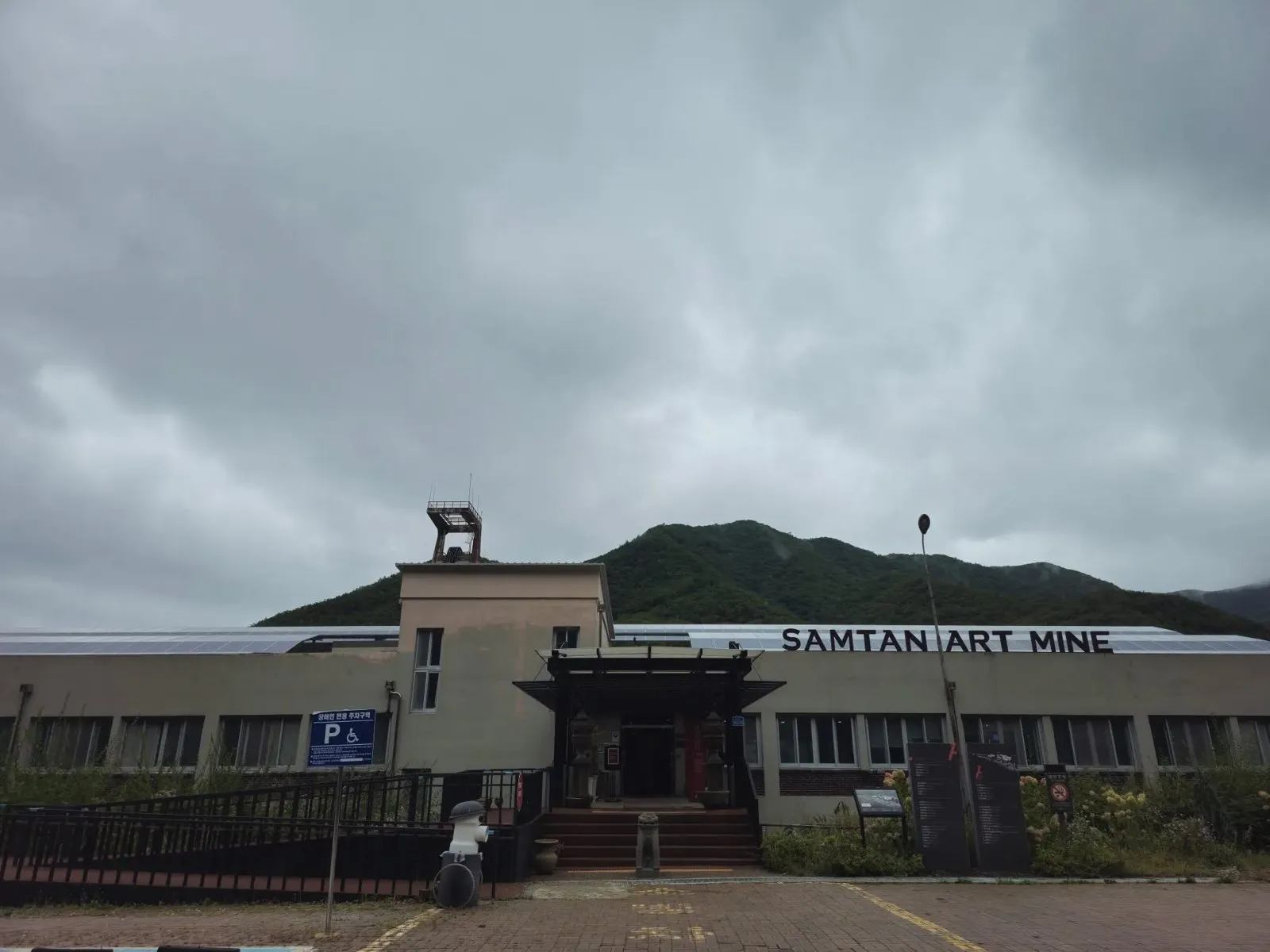
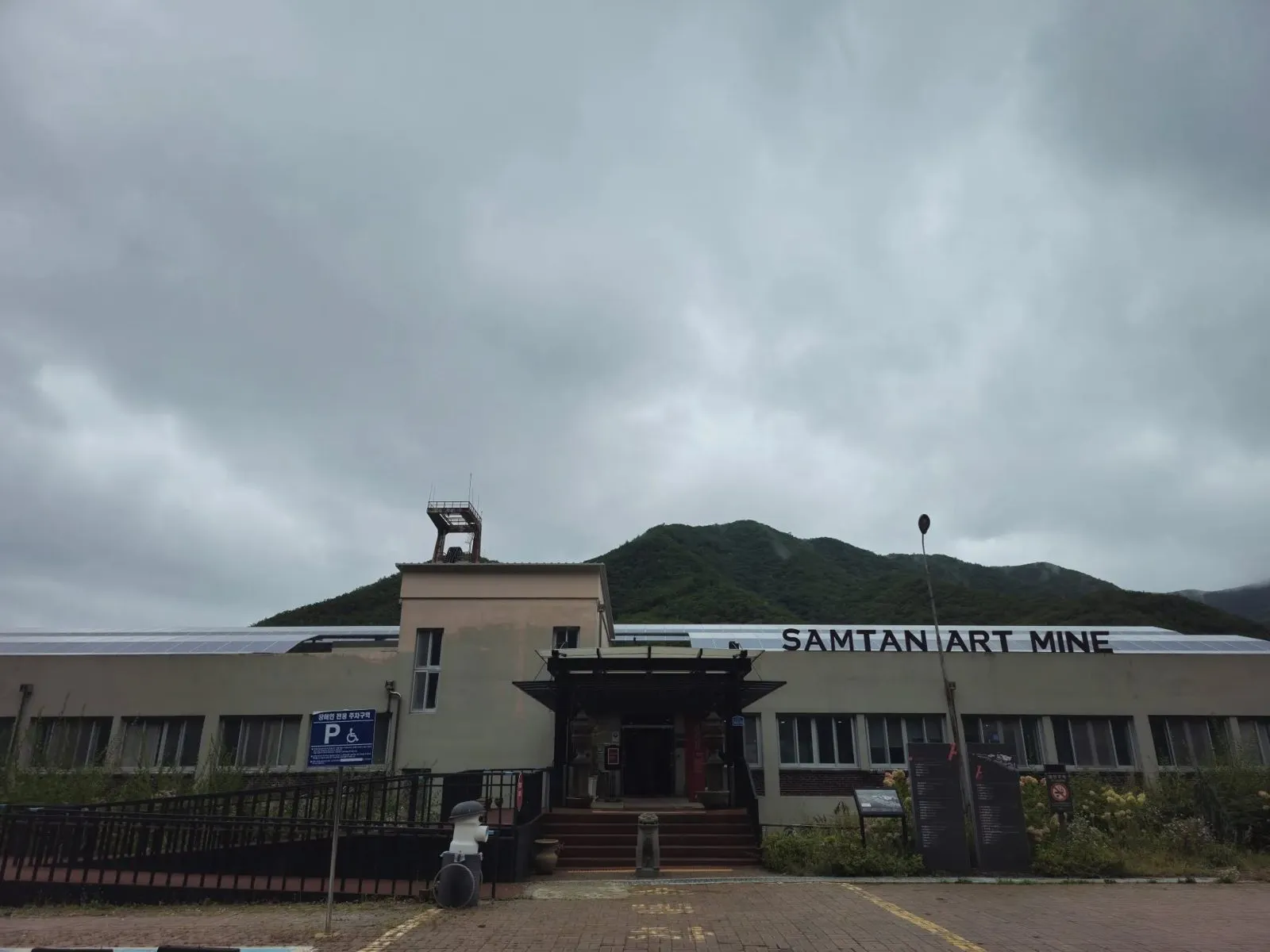 The Samtan Art Center seen from the car park, with the old mine tower on the roof.
The county and the Korea Times (2018) both say it holds more than 100,000 artworks collected from about 150 countries. News reports put it at over 800 metres above sea level, and the mountain air felt cool when I visited.
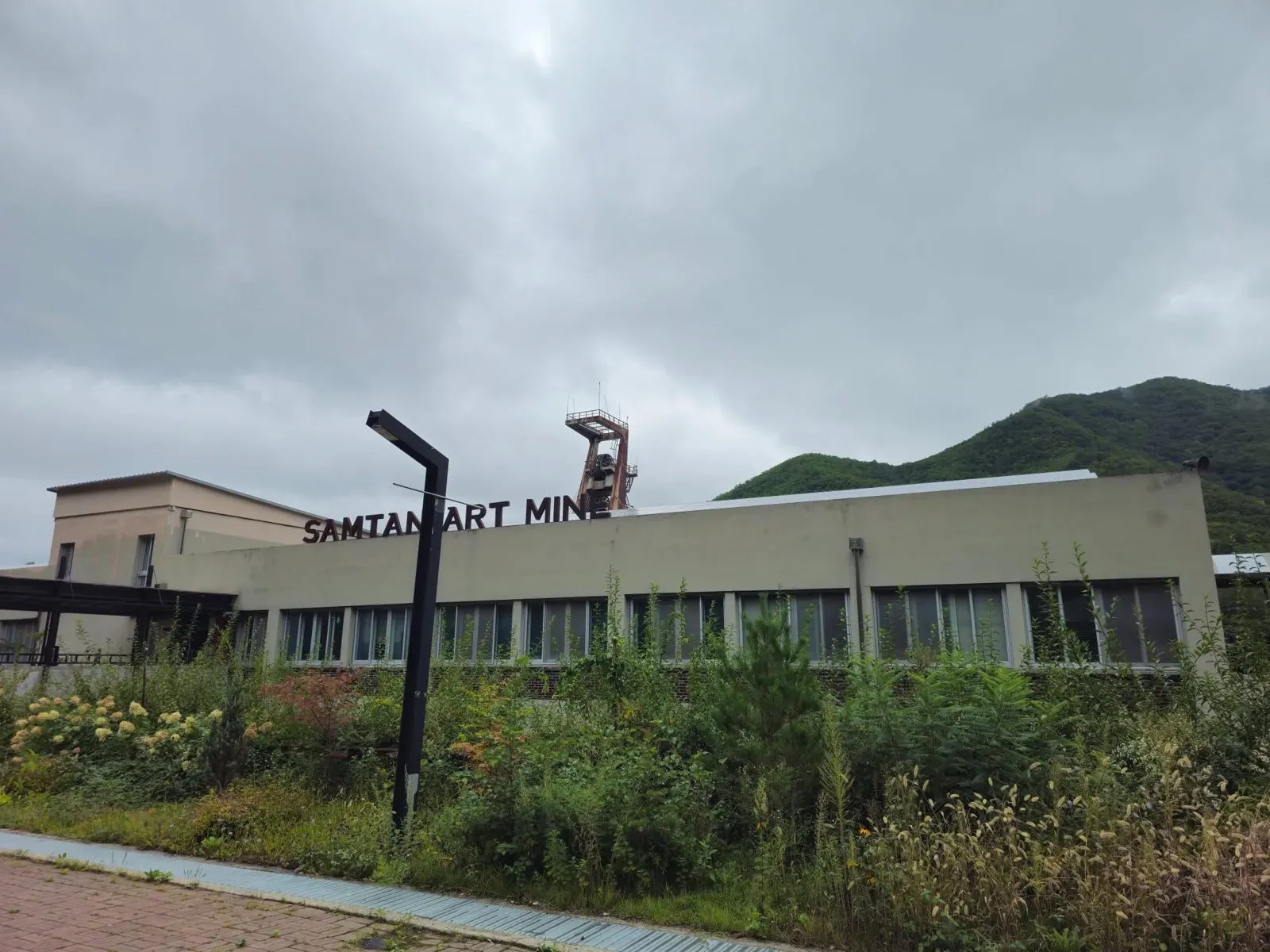 The Art Center from the side.
Descendants of the Sun
Samtan Art Mine is a filming location for the KBS drama Descendants of the Sun (2016), starring Song Joong-ki and Song Hye-kyo. The Korea Times (2016 and 2018) and Jeonbuk Ilbo (2016) both report that the drama was filmed here. The drama’s other main location in the area was a former mine in nearby Taebaek (Korea Times, 2016; Tenasia, 2016).
Inside and around
The bilingual site map at the entrance (photographed on my visit) puts the info desk on the 4th floor, with galleries, the Samtan Museum and the Contemporary Art Museum CAM on the floors below, and outside a Cave Gallery, the Rail by Museum, a restaurant, an Origin Art Museum and a Memorial Garden (the county calls it the Memory Garden). The map has English names for everything.
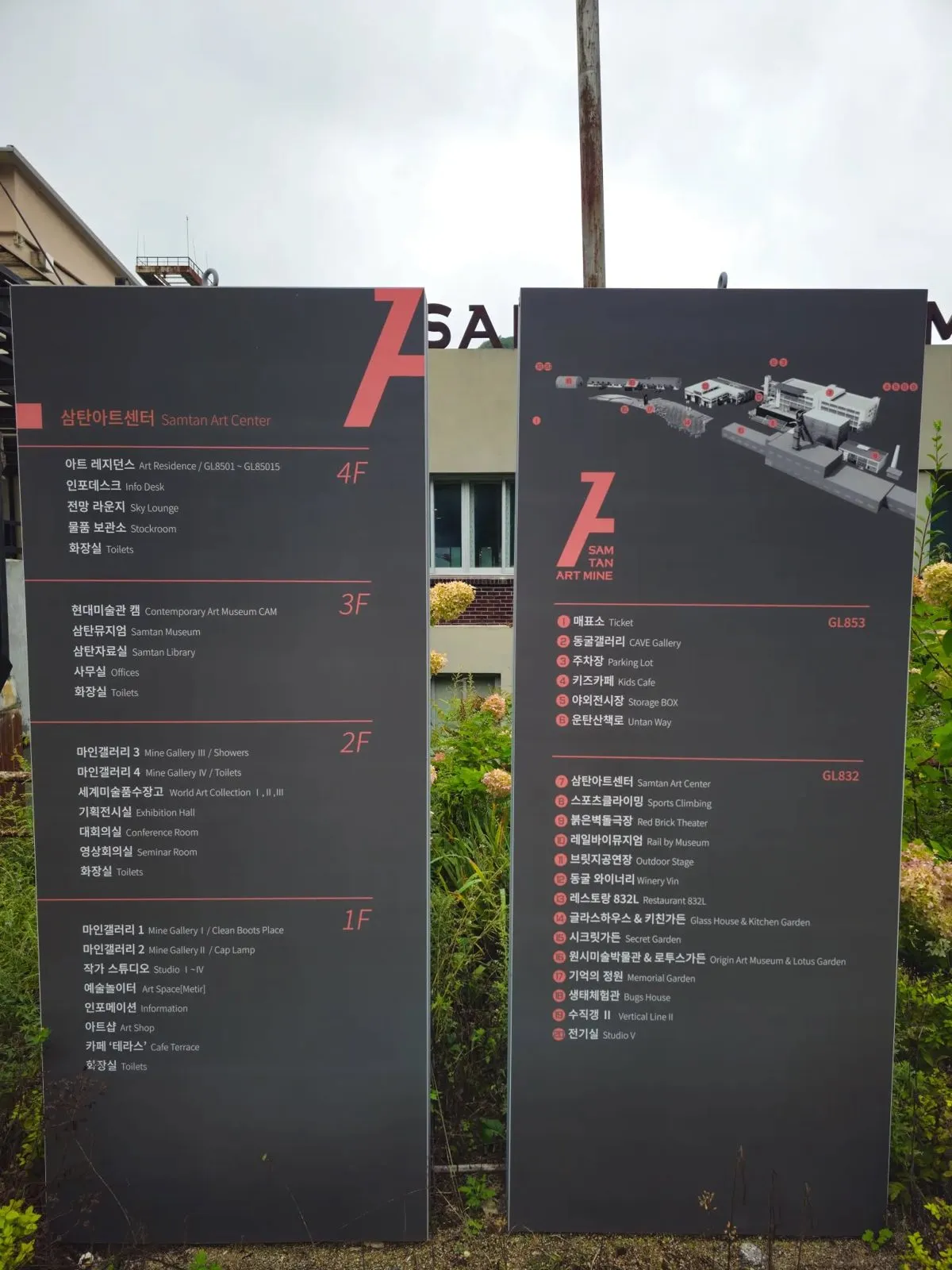 The bilingual site map at the entrance.
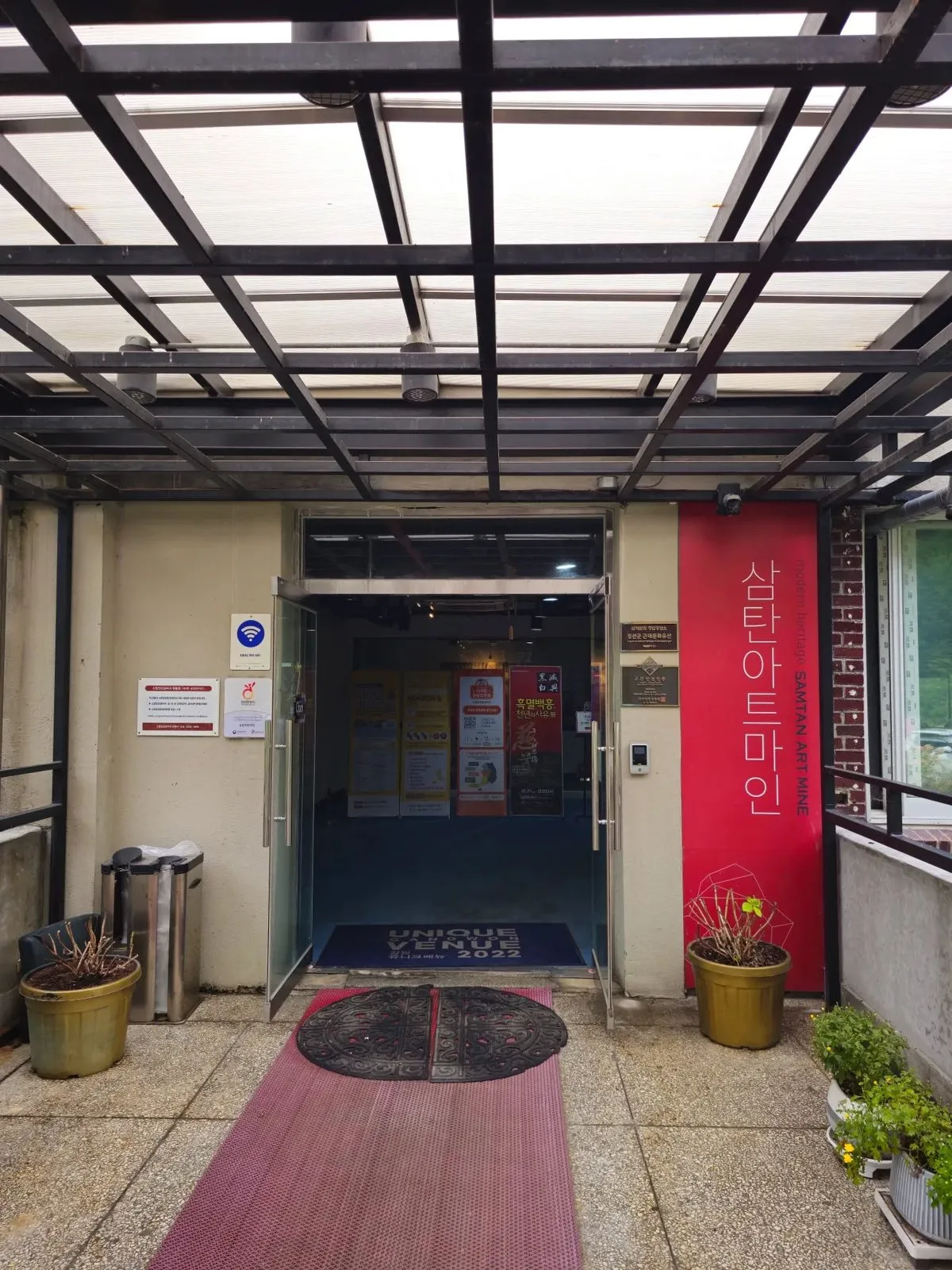 The entrance to the Art Center.
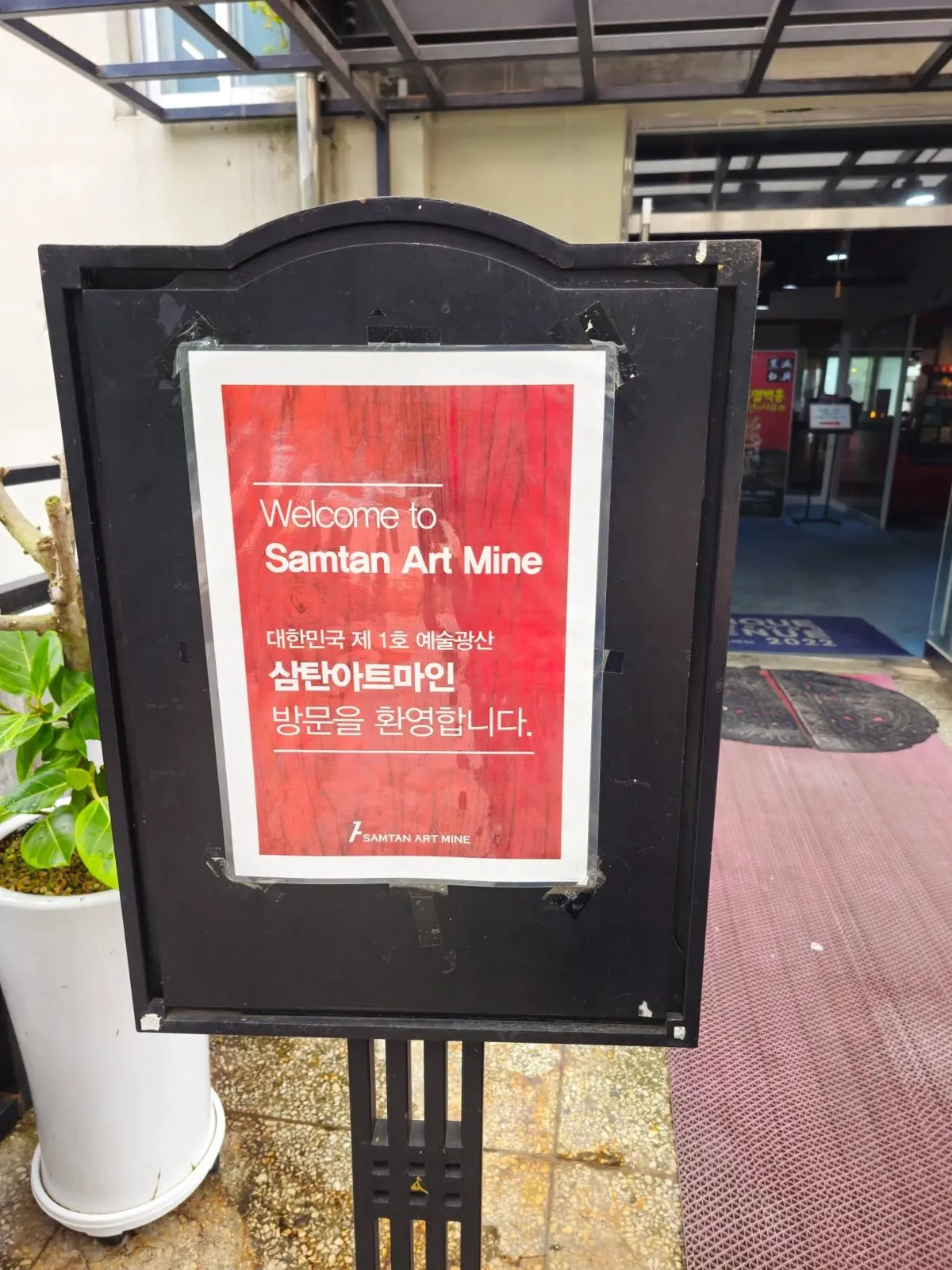 The welcome sign calls it Korea’s first art mine.
Exhibitions change. A Korean news report (Pressian, August 2025) gives Black Perishes, White Prospers: A Thousand Years of Contemplation as that summer’s contemporary art exhibition at the Contemporary Art Museum CAM, the Mine Gallery and other spaces, and a poster for it was still up by the entrance when I visited in September.
Outside, old mine equipment is left among the trees. A bright yellow mine locomotive stands in front of a gated tunnel mouth, and over the tunnel is a hand-lettered sign: 아빠! 오늘도 무사히, “Dad! Stay safe today, too”.
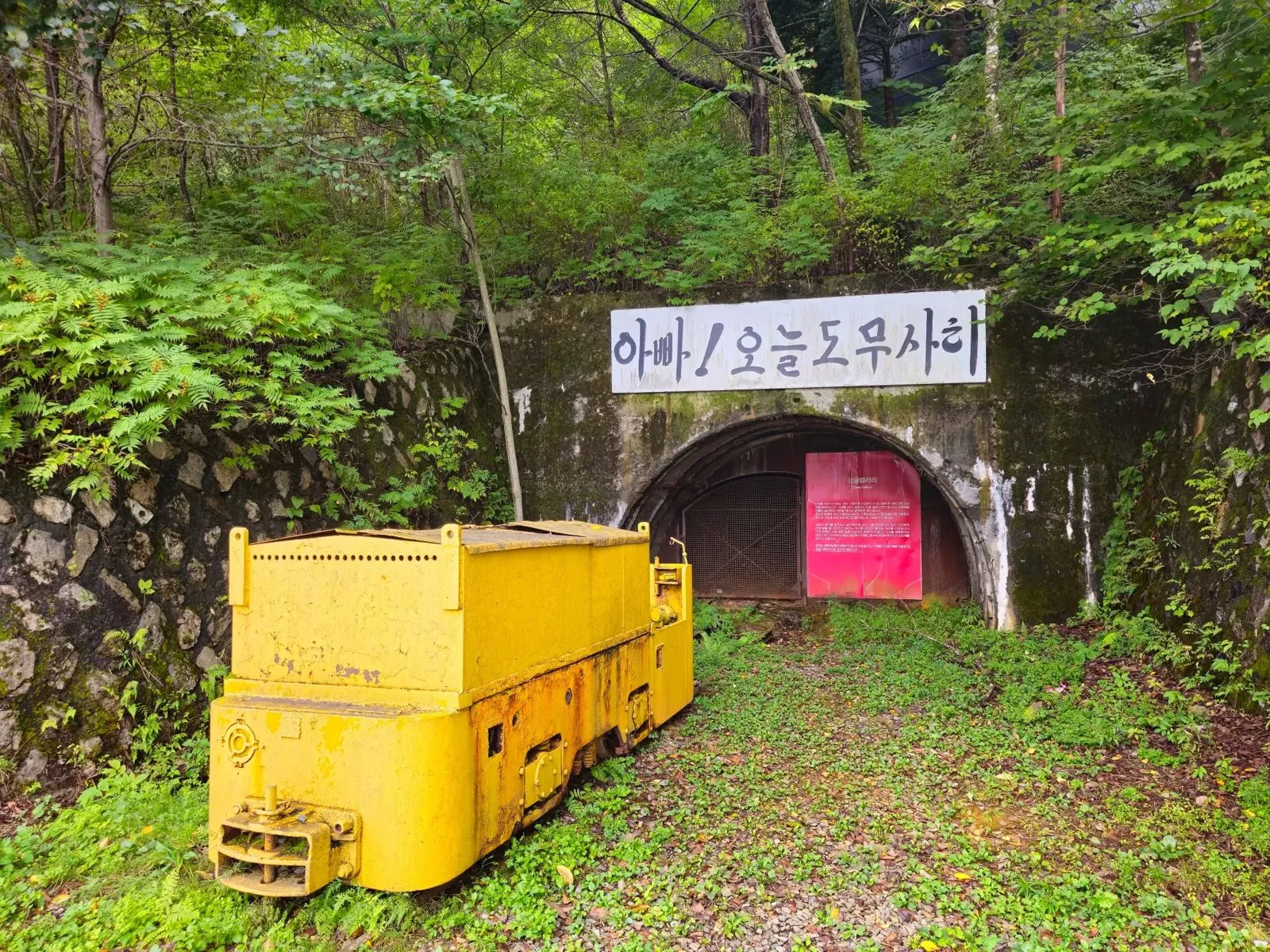 “Dad! Stay safe today, too”, over an old tunnel entrance.
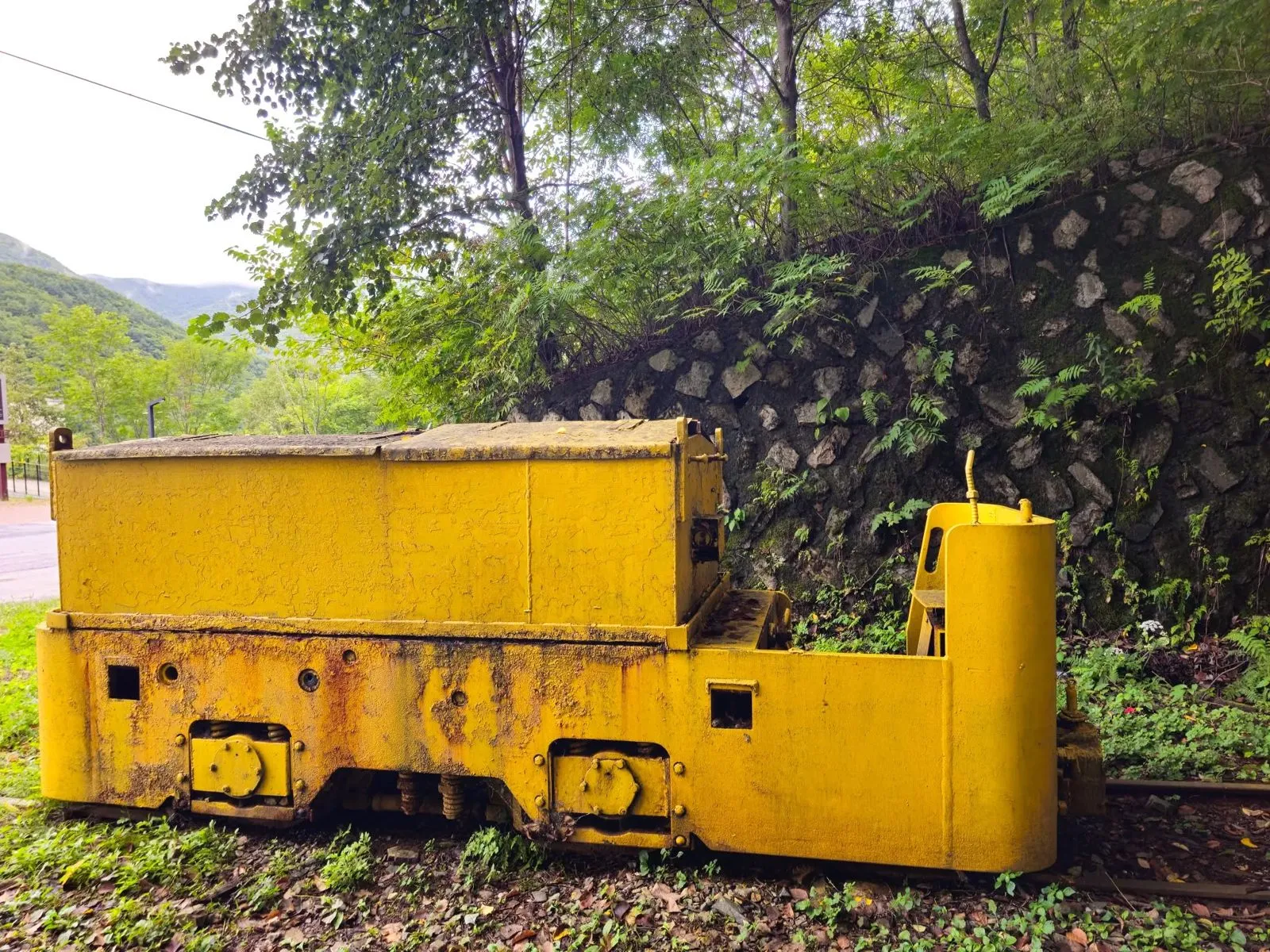 A mine locomotive left among the trees.
The pink panel at the tunnel (Korean only) calls it the Cave Gallery. It says this was an inclined shaft, running level for about 500 metres and then sloping down, and that before opening a new tunnel, miners held a rite for the mountain spirit, a custom it says is still kept before digging today. It describes the tunnel now as a cave gallery and mine experience hall.
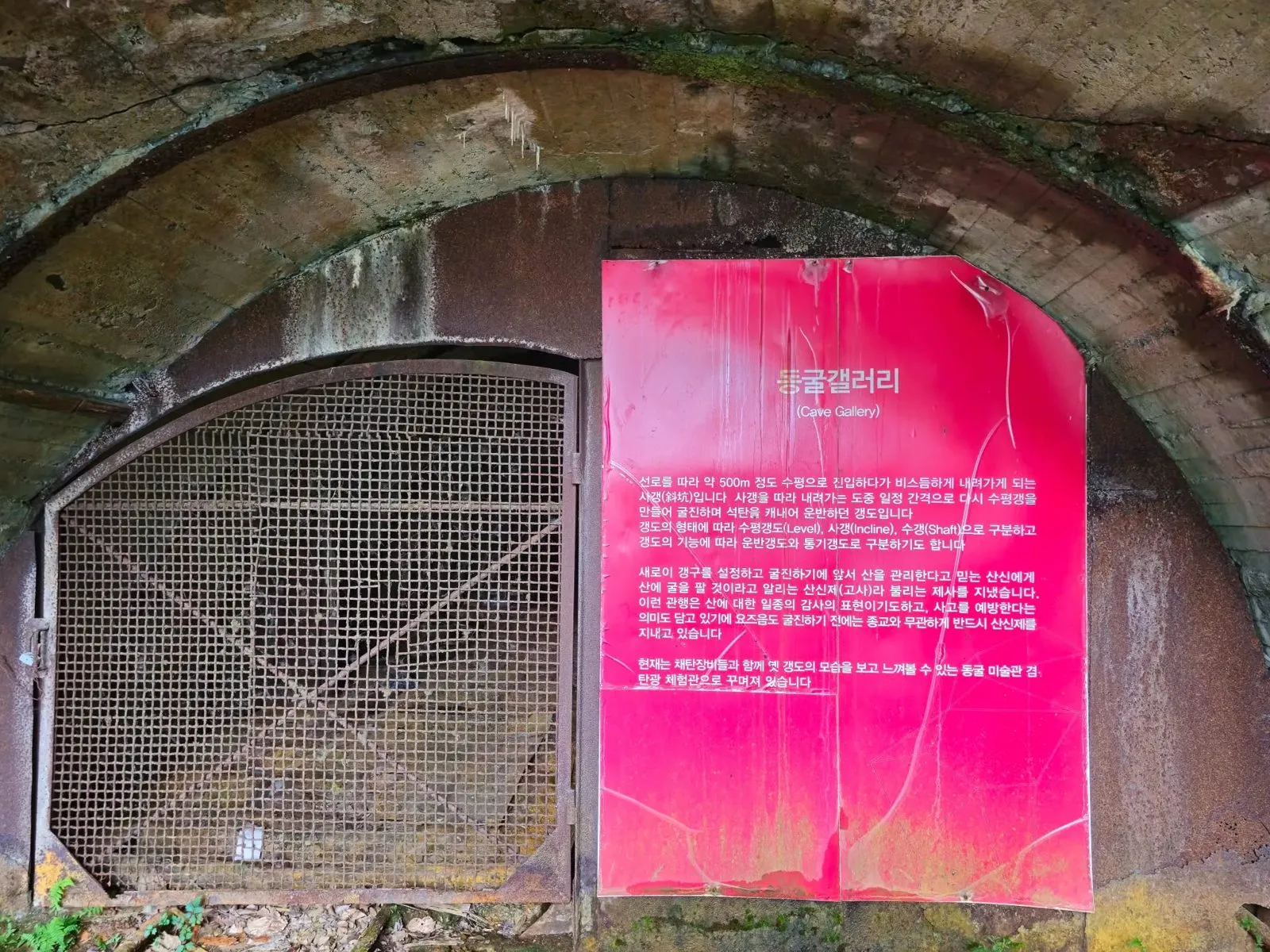 The Cave Gallery panel.
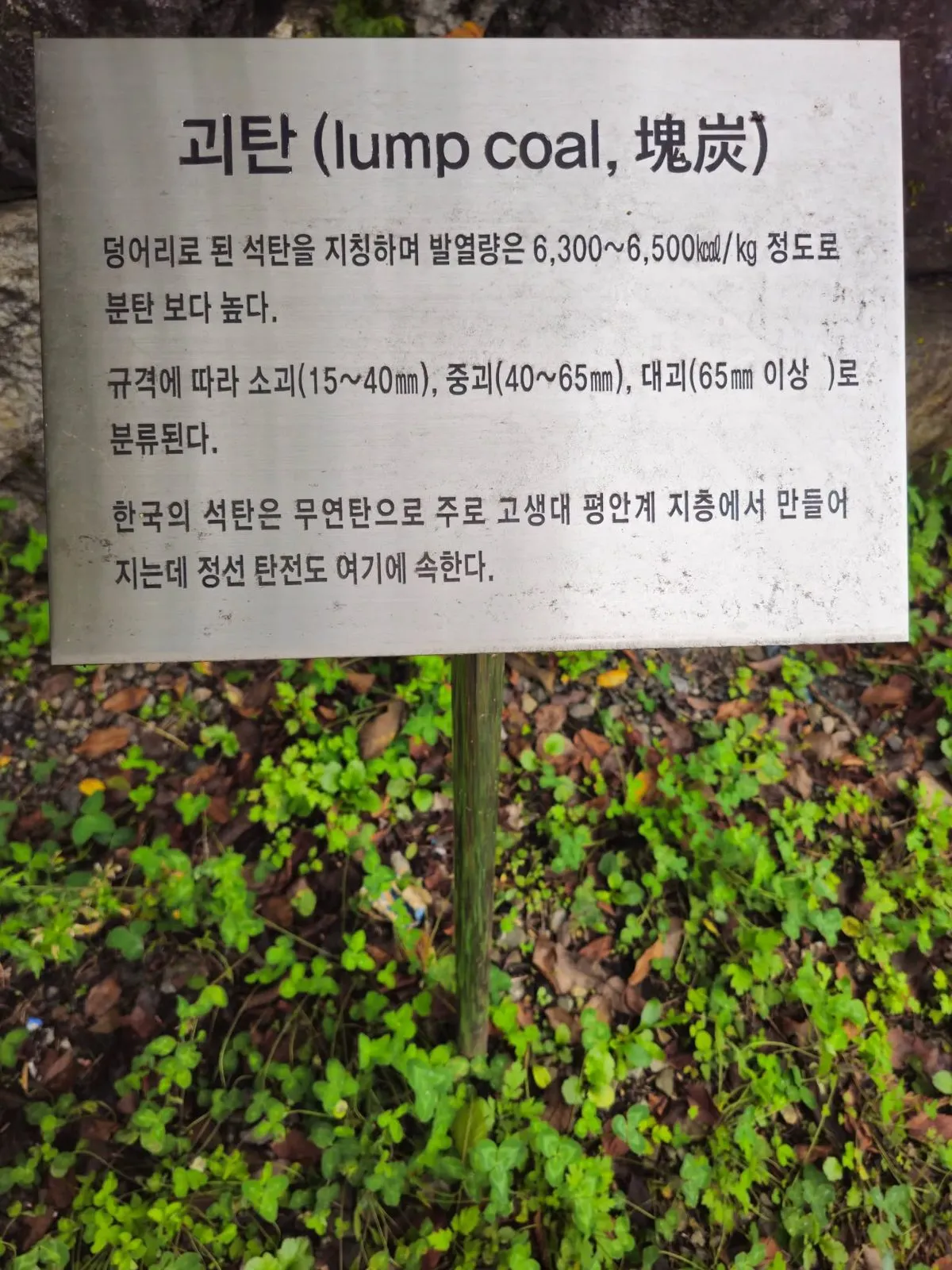 Small signs explain the coal itself.
From up here, the view out towards Gohan, with mountain ridges fading into the sky, is very good, and the cool air and the faint sounds around you are good for clearing your head.
Visiting
| Samtan Art Mine | |
|---|---|
| Admission | Adults ₩13,000; teenagers ₩11,000 (KTO; Jeongseon County’s English page gives ₩10,000 to ₩13,000). Preschoolers (5 and under) free (KTO). Seniors (65+) ₩9,100 (KTO). Children’s prices differ between sources. |
| Hours | KTO: 09:00 to 18:00 from April to November, 09:00 to 19:00 in the summer peak, 09:30 to 17:30 from December to March. Jeongseon County’s English page: winter weekdays 10:00 to 17:00, winter weekends 09:30 to 17:30, peak season (18 July to 23 August) 09:00 to 19:00. |
| Closed | Mondays and Tuesdays, 1 January, and Seollal and Chuseok days (KTO). The county’s English page lists Mondays only, with no closing days from 18 July to 23 August. |
| Parking | Free (Jeongseon County’s English page) |
| Rules | No pets; no food or drink (Jeongseon County’s English page) |
| Address | 1445-44 Hambaeksan-ro, Gohan-eup, Jeongseon-gun, Gangwon Province |
Because the sources disagree on days and hours, call before a special trip: the Korea Travel Hotline (02-1330 from a Korean mobile, +82-2-1330 from abroad) has English-speaking staff.
How to get there
By car: I drove. It’s on Hambaeksan-ro, in the mountains above Gohan-eup; search Samtan Art Mine in Naver Map. The county’s English page says parking is free.
By public transport: check the live route in Naver Map: search Samtan Art Mine, or paste the Korean name, 삼탄아트마인.
How to check buses in English: install Naver Map and switch it to English in its settings. When I checked it in October 2026, the English version showed bus routes, stop names and live arrival times (minutes and stops away) in English. Google Maps also gives public transport directions in Korea, but as of late September 2026 it still had no turn-by-turn walking or driving navigation here. Stuck? Call the Korea Travel Hotline: dial 02-1330 from a Korean mobile phone (+82-2-1330 from abroad). It has English-speaking staff.
Tips
- Check the day. Most official listings say it’s closed on Mondays and Tuesdays.
- Bring a layer. It’s over 800 m up (news reports), and the air felt cool when I went.
- Walk outside too. The tunnel, the locomotive and the view are all outdoors.
- Use the site map. It’s in English and Korean and shows where everything is.
Who it’s for
Likely to suit (estimate): Descendants of the Sun fans, people who like industrial history or unusual art spaces, and travellers driving through the Gangwon mountains who want something quieter than the big sights.
Sources
Checked against Jeongseon County’s English tourism page (address, layout, 1964 opening, 2013 reopening, the 100,000 artworks, price range, hours, Monday closing, free parking, rules), the Korea Tourism Organization’s listings (prices, seasonal hours, closing days), the Korea Times (2016 and 2018: Descendants of the Sun, 100,000 artworks from 150 countries, 1964 and 2001), and Korean news reports from Jeonbuk Ilbo (2016: Descendants of the Sun, the Rail by Museum and 3,000 miners), Tenasia (2016: the Taebaek set), Pressian (2024: 1962, closure in 2001, the altitude and about 2,700 miners; August 2025: the exhibition), OSEN (2016: KBS), plus the site map and panels I photographed on my visit. The JoongAng Daily (2013) also gives 1962, closure in 2001, about 3,000 miners, the altitude and the rail yard that became the Rail by Museum.