Home / Gangwon / Jungdo Stone-piled Tombs, Chuncheon
Jungdo Stone-piled Tombs, Chuncheon: ancient tombs on a quiet lawn
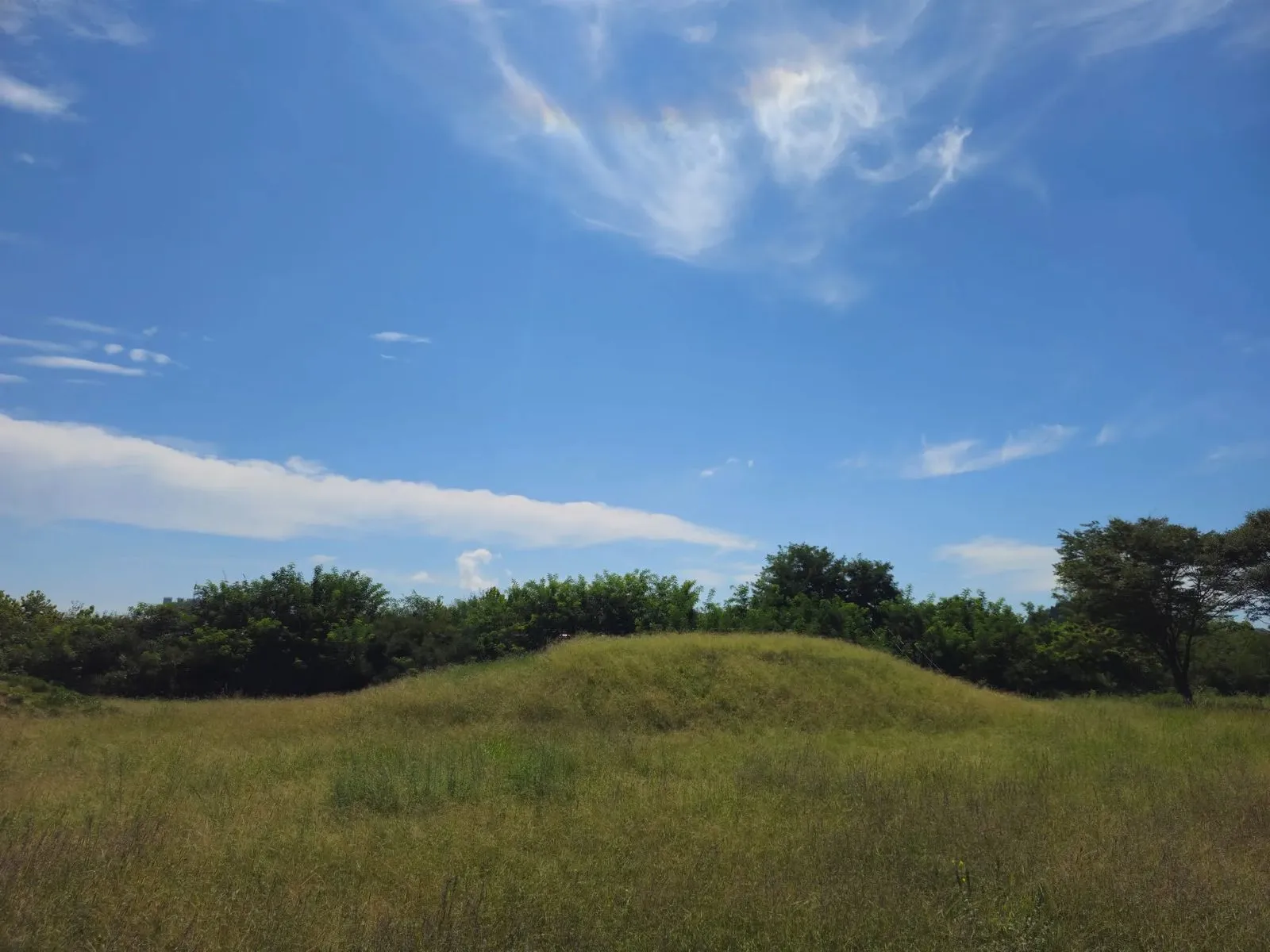
Two ancient stone-piled tombs and three dolmens on a quiet lawn on Jungdo island, Chuncheon. Free entry and parking; my pick over Nami Island.
- Getting there
- By car: there's a well laid-out free car park. For buses, check the live route in Naver Map (in English).
- Cost
- Free (I paid nothing on my visit). Parking was free too.
- Time needed
- 30 minutes to 1 hour (estimate), longer if you bring a mat
- Best time
- Daytime, in clear weather. It's an outdoor lawn.
Tap any Korean name on this page to hear it. Prefer Naver Map? In the app (set to English), search Jungdo Stone-piled Tombs Chuncheon, or paste the Korean name:춘천 중도 적석총
Short version: On Jungdo, an island in Uiam Lake in Chuncheon, two ancient stone-piled tombs and three dolmens sit on a wide, quiet lawn with paved paths. When I visited there weren’t many people. If you’re in Chuncheon and want somewhere calm to walk or sit on a mat, I’d pick it over Nami Island (my view).
Last checked: 12 November 2026. The designation was checked against the Korea Heritage Service’s record and Chuncheon City’s list of designated heritage. The history comes from the two information boards at the site, which I photographed, plus the Encyclopedia of Korean Culture. Free admission, free parking, the car park and the atmosphere are from my own visit. Hours are unconfirmed. Tell me if anything has changed.
What it is
A stone-piled tomb is exactly what it sounds like: according to the board at the site, a place was prepared for the body, then river stones and broken stones were piled over it to make a burial mound. There are two of them here. The Korea Heritage Service lists them as a Gangwon provincial monument, designated on 17 June 1976 and looked after by Chuncheon City.
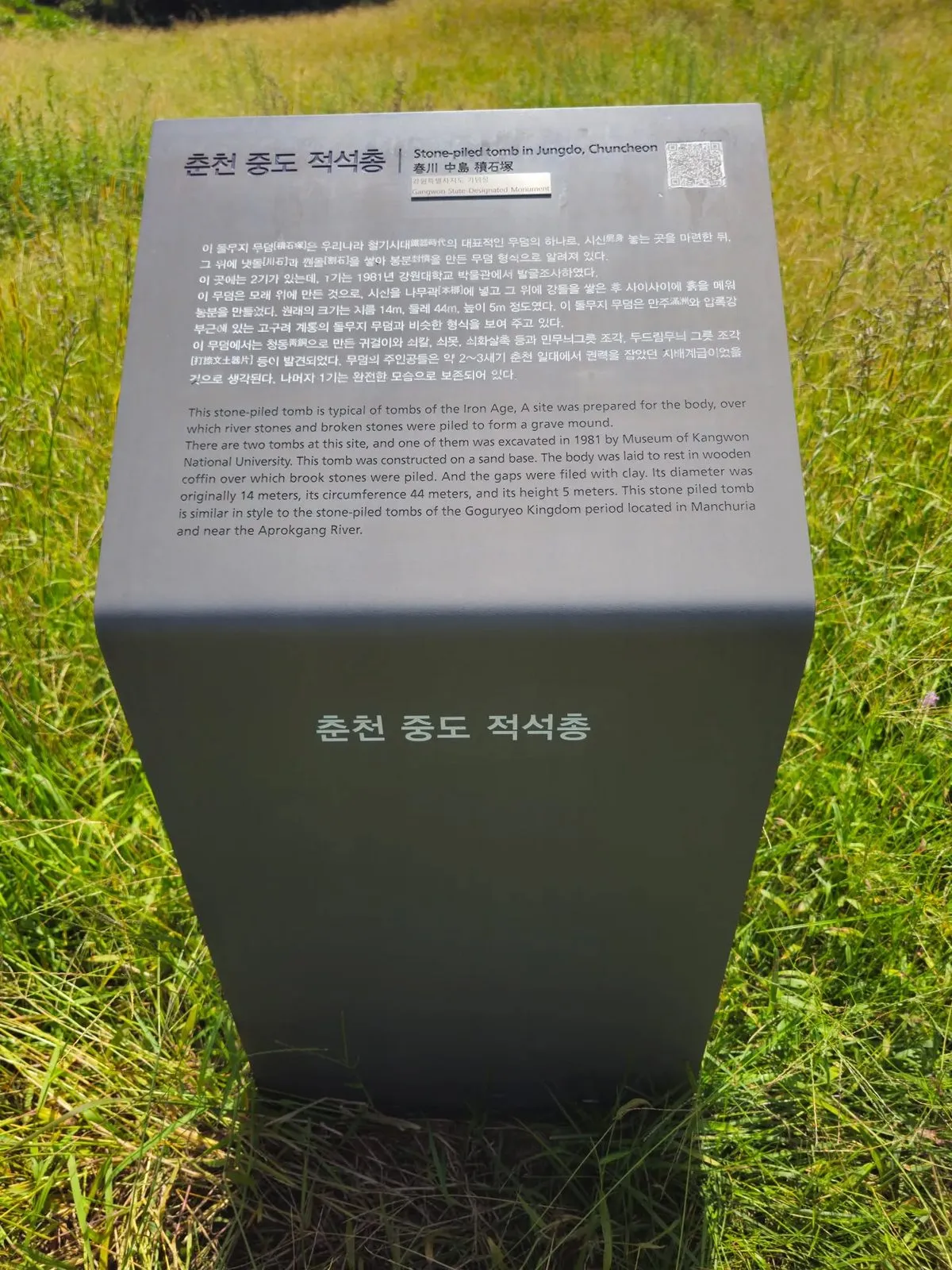 The board for the tombs, in Korean and English.
One of the two was excavated in 1981, and according to the board the other is still fully preserved. The Encyclopedia of Korean Culture adds that the 1981 dig was part of a survey of heritage sites being damaged as changes in the lake’s water level made the shore collapse. According to the board, the excavated tomb was built on sand, and the body was laid in a wooden coffin with river stones piled on top and the gaps filled with clay.
Sources give slightly different sizes for the excavated tomb: roughly 14 to 15 m across and 4 to 5 m high (the board gives 14 m and 5 m as its original size). Finds included bronze earrings, a small iron knife, iron arrowheads, iron nails and pieces of pottery. The board and the Heritage Service say the people buried here were probably local rulers of the Chuncheon area around the 2nd to 3rd century AD; the encyclopedia dates the tombs a little later, to the late 3rd or early 4th century. The board also says the style is similar to stone-piled tombs of the Goguryeo kingdom in Manchuria and along the Amnok (Yalu) River.
According to the encyclopedia, the tombs were once nicknamed mal-mudeom, the “horse tomb”, from a story that a general’s horse was buried here.
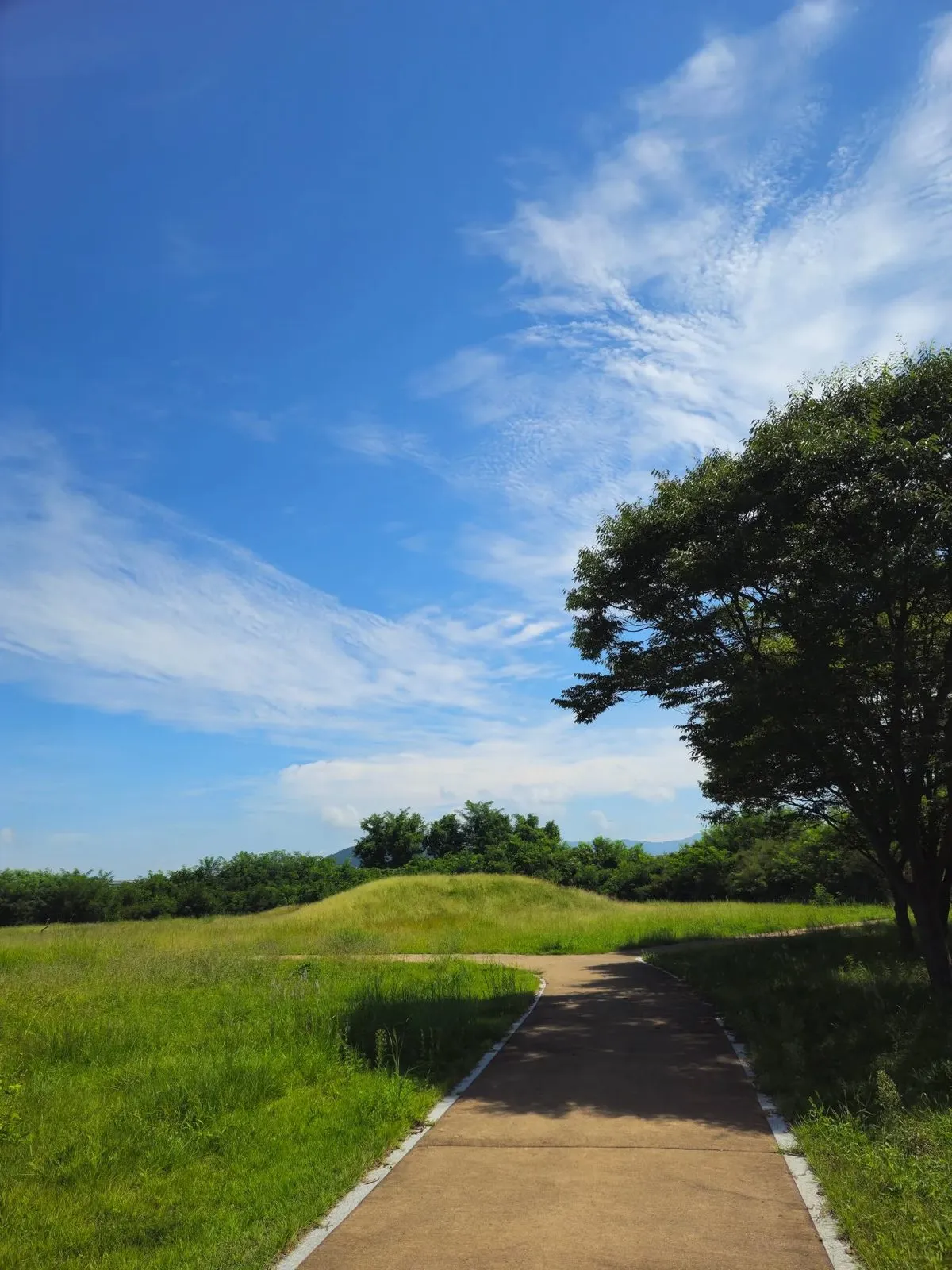 The path towards one of the low mounds.
The dolmens
A second board covers the dolmens, the older stone tombs of the Bronze Age. It says the three dolmens here were all moved from elsewhere: one “table” type (upright stones holding up a flat capstone) came from the area flooded when Soyang Dam was built, and the other two were moved here after an excavation on the north-west side of the island. According to the board, about 160 dolmens have been surveyed on Jungdo, and they’re thought to date from around the 8th to the 5th century BC.
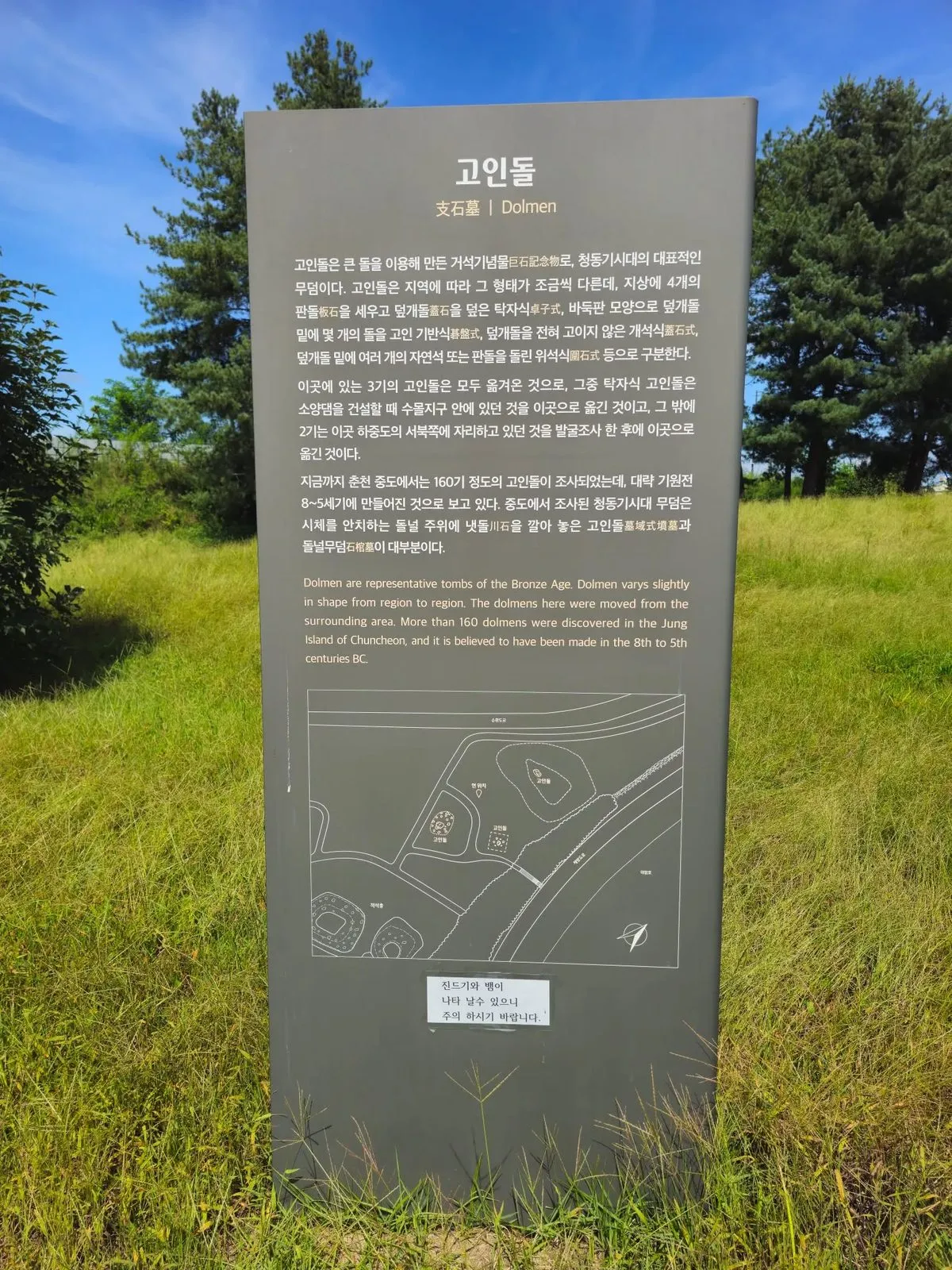 The dolmen board, with a site map. A small note taped below it, in Korean, warns that ticks and snakes may appear.
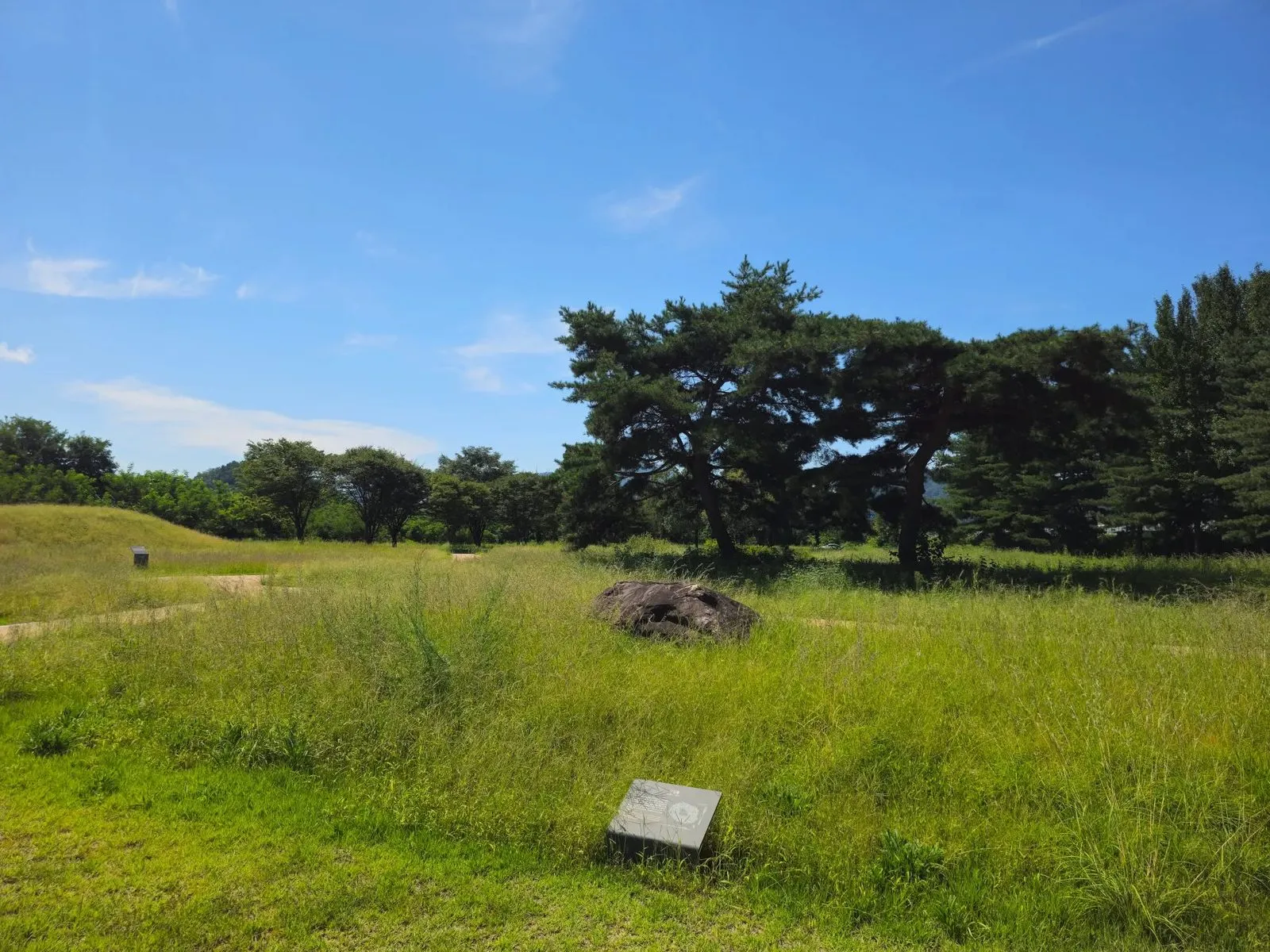 A large stone in the grass, with a small plaque in front.
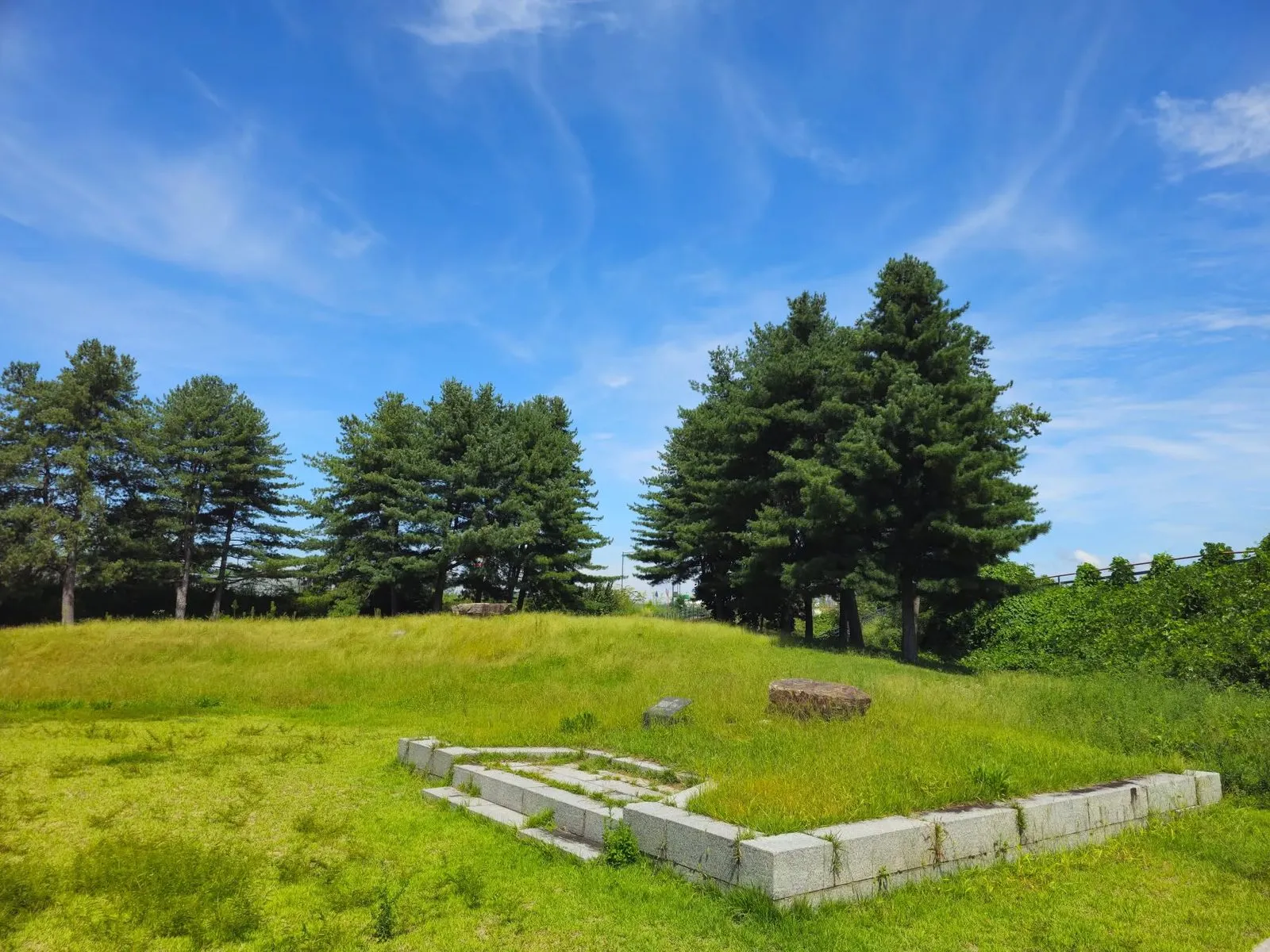 Cut-stone edging and steps around a grassy rise, with a flat stone on top.
Jungdo is also the island where Legoland Korea opened in 2022. Excavations on the Legoland site from 2013 to 2017 found around 3,000 features, including Bronze Age dolmens.
What I saw
The site is mostly open lawn, with paved paths winding between big trees and the low grassy mounds. On the day I went, a Wednesday in early September, there weren’t many people and it was quiet.
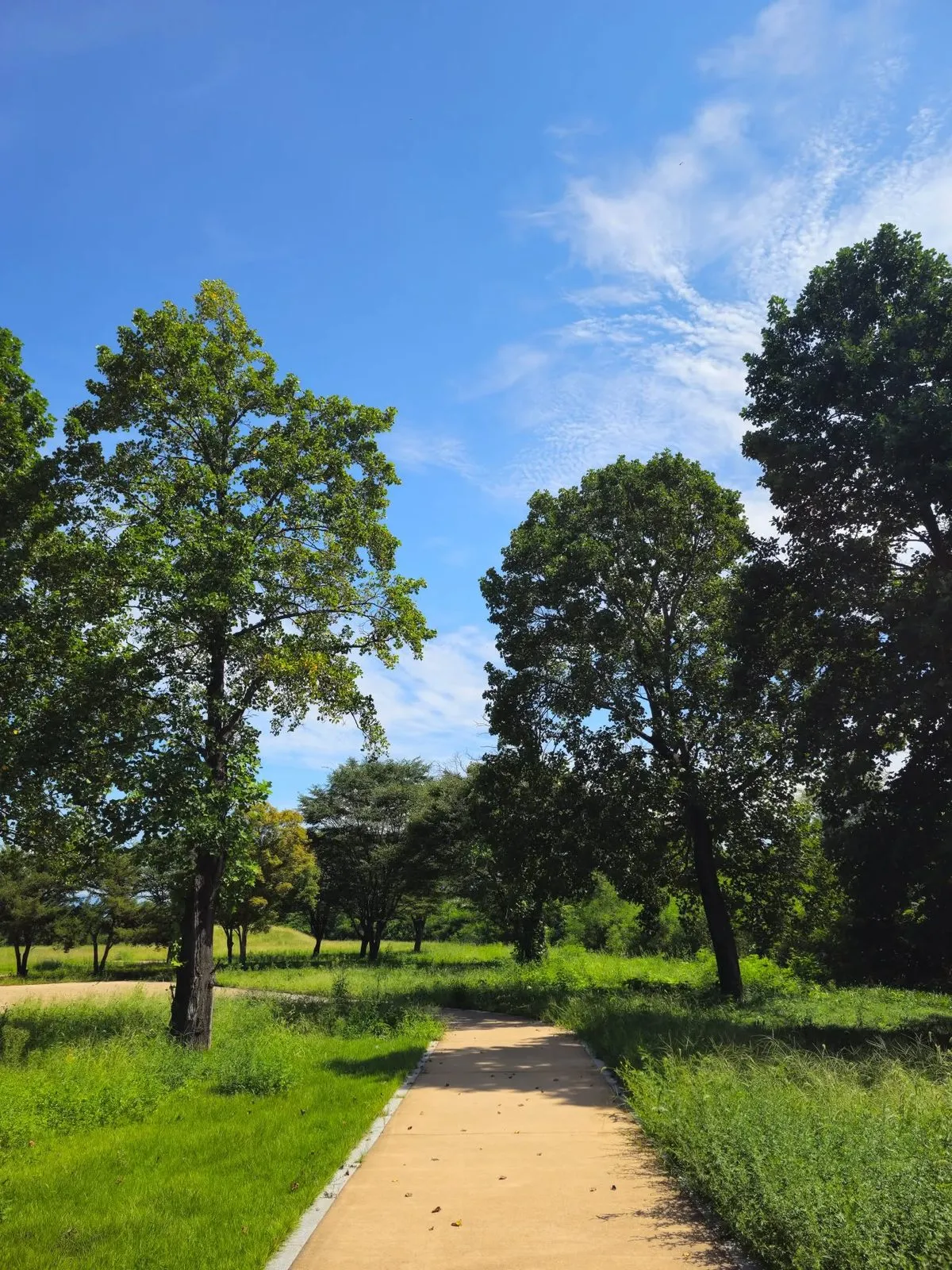 A path under the trees.
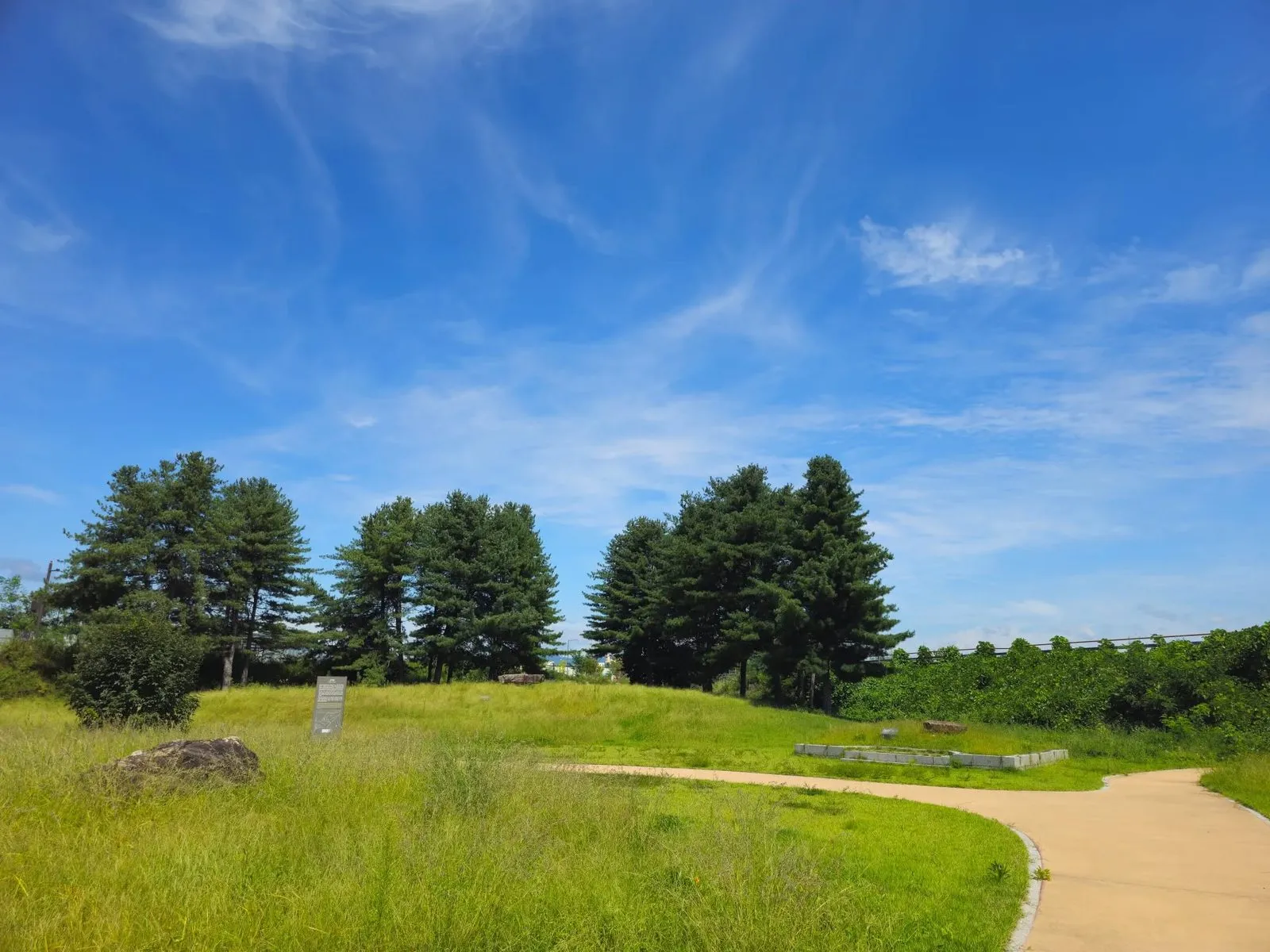 The lawn and the pines.
Visiting
| Jungdo Stone-piled Tombs | |
|---|---|
| Admission | Free (I paid nothing on my visit) |
| Parking | A well laid-out car park, free (as I found on my visit) |
| Hours | An outdoor site. I couldn’t confirm set hours, so go in the daytime |
| Address | Jungdo-dong, Chuncheon, in the south of Jungdo island. Official listings give different lot numbers, so search the name in a map app |
How to get there
By car: there’s a car park at the site, and it was free when I visited.
By public transport: bus routes and times change, so check the live route in Naver Map (switched to English): search Jungdo, or paste the Korean name, 춘천 중도 적석총.
How to check buses in English: install Naver Map and switch it to English in its settings. When I checked it in October 2026, the English version showed bus routes, stop names and live arrival times (minutes and stops away) in English. Google Maps also gives public transport directions in Korea, but as of late September 2026 it still had no turn-by-turn walking or driving navigation here. Stuck? Call the Korea Travel Hotline: dial 02-1330 from a Korean mobile phone (+82-2-1330 from abroad). It has English-speaking staff. More in our guide to taking buses in Korea in English.
Tips
- Bring a mat if you want to sit out on the lawn.
- Mind the long grass. The note at the site warns of ticks and snakes, so the paved paths are the safer way around.
- Use a translation app on the dolmen board. Its English text is only a short summary.
Who it’s for
Likely to suit (estimate): anyone visiting Chuncheon who wants a quiet break from the busier sights, families with a picnic, solo walkers, and anyone curious about Korean prehistory.
Sources
Checked against the Korea Heritage Service’s record for the Chuncheon Jungdo stone-piled tombs (Gangwon monument, designated 1976, two tombs, managed by Chuncheon City, dating and finds), Chuncheon City’s list of designated heritage (designation date), the Encyclopedia of Korean Culture (Academy of Korean Studies) entry on the tombs (the 1981 dig, later dating, the “horse tomb” nickname), and the two information boards at the site (photographed on my visit). Legoland Korea on Jungdo: Seoul Shinmun (May 2022) and Weekly Kyunghyang (August 2022). Admission and parking (both free), the car park, the atmosphere and the tick warning are from my own visit. Hours and public transport are unconfirmed.