Home / Gangwon / Seven-story Stone Pagoda, Chuncheon
Chuncheon Seven-story Stone Pagoda: free Goryeo-era Treasure
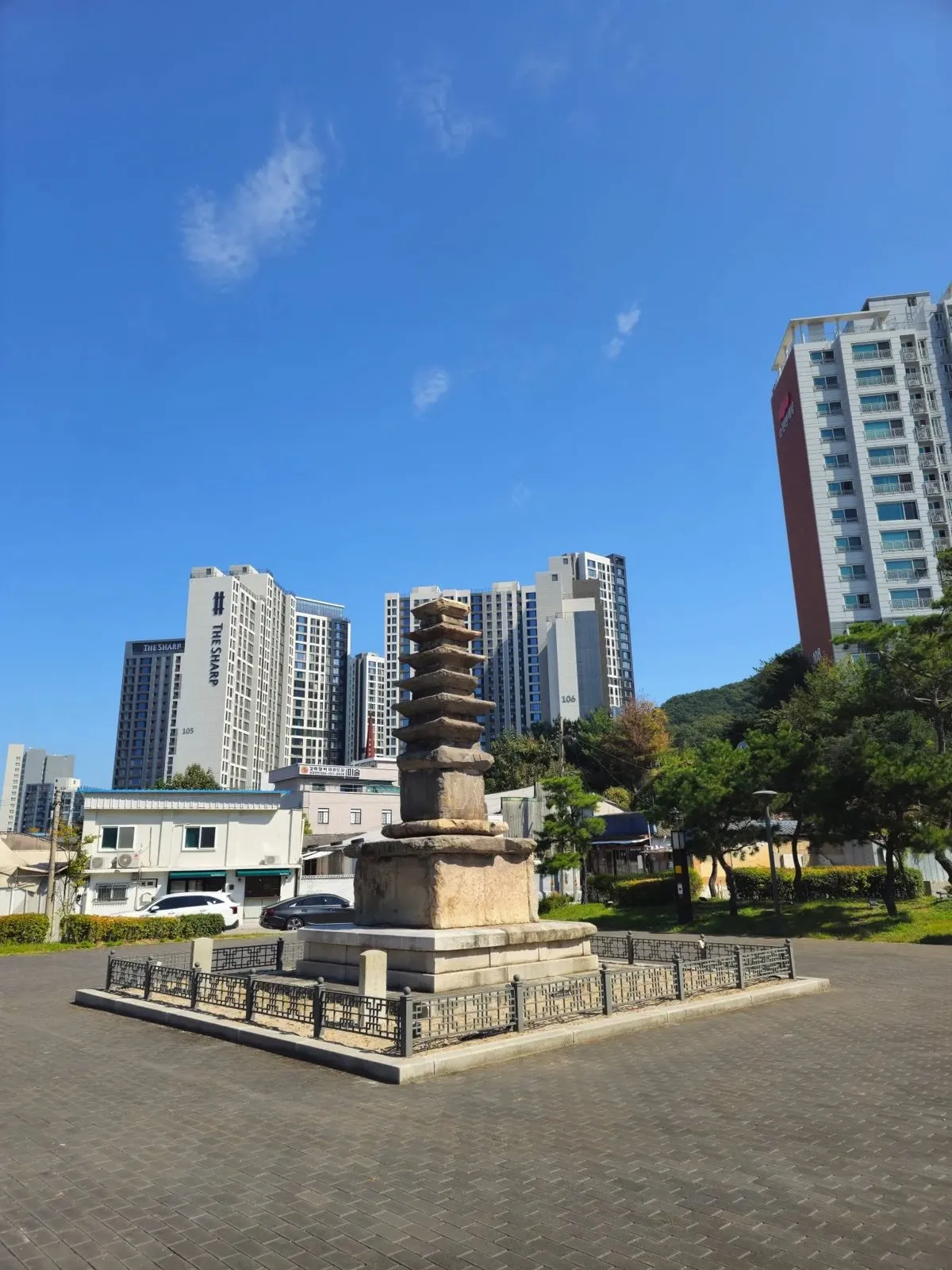
A Goryeo-period stone pagoda, a designated Treasure, in a park among apartment towers in central Chuncheon. Free entry and parking, clean toilets and history.
- Getting there
- There's a wide free car park. For buses, check the live route in Naver Map (in English).
- Cost
- Free (no admission fee when I visited). Parking was free too.
- Time needed
- 15 to 30 minutes (estimate)
- Best time
- Daytime. It's an outdoor monument in a small park.
Tap any Korean name on this page to hear it. Prefer Naver Map? In the app (set to English), search Chuncheon Seven-story Stone Pagoda, or paste the Korean name:춘천 칠층석탑
Short version: In the middle of Chuncheon, a stone pagoda from the Goryeo period stands in a small paved park, with modern apartment towers all around it. It’s a designated Treasure of Korea. It’s a short stop, but there’s a wide free car park and clean toilets, so it’s an easy place to take a break (my view).
Last checked: 11 October 2026. The designation and the basic history were checked against the Korea Heritage Service’s records and the Korea Tourism Organization. The story of the pagoda’s move and the excavation come from the English information board at the site, which I photographed. Parking, toilets, admission and the address are from my own visit. For public transport, use Naver Map’s live routes. Tell me if anything has changed.
What it is
A pagoda is a Buddhist monument. The English board at the site explains that pagodas enshrine relics of the Buddha, or are treated as sacred even when they don’t.
This one is a granite pagoda with a two-tier base and seven stories. The Korea Heritage Service dates it to the Goryeo period, probably around the middle of that dynasty (Goryeo ruled from 918 to 1392), and it was designated a Treasure on 21 January 1963 (originally designated as Treasure No. 77). Its top ornament is missing.
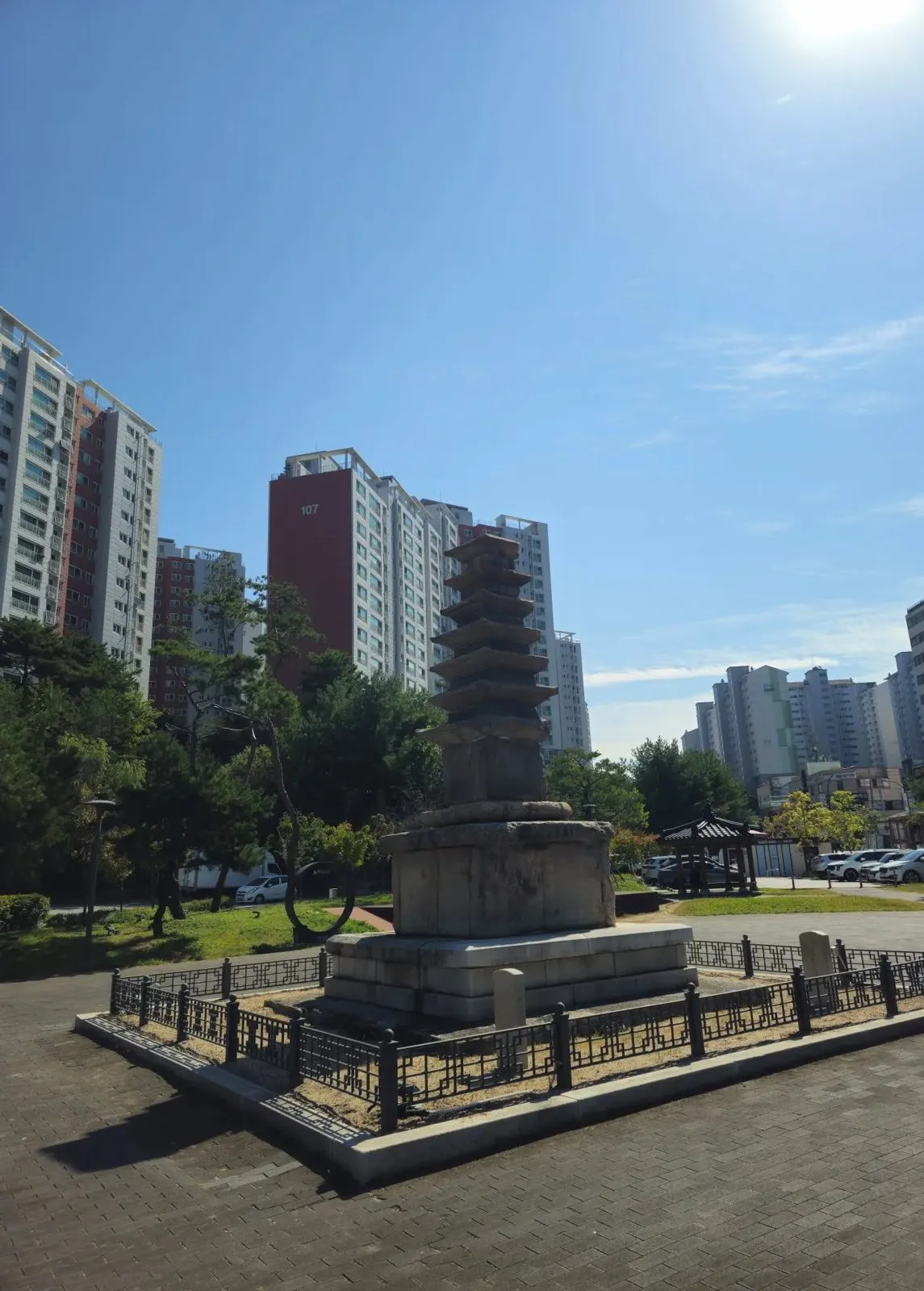 The pagoda from the side.
The temple it belonged to is unknown. It’s thought to have been a temple called Chungwonsa, but that link is only presumed. The board describes the base as large and wide compared with the body stones, and says the pagoda keeps its balance because it’s tall. Sources give slightly different heights, so I’ll just say it’s a little over 6 m tall.
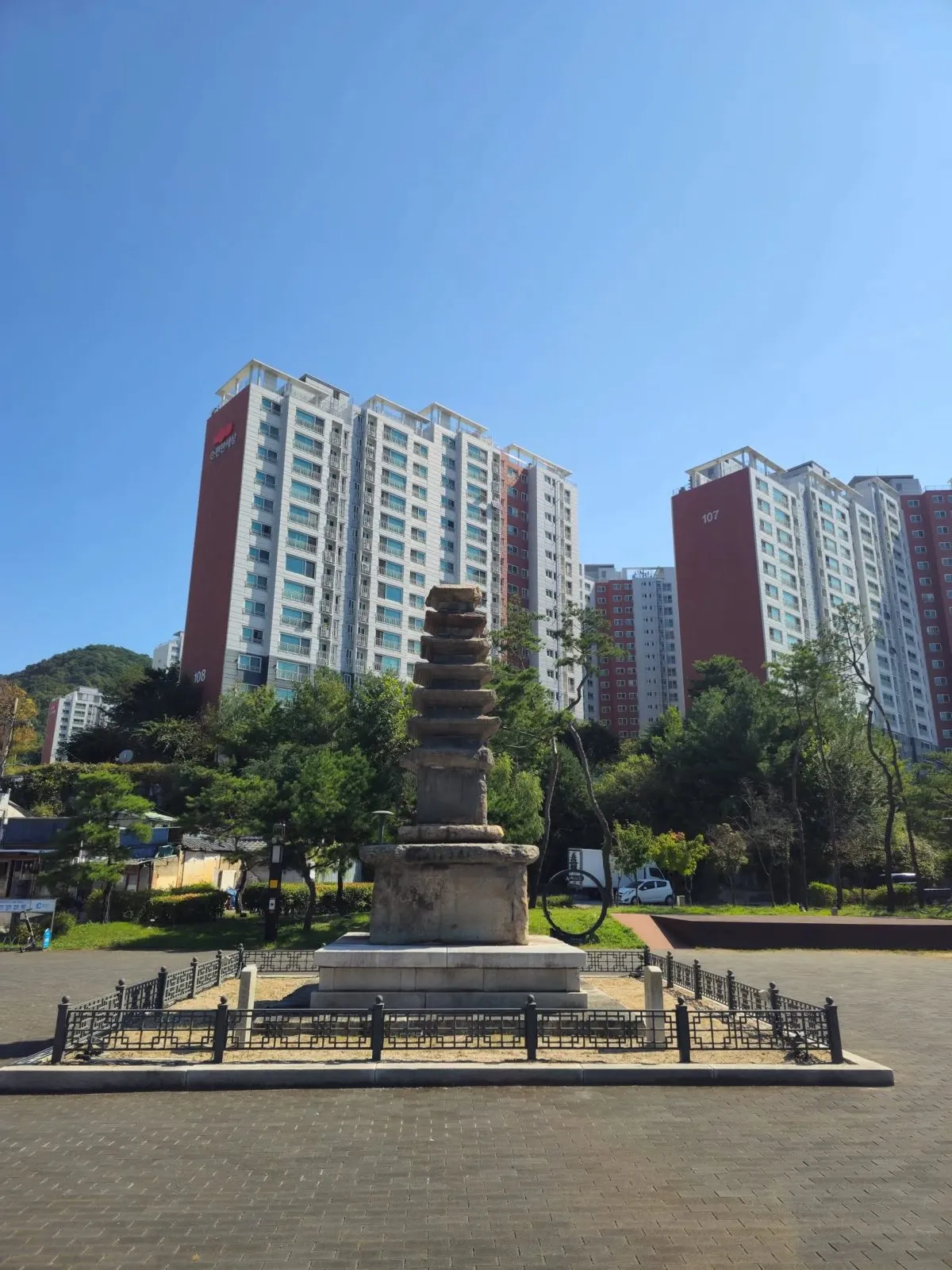 From the front, with the apartment towers behind.
How it got here
The Korea Heritage Service says the pagoda was damaged during the Korean War, and that a full-scale repair in 2000 restored its base. Before that, the lower part of the base had been buried.
According to the English board, the pagoda was taken apart in 2016 for the construction of a park and rebuilt in 2018 at its current spot, about 30 m north-west of where it originally stood. The board says excavations at the original site from 2016 to 2019 found 15 building sites from the Goryeo period and three roof-tile kiln sites from the Unified Silla period (668–935).
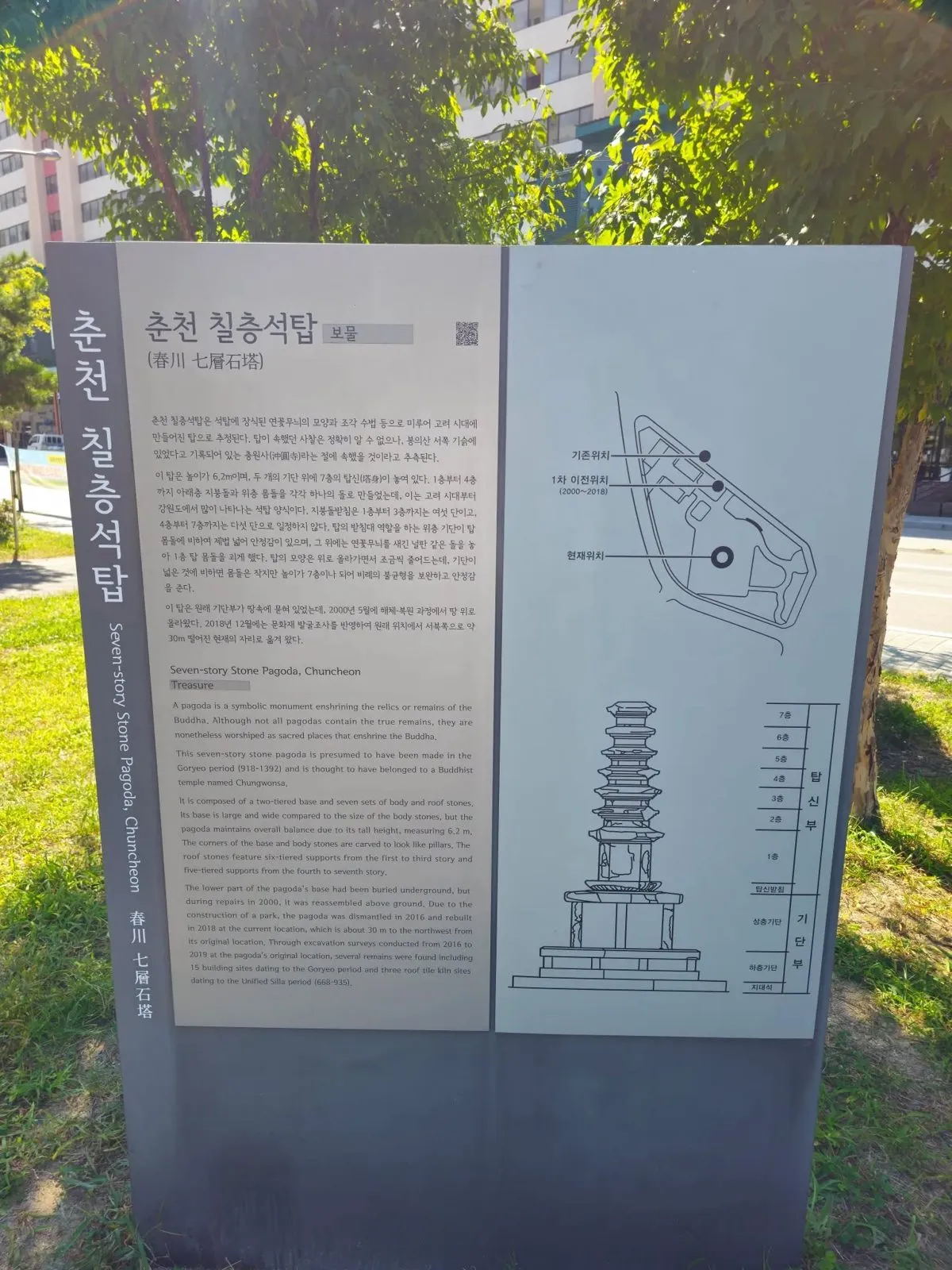 The information board, with English text and a map, labelled in Korean, marking the pagoda’s original, 2000–2018 and current positions.
Today the pagoda stands in a paved square inside a low fence, with trees around the edges and high-rise apartments on most sides.
Visiting
| Seven-story Stone Pagoda, Chuncheon | |
|---|---|
| Admission | Free (no admission fee when I visited) |
| Parking | A wide, free car park (as I found on my visit) |
| Toilets | Clean toilets (as I found on my visit). I couldn’t confirm wheelchair-accessible toilets or disabled parking |
| Address | 162-9 Soyang-ro 2-ga, Chuncheon, Gangwon Province (lot-number address) |
How to get there
Bus routes and times change, so check the live route in Naver Map (switched to English): search Chuncheon Seven-story Stone Pagoda, or paste the Korean name, 춘천 칠층석탑.
How to check buses in English: install Naver Map and switch it to English in its settings. When I checked it in October 2026, the English version showed bus routes, stop names and live arrival times (minutes and stops away) in English. Google Maps also gives public transport directions in Korea, but as of late September 2026 it still had no turn-by-turn walking or driving navigation here. Stuck? Call the Korea Travel Hotline: dial 02-1330 from a Korean mobile phone (+82-2-1330 from abroad). It has English-speaking staff.
By car: the car park is wide and was free when I visited.
Tips
- Read the English board. It explains the pagoda’s history and its move.
- Combine it with other sights in Chuncheon. On its own it’s a short stop.
- Take a break here. With free parking and clean toilets, it’s an easy place to rest on a day out (my own view).
Who it’s for
Likely to suit (estimate): anyone interested in Korean Buddhist art or history, photographers who like the contrast of old and new, and drivers passing through Chuncheon who want a short stop.
Sources
Checked against the Korea Heritage Service’s record for the pagoda (designation, date, period, materials, the 2000 restoration), the Korea Tourism Organization (the Chungwonsa link), and the English information board at the site (photographed on my visit) for the move and the excavation. Admission, parking, toilets and the address are from my own visit. For public transport, use Naver Map’s live routes.