Home / Incheon / Ganghwa Dolmen (Bugeun-ri)
Ganghwa Island dolmen (Bugeun-ri): free UNESCO site, bus from Seoul
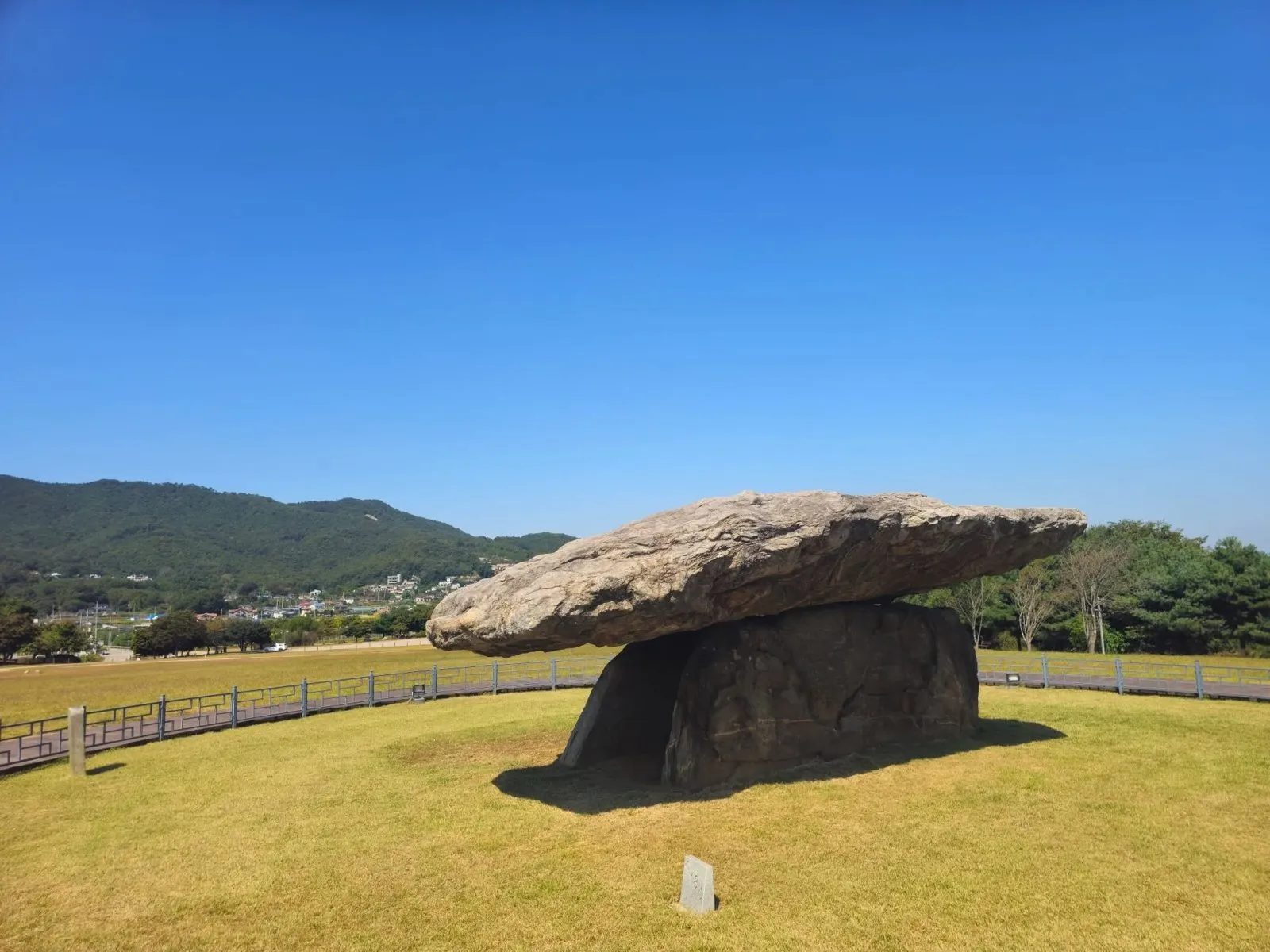
A huge Bronze Age stone tomb in an open field on Ganghwa Island, part of a UNESCO World Heritage site. What I saw, free parking, and bus 3000 from Seoul.
- Getting there
- From Seoul, bus 3000 from Sinchon Station to Ganghwa Bus Terminal. From there, check the local bus in Naver Map (in English).
- Cost
- Free (I paid nothing on my visit). Parking was free too.
- Time needed
- 30 minutes to 1 hour for the main dolmen (estimate)
- Best time
- Daytime. It's an open field with little shelter in my photos, so avoid the hottest hours (my own advice).
Tap any Korean name on this page to hear it. Prefer Naver Map? In the app (set to English), search Ganghwa Dolmen Bugeun-ri, or paste the Korean name:강화 부근리 지석묘
Short version: On Ganghwa Island, in Incheon, a huge flat stone sits on upright stones in the middle of a lawn. It’s a dolmen, a Bronze Age tomb, and it is part of a UNESCO World Heritage site. You walk around it on a wooden path, with green hills behind. It’s an easy outdoor stop, in my view, and I’d recommend it.
Last checked: 10 October 2026. The facts about the site come from UNESCO and Incheon city’s English pages, plus the information boards at the site, which I photographed on my visit. The sources give different sizes for the stone, so I give a range. The admission and parking notes are from my own visit. Tell me if anything has changed.
What it is
A dolmen is a prehistoric stone tomb. This one is a “table type”: upright stone slabs hold up a wide, flat capstone, forming a chamber above ground. The English board at the site dates dolmens to the Bronze Age (1500 to 300 BC), and says the Korean peninsula has a large share of the world’s dolmens.
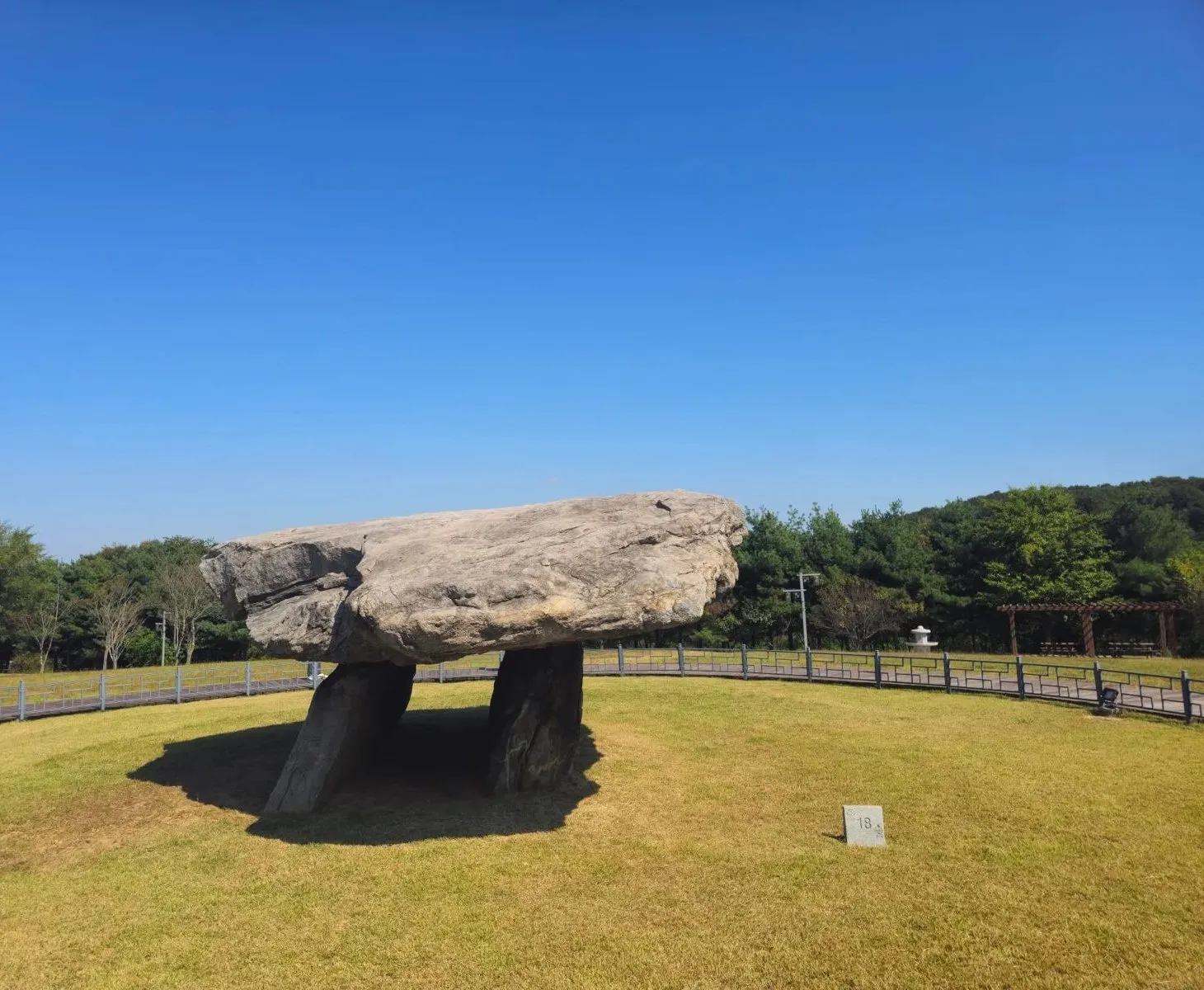 The dolmen seen from the side. The table-like shape is easy to see from here.
The capstone is enormous. The on-site board gives it as about 6.5 m long and 5.2 m wide, weighing around 53 tons. One Incheon city English page gives 7.1 m long and 75 tons, and another says 6.5 m long. I couldn’t settle the difference, so think of it as roughly 6.5 to 7 m long and somewhere between about 50 and 75 tons.
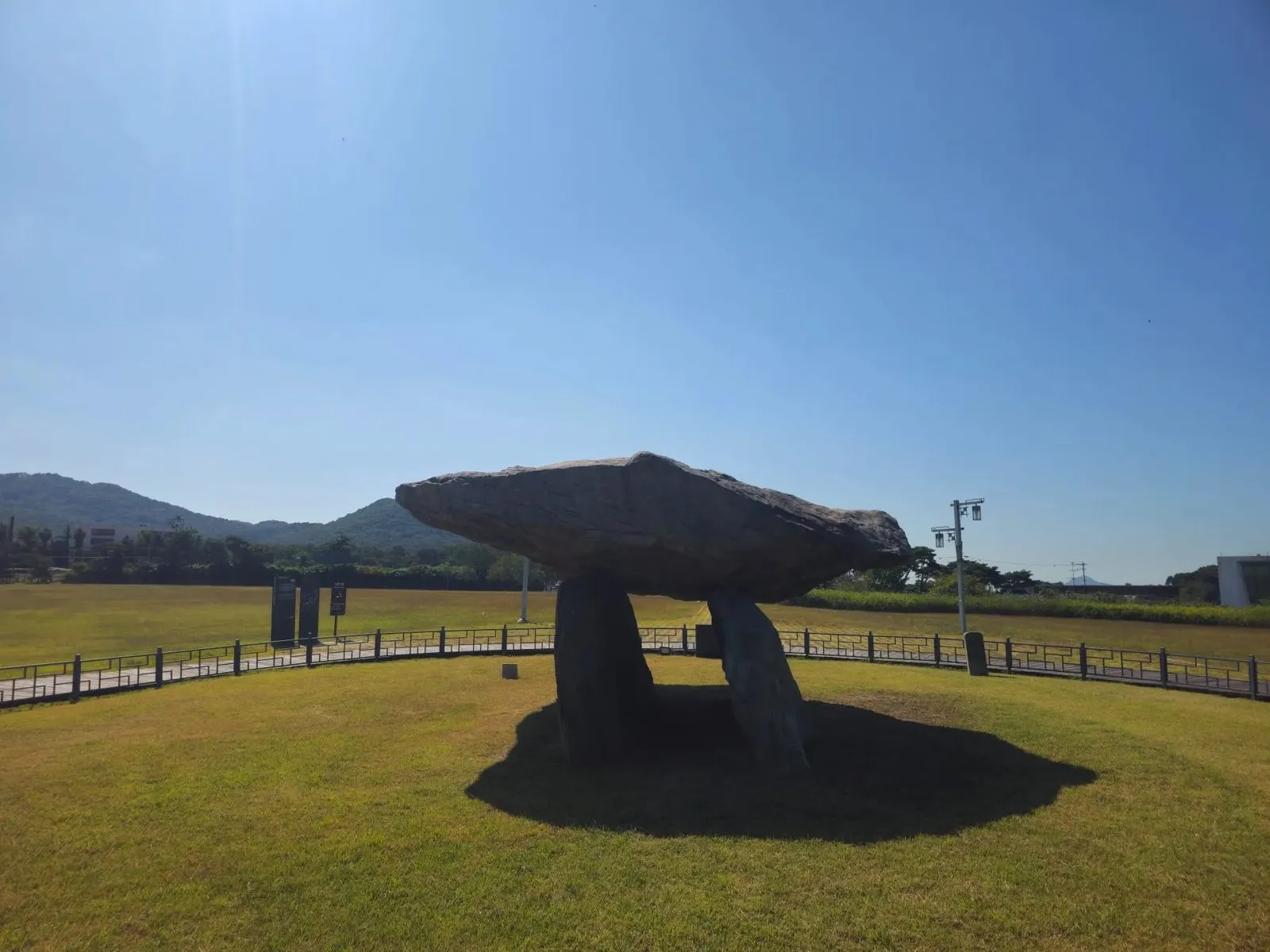 From another angle, with the mountains behind.
A UNESCO World Heritage site
The dolmen is part of the “Gochang, Hwasun and Ganghwa Dolmen Sites”, which UNESCO inscribed on the World Heritage List in 2000. UNESCO describes the Ganghwa dolmen sites as lying on mountain slopes on the offshore island, usually higher up than the dolmens at the other two sites (this one, though, stands on flat ground), and says the ones at Bugeun-ri and Gocheon-ri are stylistically early.
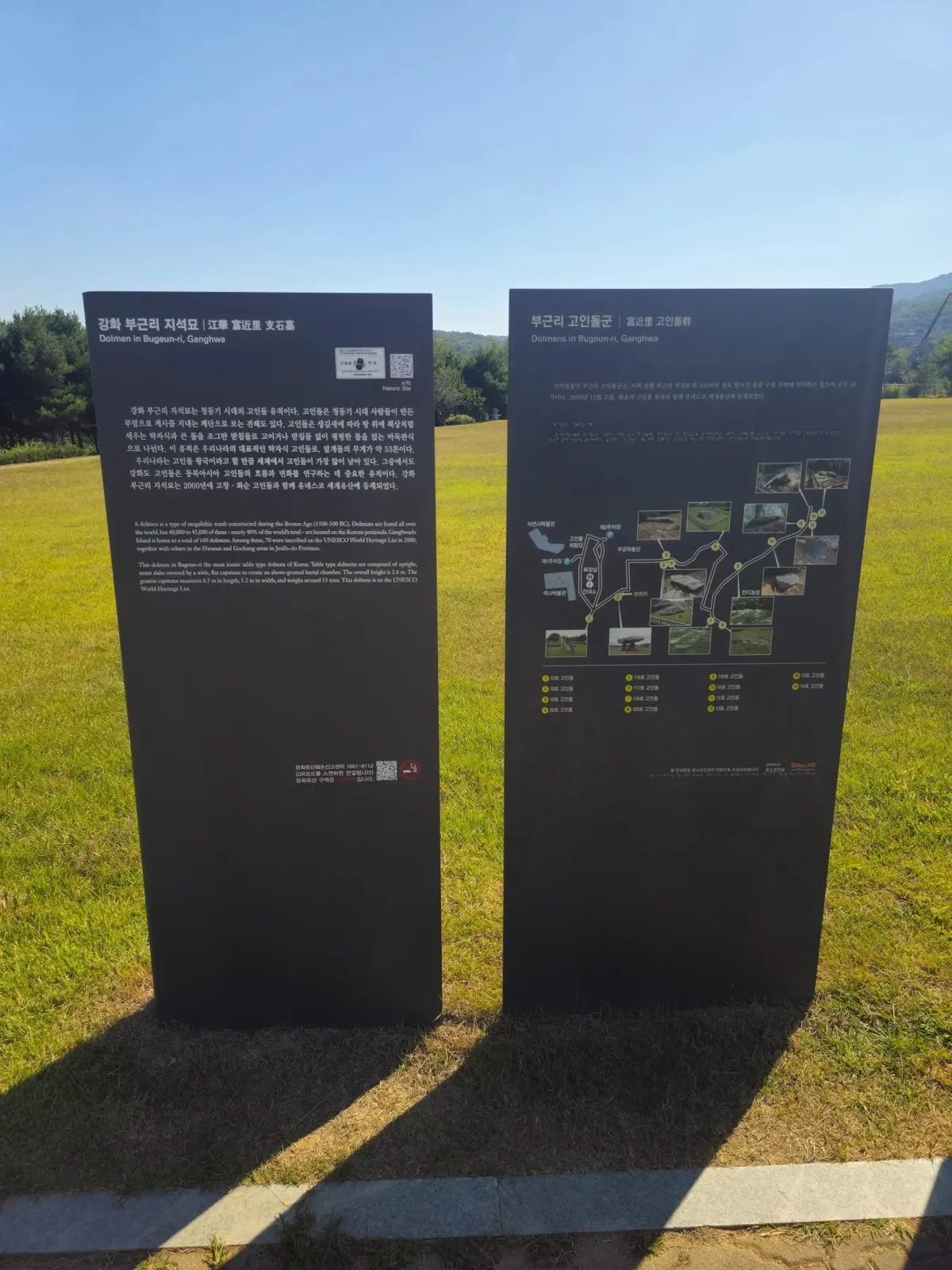 Two information boards at the site. The left one has English text below the Korean.
The English board says Ganghwa Island has 160 dolmens, 70 of them on the World Heritage List. Other official counts differ, so treat these numbers as approximate. A trail from the main dolmen leads to more dolmens nearby, shown on the map board.
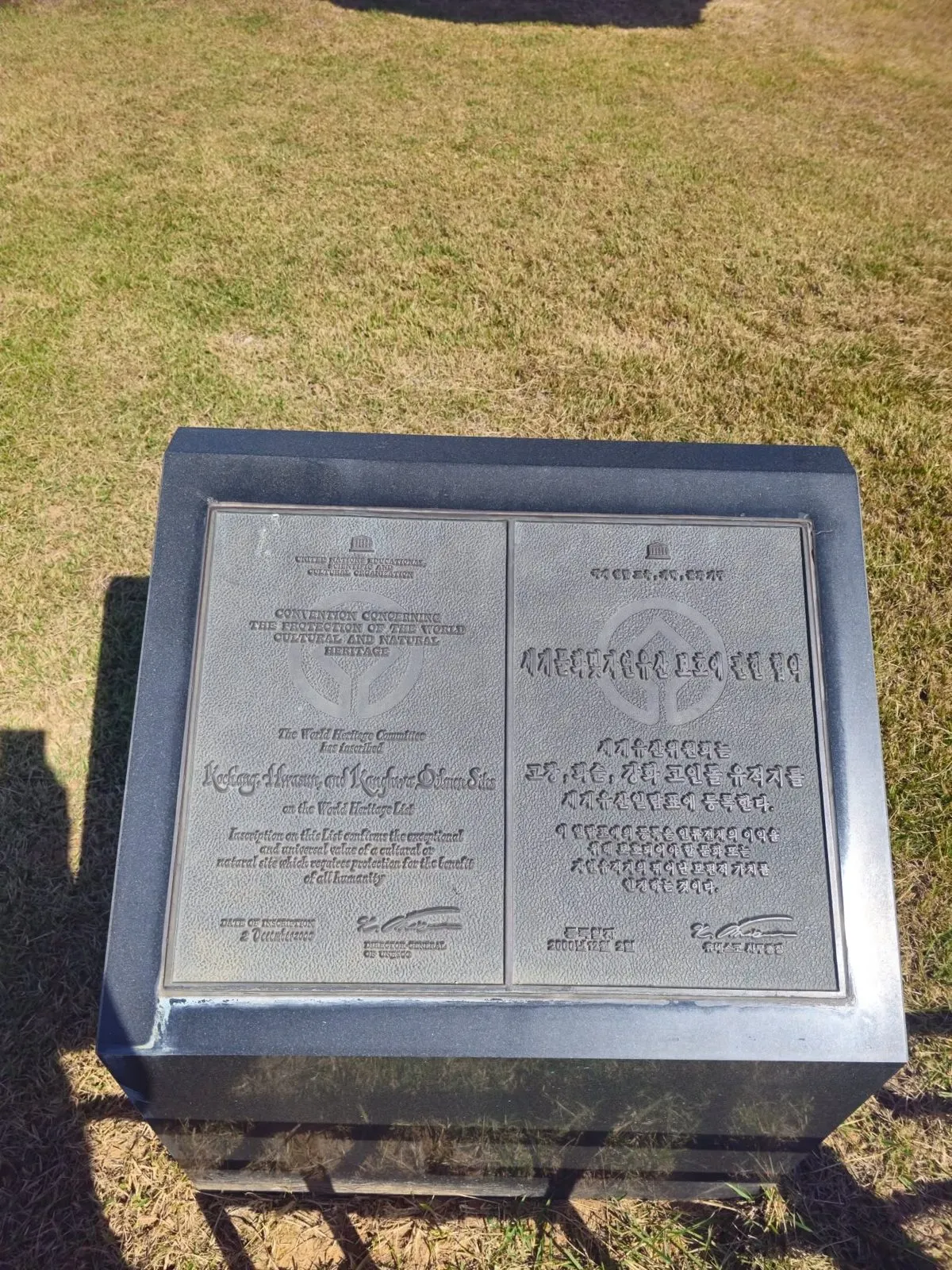 A UNESCO World Heritage plaque at the site.
What I saw
A round lawn with a low fence around it surrounds the dolmen, and a wooden walkway curves around the outside. Open grass stretches out on several sides, with hills beyond.
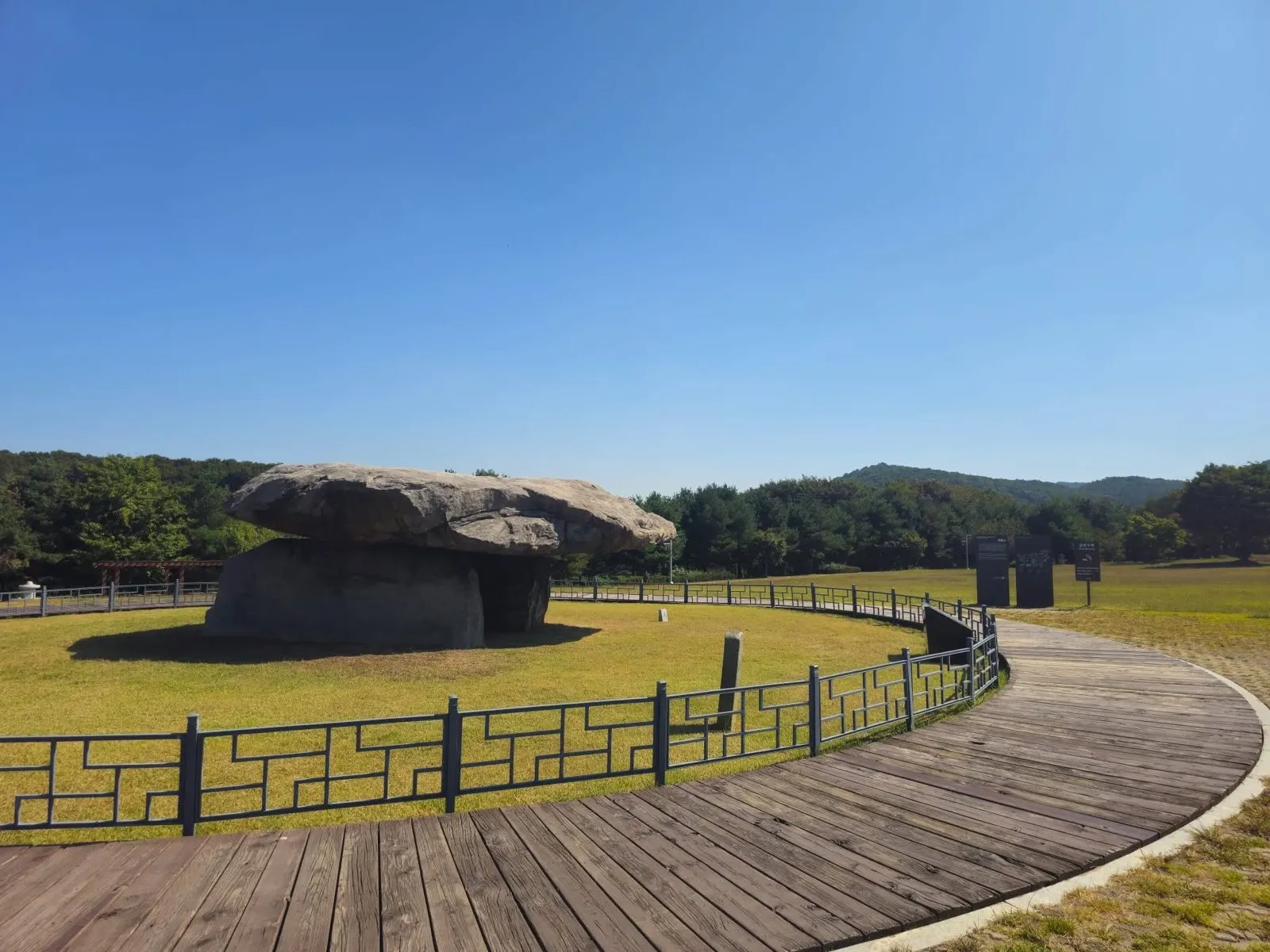 The wooden walkway around the dolmen.
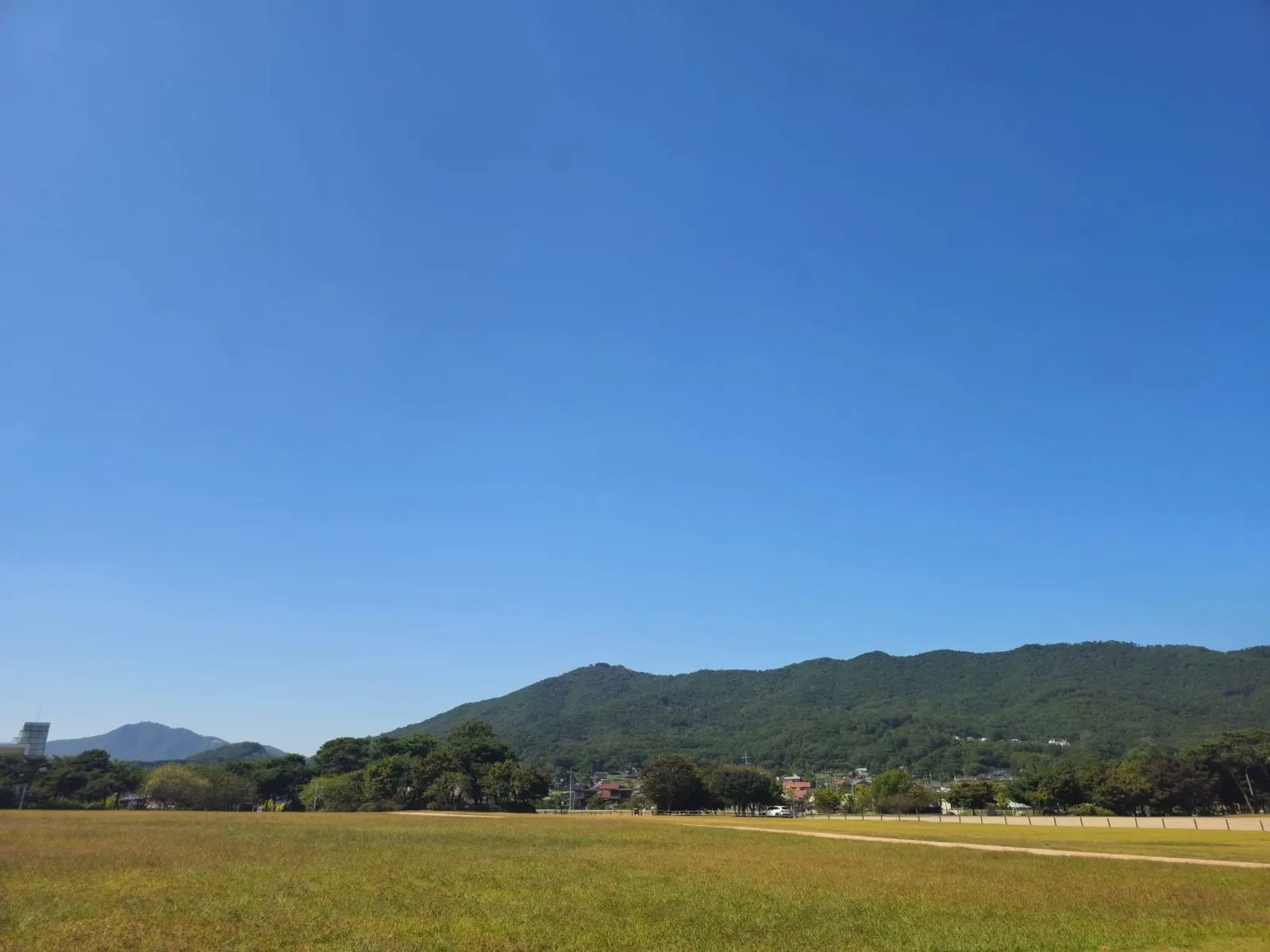 The open grass beside the dolmen. There’s very little shade here.
It was hot and sunny on the day I went, in late September. There were quite a few foreign tourists there too.
Visiting
| Ganghwa Dolmen (Bugeun-ri) | |
|---|---|
| Opening hours | Always open, with no set hours (Incheon city’s English pages list it as open year-round, and one lists “24 hr”). It’s an outdoor site, so daytime is the practical time to go |
| Admission | Free (I paid nothing on my visit) |
| Parking | Free, and very large (as I noted on my visit) |
| Address | 994-12, Ganghwa-daero, Hajeom-myeon, Ganghwa-gun, Incheon (lot-number address: 348 Bugeun-ri, Hajeom-myeon) |
If you’re making a special trip, call the Korea Travel Hotline (02-1330 from a Korean mobile) first.
The Incheon page says the Ganghwa History Museum is next to the dolmen park. I didn’t go in, so I can’t tell you what it’s like.
How to get there
From Seoul: bus 3000 runs between Sinchon in Seoul and Ganghwa Bus Terminal, and also stops at Hapjeong Station. In Naver Map (October 2026) the Seoul end of the route is the stop 신촌오거리.2호선신촌역 (Sinchon Five-Way Junction, Line 2 Sinchon Station). The adult fare is 3,000 won by card (from August 2025). Routes, fares and timetables change, and I couldn’t confirm the journey time or how often it runs outside peak hours.
From the terminal to the dolmen: local buses change, so check the live route in Naver Map (switched to English): search Ganghwa Dolmen Bugeun-ri, or paste the Korean name, 강화 부근리 지석묘.
How to check buses in English: install Naver Map and switch it to English in its settings. When I checked it in October 2026, the English version showed bus routes, stop names and live arrival times (minutes and stops away) in English. Google Maps also gives public transport directions in Korea, but as of late September 2026 it still had no turn-by-turn walking or driving navigation here. Stuck? Call the Korea Travel Hotline: dial 02-1330 from a Korean mobile phone (+82-2-1330 from abroad). It has English-speaking staff.
Tips
- Bring sun protection. The area is open grass and the sun was strong when I went (my own advice).
- Go in the daytime. The sights are outdoors.
- Read the English board. It explains what a dolmen is and the World Heritage listing.
- Also in Ganghwa: the Ganghwa Christian History Memorial Hall, and Daeryong Market on Gyodong Island.
Who it’s for
Likely to suit (estimate): anyone interested in prehistory or World Heritage sites, photographers who like open landscapes, and anyone adding a short outdoor stop to a day on Ganghwa Island.
Sources
Checked against UNESCO’s World Heritage Centre page for the Gochang, Hwasun and Ganghwa Dolmen Sites (inscription year, description), Incheon city’s English tourism pages (the Bugeun-ri area, address, “open year-round”), and the information boards and plaque at the site (photographed on my visit). Admission and parking are from my own visit.