Home / Gangwon / Gangneung Daedohobu Gwana (Government Office)
Gangneung Daedohobu Gwana: National Treasure near Gangneung Station
Gangneung's old government office, with a Goryeo-era gate that is a National Treasure. Free entry, no car park of its own. My tip: don't only go to the sea.
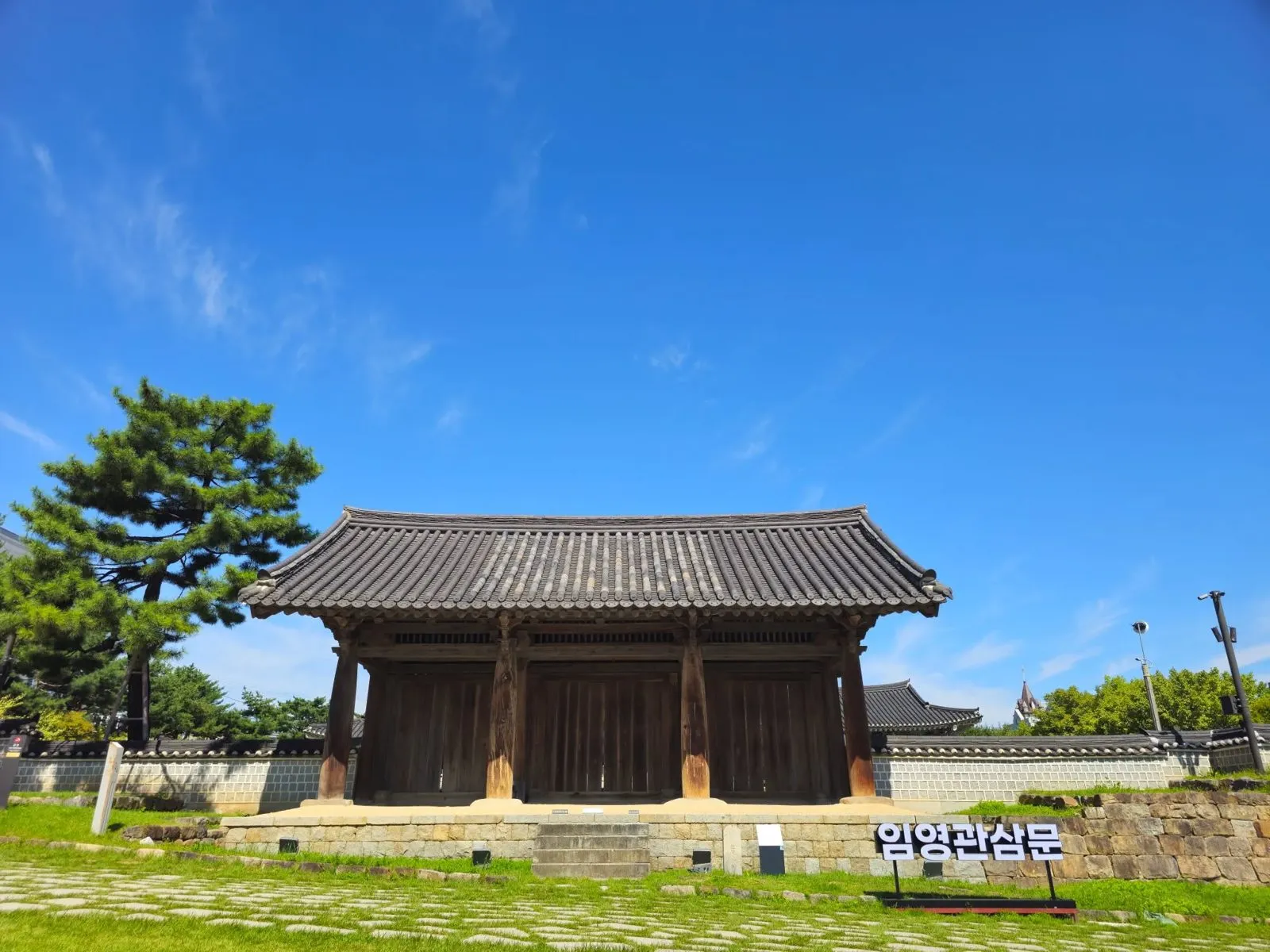
- Getting there
- In central Gangneung, not far from Gangneung Station. No car park of its own; use a nearby public car park. For buses, check the live route in Naver Map (in English).
- Cost
- Free when I visited (September 2026).
- Time needed
- 30 minutes to 1 hour (estimate)
- Best time
- Daytime. Listings give different opening hours, so don't leave it late.
Tap any Korean name on this page to hear it. Prefer Naver Map? In the app (set to English), search Gangneung Daedohobu Gwana, or paste the Korean name:강릉대도호부관아
Short version: In the middle of Gangneung, a short way from the station, is the site of the city’s old government office. Most of it was rebuilt in the 2000s and 2010s, but two buildings are original: the Chilsadang hall, a Treasure, and the gate of the Imyeonggwan guesthouse, a National Treasure from the Goryeo period. Entry is free and it’s quiet. If you come to Gangneung, don’t only go to the sea (my advice).
Last checked: 12 October 2026. The history comes from the information board at the site, which has English text and which I photographed, plus the Encyclopedia of Korean Culture, the Korea Tourism Organization and Korean news reports. Free entry and parking are from my own visit. Listings give different opening hours. Tell me if anything has changed.
What it is
A gwana is a government office, and Gangneung was a daedohobu, which the board at the site translates as “a great strategic prefecture”. The English text on the board says the office traces its origins to the founding of the Imyeonggwan guesthouse in 936, and that Gangneung was raised to the status of a daedohobu in 1389. By the end of the Joseon period it had many buildings.
According to the board, during the Japanese colonial period (1910–1945) every building apart from the Chilsadang hall and the main gate of the guesthouse was demolished and replaced with school and police buildings. In 1993, an excavation during preparations for a new city hall found many remains and artefacts, and the area was designated a historic site in 1994. Much of the complex was then rebuilt: the board says the Imyeonggwan guesthouse was rebuilt in 2000–2006, and the office’s front gate, the magistrate’s office and the Uiullu pavilion in 2012.
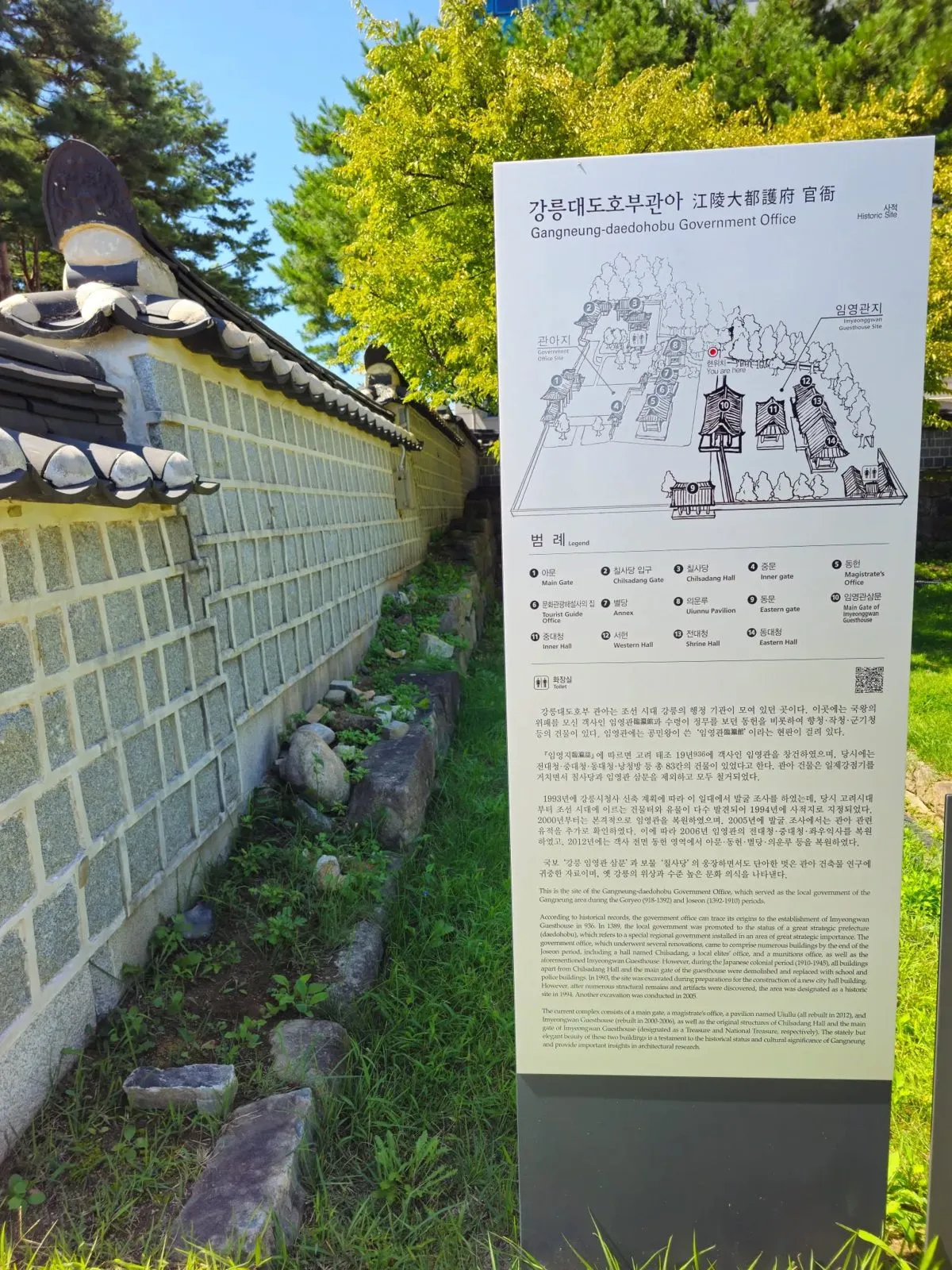 The information board. The text is in Korean and English.
The National Treasure gate
The star is the Imyeonggwan Sammun, the main gate of the old guesthouse. The Encyclopedia of Korean Culture lists it as a National Treasure, designated on 20 December 1962 and long known as National Treasure No. 51, and dates it to the Goryeo period. It’s a wooden gate, three bays wide, with a simple gabled roof and columns that swell noticeably in the middle.
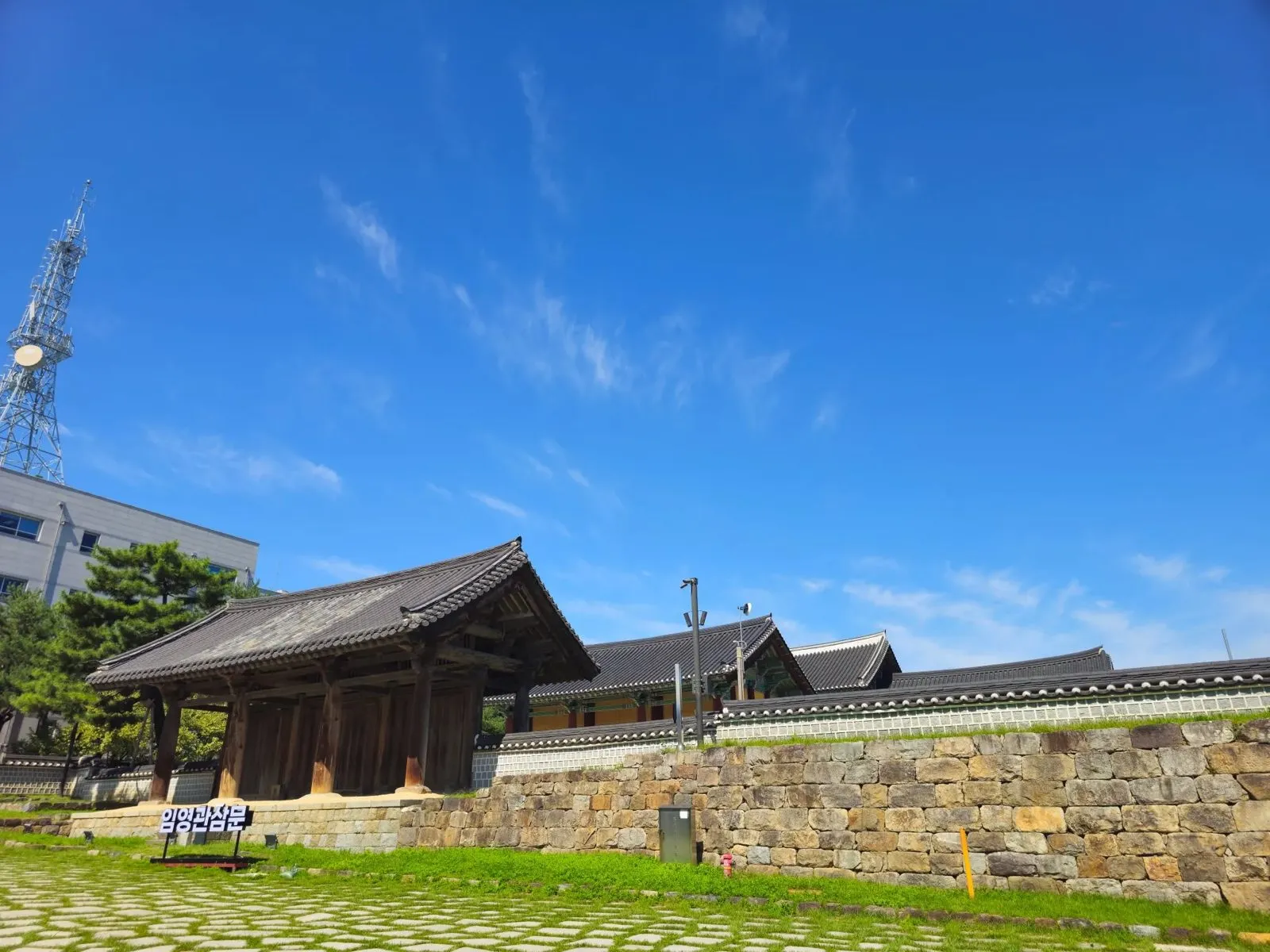 The gate and the stone wall beside it.
The other original building is the Chilsadang hall, which is listed as a Treasure.
The Imyeonggwan guesthouse and King Gongmin’s plaque
Behind the gate are the rebuilt halls of the Imyeonggwan guesthouse. The board says the name plaque reading Imyeonggwan was written by King Gongmin of Goryeo; the Encyclopedia of Korean Culture says the same, and a 2026 Seoul Shinmun column calls it a tradition (“it is said”). The encyclopedia places the plaque on the gate, but when I visited it hung on the central hall, the Jeondaecheong (“Shrine Hall” on the board’s map).
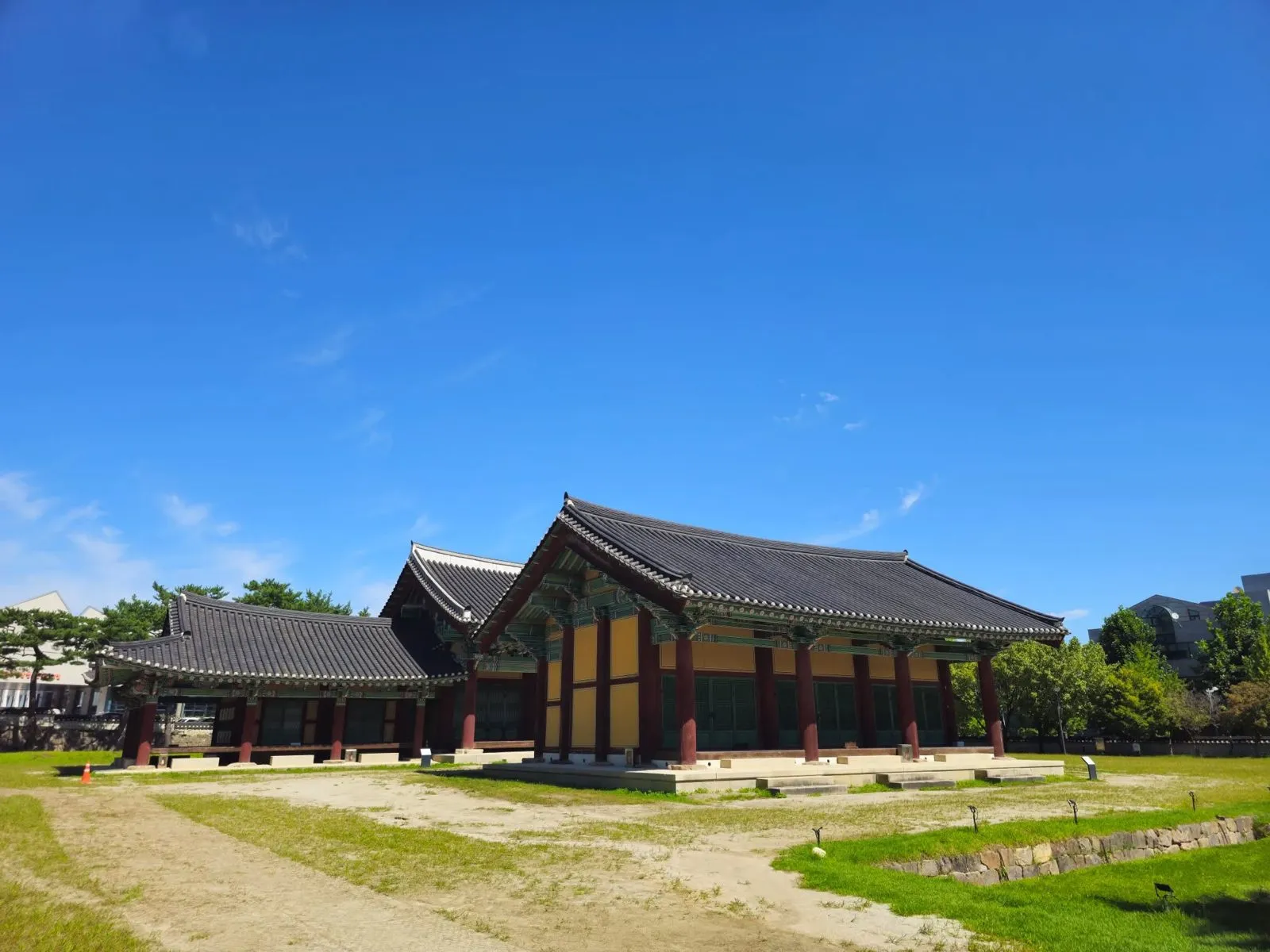 The rebuilt guesthouse halls.
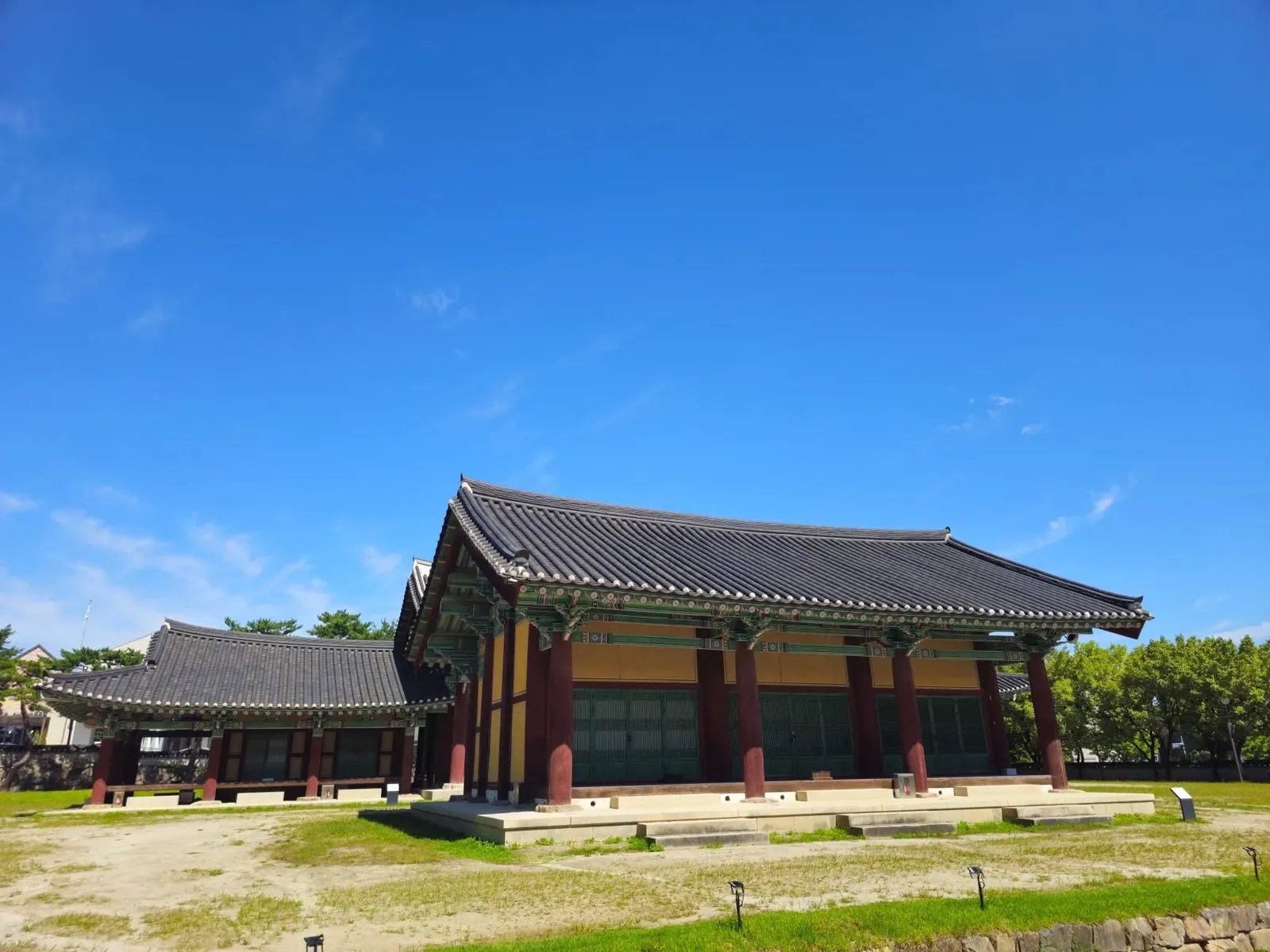 The halls from another angle.
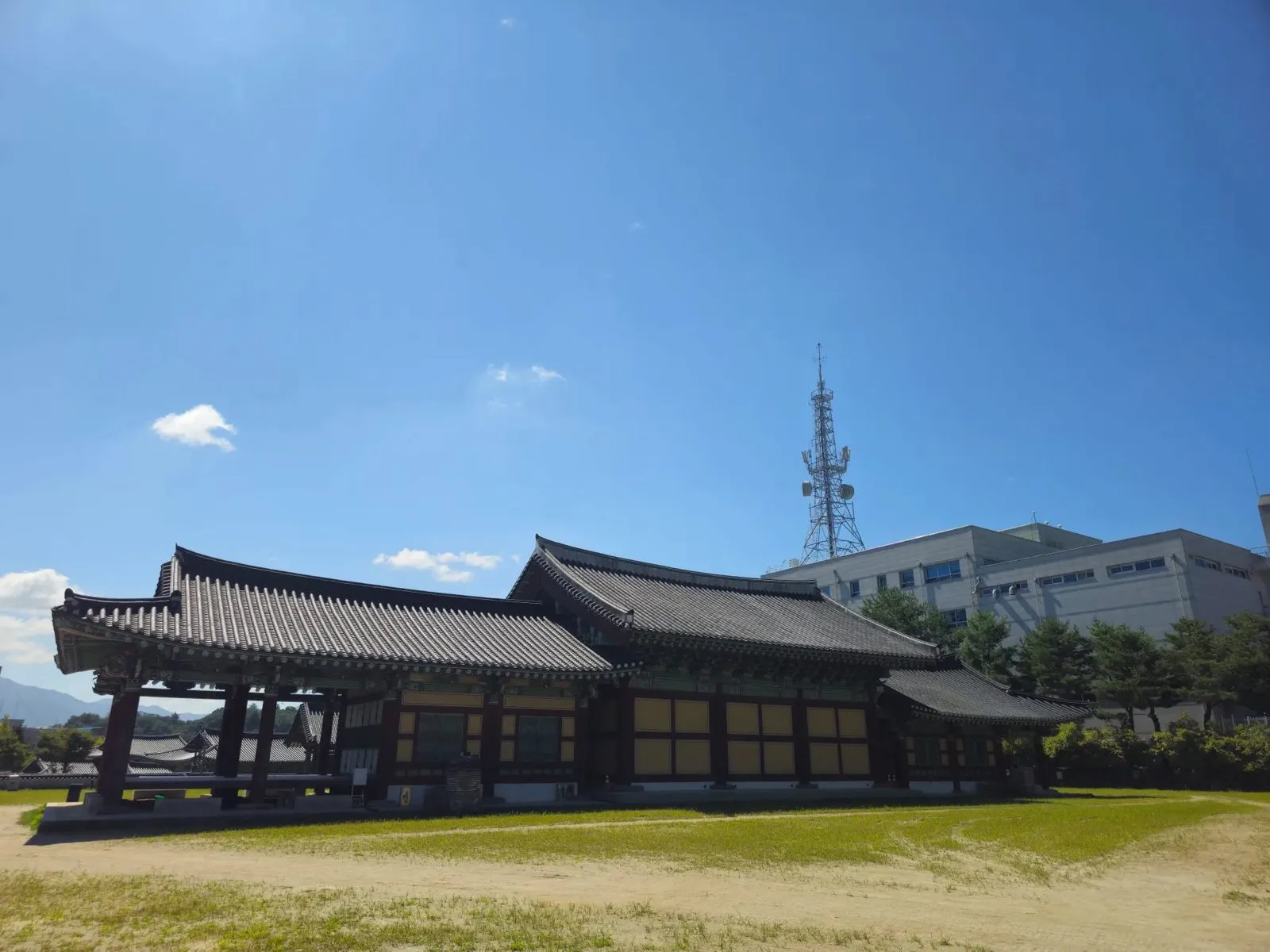 The rebuilt halls with the city behind.
Visiting
| Gangneung Daedohobu Gwana | |
|---|---|
| Admission | Free when I visited (September 2026) |
| Parking | No car park of its own. Use a nearby public car park |
| Hours | Listings differ: the Korea Tourism Organization’s guide-booking site gives 9:00 to 18:00, and a 2026 travel article calls it always open. Go in the daytime |
| Address | 6, Imyeong-ro 131beon-gil, Gangneung, Gangwon Province |
How to get there
From Gangneung Station: it’s in the city centre, not far from the station. Check the walk or bus in Naver Map (switched to English): search Gangneung Daedohobu Gwana, or paste the Korean name, 강릉대도호부관아.
How to check buses in English: install Naver Map and switch it to English in its settings. When I checked it in October 2026, the English version showed bus routes, stop names and live arrival times (minutes and stops away) in English. Google Maps also gives public transport directions in Korea, but as of late September 2026 it still had no turn-by-turn walking or driving navigation here. Stuck? Call the Korea Travel Hotline: dial 02-1330 from a Korean mobile phone (+82-2-1330 from abroad). It has English-speaking staff.
By car: there’s no car park of its own, so use a nearby public car park.
Tips
- Read the board. It has a clear English history of the site.
- Find the two originals. The gate and the Chilsadang hall are the buildings that survived.
- Look for King Gongmin’s plaque on the central guesthouse hall.
- Pair it with the sea. Don’t only go to the beaches (my advice): this is an easy extra stop in town.
Who it’s for
Likely to suit (estimate): anyone interested in Korean history or traditional architecture, visitors arriving at Gangneung Station with an hour to spare, and anyone who wants a quiet break from the beaches.
Sources
Checked against the information board at the site (photographed on my visit; English and Korean text), the Encyclopedia of Korean Culture (Academy of Korean Studies) entry on the Imyeonggwan Sammun (designation, period, structure), the Korea Tourism Organization’s culture-guide booking site (address, hours, Historic Site listing), a Seoul Shinmun column (March 2026, the Gongmin plaque), the Korea Heritage Service listing and Korean news reports (2021 and 2026) for the Chilsadang hall’s Treasure status, and a 2026 travel article (address, “always open”). Free entry, parking and the plaque’s position are from my own visit.