Hwadojin Fort, Incheon: a free 1870s fort near Dong-Incheon
A small, quiet restored late-Joseon fort in Hwadojin Park near Dong-Incheon and Baedari. What it was, what to see, free entry, and why public transport is easier.
- Getting there
- Bus to the Hwadojin Park stop, or combine it with a walk from the Dong-Incheon area
- Cost
- Free
- Time needed
- 30 minutes to an hour (estimate)
- Best time
- Daytime, if you want to see inside the exhibition hall
Tap any Korean name on this page to hear it. Prefer Naver Map? In the app (set to English), search Hwadojin Park, or paste the Korean name:화도진공원
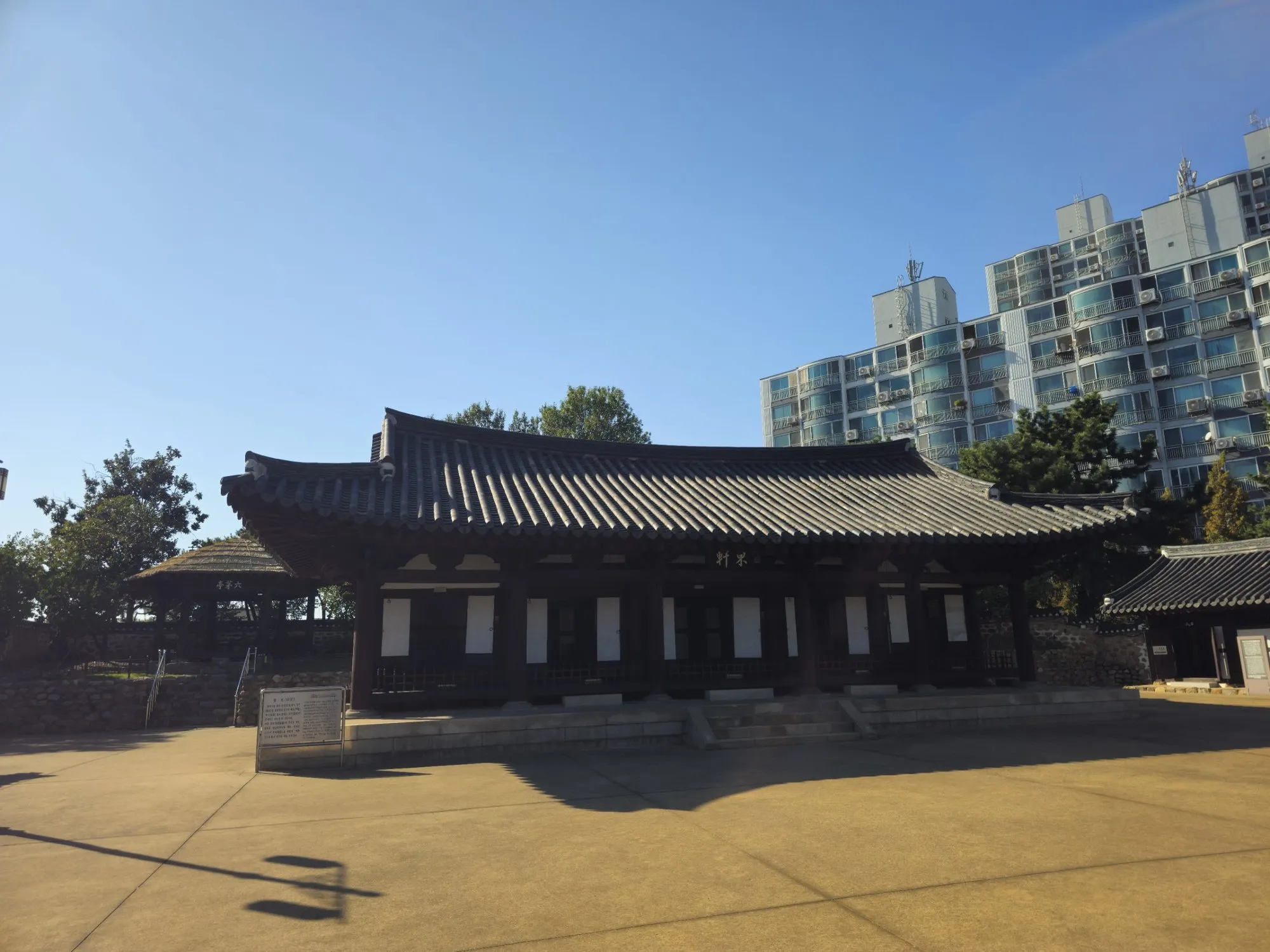
Short version: Hwadojin (화도진) was a coastal fort built in 1879, in the last decades of the Joseon dynasty, to guard the sea approach to Seoul. It was abolished in 1894, and what you see today is a 1989 reconstruction inside Hwadojin Park, in the old part of Incheon near Dong-Incheon. It’s small and quiet: a cluster of tiled-roof hanok buildings and stone walls, overlooked by apartment blocks.
Last checked: 9 October 2026. History was checked against the on-site signs and Korean news reports. Tell me if anything has changed.
What it was
In the 1860s and 1870s foreign warships were appearing off the Korean coast. The signs at Hwadojin explain that after the French invasion of 1866, known in Korea as Byeongin Yangyo, this office was set up to control 31 cannons placed along the coast for defence. In 1878 King Gojong ordered Sin Jeong-hui, commander of the royal guard, to build a fort here, and it was completed in 1879 and named Hwadojin.
For a long time Hwadojin was presented as the place where the Treaty of Amity and Commerce between Korea and the United States, Joseon’s first treaty with a Western country, was signed on 22 May 1882. Research in the 2010s pointed instead to a hill near today’s Jayu Park, and Incheon has since revised its records, so you may still see older material linking the treaty to Hwadojin.
The fort was abolished in the Gabo Reforms of 1894. The buildings you see today are a reconstruction: the main sign says the office building was restored in 1989 from a map believed to date from the fort’s construction, and the site was designated an Incheon city monument in 1990.
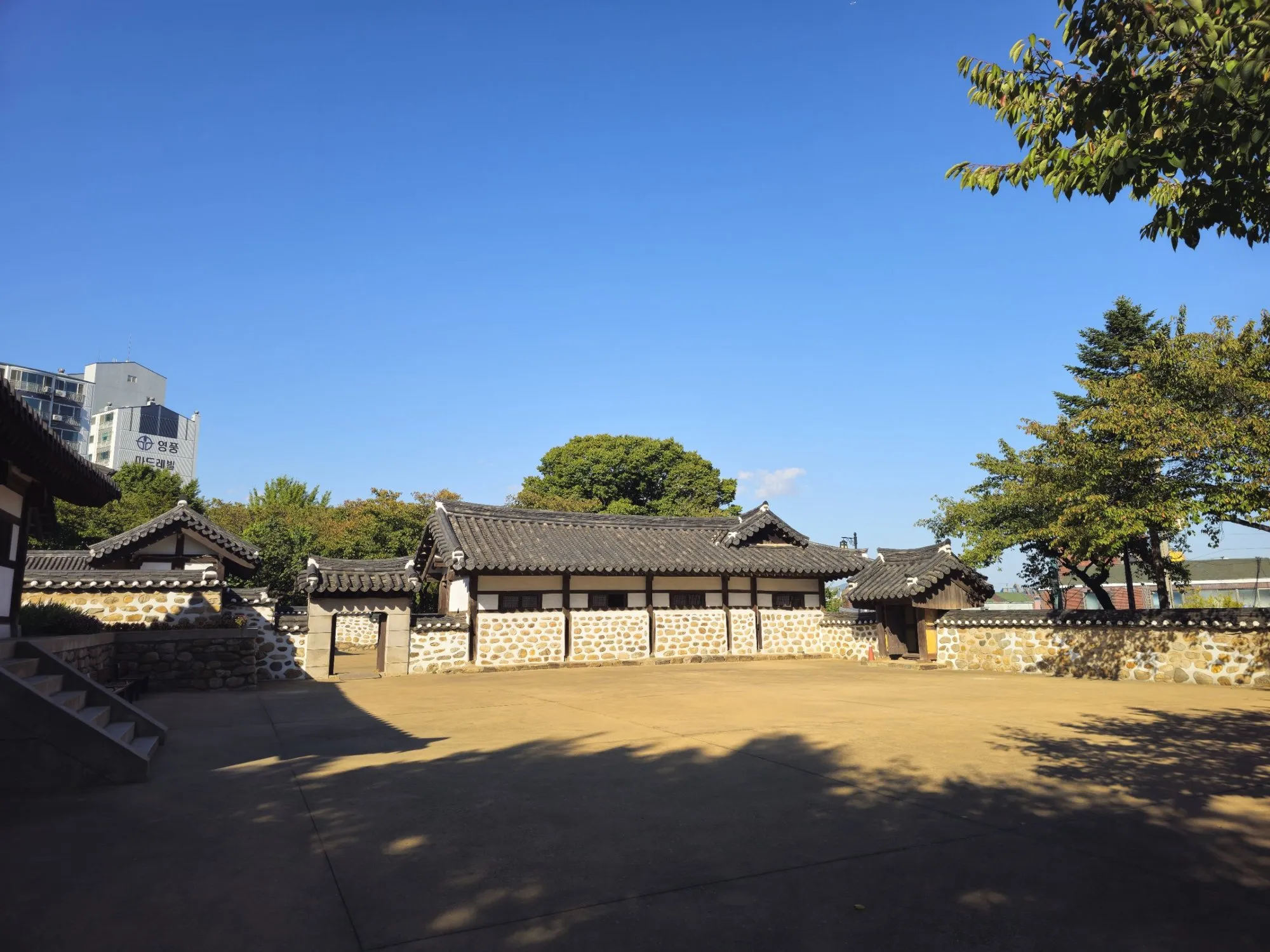 A courtyard inside the restored fort, enclosed by stone-and-plaster walls.
What you’ll see
The restored complex is a set of hanok buildings arranged around open courtyards, with stone walls and small gatehouses between them. Signs in Korean and English explain what the main buildings were for:
- Dongheon (동헌): the main office building, where the officials in charge carried out their work.
- Inner quarters (내사): the women’s quarters, furnished as a traditional household.
- Sarangchae (사랑채): in an ordinary house, the master’s quarters; at Hwadojin, the sign says it was used as a barracks for the naval base’s seamen.
- Exhibition hall (전시관): a long, low building on one side of a courtyard, with a stone well in front of it.
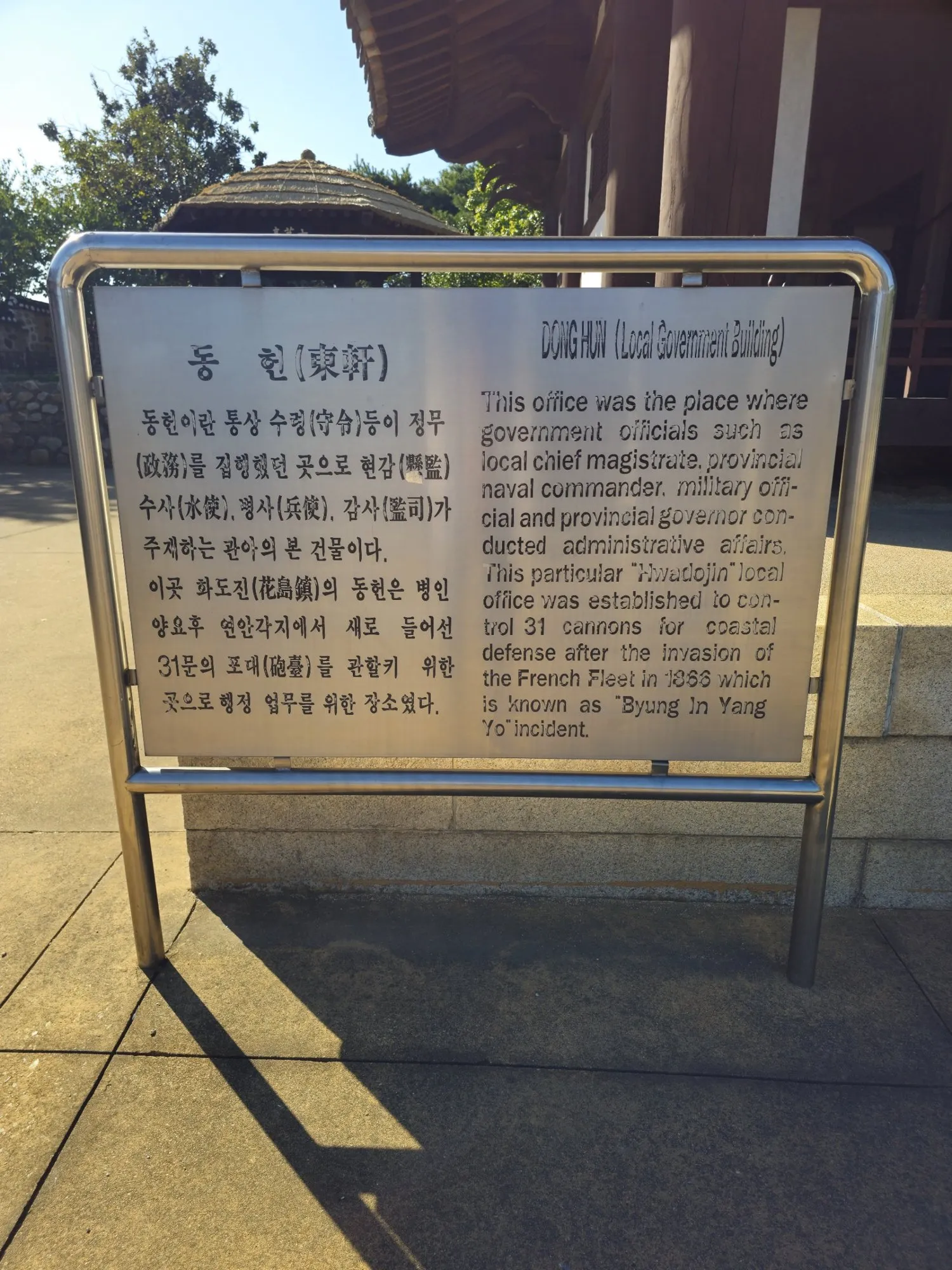 The Dongheon sign, in Korean and English.
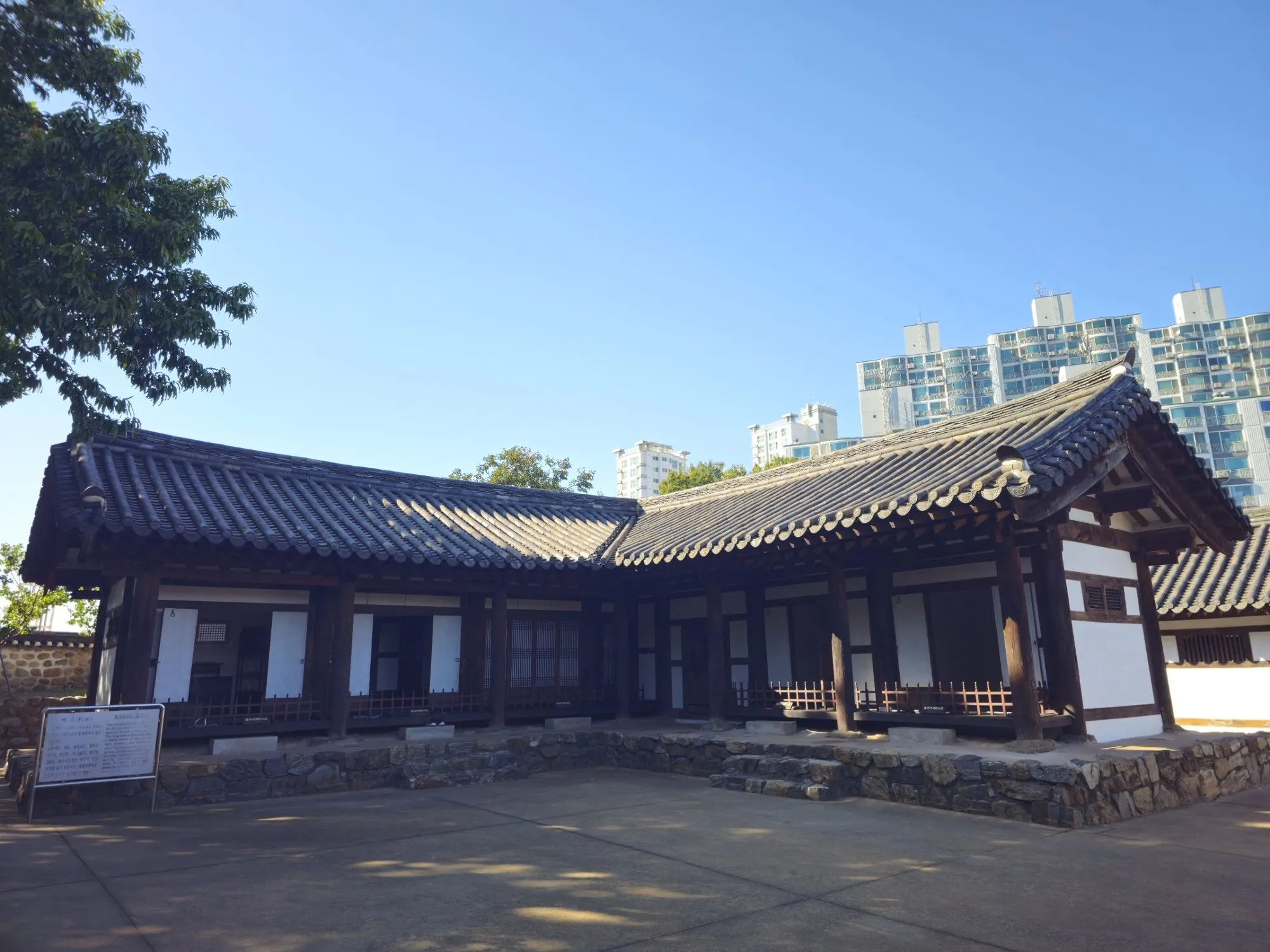 The inner quarters.
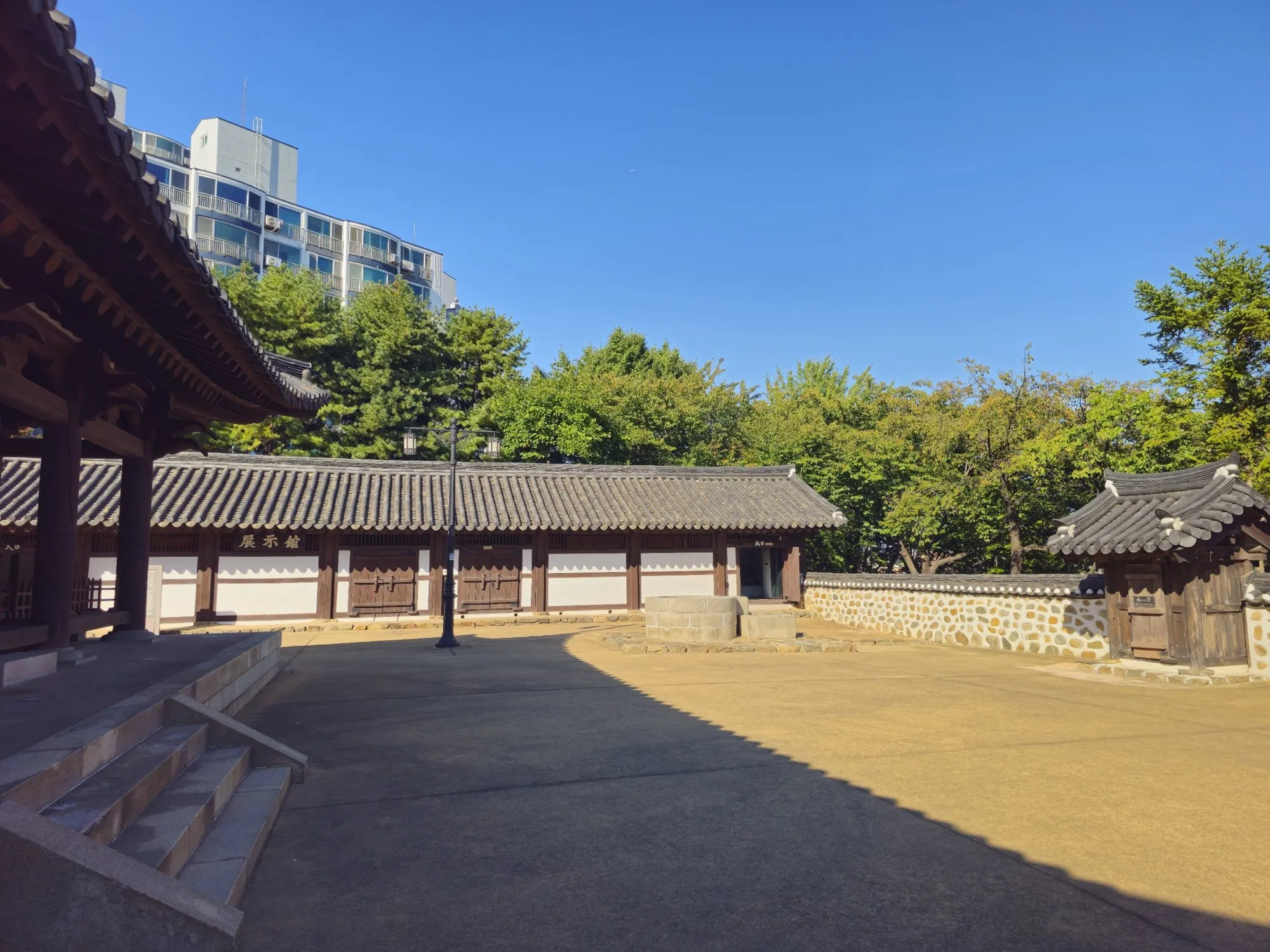 The exhibition hall and the old well.
The restored roofs and stone walls sit right under a wall of modern apartment blocks.
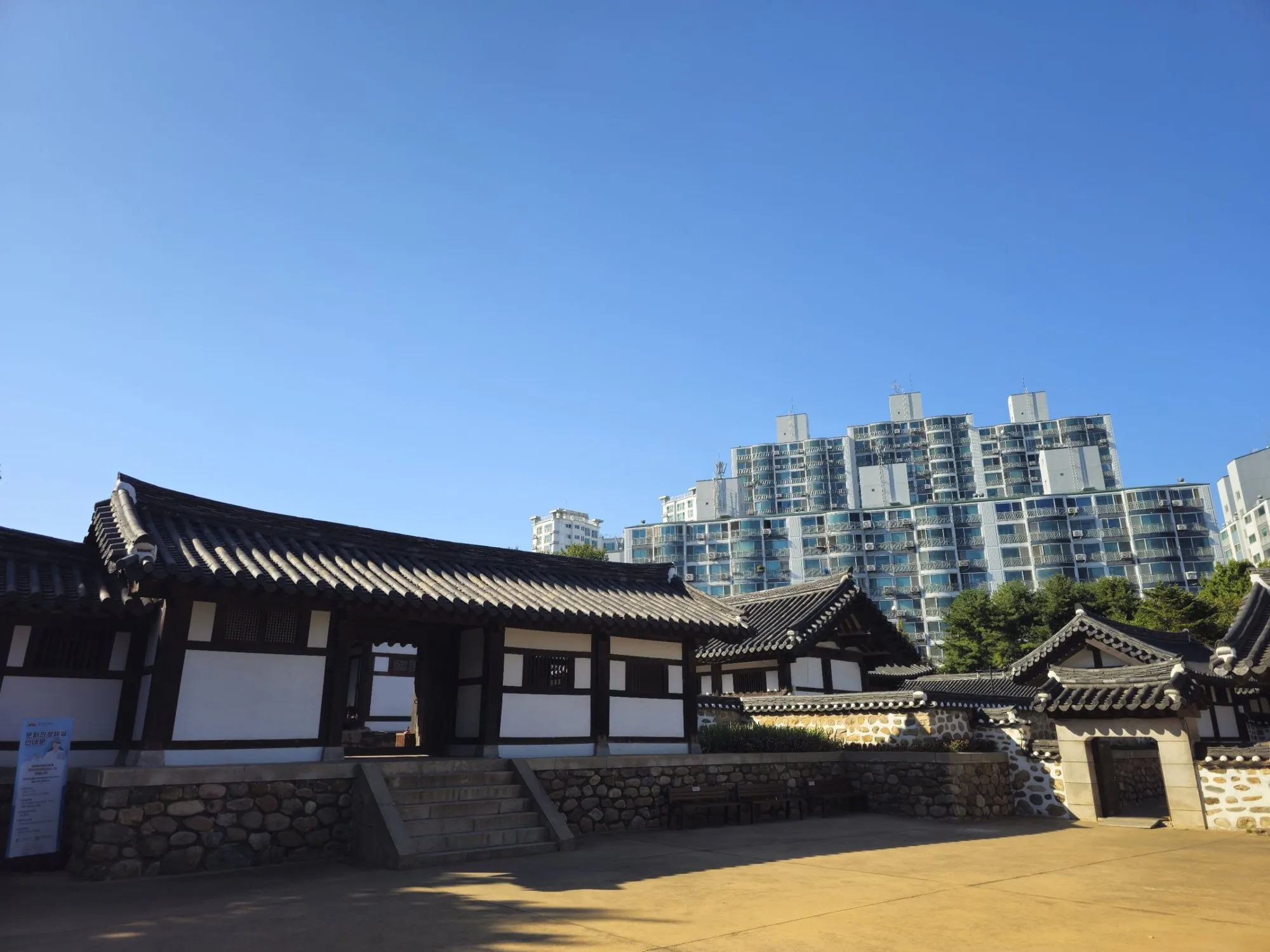 Old Incheon and new Incheon in one view.
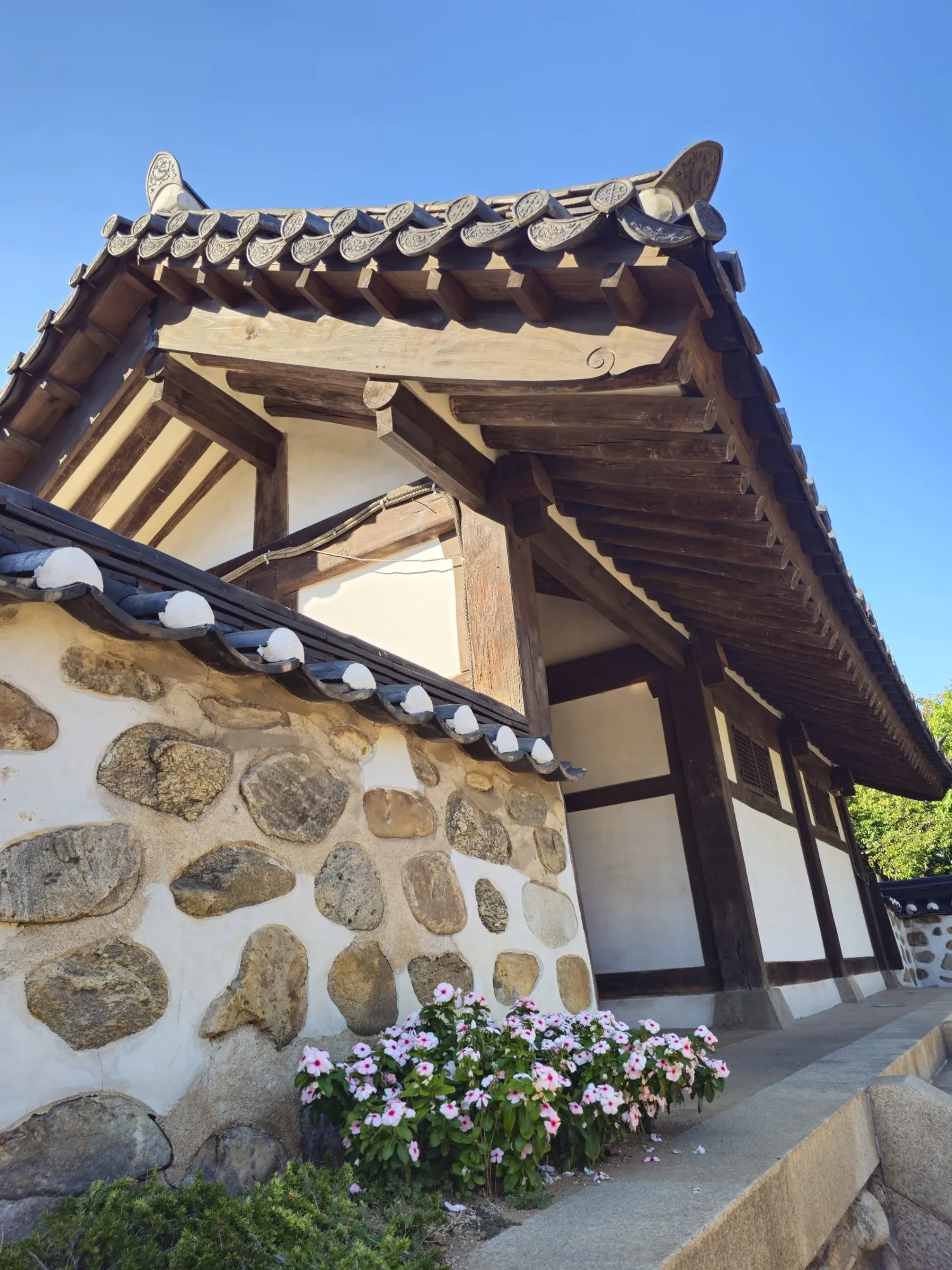 Rooflines and walls up close.
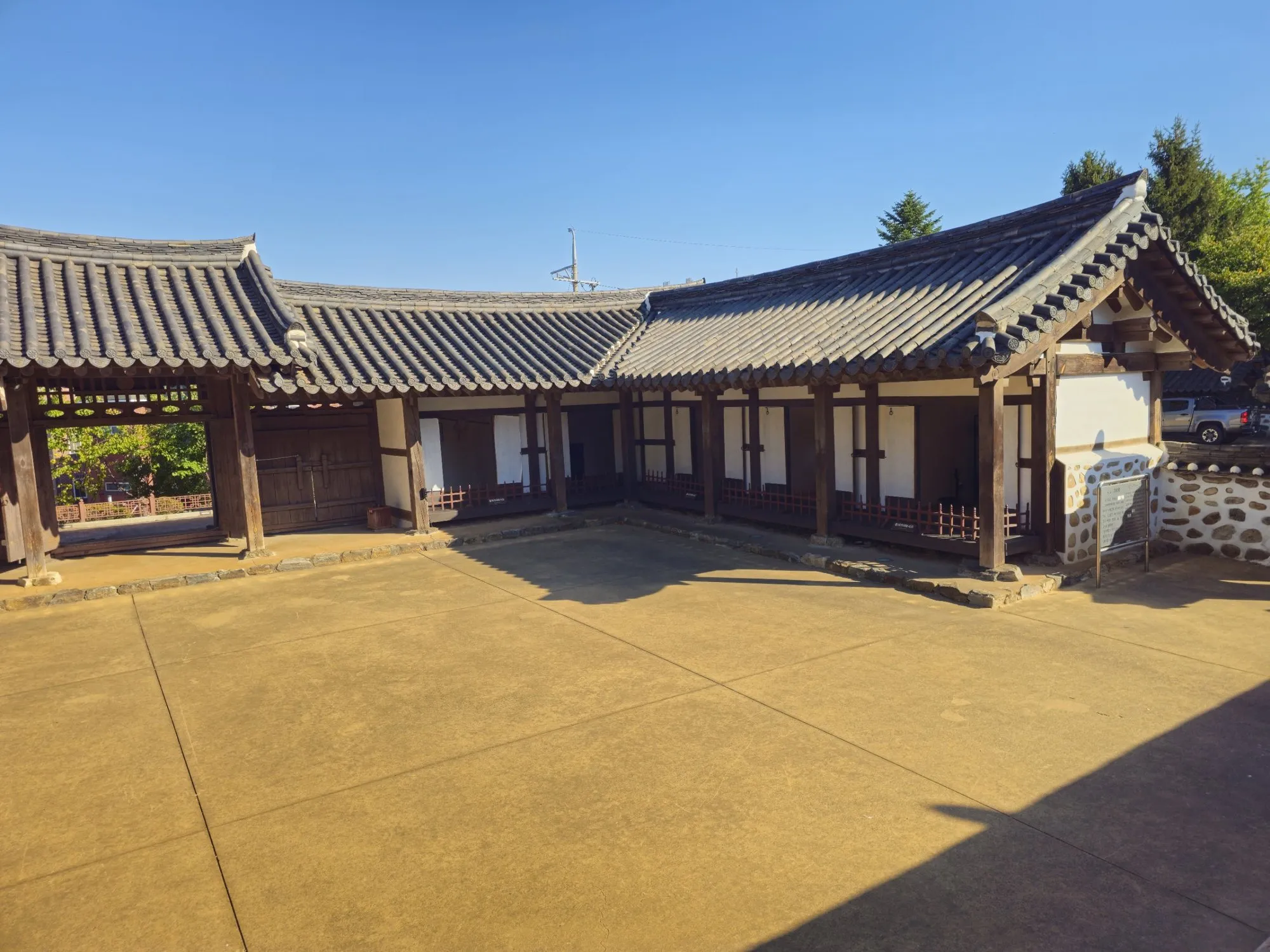 Another courtyard.
Practical information
| Hwadojin | |
|---|---|
| Admission | Free (it was free when I visited) |
| Where | Inside Hwadojin Park, 114 Hwadojin-ro, Incheon |
| Parking | A small car park |
Tourism listings give the exhibition hall’s hours as 09:00–18:00, but we couldn’t confirm them with the district office, and I didn’t go inside the exhibition hall myself, so check before you make a special trip for it. The park itself is a public city park.
Note on the address: in July 2026 Incheon reorganised its districts, and this area, formerly Dong-gu, is now part of Jemulpo-gu. Older maps and guides will still say Dong-gu.
How to get there
Public transport is the easier option. Tourism listings name the nearest bus stop as Hwadojin Park / Hwadojin Library (화도진공원·화도진도서관). Search Hwadojin Park in Naver Map, or paste the Korean name, 화도진공원, to see the buses from where you are.
How to check buses in English: install Naver Map and switch it to English in its settings. When I checked it in October 2026, the English version showed bus routes, stop names and live arrival times (minutes and stops away) in English. Google Maps also gives public transport directions in Korea, but as of late September 2026 it still had no turn-by-turn walking or driving navigation here. Stuck? Call the Korea Travel Hotline: dial 02-1330 from a Korean mobile phone (+82-2-1330 from abroad). It has English-speaking staff.
Tips
- More in Incheon: Wolmido, a seafront with the Wolmi Sea Train, and Dapdong Cathedral, a red-brick church by Sinpo Market.
Who it’s for
Likely to suit (estimate): anyone walking around old Incheon (Dong-Incheon, Baedari, the Jemulpo area) who wants a quiet half hour among traditional buildings, and anyone interested in late-Joseon coastal defence.
Sources
History checked against the signs on site (photographed on my visit), Korean news reports on the fort’s construction (2022, 2024, 2025) and on the research into where the 1882 treaty was signed (2023), and the Old Korean Legation’s history of Korea–US relations. District change checked against Korean news coverage (2026).